How to Remove Lint and Fluff From Black Clothes in Pakistan: 5 Quick Fixes and How to Stop It
Remove lint from black clothes in Pakistan with a lint roller, sticky tape or a damp rubber glove, then stop it: wash darks alone, inside out and cold.
To remove lint and fluff from black clothes, roll a lint roller or a strip of wide sticky tape over the fabric in one direction. To stop it coming back, wash darks inside out, on their own, away from towels and blankets, and clean the washing machine filter. A slightly damp rubber glove works too when you have no roller.
Black and navy clothes are the winter uniform in Pakistan: black shalwar kameez, dark office trousers, navy blazers, black abayas and coats. They also show every white thread and grey fluff ball. Most lint comes from the wash itself, so the fix is half removal and half changing how the load is put together.
Most lint on dark clothes comes from the wash
Lint is loose fibre that sheds from towels, blankets, fleece and new cotton in the machine, then sticks to darker fabrics. Mixed loads, overloading, dirty filters and too little rinsing all make it worse. Static in dry winter air holds it on.
The Texas A&M extension stain guide lists lint among the most common laundry problems, alongside poor cleaning and residue. It points to the same basic fixes: sort clothes by colour and surface texture, avoid overloading the washer, and clean the filters regularly.
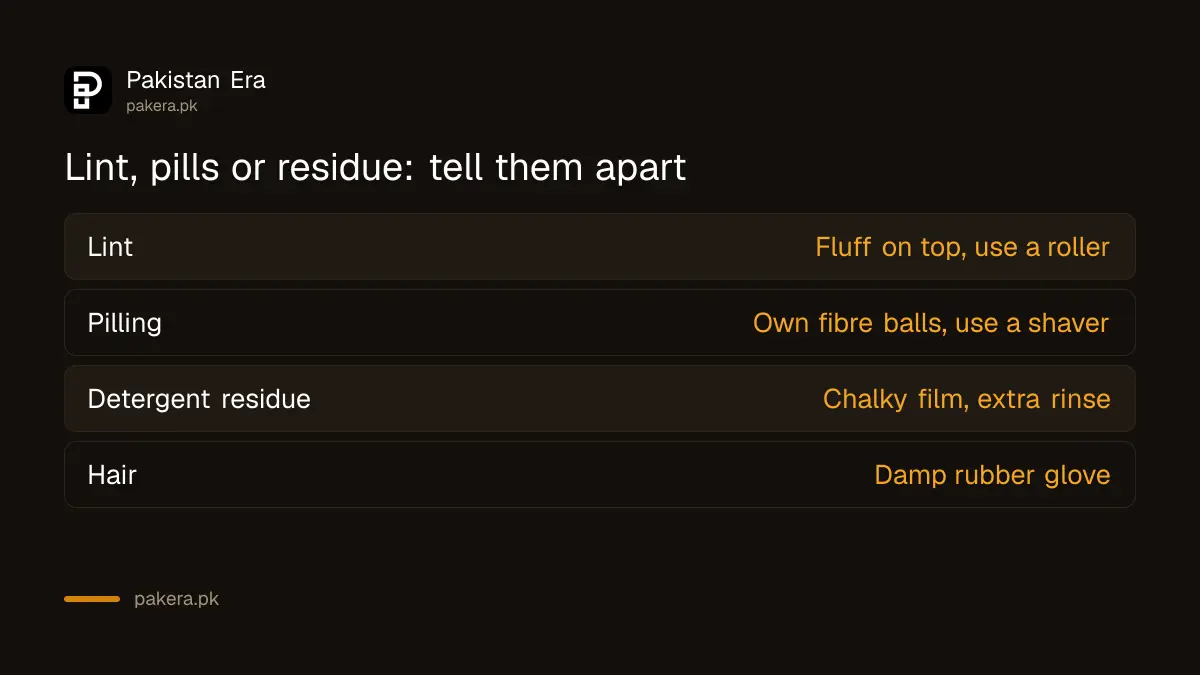
Pilling is different. Pills are tiny balls made from the garment's own fibres, from rubbing. Lint is fluff from something else. Pills need a fabric shaver, and the safe ways to remove pilling from sweaters are different from lint removal.
| Problem | What it looks like | Fix |
|---|---|---|
| Lint | White or grey fluff sitting on top of the fabric | Lint roller, sticky tape, damp rubber glove |
| Pilling | Small balls of the garment's own fibre | Fabric shaver or sweater comb |
| Detergent residue | White streaks or a dull, chalky film | Correct dose, extra rinse |
| Pet or human hair | Long strands woven into the surface | Damp rubber glove, lint roller |
Five ways to remove lint from black clothes at home
A lint roller is fastest. Wide sticky tape wrapped around your hand, sticky side out, works just as well. A damp rubber glove, a dry kitchen sponge or a clean pumice style lint brush also lift fluff. Always work in one direction, top to bottom.
- Lint roller. Lay the garment flat and roll from the shoulders down. Tear off the used sheet when it stops picking up.
- Sticky tape. Wrap packing tape around your hand, sticky side out, and pat the fabric. Do not drag hard on delicate weaves.
- Damp rubber glove. Wear a clean rubber kitchen glove, dampen it slightly, and sweep your hand down the fabric. The fluff rolls into a clump.
- Dry sponge. The rough side of a clean, dry sponge lifts lint from wool coats and trousers. Test on a hidden area first.
- Clothes brush. A firm clothes brush, used downwards, clears lint from coats and blazers between wears.

If you have a tumble dryer, a short cycle on air only with no heat shakes much of the lint loose into the filter. Empty the filter afterwards.
Wash dark clothes so lint does not stick
Wash dark clothes on their own, turned inside out, in cold water, with no towels, blankets or fleece in the load. Use the right amount of detergent, do not overload the drum, and empty the filter after every few washes.
- Separate darks from lint shedders. Towels, new cotton, fleece, blankets and razai covers shed fibre. Wash them separately from black and navy clothes.
- Turn darks inside out. Any lint that lands sticks to the inside, where nobody sees it, and the colour lasts longer.
- Use cold water. Cold washes are gentler on dark dyes and on fibres, so less fluff is shed.
- Do not overload. Clothes need room to move, so water can carry lint to the filter.
- Clean the filter. Every washing machine has one. A blocked lint filter in a front loader or the lint net in a twin tub sends fluff straight back onto the clothes.
- Check pockets. A single tissue in a pocket can cover a whole dark load in white flakes.
Blankets are the worst lint source in winter. When you wash a mink or fleece kambal, run an empty rinse afterwards before putting a dark load in the same machine.
Tissue in the wash needs a different fix
If a tissue went through the wash, do not dry the clothes yet. Shake each garment hard outdoors, then run a rinse with a little fabric softener. Once dry, use a lint roller on what is left. Clean the machine drum and filter before the next load.
Shaking while wet removes most of the paper flakes. Fabric softener helps the rest let go. Drying first glues the flakes on, so this is the one time to resist hanging clothes out straight away.
Static holds lint on in dry winter air
In dry winter air, synthetic fabrics such as polyester and acrylic build static and pull lint onto themselves. A little fabric softener in the rinse, taking clothes out of a dryer while slightly damp, and a humidifier indoors all reduce it.

Wool coats and blazers attract lint from scarves and car seats. A clothes brush after each wear keeps them clean, and you can clean a wool long coat at home for marks a brush cannot lift.
For black suits and blazers worn to the office, keep a small lint roller in a drawer. Ten seconds before a meeting does more than any wash.
Common questions
What is the fastest way to remove lint without a lint roller?
Wrap wide sticky tape around your hand, sticky side out, and pat the fabric. A slightly damp rubber glove swept downwards also works well on trousers and coats.
Why do my black clothes come out of the wash covered in fluff?
Usually because they were washed with towels, blankets or new cotton, the drum was overloaded, the filter was blocked, or a tissue was left in a pocket.
Does fabric softener reduce lint?
It helps. Softener reduces static, so lint does not cling as hard to synthetic fabrics. Use the dose on the bottle, as too much can leave a film.
Is lint the same as pilling?
No. Lint is loose fluff from other items. Pilling is small balls of the garment's own fibre, caused by rubbing. Lint lifts with a roller, pills need a fabric shaver.
How do I get tissue flakes off black clothes?
Shake the wet clothes hard outdoors, rinse again with a little fabric softener, then dry and use a lint roller on what remains. Clean the drum and filter afterwards.
How we verified this
What we checked and where we read it.
We checked this guidance on 15 November 2026. The detergent maker Ariel's page on how to wash dark clothes says lint is a more common problem with darks and suggests tape or a lint roller, a dryer on air only, separating darks, turning them inside out and washing cold. Its acrylic and polyester pages say fabric softener reduces static and that taking synthetics out of the dryer slightly damp avoids static build up. The Texas A&M AgriLife Extension Quick Stain Removal Guide (L-5199) lists lint residue among the most common laundry problems and advises sorting by colour and surface texture, avoiding overloading, and cleaning washer and dryer filters regularly. The rubber glove, sponge and tissue rinse methods are our own household advice.
About the author

Lifestyle & Clothing Writer
Mahnoor Siddiqui is a lifestyle and clothing writer at Pakistan Era, joining the new lifestyle desk in November 2026.