Balochistan State Land Lease Rules: Cancellation, Heirs, Transfer and Ownership After 40 Years
Hold a Balochistan state land lease? Under the 2026 policy a breach can cancel it, heirs need government approval and ownership is possible after 40 years.
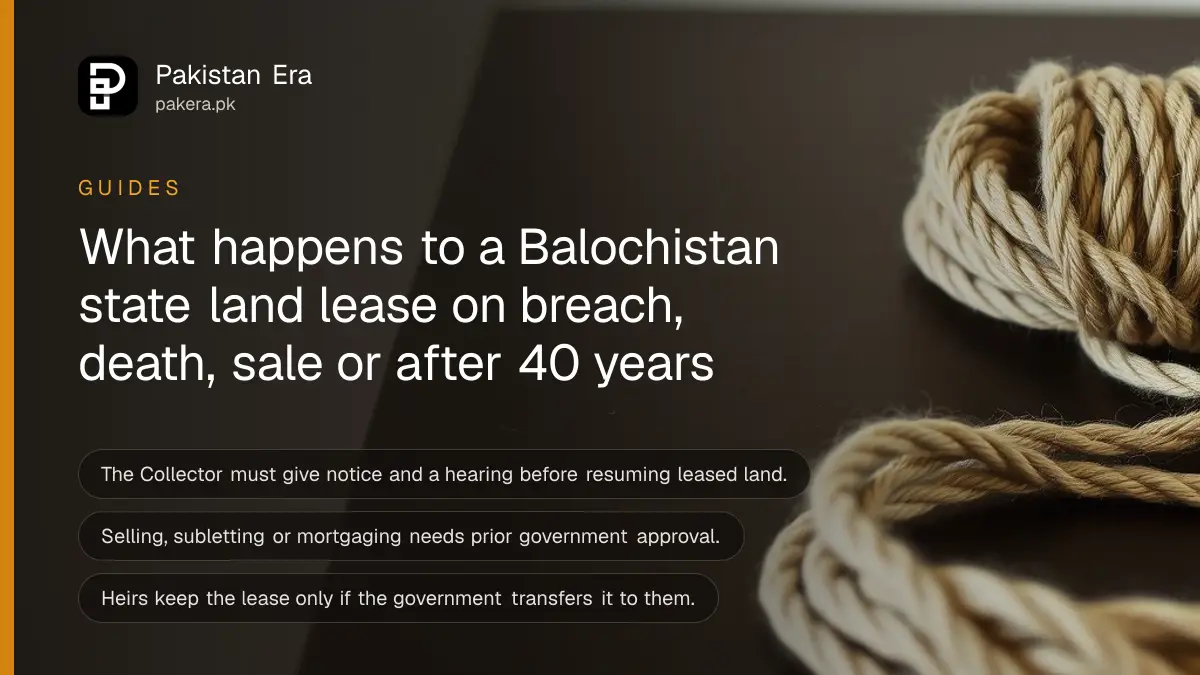
If you hold a Balochistan state land lease, the Land Lease Policy, 2026 lets the Collector cancel it for any breach after a hearing, bars you from selling, subletting or mortgaging without government approval, and leaves the lease to your heirs only if the government agrees. A lessee who kept every condition can be granted ownership after 40 years.
We read the policy on the Balochistan Code, the provincial law portal, on 21 October 2026. The Board of Revenue notified it on 2 April 2026. If you are still trying to get a plot, start with the guide to applying for a state land lease. This page is for people who already hold one, or who inherit one.
The Collector can cancel a lease after giving you a hearing
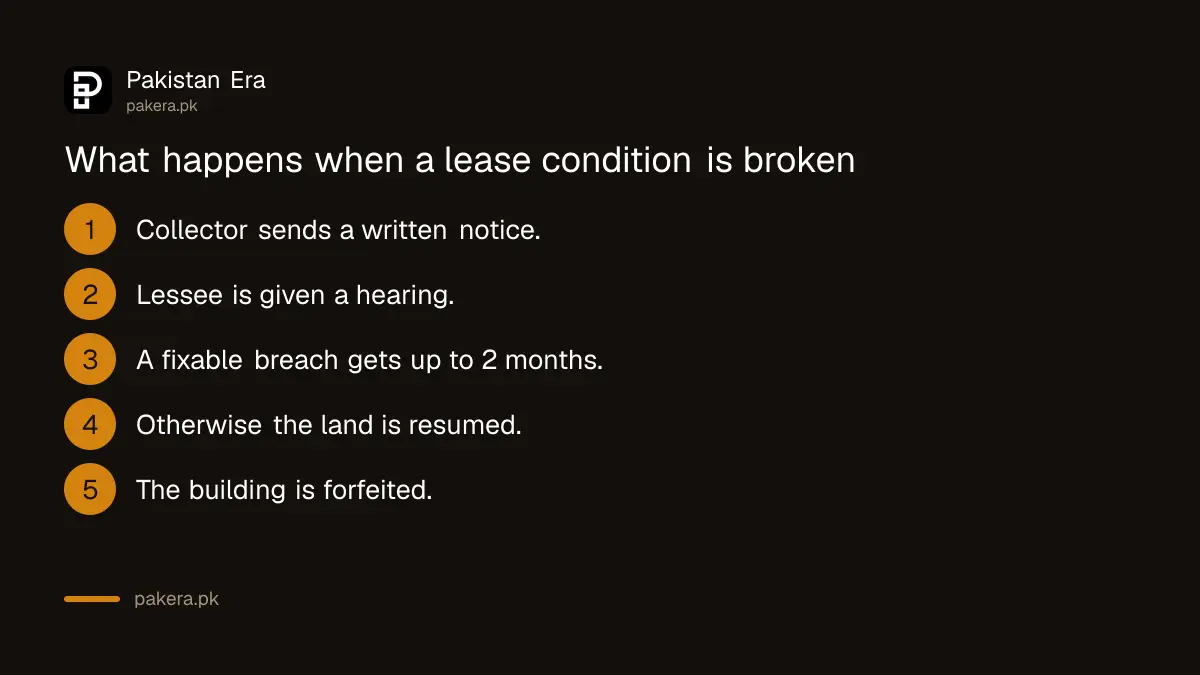
Clause 14 says that if the Collector is satisfied that a lessee broke any condition, he may, after a written notice and a chance to be heard, either resume the land or, if the breach can be fixed, give you up to two months to fix it at your own cost.
So a notice is not the end. Reply in writing, in time, and fix what can be fixed. Clause 5(b) adds that false statements or hiding facts allow cancellation, again after you are heard.
On cancellation the land goes back and buildings are forfeited
Clause 5 is harsh. When a lease is cancelled, the state land is resumed and any building on it is forfeited to the government. No compensation is granted to the lessee. Any arrears are recovered as arrears of land revenue under the Land Revenue Act, 1967.
There are two softer rules. If you surrender the land without any default, you pay no arrears. And you may remove installations that do not damage the land or its use (clause 5(f) and (g)).
| Event | What the policy says |
|---|---|
| Breach of a condition | Notice, hearing, then resumption or up to 2 months to fix |
| Cancellation | Land resumed, building forfeited, no compensation |
| Surrender with no default | No arrears of land revenue payable |
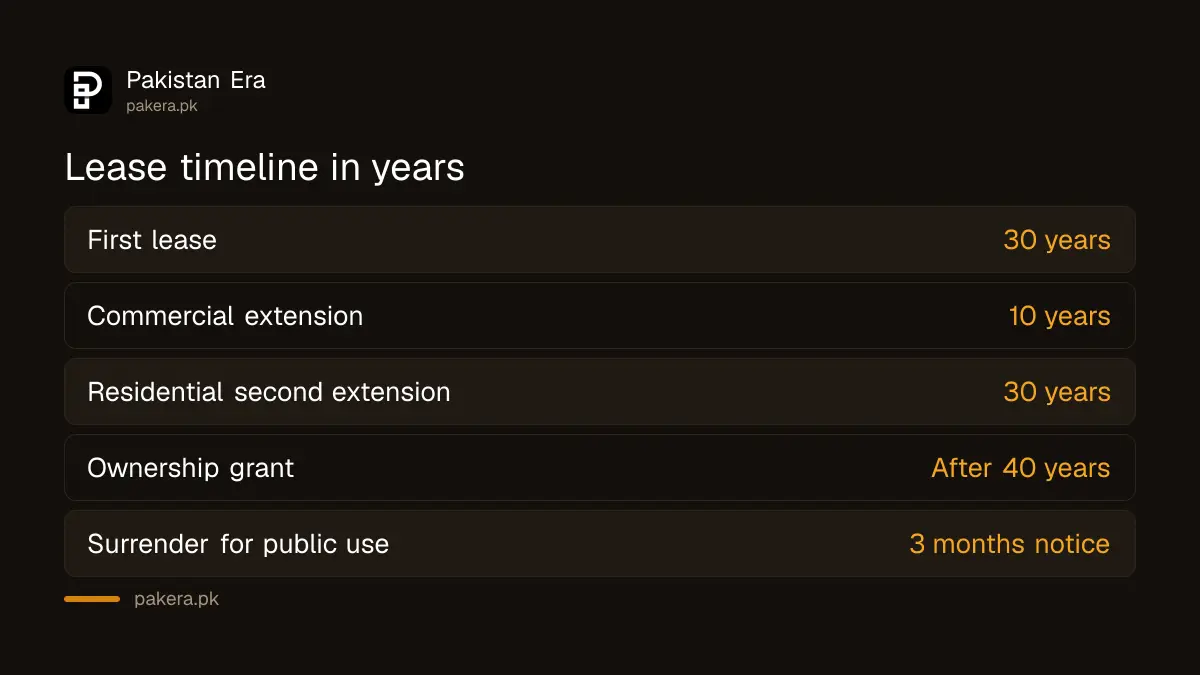
| Land needed for public use | Surrender within 3 months of notice, compensation fixed by the Collector |
| Appeal or revision | Sections 161 to 164 of the Land Revenue Act, 1967 |
You cannot sell, sublet or mortgage without prior approval
Clause 11 forbids assigning, subletting, mortgaging or transferring the leased land, or any part of it, in any manner without the government's prior approval. A sale deed signed without it is a risk, not a shortcut.
The same goes for use. Clause 12 says the land is only for the purpose it was leased for. A house plot cannot become a shop and a farm cannot become a plaza. If the land is not used for its purpose, it can be resumed.
If you are buying a plot that someone says is leased, ask for the lease order and the approval in writing. Then check the entry in the revenue record, using the steps to check land records in Balochistan. A buyer who skips this can lose both the plot and the money.
Heirs get the lease only if the government agrees
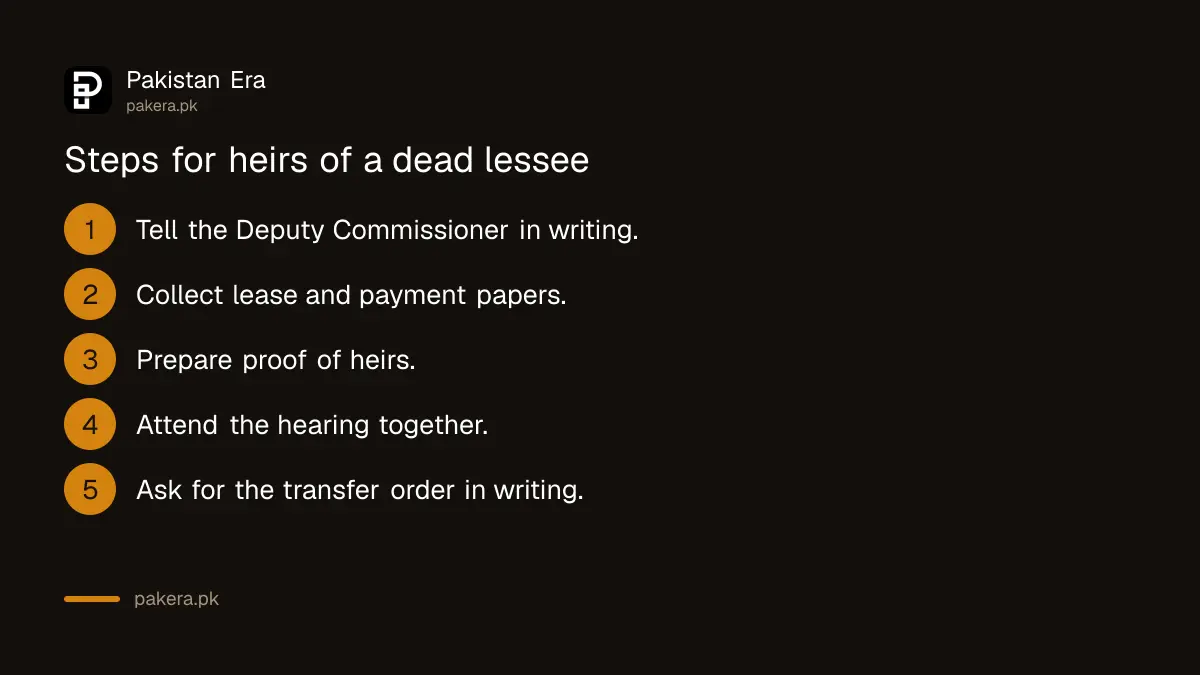
Clause 13 deals with death. The government reserves an absolute right either to transfer the lease to all the legal heirs for the remaining period, after the Deputy Commissioner hears them, or to end it after notice if no heir is fit to succeed. The first option applies only if the lessee had met the conditions.
The heirs of the dead lessee should therefore act fast. Report the death, bring the succession papers and attend the hearing. The shares among heirs follow the rules explained in the guide to inheritance shares in Pakistan.
- Tell the Deputy Commissioner's office about the death in writing.
- Collect the lease order, payment receipts and the death certificate.
- Prepare proof of the heirs, such as a succession certificate or family registration.
- Attend the Deputy Commissioner's hearing together.
- Pay any instalments that fall due while the case is pending.
- Ask for the transfer order in writing for the remaining lease period.
Ownership after 40 years is possible but not automatic
Clause 10 says a lessee who has developed the land and not violated any condition shall be entitled to a grant of ownership, called proprietary rights, after 40 years, on payment of a price fixed by the government. The policy does not state that price.
Until then, you are a tenant of the state. That is why the 30 year lease and extensions matter. Residential leases get a second extension of 30 years, and commercial ones get 10 years, both on performance (clause 4).
Common questions
Can the government take my leased plot back?
Yes, if you breach a condition or the land is needed for a public purpose. For a public purpose you get notice, a hearing and compensation fixed by the Collector.
Do I get paid for my building if the lease is cancelled?
No. On cancellation the building is forfeited and no compensation is given. You may take away installations that do not damage the land.
Who hears an appeal against a cancellation?
The policy applies sections 161 to 164 of the Land Revenue Act, 1967 to appeals and revisions. We did not read those sections, so ask a revenue lawyer about the time limit.
Can I sell a leased plot?
Not without prior government approval. The policy bars any assignment, subletting, mortgage or transfer made without it.
What happens to a lease when the lessee dies?
The government may transfer it to all legal heirs for the remaining period after a hearing, or end it if no heir is fit to succeed.
When can I become the owner?
After 40 years, if you developed the land, broke no condition and pay the price the government fixes.
How we verified this
What we checked, where we read it, and what we could not confirm.
We read the full text of the Balochistan Land Lease Policy, 2026 on the Balochistan Code on 21 October 2026. We did not read the Land Revenue Act, 1967 sections on appeals, and we could not find the ownership price or any notified rules. Practice may differ from the written policy. This is general information, not legal advice.
About the author

Tax, Bills and Technology Writer
Ali Akhtar is a young and curious voice here at Pakistan Era. He is currently pursuing his A-Levels and has a growing interest in Pakistan’s changing industrial landscape and educational trends. Ali likes to write in a way that helps him explain and explore the world around him. His writing reflects the perspective of the new generation navigating the evolving trends of Pakistan where technology, youth innovation, and shifting opportunities are reshaping the country’s future.