How to Help Someone Having a Seizure or Fit in Pakistan: Steps and When to Call 1122
Cushion the head, loosen tight clothing, note the time and turn them on their side after the jerking. Call 1122 for a first seizure or one over 5 minutes.
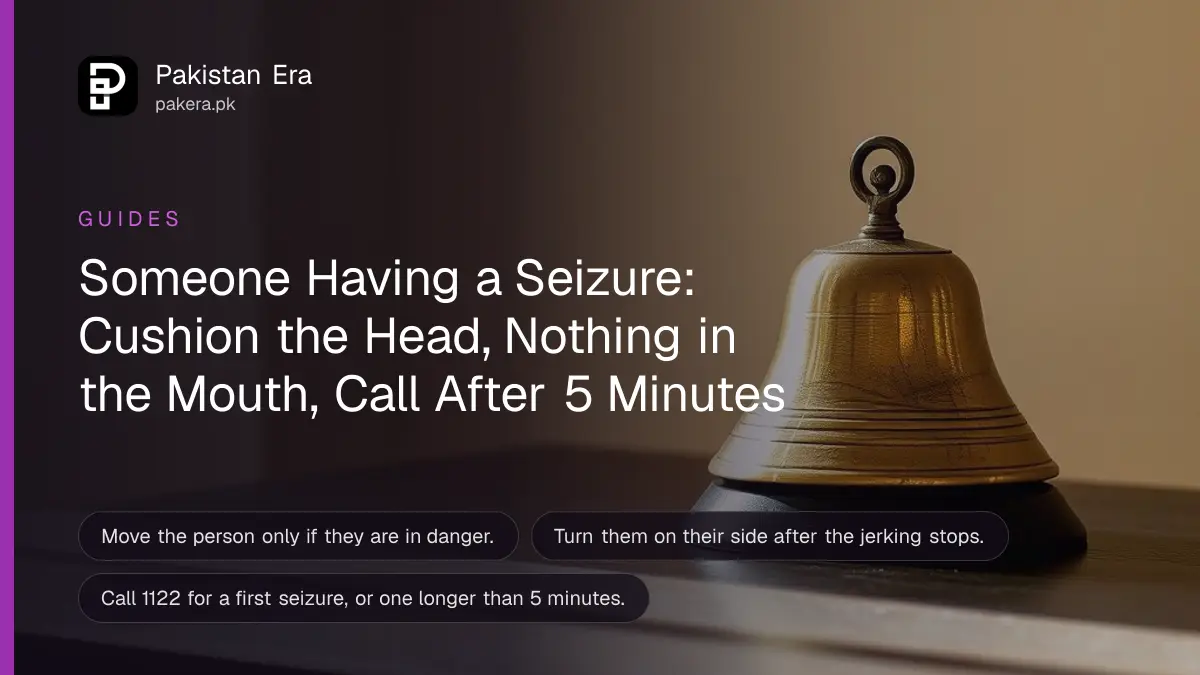
If someone has a seizure, stay calm, cushion their head, loosen tight clothing at the neck, and note the time. Move them only if they are in danger. Put nothing in their mouth. Turn them on their side when the jerking stops. Call 1122 or 115 for an ambulance if it is their first seizure or it lasts more than 5 minutes.
A seizure, or fit, can frighten everyone nearby. It is often not an emergency, and the right help is simple. We read the National Health Service (NHS) of England's seizure page and its epilepsy page on 21 October 2026. The steps below come from them, with Pakistan's emergency numbers in place of 999.
Stay with the person and make them safe without holding them down
Move the person only if they are in danger, such as near a busy road or a hot cooker. Cushion their head, loosen a tight collar or tie, and stay with them. Talk to them calmly until they recover.
If the person is in a wheelchair, put the brakes on and leave any seatbelt or harness on. Support them gently and cushion the head, but do not try to move them. Do not put anything in the mouth, including your fingers, and give no food or drink until they have fully recovered.
| During the seizure | After the jerking stops |
|---|---|
| Move them only if in danger | Turn them on to their side |
| Cushion the head on the ground | Stay and talk calmly until they recover |
| Loosen tight clothing at the neck | No food or drink until fully recovered |
| Note when it starts and finishes | Write down what you saw for the doctor |
Call an ambulance for a first seizure or one longer than 5 minutes
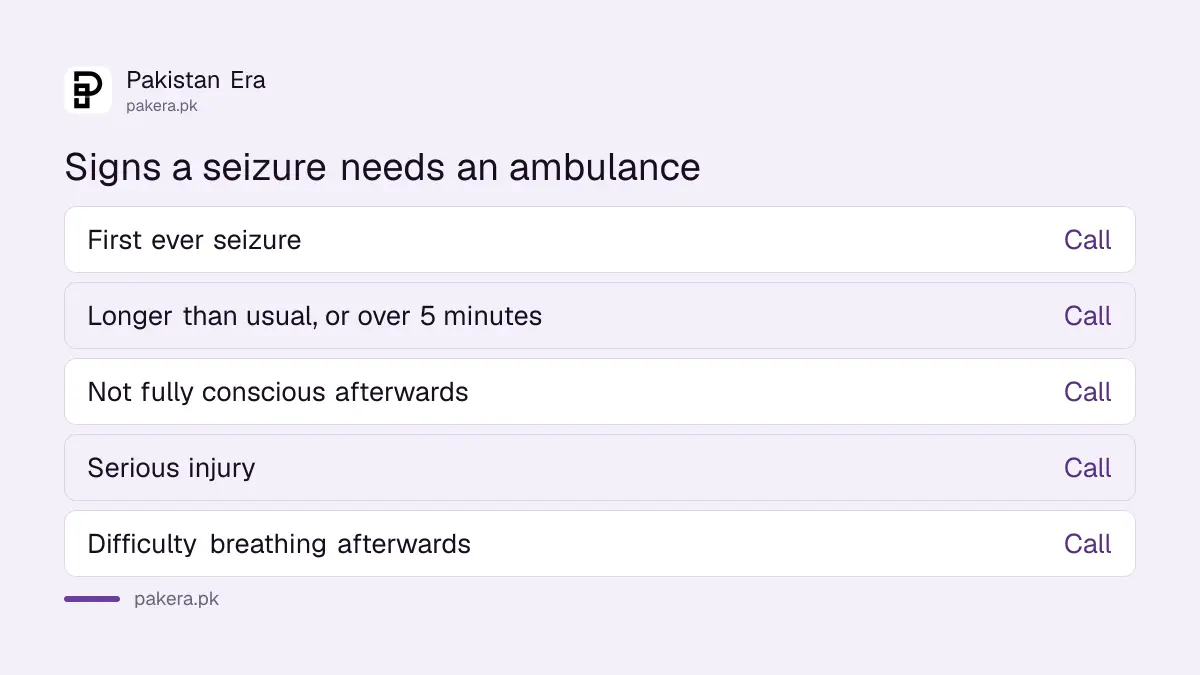
The NHS lists six reasons for an ambulance: it is the first seizure, it lasts longer than usual for that person, it lasts more than 5 minutes if you do not know their normal, the person does not regain full consciousness, they are seriously injured, or they have difficulty breathing afterwards.
In Pakistan, dial 1122 where Rescue 1122 operates, mainly Punjab and Khyber Pakhtunkhwa, or 115 for Edhi. Our emergency numbers list shows which to save, and what Rescue 1122 does explains the service. A person who has had several seizures without waking in between also needs an ambulance.
People with epilepsy do not always need hospital after a seizure
The NHS says people with epilepsy do not always need an ambulance or hospital every time. They usually have a care plan agreed with doctors, family or carers. The plan says what to do, such as giving emergency medicine. If you are trained, follow it.
Some people wear a bracelet or carry a card to show they have epilepsy. Look for one. The epilepsy page also says a seizure usually lasts a few seconds or minutes and stops by itself, and that the person may or may not remember it.
Write down what you saw for the doctor
The NHS asks witnesses to note useful details. What was the person doing before? Did they mention an odd smell or taste? Did their colour change, and where? Which body parts stiffened or twitched? How long did it last? Did they lose control of the bladder or bite their tongue?
On brown or black skin, colour change may be easier to see on the palms, soles, lips, gums and inside the eyelids. Anyone who has had a seizure needs to see a specialist doctor, who will ask what happened before, during and after. If you saw it, go with them, because your account can help the doctor.
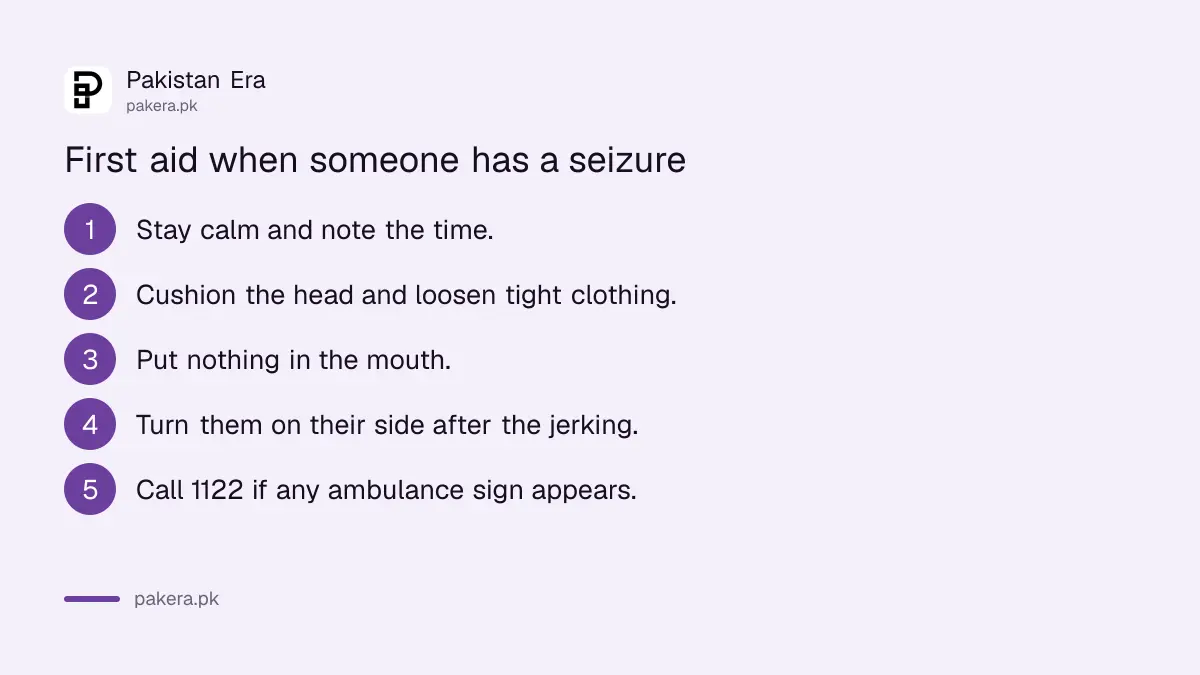
- Stay calm and note the time.
- Move them only if they are in danger, and cushion the head.
- Loosen tight clothing at the neck and put nothing in the mouth.
- When the jerking stops, turn them on to their side and stay with them.
- Call 1122 or 115 if it is a first seizure, lasts over 5 minutes, or any other emergency sign appears.
Daily safety for someone living with epilepsy
The NHS advice for people with epilepsy is short. Tell family and friends what to do, carry medical ID, keep a diary of triggers such as tiredness, stress or flashing lights, and take medicine without missing doses. Do not change or stop treatment without a specialist, and do not drink too much alcohol.
The NHS also suggests showers instead of baths, and care when cooking, using tools or machinery, swimming or playing sports. Medicines are the main treatment. If you have not had a seizure for 2 years, a specialist may suggest reducing treatment slowly. Never do that alone.
Common questions about seizures and epilepsy in Pakistan
What is the first thing to do when someone has a seizure?
Stay calm, cushion their head if they are on the ground, and note the time. Move them only if they are in danger.
Should I put a spoon or my fingers in their mouth?
No. The NHS says not to put anything in their mouth, including your fingers.
When do I call an ambulance?
For a first seizure, one longer than usual or over 5 minutes, no full recovery, serious injury or breathing difficulty.
Does every seizure mean epilepsy?
No. The NHS says a seizure does not always mean epilepsy. It is diagnosed usually after more than 1 seizure, or if tests show a risk of more.
Can a person with epilepsy stop their medicine?
Only on a specialist's advice. The NHS says not to change or stop treatment without it.
What if the person is in a wheelchair?
Put the brakes on, leave the belt or harness on, support them gently and cushion the head.
How we verified this
What we checked, where we read it, and what we could not confirm.
Last checked 21 October 2026. We read the NHS pages on what to do if someone has a seizure and on epilepsy on that date. The steps, the ambulance signs, the care plan advice and the epilepsy self-care points come from them. The Pakistan numbers 1122 and 115 come from our own emergency list. We did not test any step. This is general first-aid information, not medical advice, and we could not verify neurology access or free epilepsy medicines in Pakistan.
About the author

Tax, Bills and Technology Writer
Ali Akhtar is a young and curious voice here at Pakistan Era. He is currently pursuing his A-Levels and has a growing interest in Pakistan’s changing industrial landscape and educational trends. Ali likes to write in a way that helps him explain and explore the world around him. His writing reflects the perspective of the new generation navigating the evolving trends of Pakistan where technology, youth innovation, and shifting opportunities are reshaping the country’s future.