Sindh Tyre Pyrolysis Plants: 13 Units Sealed by SEPA and How to Report One
Sindh bans tyre pyrolysis plants, and SEPA sealed 13 on 14 September 2026, 8 in Keamari and 5 in Malir. See the health risks SEPA cites and how to complain.
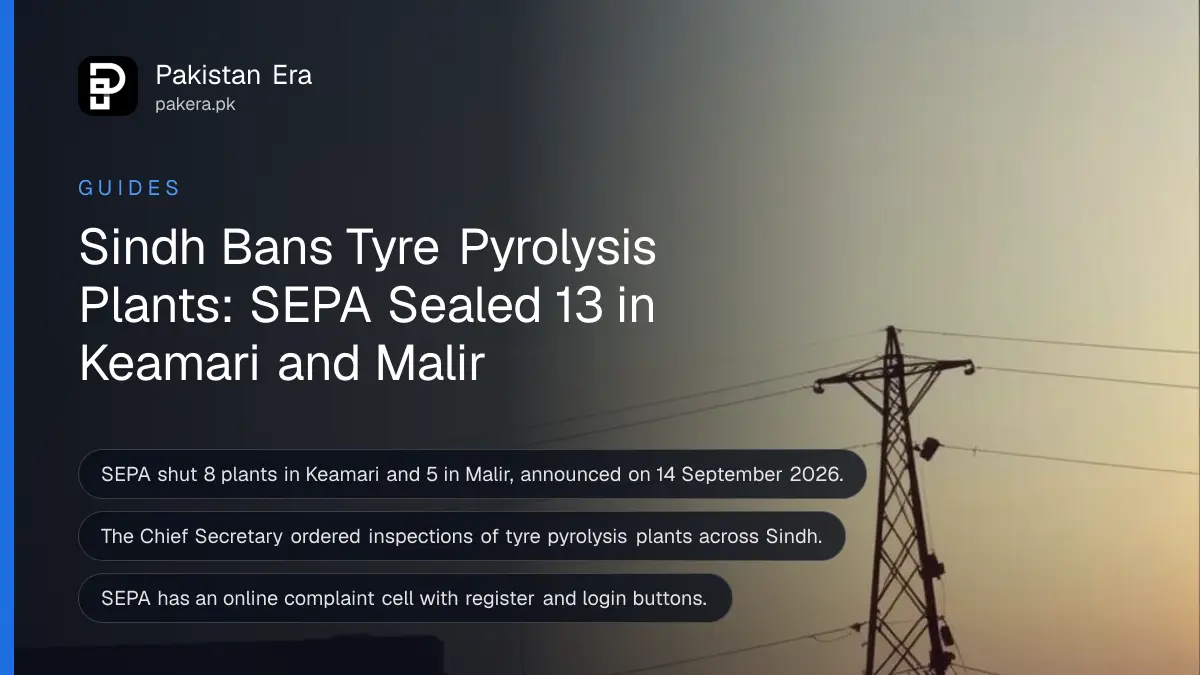
Sindh bans setting up or running tyre pyrolysis plants, and on 14 September 2026 the Sindh Environmental Protection Agency (SEPA) said it had shut 13 of them: eight in Keamari district and five in Malir district. The Chief Secretary ordered inspections of such plants across the province. If a plant near your home still burns tyres, you can file a complaint with SEPA through its online complaint cell.
Pyrolysis means heating used tyres at high temperature with very little oxygen to get oil, carbon black, steel and gas. SEPA says units without emission controls can release toxic fumes and fine particles. We read SEPA's press release, posted on its website on 14 September 2026, and its complaint page on 22 October 2026.
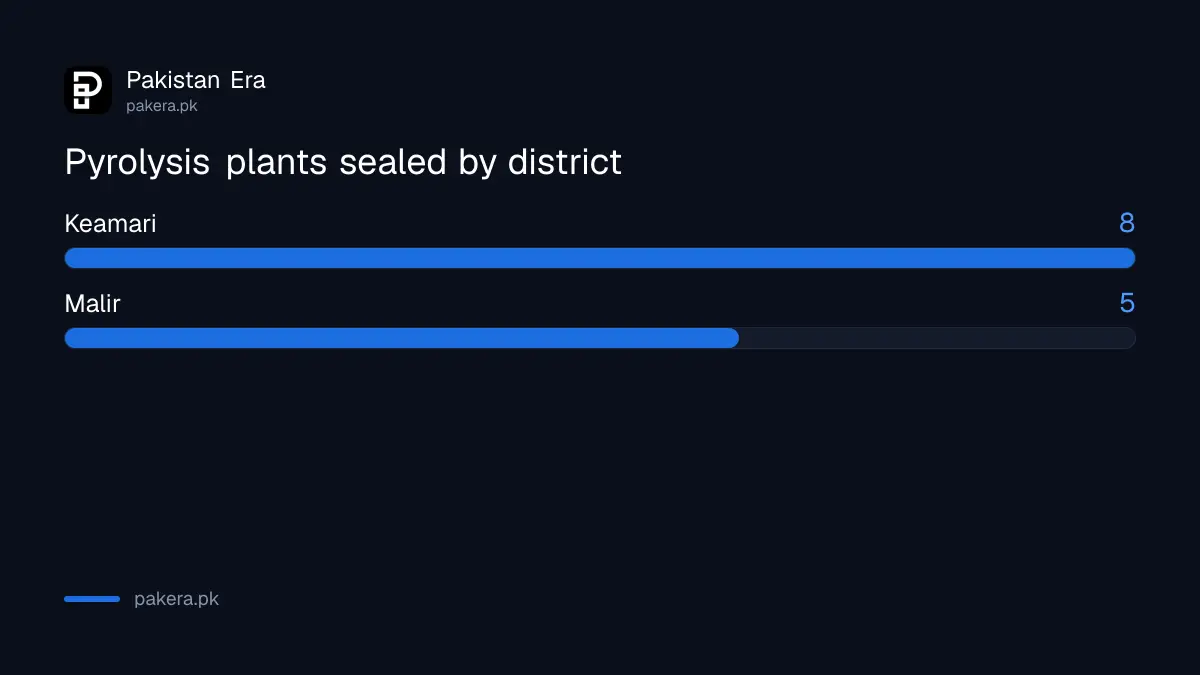
SEPA closed 8 plants in Keamari and 5 in Malir on 14 September 2026
The release says eight plants were shut in Keamari district. A separate operation closed five more in Ghaghar Phatak, Dewan Cement Road and Bin Qasim Town in Malir district. That makes 13 units, all described as operating against environmental regulations.
| District | Plants shut | Areas named |
|---|---|---|
| Keamari | 8 | Not listed in the release |
| Malir | 5 | Ghaghar Phatak, Dewan Cement Road, Bin Qasim Town |
| Total | 13 |
The action rests on a provincial ban on setting up and running these plants
The Secretary of the Environment, Climate Change and Coastal Development Department, Faisal Ahmed Uqaili, said the action was taken under the Sindh government's ban on the establishment and operation of tyre pyrolysis plants across the province. The release says inspections will continue.
We could not find the ban's notification number or date in the release, so we do not give them. The release also does not say whether any plant has permission to run. Chief Secretary Asif Hyder Shah called it a zero-tolerance policy and told departments to inspect plants province-wide.
Smoke and ash from poorly run plants can harm breathing and water
The Secretary listed toxic fumes, fine particles and volatile organic compounds as possible releases from units without filters. He said they can cause breathing difficulty, eye and throat irritation and asthma, and that long exposure is riskier for workers and nearby residents.
He added that ash, chemical residue and wastewater, if stored or dumped unsafely, can contaminate soil, surface water and groundwater. These are SEPA's statements about risk, not test results for any named plant. We did not test any air or water.
You can file a complaint on the SEPA complaint cell
SEPA's website has a "Complaint Cell" page that describes an automated system for the immediate resolution of public complaints. It offers Register and Login buttons. We opened the page but did not file a complaint, so we cannot say what fields it asks for or how fast SEPA replies.
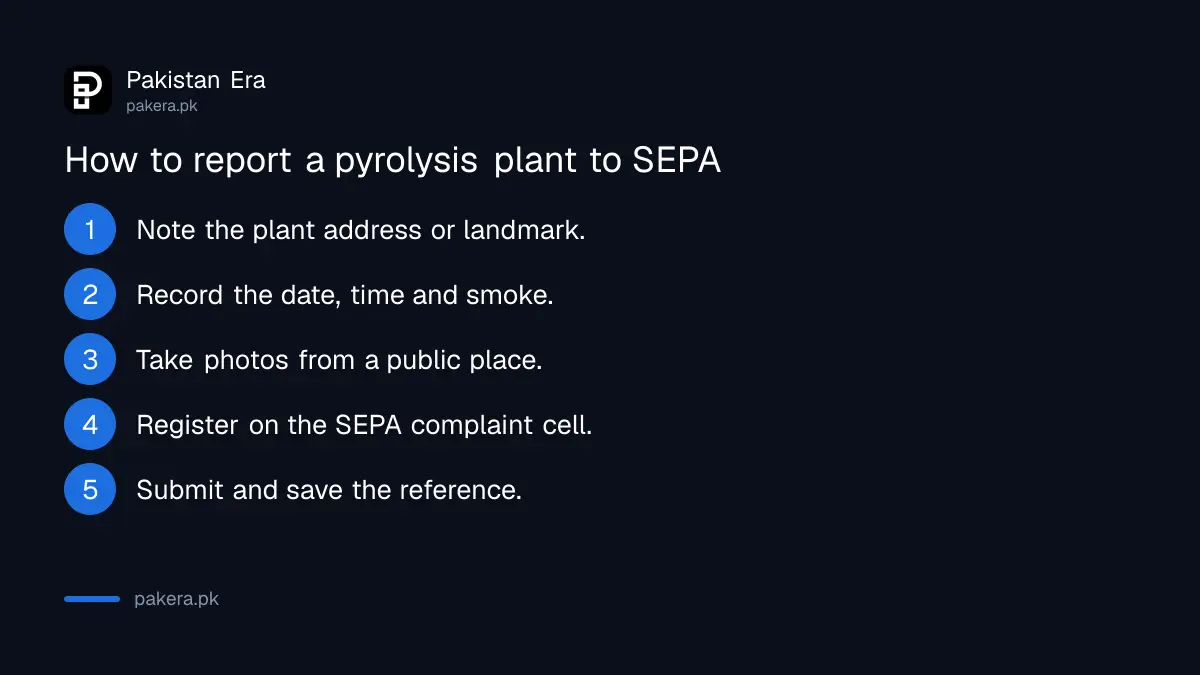
Before you file, note the plant's location, the time and the kind of smoke you see, and keep dated photos taken from a public place. The wider steps for pollution complaints in Karachi and Sindh are in the guide to reporting pollution to Sindh EPA. If garbage is also burning nearby, the steps to report garbage in Karachi help.
A complaint works best when it is specific. Give the nearest road, the name of the area and, if you know it, the name painted on the gate. Say how often the smoke appears, for example every evening, and what it does to your street: smell, soot on windows or eye irritation. SEPA's release does not promise a reply time, so keep your reference number and note the date you filed.
Neighbours can file separate complaints about the same plant. Several reports from different households help show that the problem is regular and not a single bad night. Keep your own records factual, and leave out guesses about who owns the plant.
- Note the plant's address or the nearest landmark.
- Record the date, time and what you see or smell.
- Take photos from a public place, not from inside the premises.
- Open the SEPA complaint cell page and register.
- Submit the complaint and save the reference number.
- Follow up through the channels in the guide to complaints.
Residents should not confront plant owners
Sealing is SEPA's job. Do not enter a plant, and do not argue with workers. If you see fire or an injured person, call the emergency number for your city. If you need escalation after SEPA does not reply, the Sindh Ombudsman complaint route is the next step.
Common questions about tyre pyrolysis plants in Sindh
Are tyre pyrolysis plants banned in Sindh?
SEPA's release says the action was taken under the provincial government's ban on setting up and operating them. We did not see the ban notification itself.
How many plants did SEPA close?
Thirteen on 14 September 2026: eight in Keamari and five in Malir.
Does the ban apply outside Karachi?
The release says the ban covers the province, and the Chief Secretary asked for inspections across Sindh.
What does a pyrolysis plant make?
According to the release, oil, carbon black, steel and gas from used tyres.
Who runs SEPA?
The release names Ashique Langah as Director General of SEPA.
Has the crackdown ended?
The release says inspections and enforcement will continue. We found no later release on the SEPA home page on 22 October 2026.
How we verified this
What we checked, where we read it, and what we could not confirm.
Last checked 22 October 2026. We read SEPA's press release dated 14 September 2026 in English and Urdu on the Sindh EPA website, and its complaint cell page. We did not file a complaint or visit any plant. The ban's notification number and date, the names of the closed units and any later closures were not confirmed. The health statements are SEPA's, not our test results.
About the author

Tax, Bills and Technology Writer
Ali Akhtar is a young and curious voice here at Pakistan Era. He is currently pursuing his A-Levels and has a growing interest in Pakistan’s changing industrial landscape and educational trends. Ali likes to write in a way that helps him explain and explore the world around him. His writing reflects the perspective of the new generation navigating the evolving trends of Pakistan where technology, youth innovation, and shifting opportunities are reshaping the country’s future.