Apply for a ZTBL Biofloc Fish Farming Loan: Up to Rs 2.5 Million Over 5 Years
ZTBL lends up to Rs 2.5 million for biofloc fish farming, repaid within 5 years after a 1 year grace period. See who qualifies, the papers and how to apply.
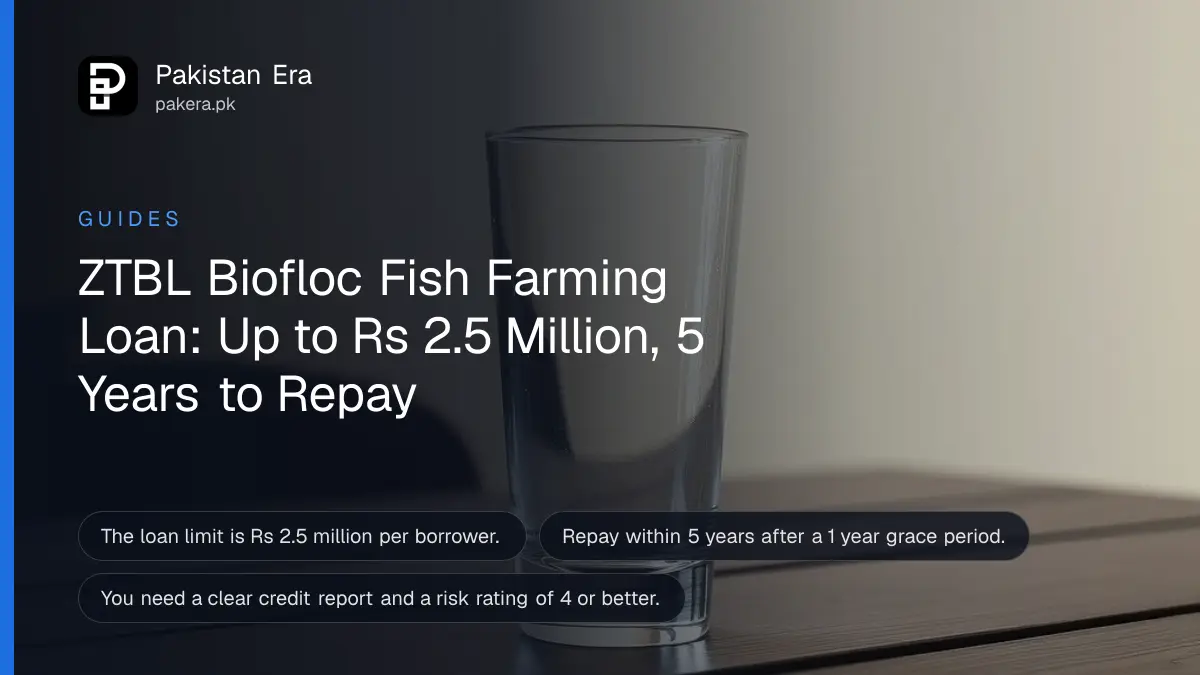
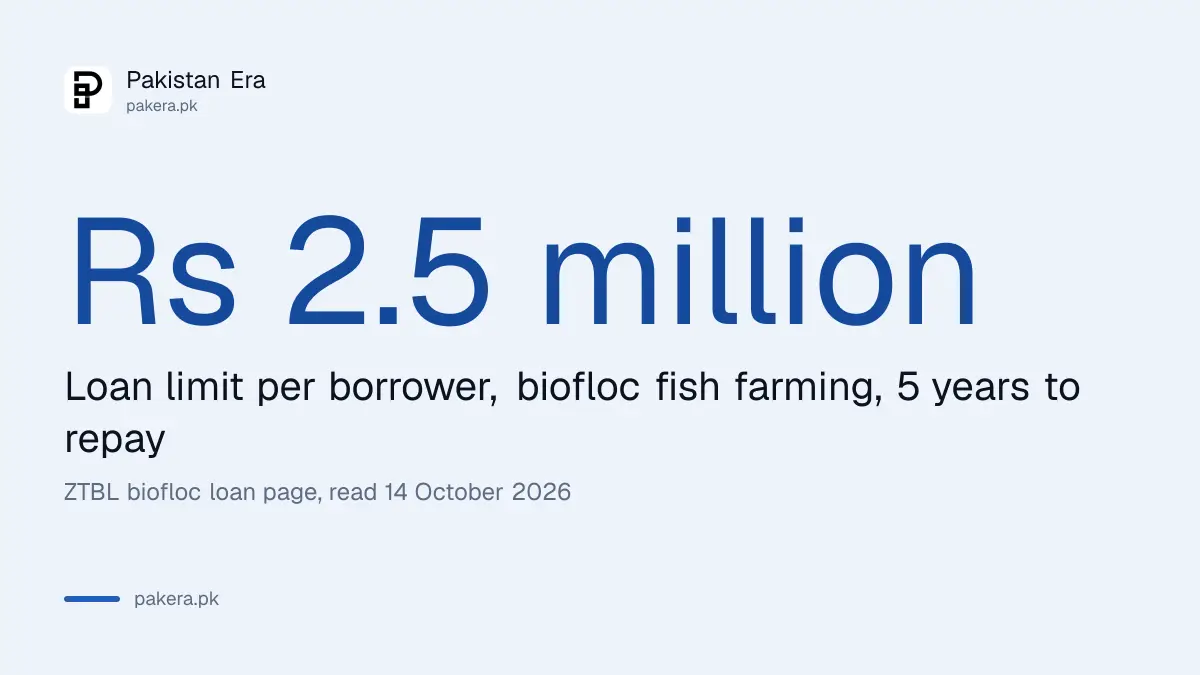
Zarai Taraqiati Bank Limited (ZTBL) lends up to Rs 2.5 million per borrower for biofloc fish farming. You repay in half-yearly instalments within 5 years, with a one year grace period, and you put in 10 per cent of the loan yourself. You need a clear credit report and a risk rating of 4 or better.
Biofloc is a way of raising fish in tanks that need little or no water exchange. ZTBL says so on its own product page, which we read on 14 October 2026. Every term below comes from that page. The page shows no markup percentage, so we quote none.
ZTBL lends up to Rs 2.5 million for biofloc fish farming
The loan limit is Rs 2.5 million per borrower or party. The money is for biofloc fish farming projects only. It is a development loan, so the prevailing markup rate on development loans applies, and the cost of credit is set by the bank's rules.
The biofloc method matters here because it saves water. A tank system with little water exchange suits places where canal or tubewell water is short. The page does not say what costs are covered, such as tanks, aerators or fish seed. Ask the branch to list what it will fund before you order anything.
Ask for the exact markup in writing before you sign. For a wider view of what ZTBL offers other farmers, see the Zarkhez-e farm loan.
A clear credit report and a risk rating of 4 or better are required
ZTBL wants creditworthy rural farmers with a good repayment history who know biofloc fish farming. You need a clear e-CIB report from the State Bank, which is its record of your past loans, and an Obligor's Risk Rating of up to 4.
The Obligor's Risk Rating is the bank's own score of how risky a borrower is. The page does not explain how it is worked out, and it does not give an age range for this loan. Ask the branch to check both before you pay for photocopies or a plan.
The word "familiar" matters. Biofloc is a technical method. If you have never run a tank system, expect staff to ask about your training or a place you have visited. Fish farming rules also differ by province, and licence rules in Sindh are explained in the Sindh fishing licence rules.
Five years to repay, with a one year grace period
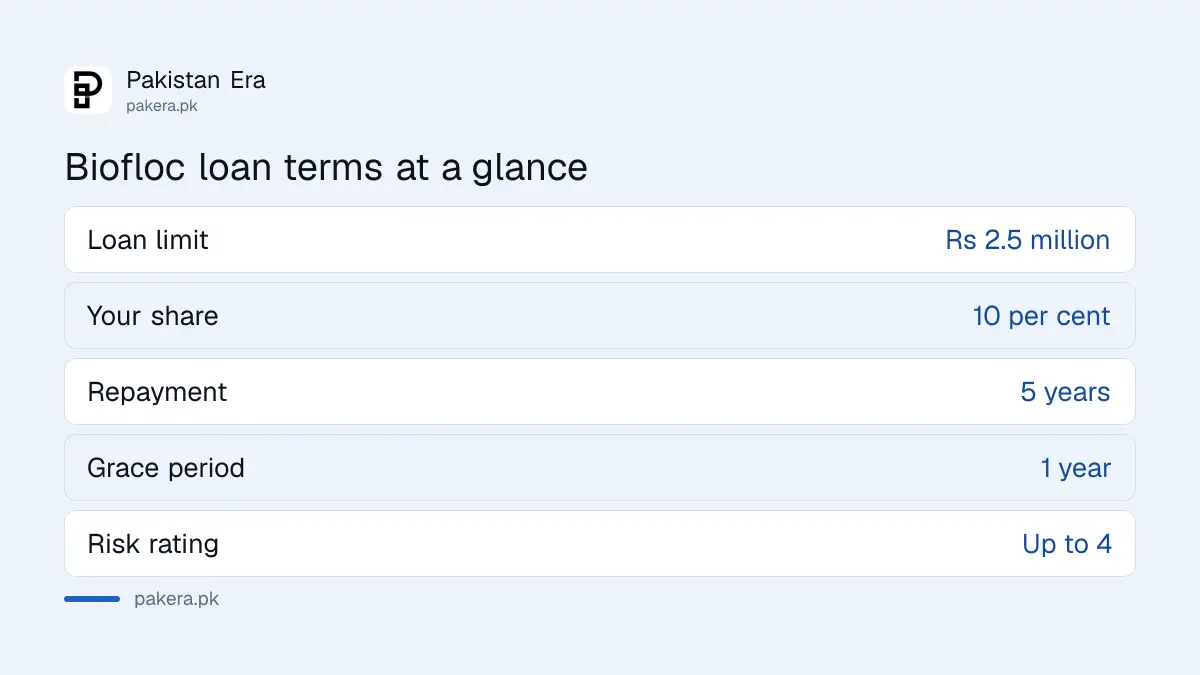
You repay within 5 years in half-yearly instalments. The first year is a grace period. So you pay twice a year, and the first instalment falls after the grace year ends.
| Item | What ZTBL's page says |
|---|---|
| Loan limit | Rs 2.5 million per borrower or party |
| Your share | 10 per cent of the loan amount |
| Repayment | 5 years, half-yearly instalments |
| Grace period | 1 year |
| Credit report | Clear e-CIB report |
| Risk rating | Obligor's Risk Rating up to 4 |
Our example: on a Rs 2,000,000 loan your 10 per cent is Rs 200,000. That is our arithmetic, not a bank figure. The page says you can pay the 10 per cent or invest it in the project, so ask which the branch prefers.
Bring four papers, and expect monthly checks after approval
You need a CNIC copy, the loan application, your agricultural passbook or Fard Jamabandi (the land record) and two recent photographs. The Credit Review Department at head office sanctions the loan. The bank then monitors your project every month.
Collateral is any tangible security the bank accepts. Monthly monitoring means staff may visit or ask for proof of progress. Keep receipts for tanks, equipment and fish seed so you can show where the money went. Weather and disease can hit a fish crop, and crop insurance claims after flood, hail or drought are explained in the crop loan insurance claims.
Apply at a ZTBL branch with a simple project plan
Take your papers to the nearest ZTBL branch. Staff will review your plan, check your credit report and send the file for sanction. Once the legal documents are signed, the money is released under the loan terms.
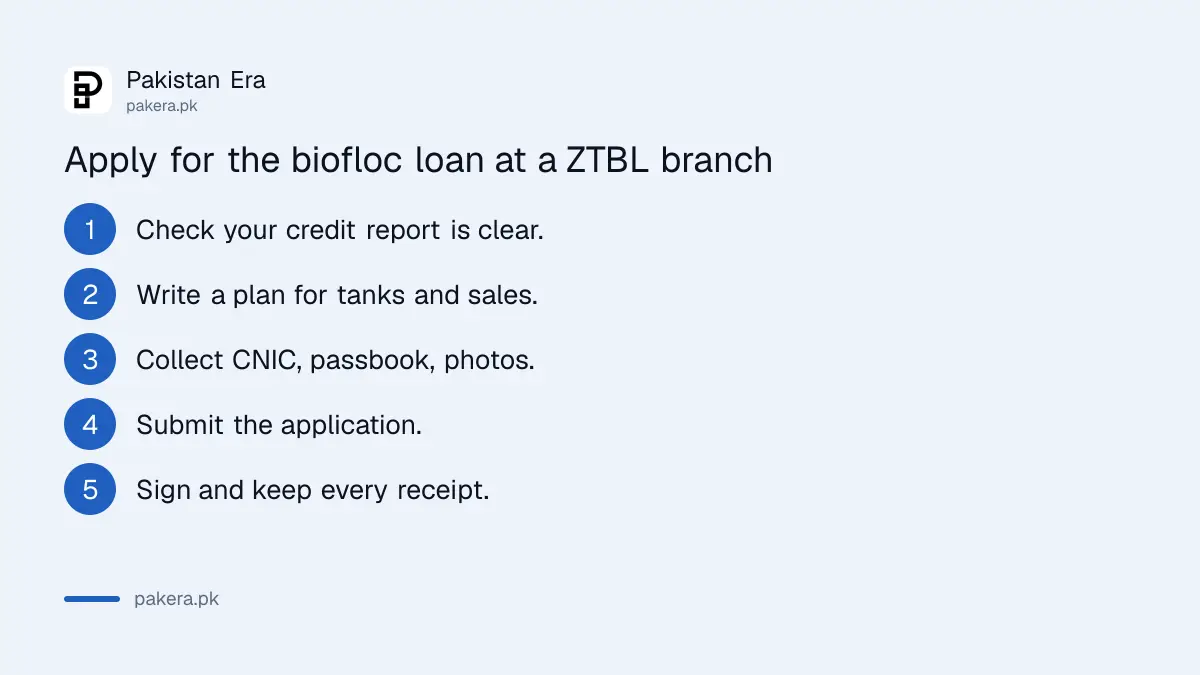
- Check your e-CIB report is clear and ask the branch about your risk rating.
- Write a plan: number of tanks, fish type, water source, feed and where you will sell.
- Work out total cost and your 10 per cent share.
- Collect the CNIC copy, passbook or Fard Jamabandi and two photographs.
- Submit the application and ask for the markup rate in writing.
- Sign the legal documents and keep receipts for every purchase.
The bank's helpline is 051-111-30-30-30, as shown on ZTBL's home page.
Common questions about the ZTBL biofloc fish farming loan
How much can I borrow for biofloc fish farming?
Up to Rs 2.5 million per borrower or party, with 10 per cent from you.
What is biofloc fish farming?
ZTBL describes it as a fish farming method that needs little or no water exchange. The page gives no more technical detail.
How long do I have to repay?
Within 5 years, in half-yearly instalments, with a one year grace period.
What is the markup rate?
The prevailing rate on development loans applies. No percentage appears on the page, so ask your branch for it in writing.
Is there an age limit for this loan?
Not on the page we read. The bee keeping loan lists 18 to 60, but this one does not, so ask the branch.
How we verified this
What we checked, where we read it, and what we could not confirm.
Last checked 14 October 2026. All terms come from ZTBL's own page, Financing for Biofloc Fish Farming, and the helpline from the ZTBL home page. We did not apply for this loan and saw no markup percentage. The bank can change terms at any time, so confirm them at a branch before you commit.
About the author

Tax, Bills and Technology Writer
Ali Akhtar is a young and curious voice here at Pakistan Era. He is currently pursuing his A-Levels and has a growing interest in Pakistan’s changing industrial landscape and educational trends. Ali likes to write in a way that helps him explain and explore the world around him. His writing reflects the perspective of the new generation navigating the evolving trends of Pakistan where technology, youth innovation, and shifting opportunities are reshaping the country’s future.