Get a Crop Loan Insurance Claim in Pakistan After Flood, Hail or Drought
Bank loan for wheat, rice, cotton, maize or sugarcane? Your crop is insured. Who pays the premium, what losses count, and how the claim reaches your loan.
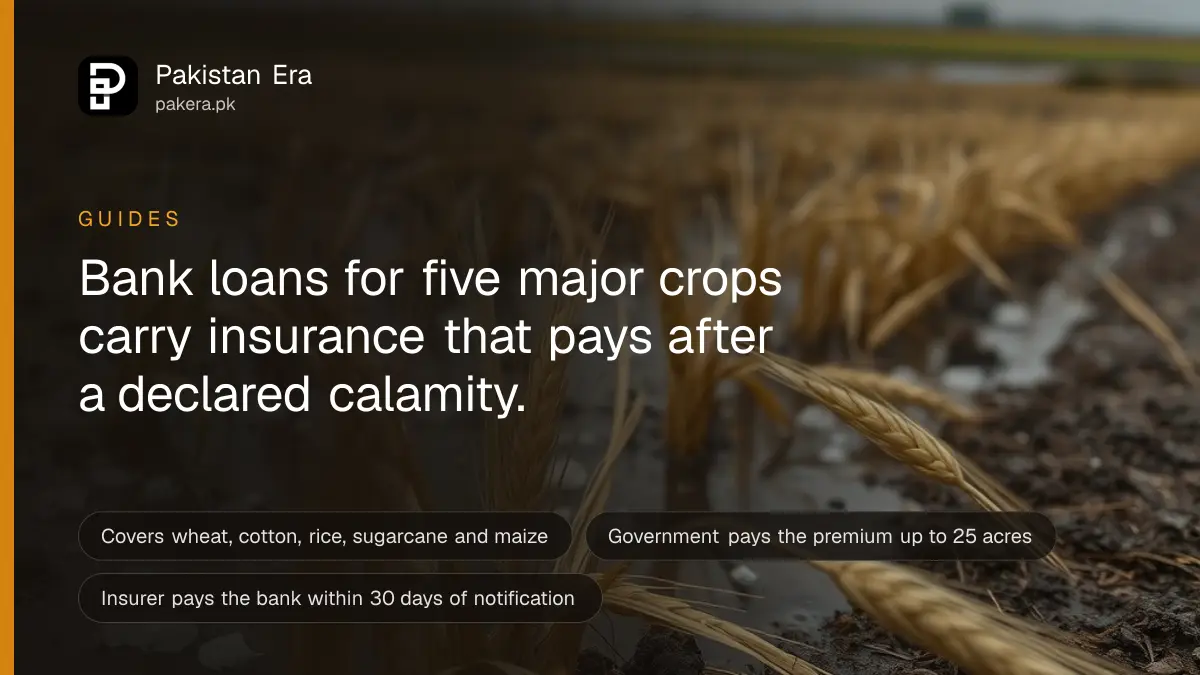
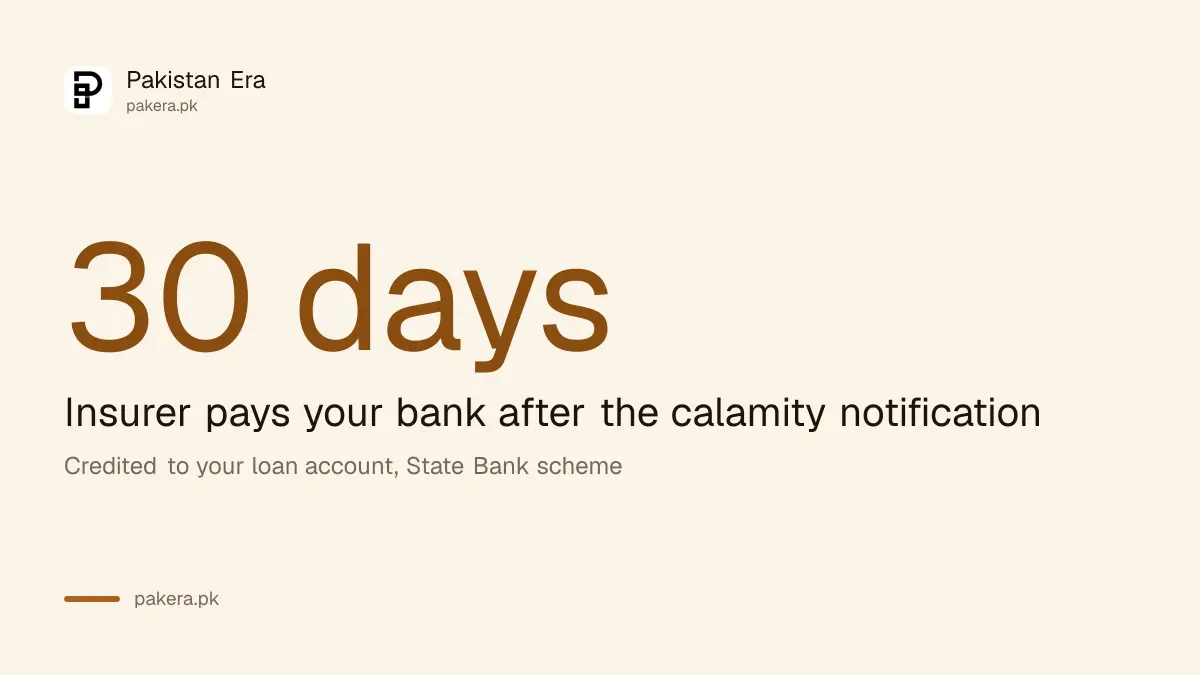
If you took a bank loan for wheat, cotton, rice, sugarcane or maize, your crop is already insured under the State Bank's Crop Loan Insurance Scheme. A claim is paid only when the provincial government declares your area calamity hit. The insurer then pays your bank within 30 days, and the money goes into your loan account.
Many farmers do not know they are covered. The cover is compulsory for every bank and microfinance bank production loan for those five crops, and the federal government pays the premium for farmers with up to 25 acres. We read the State Bank's scheme page and its term sheet. The catch is in how the claim works: you do not file it with the insurer yourself.
Who is covered by crop loan insurance
Every farmer who takes an agricultural production loan from a bank or microfinance bank for wheat, cotton, rice, sugarcane or maize. Your name and crop must be in the land revenue record. Tenants and people who lease land are covered too.
| Point | What the State Bank scheme says |
|---|---|
| Crops covered | Wheat, cotton, rice, sugarcane and maize |
| Who must have it | All production loans from banks and microfinance banks |
| Premium | At most 2% of the loan per crop per season |
| Who pays the premium | Federal government, for farmers with up to 25 acres (32 in Balochistan) |
| Cover period | From sowing or transplanting to harvest |
| Sum insured | Based on the State Bank's per acre loan limits |
The scheme splits farmers by land. Small farmers hold up to 12.5 acres in Punjab and Khyber Pakhtunkhwa, 16 acres in Sindh and 32 acres in Balochistan. Medium farmers hold above 12.5 and up to 25 acres. For both groups the bank pays the premium to the insurer, then claims it back from the government.
If you borrowed through the State Bank's Zarkhez-e farm loan, the term sheet makes this insurance compulsory for the same five crops. The cover does not reach a crop grown without a bank loan.
What losses the insurance pays for
The scheme covers production loss from natural calamities, such as excessive rain, hail, frost, cyclone, flood and drought, and from crop disease, viral or bacterial attack, and pests such as locusts. Ordinary low yield, poor farming or price falls are not covered.
- Weather: excessive rain, hailstorm, frost, cyclone, flood, drought.
- Disease: viral and bacterial attacks on the crop.
- Pests: infestation such as a locust attack.
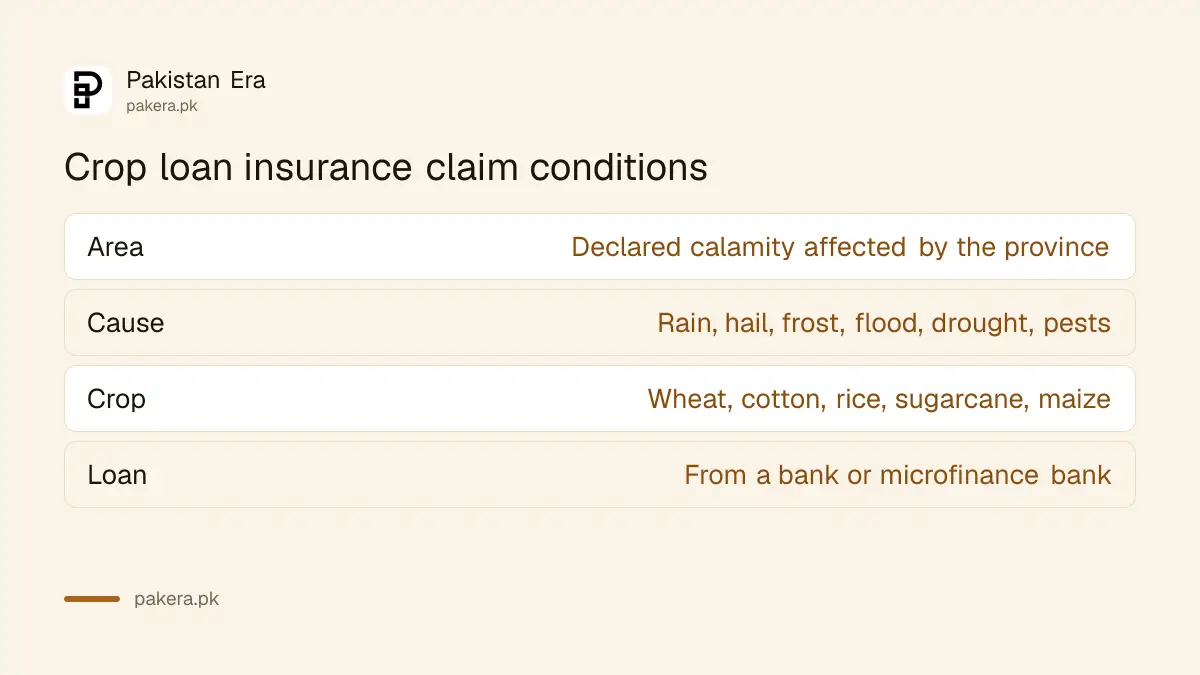
Two conditions must both be true. Your crop must be in an area that the provincial government or revenue authority has declared calamity affected. And the damage must come from one of the perils above. A hailstorm that hits only your village may never get a calamity declaration. That is the main reason claims fail.
How the crop insurance claim is paid
The province declares the calamity, the insurer checks the claim with the bank, and the insurer pays the bank within 30 days of that notification. The bank credits it to your loan account. You do not receive a cheque, but your loan goes down by the claim amount.
The scheme asks provinces, AJK and Gilgit-Baltistan to issue the calamity notification within a fortnight of the event. So the timeline, at best, is about two weeks for the declaration and 30 days for the payment. The insurer's total payouts in a year are capped at 300% of the premium it received, which can shrink claims after a very bad season.
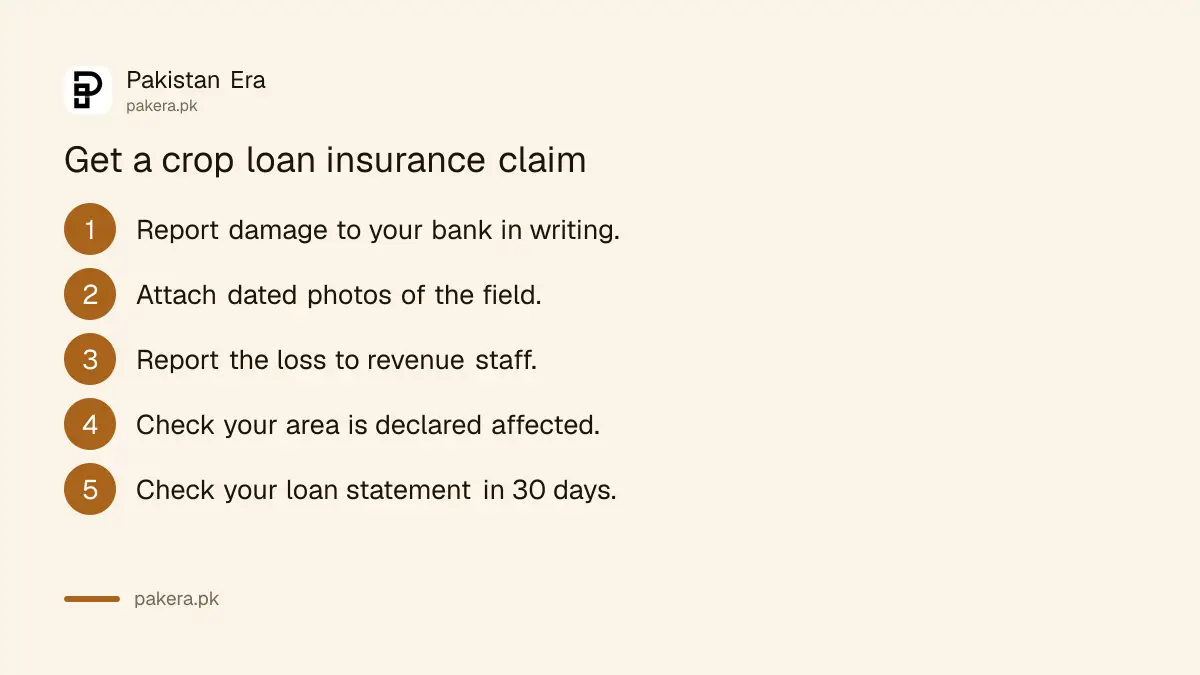
- Tell your bank branch in writing as soon as the crop is damaged. Give your loan number, the khasra numbers of the field, the crop and the date of damage.
- Attach photos of the damaged field, taken on the day if possible, and keep copies.
- Report the loss to the revenue staff who survey crop damage in your area. Their survey feeds the government's decision on a calamity declaration.
- Watch for the calamity notification covering your mauza or tehsil. Ask the bank whether your area is on it.
- Check your loan statement about 30 days after the notification. The claim should show as a credit.
Papers to keep for a crop loss claim
Keep your loan agreement, the insurance cover note or certificate from the bank, your fard showing the land and crop, photos of the damage, and a copy of your written damage report with the bank's received stamp. These settle most disputes quickly.
- Loan papers showing the crop, season and amount.
- Insurance proof. Ask the branch for the insurer's name and your cover details. The scheme says banks must give copies of their insurance agreements to the State Bank and the Ministry of Finance, so the branch has this information.
- Land record. A current fard of your land in Punjab, or the equivalent in other provinces, matching the khasra numbers on the loan.
- Damage evidence. Dated photos and the received copy of your written report.
Where to complain if the claim is not credited
Start with a written complaint to your bank branch. If the bank does not answer properly, go to the Banking Mohtasib or the State Bank's complaint portal. If the insurer has rejected the claim, the Federal Insurance Ombudsman hears it free of charge.
Bank failures are things like not passing on your damage report, not paying the premium, or not crediting a claim the insurer has paid. Those go to the Banking Mohtasib after the bank has had its chance. A refusal by the insurance company is a different case, and you can complain when an insurance claim is refused to the Insurance Ombudsman.
Be honest with yourself about the declaration first. If your area was never declared calamity affected, the scheme as written does not pay, and a complaint will not change that.
Common questions
Is crop insurance compulsory in Pakistan?
It is compulsory on bank and microfinance bank production loans for wheat, cotton, rice, sugarcane and maize, under the State Bank's Crop Loan Insurance Scheme.
Who pays the crop insurance premium?
The federal government pays it for farmers with up to 25 acres, or 32 acres in Balochistan. The premium is at most 2% per crop per season.
Do I get the claim money in cash?
No. The insurer pays the bank, and the bank credits your loan account. The claim reduces what you owe.
How long does a crop insurance claim take?
The scheme expects the calamity notification within a fortnight of the event, and the insurer's payment within 30 days after that notification.
Can a tenant farmer claim crop loan insurance?
Yes. The scheme applies to tenants and lessees who take production loans, with the crop entered in the land revenue record.
My crop was damaged but my area was not declared. Can I still claim?
Under the scheme's terms, no. A valid claim needs the area declared calamity affected by the provincial government or revenue authority.
How we verified this
What we checked, where we read it, and what we could not confirm.
Last checked on 2 October 2026. We read the State Bank of Pakistan's Crop Loan Insurance Scheme page and its linked term sheet (CLIS.pdf, three pages), which set the crops, the premium cap, the government subsidy, the perils, the cover period, the two claim conditions, the fortnight for a calamity notification and the 30 day payment to banks. The Zarkhez-e rule is from the State Bank's term sheet for that loan. The advice to report damage in writing and keep photos is our own practical advice, not a scheme rule. We did not file a claim ourselves.
About the author

Public Services and Education Journalist
Fajr Riaz is a journalist and content writer at Pakistan Era, based in Lahore. She covers the questions people meet in everyday life in Pakistan: how a public service works, what a change in the rules means, and where to find a reliable answer.