Bringing Food From Pakistan to the UK: What Is Allowed, What Is Banned and the Limits
What food you can bring from Pakistan to the UK: meat, ghee and milk mithai banned, fish up to 20kg, honey 2kg, mango and dates allowed, and the £5,000 fine.
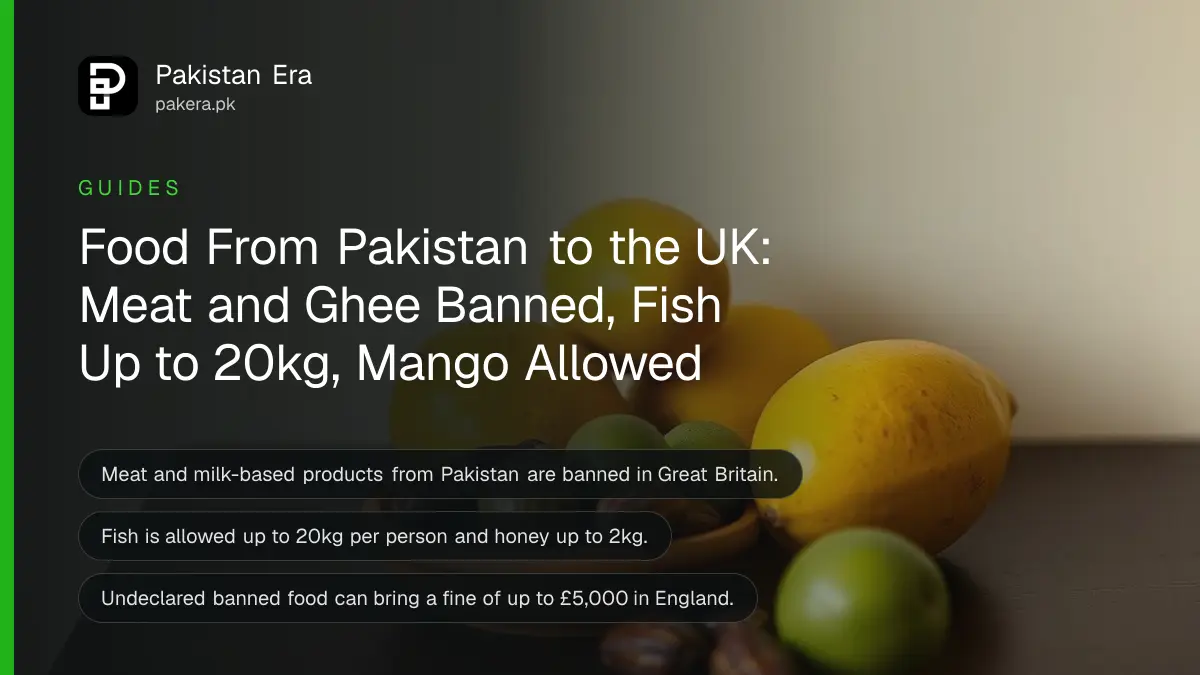
You cannot bring meat, meat products, milk or milk-based products from Pakistan into Great Britain, except up to 2kg of powdered infant milk, baby food or special medical food. Fish is allowed up to 20kg, honey up to 2kg. Mango, banana, dates, guava and citrus are allowed without a certificate. Undeclared banned food can bring a fine of up to £5,000 in England.
Pakistani families flying to Manchester, Birmingham or London often pack shami kebabs, mithai, desi ghee and achar for relatives. Some of these are banned outright. Border Force takes them away at the airport, and hiding them in a suitcase risks a fine.
| Food from Pakistan | Allowed into Great Britain? |
|---|---|
| Meat, kebabs, nihari, haleem, sausages | No |
| Milk, desi ghee, khoya, paneer, milk mithai | No |
| Powdered infant milk, baby food, medical food | Yes, up to 2kg per person, sealed |
| Fish and prawns, fresh, dried or cooked | Yes, up to 20kg per person |
| Honey | Yes, up to 2kg per person |
| Mango, banana, dates, guava, citrus, coconut | Yes, no certificate needed |
| Most other fruit and vegetables | Only with a plant health certificate |
| Bread, biscuits, chocolate, packaged noodles | Yes, if no meat or fresh cream |
Meat and milk products from Pakistan are banned
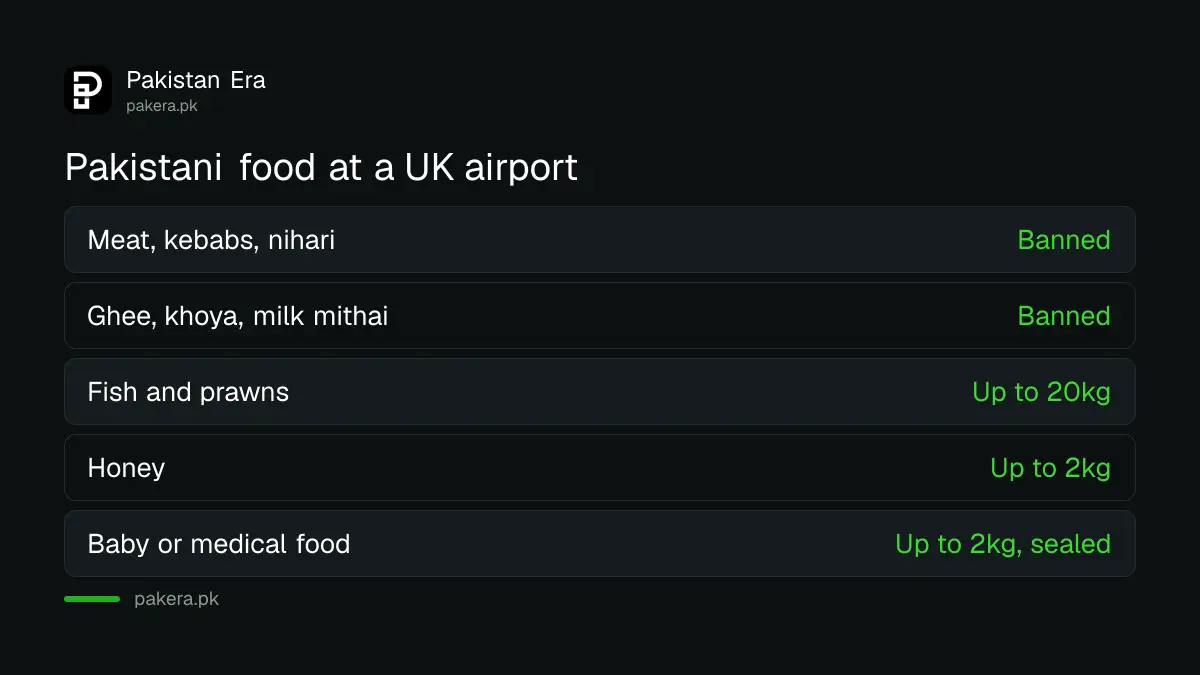
The UK government's rules for travellers from outside the EU say you cannot bring in meat or meat products, or milk or milk-based products. The only dairy exceptions are powdered infant milk, infant food and special food needed for medical reasons, up to 2kg per person.
That rules out frozen kebabs, cooked qorma in a tub, dried meat, and anything made mainly from milk. Desi ghee, khoya, paneer and milk sweets such as barfi, kalakand and rasmalai are milk-based products. Leave them at home or buy them in the UK.
The baby food and medical food exceptions have conditions. They must not need a fridge before opening, and they must be in branded, unopened packets unless you are using them on the journey.
Fish, honey and some animal products have weight limits
From outside the EU you can bring up to 20kg of fish per person in total. This covers fresh fish, which must be gutted, and dried, cooked, cured or smoked fish, and prawns. Honey is limited to 2kg per person. Caviar needs a separate wildlife permit.
| Product | Limit per person | Condition |
|---|---|---|
| Fish, fish products, prawns | 20kg in total | Fresh fish must be gutted |
| Honey | 2kg | None stated |
| Powdered infant milk, baby food, medical food | 2kg | No fridge needed, sealed branded pack |
| Caviar | Not without a permit | Needs a CITES permit |
Mango, guava and dates are allowed without a certificate
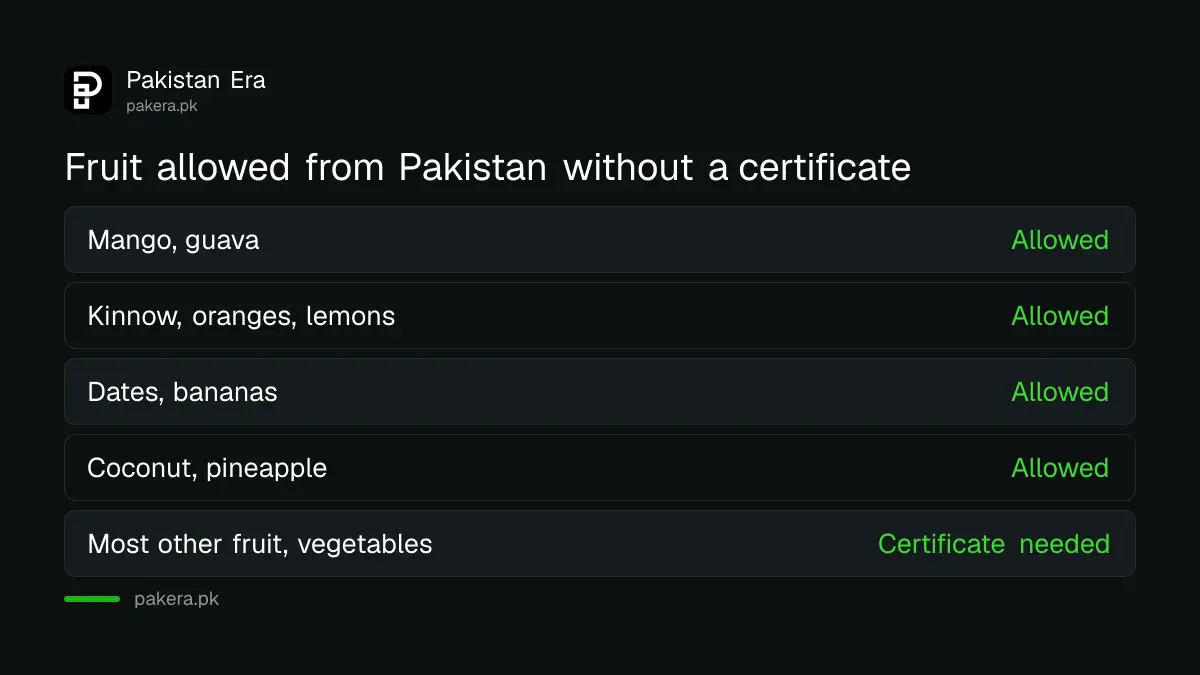
Most fruit and vegetables from outside the EU need a phytosanitary, or plant health, certificate. A short list does not: pineapple, kiwi, coconut, citrus fruits, kumquat, persimmon, durian, curry leaves, banana and plantain, mango, dates, passion fruit and guava.
Pakistani favourites on that list include mango, guava, kinnow and other citrus, dates and bananas. Peeled and processed nuts, nut butters, rice and processed, packaged plant products are also allowed. Fruit or vegetables not on the list, such as fresh paan leaves, chillies or vegetables from a farm, need a certificate.
Bread, biscuits and sweets without dairy are fine
The rules let you bring bread, cakes without fresh cream, biscuits, chocolate and sweets, pasta and noodles without meat, packaged soups and flavourings, and processed packaged plant products, from any country. So packed biscuits, rusks, nimko and sealed shop snacks are normally fine, as long as they contain no meat.
Chocolate and confectionery with a lot of unprocessed dairy are excluded, which is why milk-heavy mithai is a risk. Sealed, shop-packed spices and masala mixes fall under processed and packaged plant products. If you are unsure about any item, declare it.
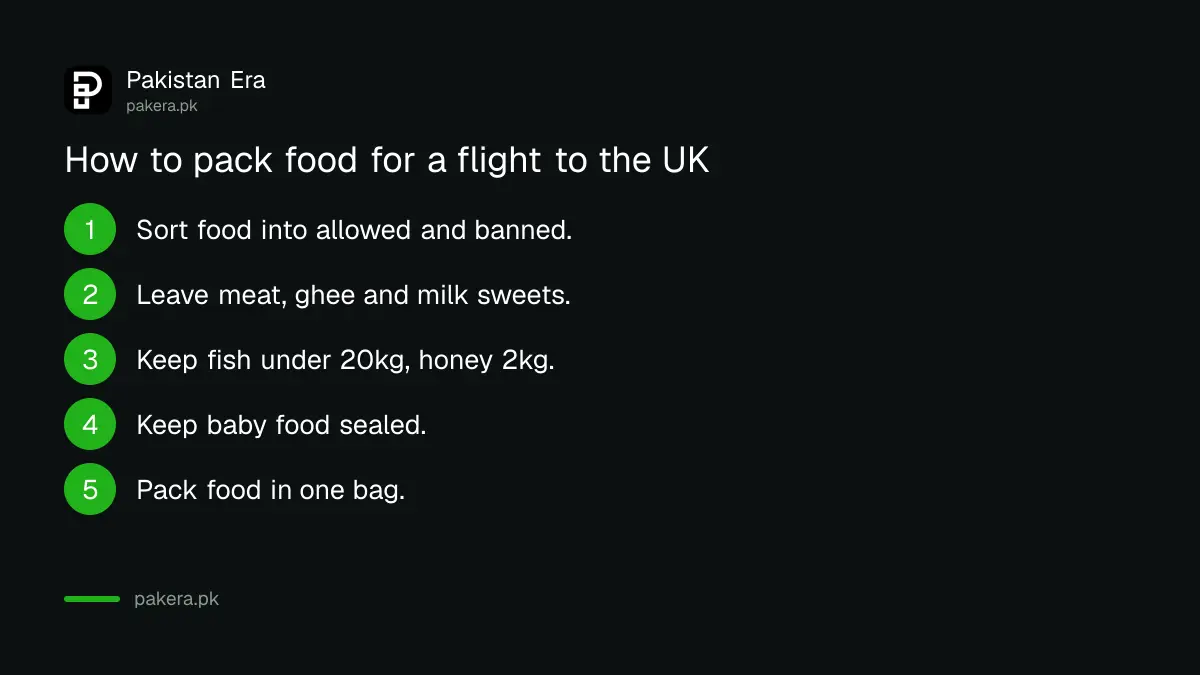
- Before packing, sort food into allowed, limited and banned using the table above.
- Leave all meat, ghee and milk sweets at home.
- Weigh fish and honey so you stay under 20kg and 2kg each.
- Keep baby food and medical food in sealed, branded packs.
- Keep food together in one bag so it is easy to show.
- On arrival, use the red channel and ask Border Force if you are unsure about anything.
Declare food in the red channel or risk a £5,000 fine
If you declare banned food to Border Force at customs, they take it away and destroy it. If you do not declare it, you could be fined up to £5,000 in England or be prosecuted. For any item you are unsure about, speak to an officer in the red channel.
Border Force can also seize items brought in above the limits, and bags or clothes contaminated by banned food. If you think something was seized wrongly, you can appeal, and a successful appeal can bring compensation. Check your airline's own limits too, using the PIA baggage rules, and see the UK visit visa guide if you are still applying. Coming back, Pakistan's own allowances are in the guide to customs duty on personal baggage.
Common questions
Can I take mithai from Pakistan to the UK?
Milk-based mithai such as barfi, kalakand, gulab jamun with khoya and rasmalai counts as a milk-based product, which is banned from outside the EU. Sealed sweets without much dairy are allowed. When unsure, declare them.
Can I take desi ghee to the UK?
No. Desi ghee is made from milk, and milk-based products from Pakistan are not allowed into Great Britain. Only powdered infant milk, baby food and special medical food are exempt.
Can I bring mangoes from Pakistan to the UK?
Yes. Mango is on the UK government's list of fruit you can bring from outside the EU without a plant health certificate. No weight limit is given for it in the rules for travellers.
How much fish can I bring from Pakistan to the UK?
Up to 20kg per person in total, including fresh, dried, cooked, cured or smoked fish and prawns. Fresh fish must be gutted.
What happens if I do not declare banned food at a UK airport?
You could be fined up to £5,000 in England or prosecuted. If you declare it, Border Force simply takes the food and destroys it, so declaring is always the safer choice.
Do the same rules apply in Northern Ireland?
No. These rules cover Great Britain: England, Scotland and Wales. Northern Ireland has separate rules, so check them before flying to Belfast.
How we verified this
What we checked and where we read it.
We checked the UK government guide "Bringing food into Great Britain" on GOV.UK on 24 November 2026, using its overview page and the printable version of the whole guide, which covers meat, dairy, fish and animal products, fruit, vegetables, nuts and seeds, and what happens if you break the rules. The guide does not mention spices, pickles or eggs by name for travellers from outside the EU, so the advice on packaged spices follows its "processed and packaged plant products" line.
Free on WhatsApp
Get last dates and rule changes on WhatsApp
We post new last dates, fee changes and fixes for common problems, a few short posts a day.
Follow Pakera on WhatsAppOther followers cannot see your number.
Pakera Solves It
Which online process wasted your time this week?
A portal that will not load, a form nobody explains, a complaint that went nowhere. Tell us. Every week we pick one, solve it step by step and publish the answer.
About the author

Global Affairs & Political Economy Writer
Muhammad Hatim is a book lover who started writing because he enjoys it. At Pakistan Era he writes about international relations, geopolitics and the global economy, with a particular interest in South Asia and the forces behind current events.