How to Check a DLS Target When Rain Stops an ODI in Pakistan
Work out a DLS target yourself when rain hits a Pakistan ODI: read the ICC resource table, apply the formula and see a worked example. Follow the steps here.
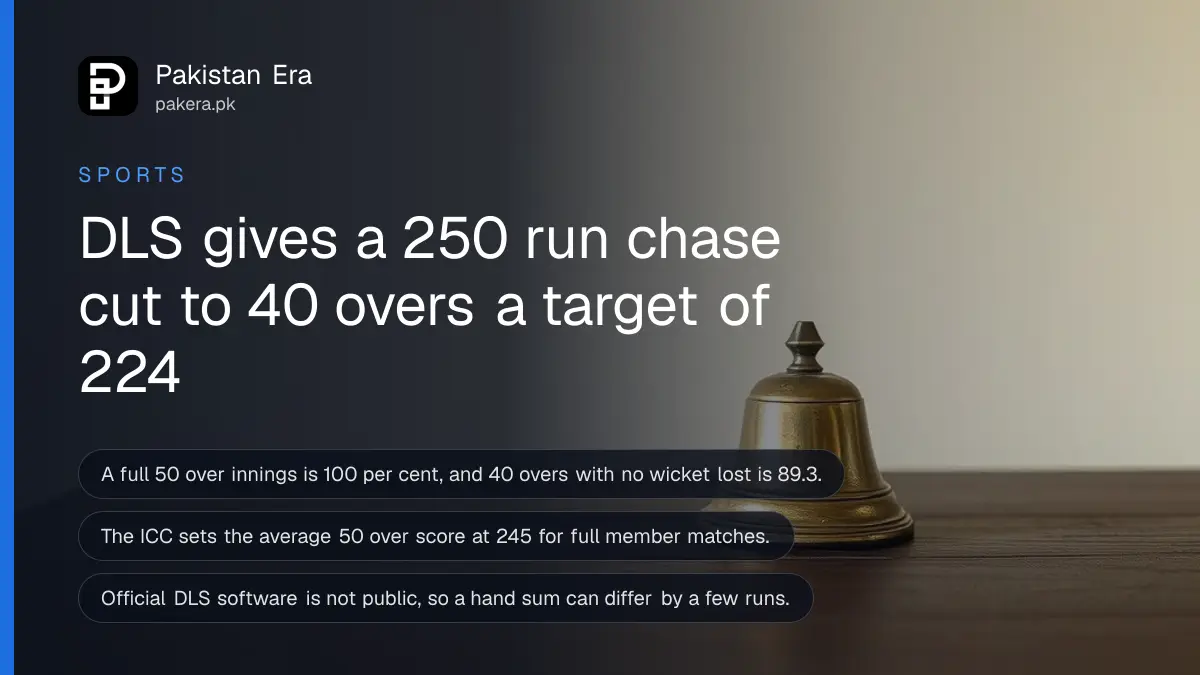
Short answer: Look up the share of batting resources each side had, then scale the first team's score by that ratio and add one run. A full 50-over innings is 100 per cent. A side with 40 overs and no wickets lost has 89.3 per cent. The ICC's own table gives every figure.
Rain is the one opponent no squad can pick. With three ODI matches in Rawalpindi and four in Lahore for the tri-series, a washed-out afternoon is a real possibility, and the number on the scoreboard after a shower often looks strange. This page shows where that number comes from, using the ICC's published method.
We read the ICC's Duckworth-Lewis-Stern page and the two methodology documents it links on 14 October 2026. One point matters before we start. The ICC document explains the older Standard Edition table in full. The official software used in international matches is separate and is not released to the public, so a scoreboard figure can differ from your hand sum by a few runs.
DLS compares what each side had left to bat with
The ICC says the method is a formula to find the fair winner when weather interrupts a match. It does not count overs alone. It counts how many overs remain and how many wickets are in hand, because ten wickets in hand lets a team score faster than two.
The ICC calls this idea "resources". A full 50-over innings with ten wickets is 100 per cent. Every other state of the game is a smaller percentage. Once rain takes overs away, both sides are measured against the same scale, so the chasing side is not punished for losing time it could not control.
The ICC document says the table covers every single ball of a game of up to 50 overs per side. The same table and the same method are used whatever the match length. That is why the method works for a shorter game as well.
The table shows how fast resources fall
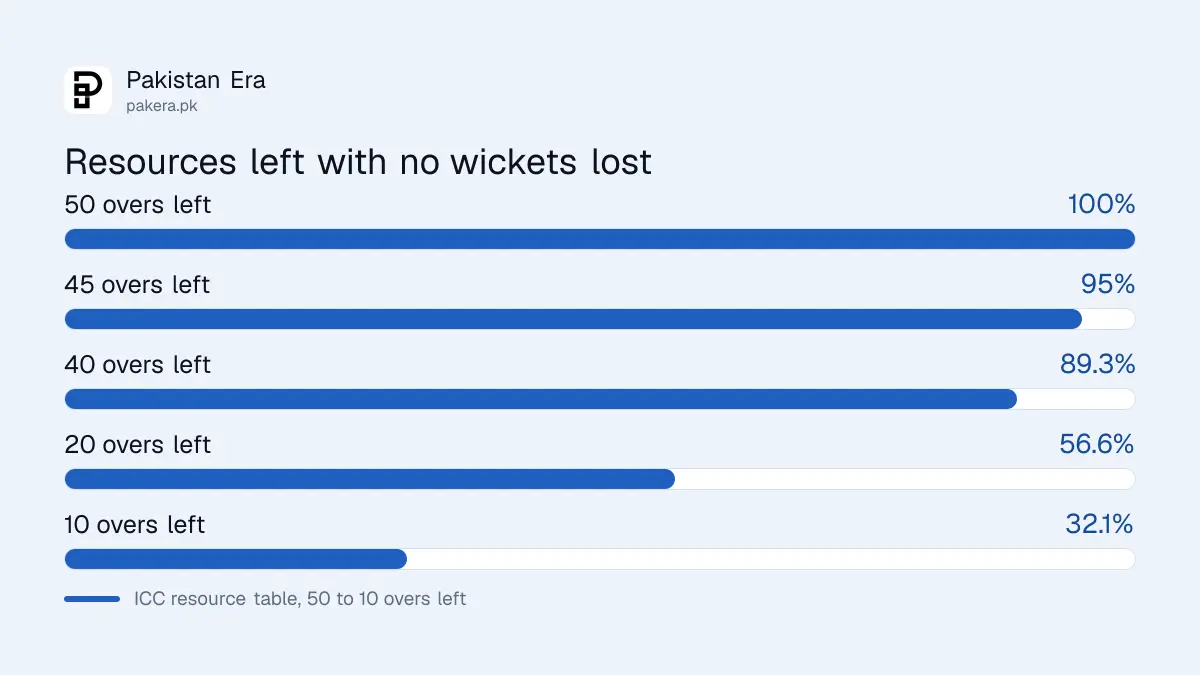
With no wickets lost, 50 overs left is 100.0 per cent, 45 overs is 95.0, 40 overs is 89.3, 20 overs is 56.6 and 10 overs is 32.1. Lost wickets cut the number further, so 50 overs with one wicket down is already 93.4.
| Overs left | 0 wickets lost | 1 wicket lost | 3 wickets lost |
|---|---|---|---|
| 50 | 100.0 | 93.4 | 74.9 |
| 45 | 95.0 | 89.1 | 72.5 |
| 40 | 89.3 | 84.2 | 69.6 |
| 20 | 56.6 | 54.8 | 49.1 |
| 10 | 32.1 | 31.6 | 29.8 |
| 5 | 17.2 | 17.0 | 16.5 |
Look at the drop between the first and last rows. Losing the last five overs of an innings costs far less than losing the first five, because late overs are worth less when few wickets are left. The numbers above come straight from the ICC's over-by-over sheet.
Five steps turn the table into a target
Find the resources each team had, call them R1 and R2, then compare them. If R2 is smaller, shrink the first team's score by the ratio and add one run. If R2 is larger, add extra runs from the average score. If they match, add one run.
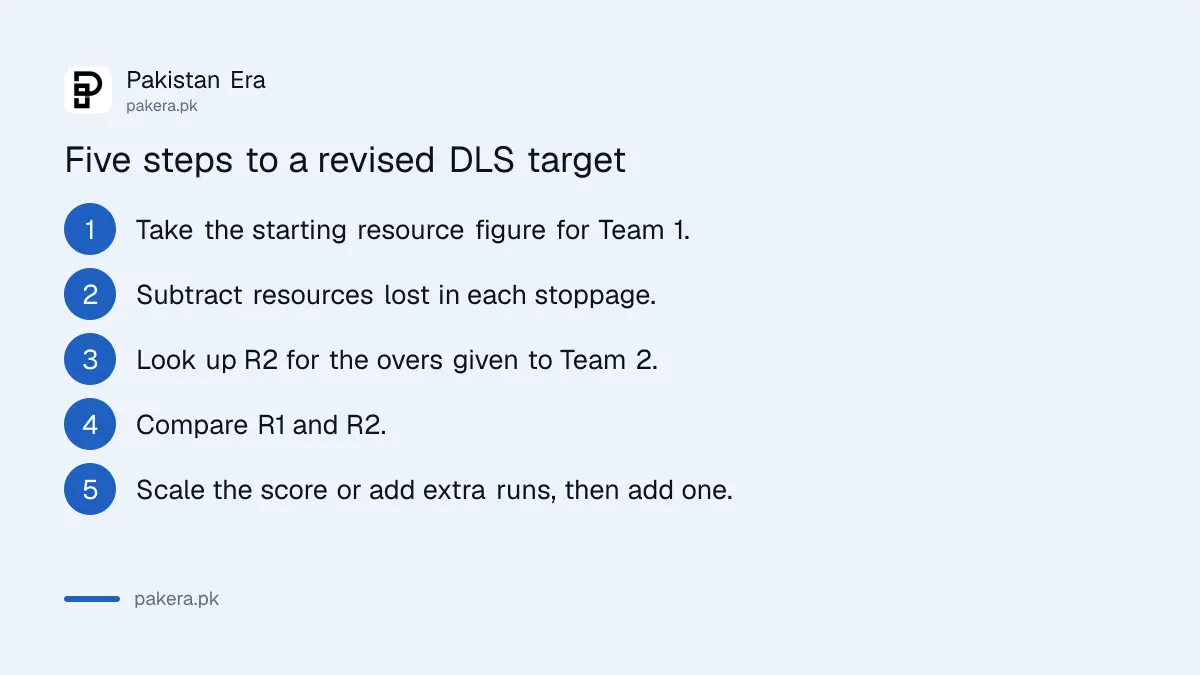
- Note the overs per innings at the start. Take the starting resource figure for Team 1 from the table.
- Find the resources lost in each stoppage: the percentage when play stopped, minus the percentage when it restarted, at the same wickets lost.
- Take the lost percentage away from the start figure. That gives R1 for the team batting first.
- Look up R2 for the overs given to the chasing side, with no wickets lost.
- Apply the formula: if R2 is below R1, target = (score x R2 / R1) + 1, rounded down.
If R2 is above R1, the formula changes to score + (R2 minus R1) x G50 / 100 + 1. G50 is the average 50-over total. The ICC sets it at 245 for matches between full members or first-class teams, so it covers Pakistan's home internationals. It is 200 for under-19, under-15, women's and associate matches.
A worked example shows the sums
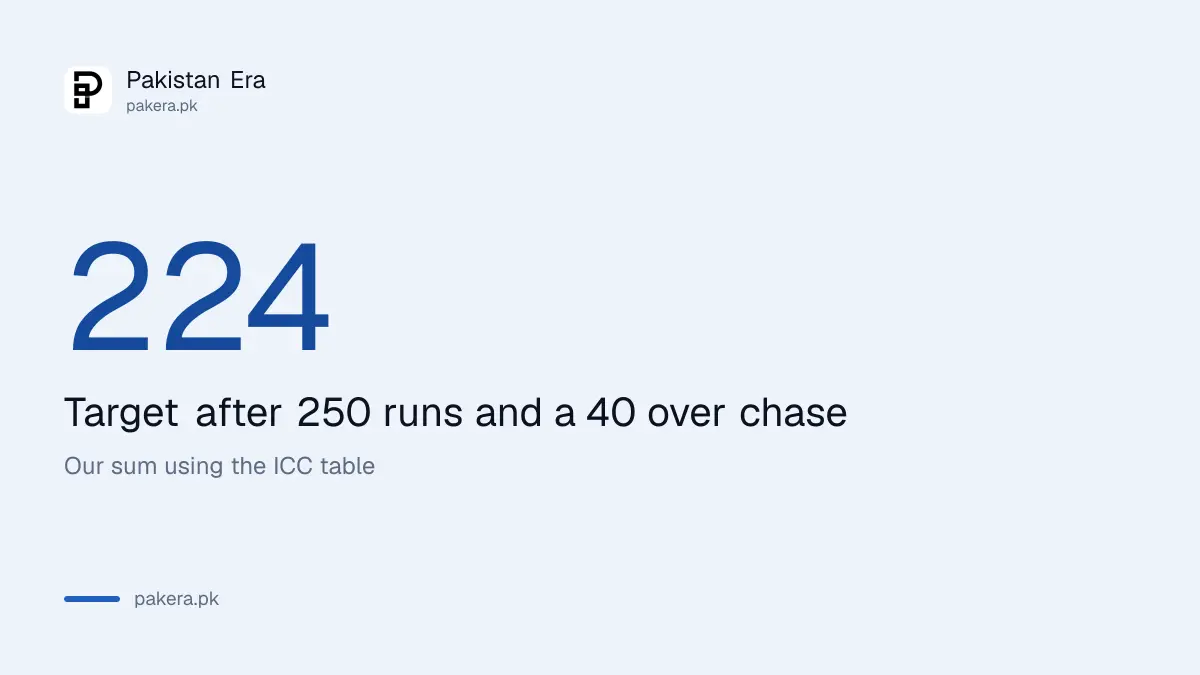
Say Pakistan bat first and make 250 in 50 overs, then rain cuts the chase to 40 overs. R1 is 100 and R2 is 89.3. The target is 250 x 0.893, which is 223.25, plus one run, so 224. A score of 223 would tie the match.
The ICC gives its own example for an interruption in the first innings. A team is 79 for 3 after 20 overs, loses 10 overs, and finishes on 180 in 40. Resources lost are 61.6 minus 49.1, which is 12.5, so R1 is 87.5. The chasing side has 89.3, and the target becomes 185.
Notice that the target went up even though the first innings was cut. The chasing side had slightly more resources, so the method asks for a few extra runs. The ICC document also says slow over rates carry no overs penalty in the calculation, so a late start by one team does not change the maths.
If rain ends the match early, the result is decided against a "par score", which is the same formula without the extra run. If Team 2 is above par, they win. If equal, it is a tie. If below, Team 1 win. For ticket-holders worried about a washout, the PCB refund rules for rain and washouts explain what happens to your money.
The official calculator is not public
An ICC memo dated 4 September 2018 says the DLS calculator and its outputs are copyright and cannot be made available to the general public. It also makes a DLS Match Manager mandatory for ODIs and T20Is involving full members, so a trained official runs the real software.
For fans, that means the sheet above is a good check of the logic and a close guide to the number, not a replacement for the official figure shown on the ground. The memo also says the Standard Edition tables remain valid for lower-level competitions, which is why the paper method still matters at club and school level.
When you follow the tri-series matches, which start at 1 pm PKT, you can keep this page open and test the target yourself when the covers come on. The playing rules for the series, including powerplays and bowler limits, sit in a separate explainer.
Common questions
What does DLS stand for?
DLS stands for Duckworth-Lewis-Stern, the method the ICC adopted to set fair targets when weather interrupts a match. It is named after the people who built and later updated it.
Why is the target not just a proportion of overs?
Because wickets in hand matter as well as overs. The ICC says resources do not fall in direct proportion to overs, so a simple run rate method would be unfair to one side.
Can I download the official DLS calculator?
No. The ICC memo says DLS cannot be made available to members of the general public. The published Standard Edition table and formula are open to read on the ICC website.
What is G50?
G50 is the average total in a 50-over innings used when the chasing side gets extra resources. The ICC sets it at 245 for full member and first-class matches and 200 for lower levels.
What happens if the scores are tied under DLS?
If the chasing side finishes one run short of the revised target, the match is tied. If play ends early, equal scores to the par score also give a tie.
How we verified this
What we checked, where we read it, and what we could not confirm.
Last checked on 14 October 2026, Pakistan time. We read the ICC page on the Duckworth-Lewis-Stern method, its methodology document and the resource table it links. We did not see the live DLS software, so the worked example for 250 runs is our own sum using the ICC table and formula, not a figure from a match.
About the author

Tax, Bills and Technology Writer
Ali Akhtar is a young and curious voice here at Pakistan Era. He is currently pursuing his A-Levels and has a growing interest in Pakistan’s changing industrial landscape and educational trends. Ali likes to write in a way that helps him explain and explore the world around him. His writing reflects the perspective of the new generation navigating the evolving trends of Pakistan where technology, youth innovation, and shifting opportunities are reshaping the country’s future.