Cut Salt to Under 5 g a Day in Pakistan: WHO Limit and How to Read Labels
WHO says adults should eat under 5 g of salt, under 2,000 mg of sodium, a day. Divide the sodium on a label by 400 to get salt in grams, then cut down.
The World Health Organization (WHO) says adults should eat less than 5 g of salt a day, which is less than 2,000 mg of sodium and just under one teaspoon. To check a food label in Pakistan, divide the sodium in milligrams by 400 to get grams of salt. A label showing 800 mg of sodium means 2 g of salt.
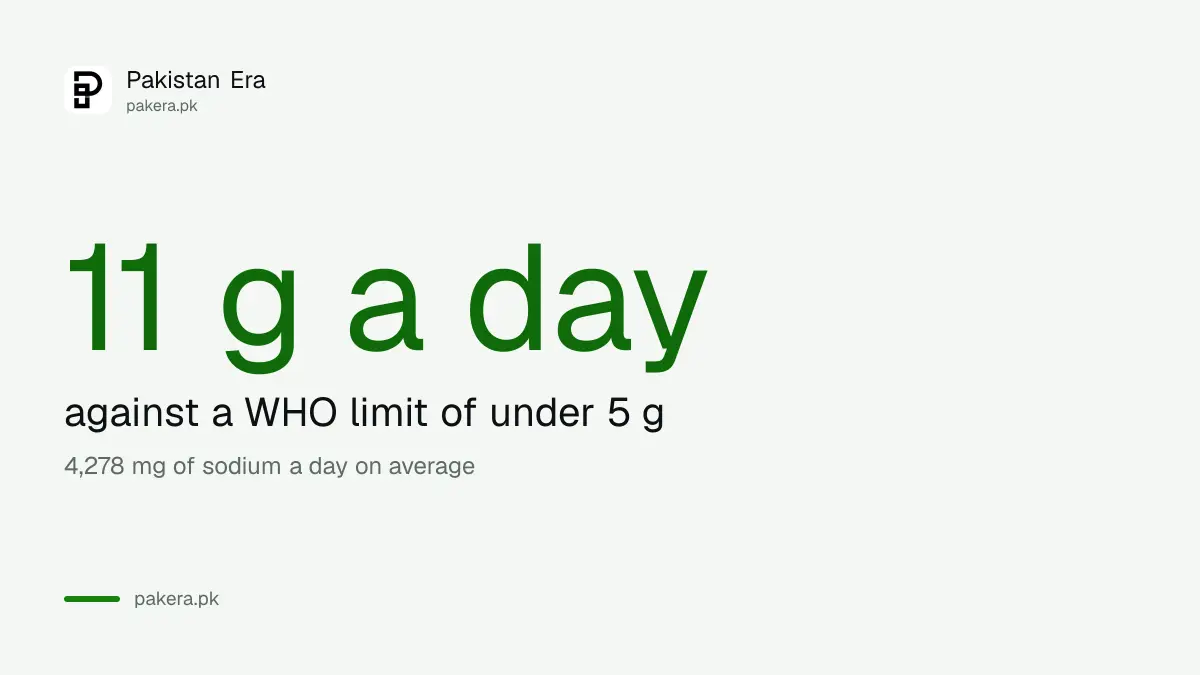
Most people eat far more than that. WHO says the global average adult intake was 4,278 mg of sodium a day in 2021, equal to 11 g of salt and more than double its limit. We read WHO's sodium reduction fact sheet on 21 October 2026. It does not give a figure for Pakistan, so we have not stated one.
The WHO limit is under 5 g of salt, or under 2,000 mg of sodium, a day
WHO recommends less than 2,000 mg of sodium for adults, equal to less than 5 g of salt, or just under a teaspoon. For children aged 2 to 15 years, it says to adjust the adult amount downward by their energy needs. It gives no gram figure for children.
Salt is made mainly of sodium and chloride, so the two numbers describe the same food in different units. That is why labels and advice do not always match. The limit covers all the salt you eat in a day, from the saltshaker, from cooking and from packed food together.
Divide the sodium on a label by 400 to get grams of salt
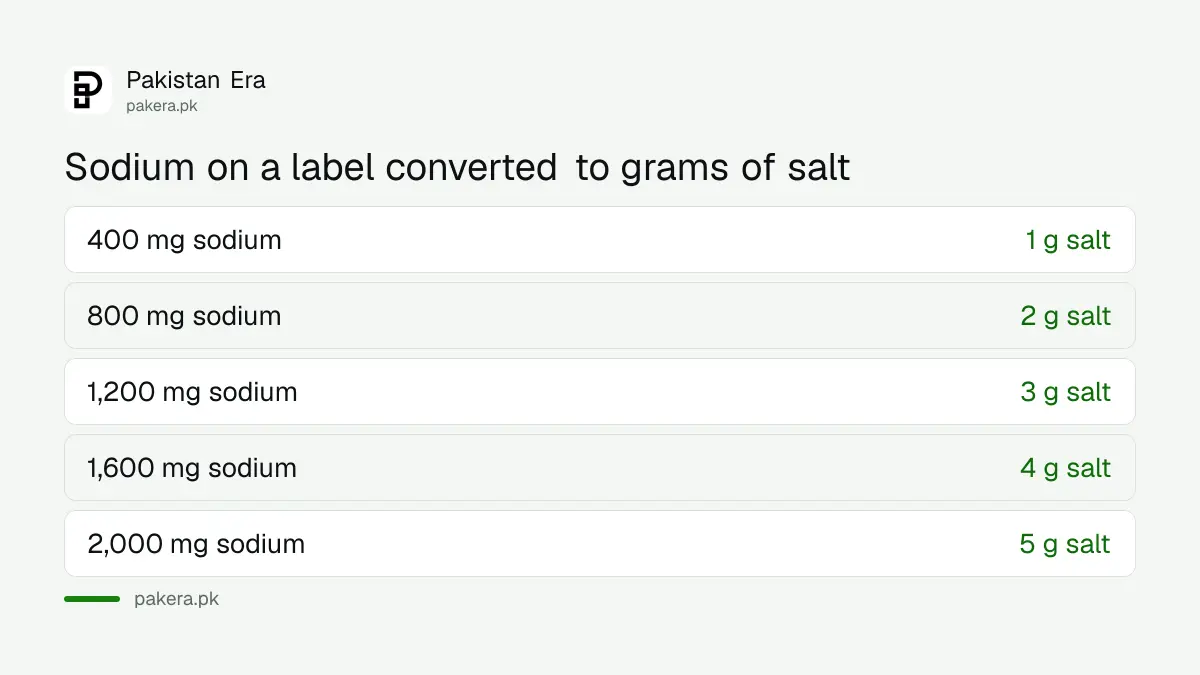
WHO gives the conversion: 1 g of salt equals 400 mg of sodium, and 5 g of salt equals 2,000 mg of sodium. So take the sodium figure from the pack and divide by 400.
| Sodium on the label | Salt it equals | Share of the 5 g limit |
|---|---|---|
| 400 mg | 1 g | 20% |
| 800 mg | 2 g | 40% |
| 1,200 mg | 3 g | 60% |
| 1,600 mg | 4 g | 80% |
| 2,000 mg | 5 g | 100% |
Here is a worked example with a made-up pack. A snack lists 600 mg of sodium per serving. That is 1.5 g of salt. Eat three servings and you have used 4.5 g, almost the whole day's limit, before any salt in your meals.
Too much sodium raises blood pressure and the risk of heart and kidney disease
WHO names raised blood pressure as the main effect of a high-sodium diet. That raises the risk of cardiovascular disease, gastric cancer, obesity, osteoporosis, Meniere's disease and kidney disease. It estimates 1.7 million deaths each year were linked to too much sodium in 2023.
WHO also says sodium deficiency is extremely unlikely in healthy people. So cutting down is not a risk for most. If you already have high blood pressure, see the numbers in how to check blood pressure against the 140/90 line. Heart and stroke warning signs are in how to spot a heart attack or stroke.
Sodium hides in processed foods, sauces and flavour powders
WHO says the main sources depend on a population's culture and eating habits. It names breads, processed meat and snack foods, and condiments such as soy and fish sauce. Sodium also occurs naturally in milk, meat and shellfish, and in sodium glutamate, a food additive.
WHO has no list of Pakistani foods. From its general advice, the items worth a label check at home are bread, packed snacks, sauces, instant noodles and their flavour sachets, and stock cubes. That list is our reading of the WHO categories, not a measurement.
Eight WHO steps to lower sodium at home
WHO lists these steps: eat mostly fresh, minimally processed foods; take the saltshaker off the table; cook with little or no salt; flavour food with herbs and spices; limit commercial sauces, dressings and instant products; limit processed food; choose lower-sodium products; and swap table salt for a lower-sodium salt with potassium.
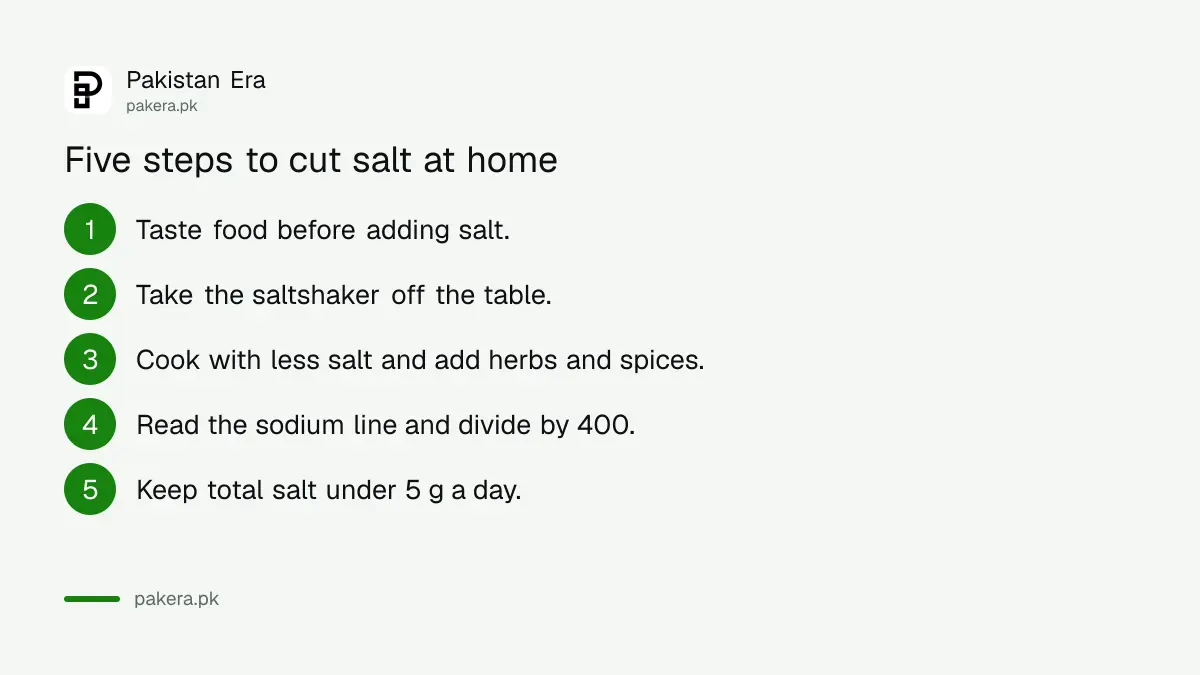
- Taste your food before you add any salt.
- Take the saltshaker off the table.
- Cook with less salt and use herbs and spices for flavour.
- Read the sodium line on packs and divide by 400.
- Keep total salt under 5 g a day, counting packed food.
WHO says the salt you do eat should be iodised
WHO says all salt consumed should be iodised, meaning fortified with iodine. It says iodine is essential for the healthy brain development of a foetus and young child and for mental function in general. So cutting down on salt does not mean switching to plain salt.
Ask your doctor about any diet change linked to a medical condition such as high blood pressure, kidney disease or diabetes.
Common questions about salt and sodium in Pakistan
How much salt is safe per day?
WHO says less than 5 g of salt a day for adults, which is less than 2,000 mg of sodium.
Is 5 g of salt the same as one teaspoon?
Almost. WHO says 5 g is just under a teaspoon, or approximately one teaspoon.
How do I turn sodium into salt?
Divide milligrams of sodium by 400. So 1,000 mg of sodium is 2.5 g of salt.
How much salt can a child have?
WHO says to adjust the adult limit downward by the child's energy needs. It gives no single gram figure.
Should I stop salt completely?
No. WHO calls sodium an essential nutrient. The advice is to eat less than the limit, and to use iodised salt.
Does the limit include salt in packed food?
Yes. The limit is for total sodium from all sources in the day.
How we verified this
What we checked, where we read it, and what we could not confirm.
Last checked 21 October 2026. We read WHO's sodium reduction fact sheet, which showed a publication stamp of 19 October 2026, for the limits, the conversion, the health effects and the tips. The worked example uses a made-up pack and our own division. We found no WHO or Pakistani official figure for national salt intake or for the sodium in local foods, so we state none. This is general health information, not medical advice.
About the author

Tax, Bills and Technology Writer
Ali Akhtar is a young and curious voice here at Pakistan Era. He is currently pursuing his A-Levels and has a growing interest in Pakistan’s changing industrial landscape and educational trends. Ali likes to write in a way that helps him explain and explore the world around him. His writing reflects the perspective of the new generation navigating the evolving trends of Pakistan where technology, youth innovation, and shifting opportunities are reshaping the country’s future.