Check Your Blood Pressure in Pakistan: WHO Says 140/90 or Higher on Two Days Means Hypertension
WHO says hypertension is 140/90 mmHg or higher on two different days, and most people feel nothing. Check your blood pressure, know your target and act early.
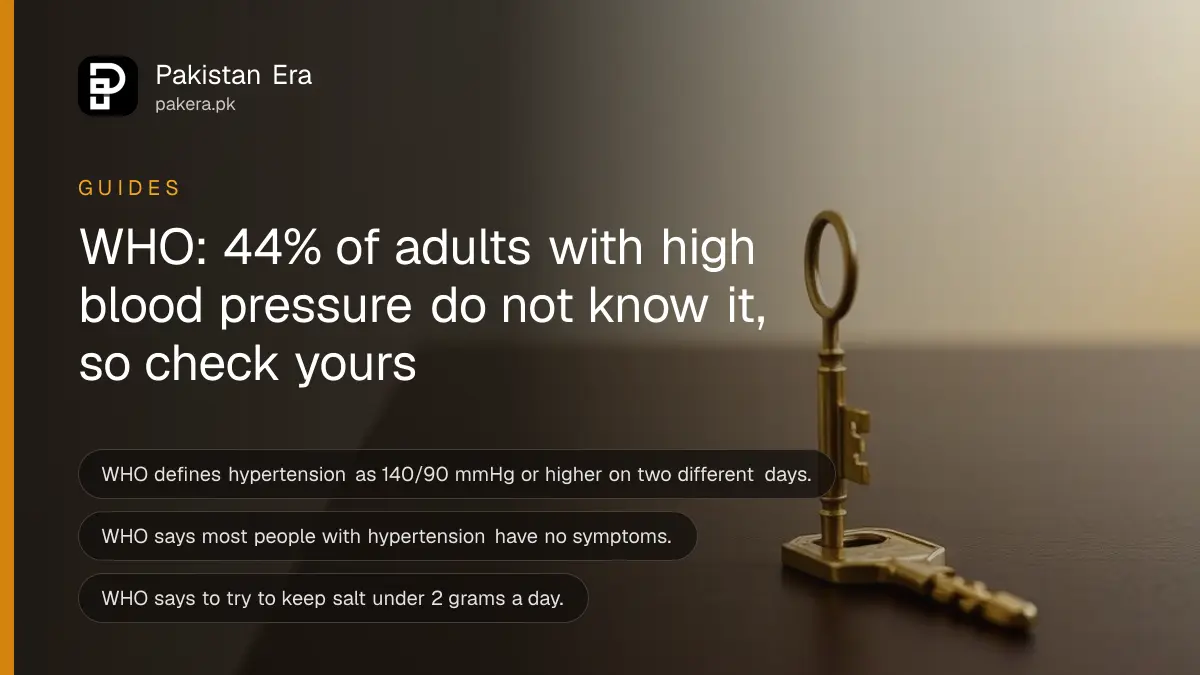
Short answer: WHO defines hypertension as a blood pressure of 140/90 mmHg or higher, confirmed by readings on two different days. Most people feel nothing, so the only way to know is to measure. WHO says the goal for most adults is below 140/90, and below 130/80 for people with heart disease, diabetes or kidney disease.
Blood pressure has no sound, no pain and no smell. A man can carry a reading of 160 over 100 for ten years and feel fine. Then one morning it is a stroke.
We read the World Health Organization (WHO) fact sheet on hypertension on 14 October 2026. It gives global figures, not Pakistan figures, and we do not state a Pakistan rate. Pakistan sits in the WHO Eastern Mediterranean Region, where the fact sheet says prevalence is the highest in the world, at 38 percent.
Hypertension means 140/90 or higher on two days
WHO defines hypertension as a systolic pressure of 140 mmHg or higher, or a diastolic pressure of 90 or higher. A diagnosis needs readings on two different days. The top number is systolic, the bottom is diastolic.
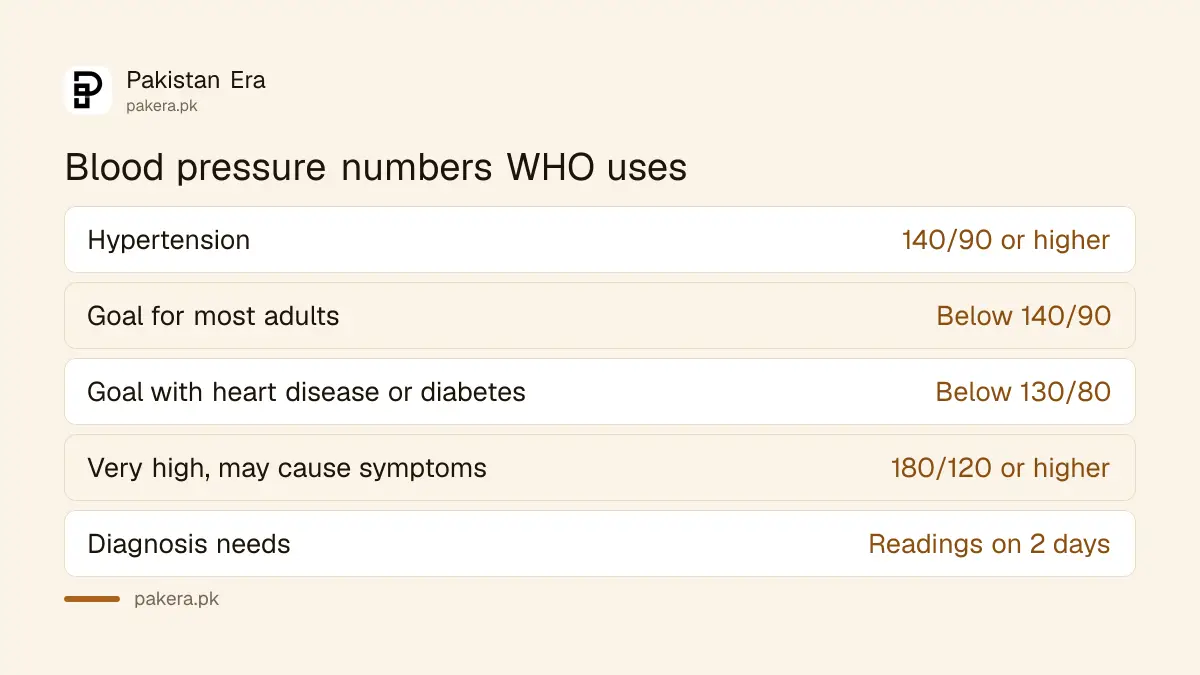
A single high reading can be a bad day, a hurried walk or a worry. That is why WHO asks for two days. For people with heart disease, diabetes, kidney disease or high heart risk, WHO sets a lower goal of below 130/80.
WHO says very high readings, usually 180/120 or higher, can bring severe headache, chest pain, dizziness and breathing trouble. If that happens, seek care at once. See the emergency helpline numbers in Pakistan.
Most people with high blood pressure feel nothing
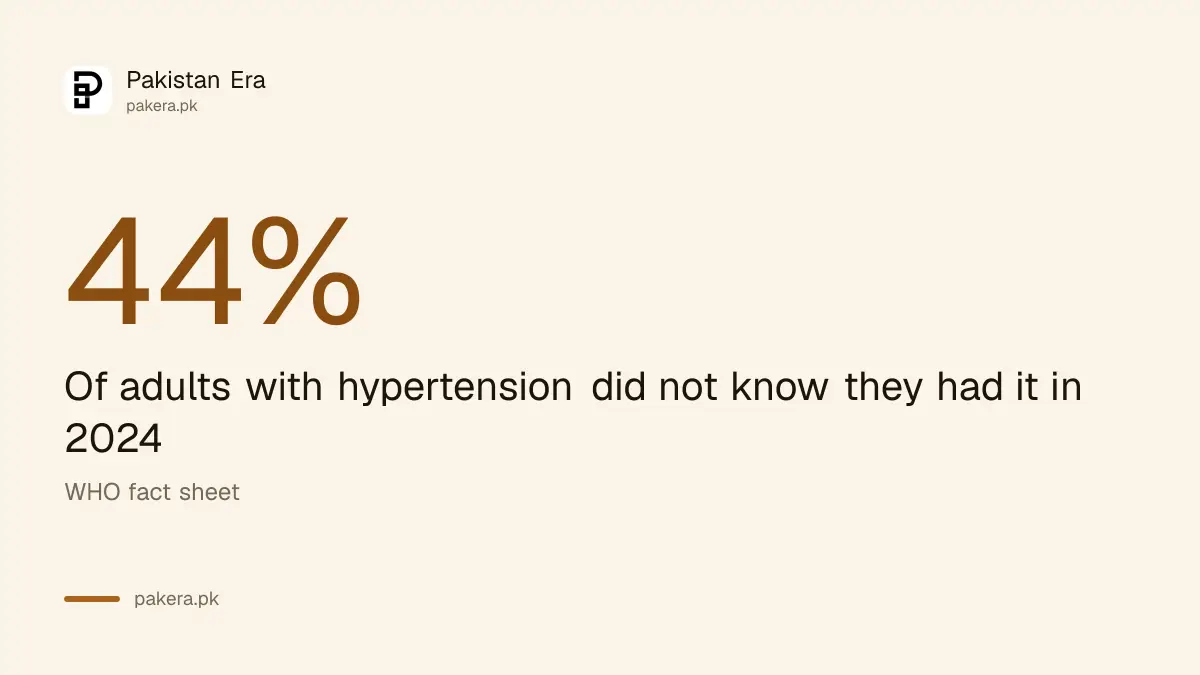
WHO says most people with hypertension have no symptoms. It estimates that 44 percent of adults with the condition did not know they had it in 2024, and only about 23 percent had it under control. Measure your pressure.
WHO estimates 1.4 billion adults aged 30 to 79 had hypertension in 2024, about a third of that age group, and two-thirds of them live in low and middle income countries.
That is why a free check at a clinic, pharmacy or workplace matters. If you are over 30, or have a parent with high blood pressure, check at least once and ask for a written reading.
Measuring at home is possible, but a doctor confirms it
WHO says self-measurement with an automated device is possible, but a professional evaluation matters for judging your overall risk. Use one device, at the same time each day, and take your records to a doctor. One reading at home is not a diagnosis.
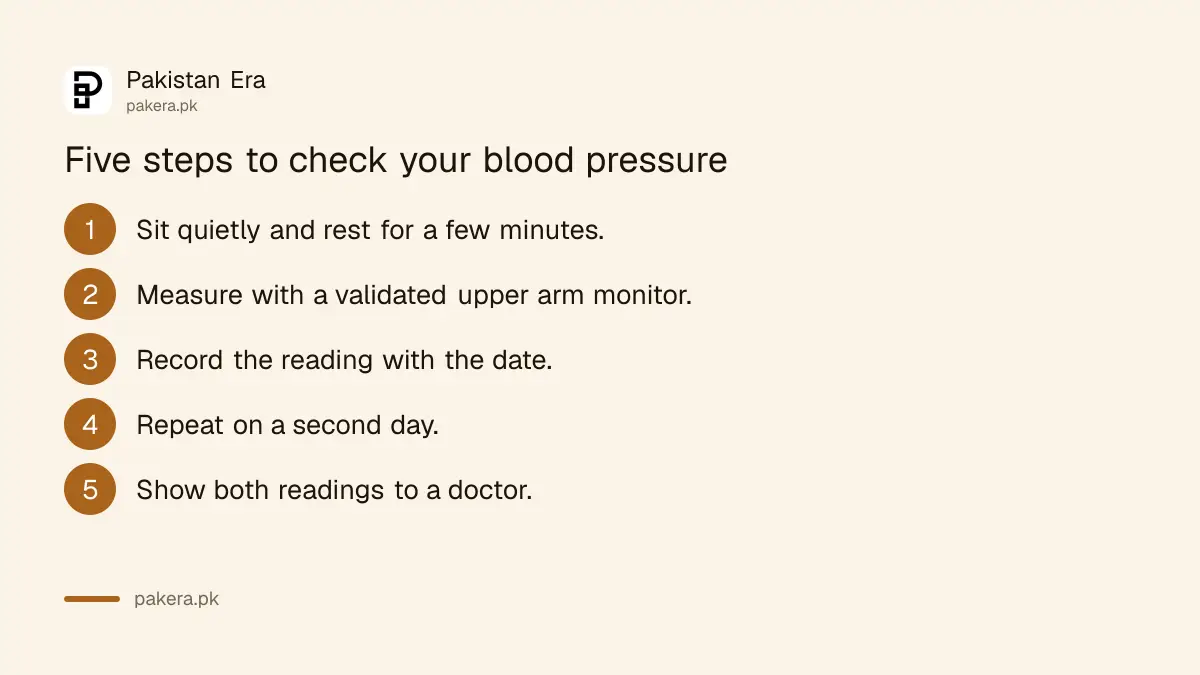
- Sit with your back supported and your feet flat for a few minutes before measuring.
- Keep your arm at heart level, with the cuff on bare skin.
- Do not talk, smoke or drink tea during the reading.
- Write down the numbers, the date and the time.
- Repeat on a second day.
- Bring both days of readings to a doctor.
Those posture tips are standard practice, not text from the WHO sheet. WHO does not give a step by step method, so ask your doctor or nurse to show you.
Salt, movement and medicines lower the risk
WHO advises more vegetables and fruit, sitting less, 150 minutes of moderate activity a week, and trying to stay under 2 grams of salt a day. It advises against tobacco and against missed or shared medicines. Many people also need tablets.
| Step | What WHO says |
|---|---|
| Salt | Try to stay under 2 grams a day |
| Activity | 150 minutes a week of moderate activity, or 75 of vigorous, plus strength work twice a week |
| Tobacco | Avoid it |
| Medicine | Do not skip doses, and do not share tablets |
| Weight | Aim for a healthy weight |
Check the salt in pickles, chips, stock cubes and bread. WHO lists air pollution as a risk factor too. See how smog affects heart patients.
WHO names four medicine classes doctors use: ACE inhibitors, ARBs, calcium channel blockers and diuretics. Never start or stop one on your own. Check that your medicine is registered with DRAP.
Treatment after diagnosis needs a regular doctor
WHO says lifestyle change comes first and many people need medicine. Do not stop tablets because you feel well, since high blood pressure rarely causes symptoms. Go back for review, keep your readings and ask your doctor what your own target should be.
If cost is a problem, look at public options. Our guides cover free heart treatment at NICVD in Karachi and the plan for stroke centres in every Punjab division.
We did not find a Pakistan-specific blood pressure guideline on the WHO page, and the fact sheet does not say which clinics measure for free. Ask your nearest government facility.
Common questions
What blood pressure is high in Pakistan?
WHO defines hypertension as 140/90 mmHg or higher on two different days. The same definition applies in Pakistan.
Does high blood pressure cause symptoms?
Most people feel nothing. WHO says very high readings, usually 180/120 or higher, may cause severe headache, chest pain, dizziness or breathing trouble.
What is a good blood pressure target?
WHO says below 140/90 for most adults, and below 130/80 for people with cardiovascular disease, diabetes, chronic kidney disease or high heart risk.
How much salt is too much?
WHO says to try to stay under 2 grams of salt a day.
Can I stop my tablets when my reading is normal?
No. A normal reading on treatment means the tablets are working. Ask your doctor before changing anything.
How we verified this
What we checked, where we read it, and what we could not confirm.
Last checked on 14 October 2026, Pakistan time. We read the WHO hypertension fact sheet. All numbers on this page come from it. It carries no Pakistan figures, so we give none. The home measuring tips are common practice and are marked as such, not WHO text. This page is not medical advice.
About the author

Tax, Bills and Technology Writer
Ali Akhtar is a young and curious voice here at Pakistan Era. He is currently pursuing his A-Levels and has a growing interest in Pakistan’s changing industrial landscape and educational trends. Ali likes to write in a way that helps him explain and explore the world around him. His writing reflects the perspective of the new generation navigating the evolving trends of Pakistan where technology, youth innovation, and shifting opportunities are reshaping the country’s future.