Protect Pregnant Women, Heart Patients and Asthma Sufferers in Pakistan's Smog: NIH's Risk Groups
NIH lists children, older adults, asthma and COPD patients, heart patients and pregnant women as high risk in smog. See what to do and when to call a doctor.
Short answer: The NIH smog advisory names children, older adults, people with asthma or COPD, people with heart disease and pregnant women as the groups at highest risk. Its advice: stay indoors at peak smog hours, wear an N95 or KN95 mask outside, close windows, use a HEPA purifier, drink water and see a doctor if symptoms last or get worse.
Smog does not hurt everyone equally. A healthy adult may feel a scratchy throat. A woman who is seven months pregnant, or a man with a weak heart, can be in real danger on the same day and in the same street.
We read the NIH Islamabad advisory for protection and preventive measures against smog on 14 October 2026. Its covering letter is dated 17 November 2025 and signed by the Chief of the Centers for Disease Control. It is last season's document, but the October to February smog season has begun again, and NIH has not published a newer one that we could find.
Smog is a daily health risk from October to February
NIH says seasonal smog hits the Indo-Gangetic plains in the cold months, typically October to February. It names Lahore, Multan, Gujranwala, Rawalpindi and Islamabad as cities with badly degraded air each year, and links it to a surge in breathing and heart emergencies.
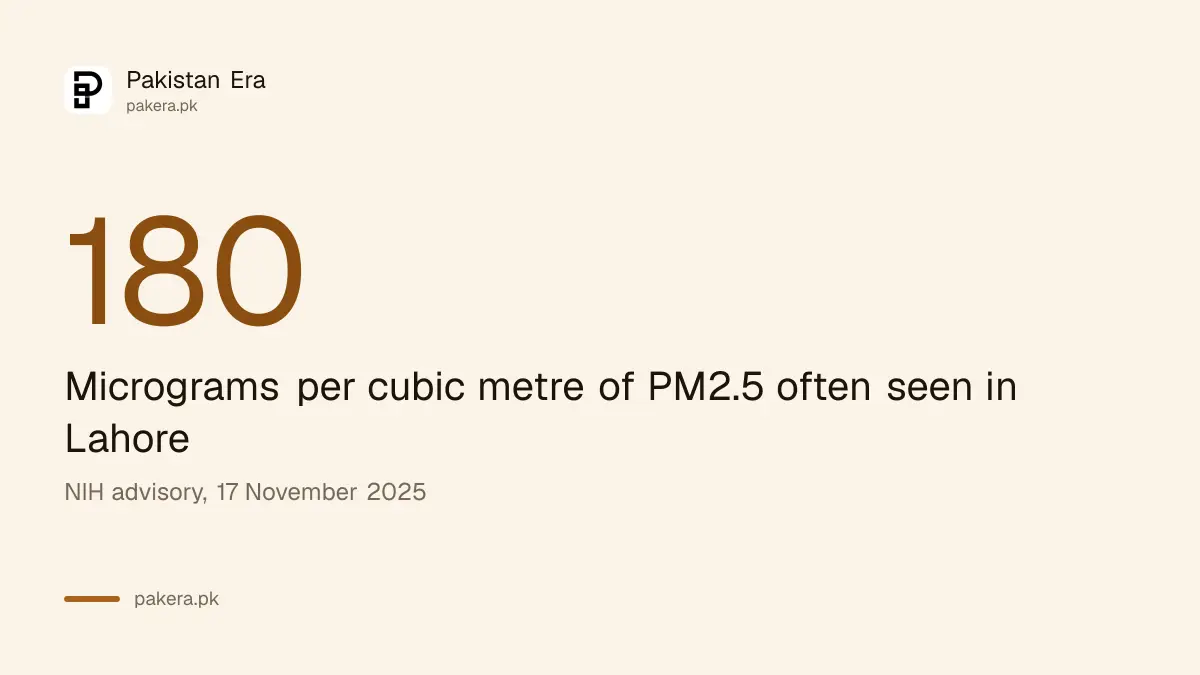
The main danger is PM2.5. These are particles under 2.5 micrometres across, small enough to reach deep into the lungs and the bloodstream. NIH quotes the WHO yearly guideline for PM2.5 as 5 micrograms per cubic metre, and says Lahore's average is often 180 in peak season.
For today's numbers, see Punjab air quality on 13 October 2026. For the season ahead, see what actually protects you in smog season.
NIH names five groups at higher risk
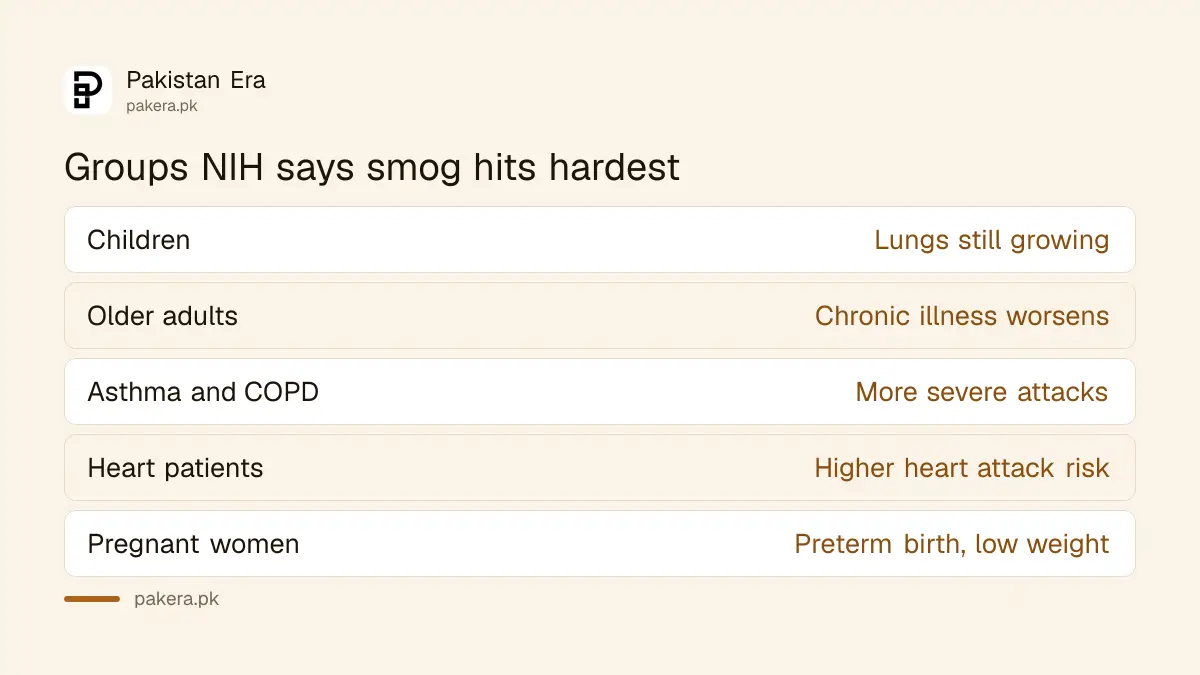
The advisory lists children, older adults, people with existing breathing conditions such as asthma and COPD, people with heart disease, and pregnant women. Smog can worsen existing illness and trigger new emergencies in these groups, so they should take every precaution early.
| Group | What NIH says smog can do |
|---|---|
| Children | More pollutant per body size, asthma, weaker lung function, poor lung growth |
| Older adults | Heart disease, diabetes and lung problems can worsen, and memory can decline |
| Asthma, COPD, lung disease | More frequent and severe attacks, more infections |
| Heart patients | Higher risk of heart attack and stroke |
| Pregnant women | Preterm birth, low birth weight, newborn breathing problems |
The advisory says PM2.5 can cross the placenta, so it can reach the baby. It does not give a number for how much risk rises, and we do not state one.
Five steps cut your exposure on smog days
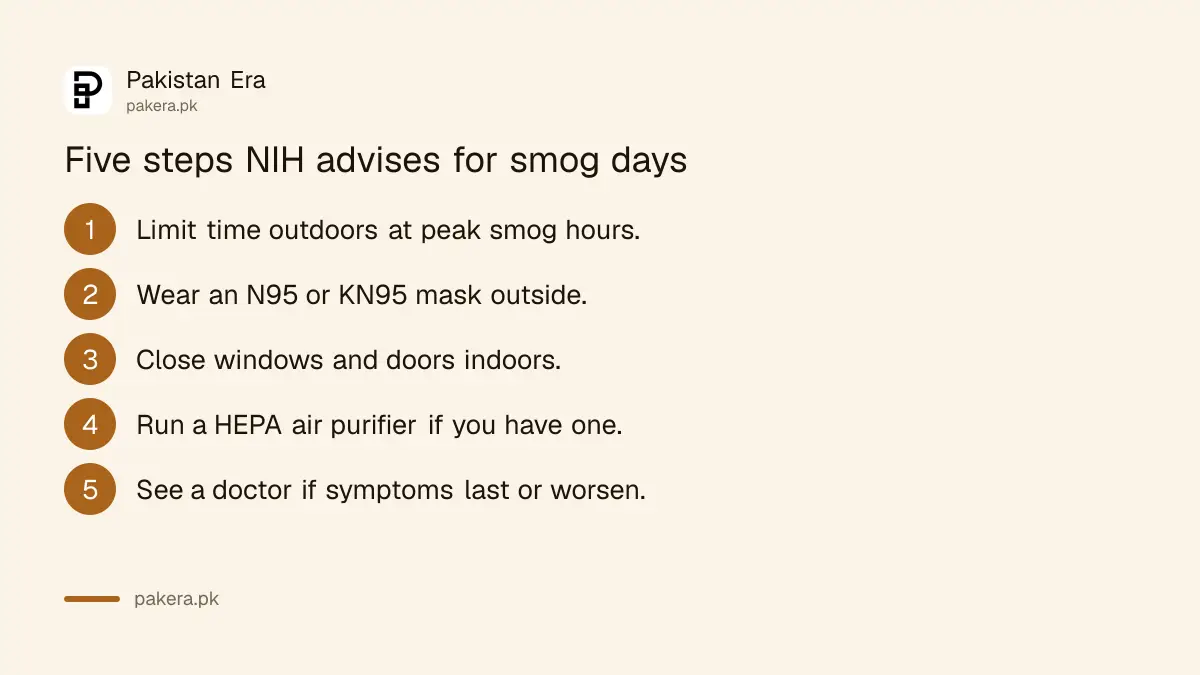
NIH advises limiting outdoor activity at peak smog hours, wearing N95 or KN95 masks outside, closing windows and doors, using HEPA air purifiers indoors, avoiding indoor smoke, drinking plenty of water and seeing a doctor for symptoms that persist or worsen.
- Plan outdoor trips for the cleaner hours and cut non-essential ones.
- Wear a well fitted N95 or KN95 mask outside. See how to wear an N95 or KN95 mask in smog.
- Close windows and doors, and avoid smoking, incense and burning at home.
- Use a HEPA air purifier if you can afford one. Our page on the best air purifier for smog compares options.
- Drink water through the day.
- Do not ignore a cough, wheeze or chest tightness that stays or worsens.
Each high risk group needs a plan before the smog peaks
The advisory gives one list for everyone, so each family must apply it. Pregnant women should talk to their doctor early. People with asthma, COPD or heart disease should keep their medicines in stock. Children and older adults need the mask and indoor steps most.
Some practical points follow from the advisory. They are our reading, not extra NIH rules.
Ask your doctor now, not in the worst week, what you should do if breathing gets worse. Keep a full supply of regular medicine at home, because pharmacies are busier during smog peaks. For children and elderly parents, read EPA advice for each air quality level.
The advisory does not name a specific AQI at which to stop going out, and it does not give mask advice for children. Ask a doctor about both.
Community measures need the government, not just families
NIH calls for cleaner fuels, strict rules on factory and vehicle smoke, better public transport and awareness campaigns. It names industrial emissions, vehicle pollution and crop burning as root causes. Families cannot fix those alone, but they can protect the people most at risk.
The advisory's community list is short. It asks for cleaner energy, tougher environmental rules, more public transport and public awareness. It also lists the main sources: two-stroke engines, poorly kept diesel vehicles, brick kilns, steel mills, power plants, rice stubble burning and open burning of waste.
Seek urgent help for severe chest pain, trouble breathing, or confusion. For the numbers to call, see emergency helpline numbers in Pakistan.
Common questions
Who is most at risk from smog in Pakistan?
NIH names children, older adults, people with asthma, COPD or heart disease, and pregnant women. Anyone can feel symptoms, but these groups face more serious harm.
Can smog harm an unborn baby?
NIH says smog is linked to preterm birth, low birth weight and newborn breathing problems, and that PM2.5 can cross the placenta. Ask your doctor for personal advice.
Which mask does NIH recommend?
NIH recommends high quality N95 or KN95 masks when outdoors. It does not give separate mask advice for children.
What is PM2.5?
It is fine particulate matter smaller than 2.5 micrometres. NIH says it can reach deep into the lungs and enter the bloodstream.
When should I see a doctor?
NIH says to consult a healthcare provider for persistent or worsening symptoms. Seek emergency care for severe chest pain, trouble breathing or confusion.
How we verified this
What we checked, where we read it, and what we could not confirm.
Last checked on 14 October 2026, Pakistan time. We read the NIH advisories page and the NIH Advisory for Protection and Preventive Measures against Smog, covering letter dated 17 November 2025. It is a scanned PDF, so we read each page as an image. We did not check the PM2.5 figures against a monitor, and the advisory does not say which monitor or year the Lahore figure comes from.
About the author

Tax, Bills and Technology Writer
Ali Akhtar is a young and curious voice here at Pakistan Era. He is currently pursuing his A-Levels and has a growing interest in Pakistan’s changing industrial landscape and educational trends. Ali likes to write in a way that helps him explain and explore the world around him. His writing reflects the perspective of the new generation navigating the evolving trends of Pakistan where technology, youth innovation, and shifting opportunities are reshaping the country’s future.