Spot a Heart Attack or Stroke in Pakistan: WHO's Warning Signs and When to Get Help at Once
WHO lists the warning signs of a heart attack and a stroke, from chest pain to sudden one sided weakness. Learn them now and get medical help at once.
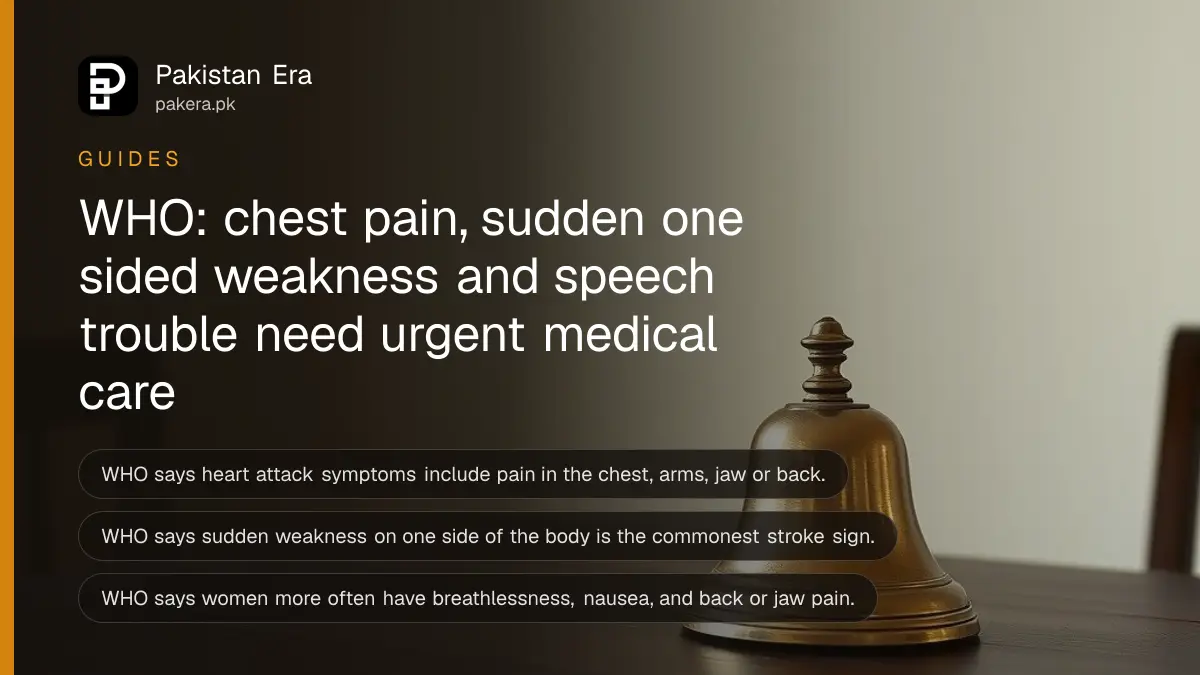
Short answer: WHO lists a heart attack as pain or discomfort in the centre of the chest, spreading to the arms, shoulder, jaw or back, with breathlessness, nausea, a cold sweat or faintness. A stroke is sudden weakness or numbness of the face, arm or leg, usually on one side, or confusion and trouble speaking. WHO says to seek medical care immediately.
A man in his fifties says he has gas and sits down in the shop. A woman feels a sudden ache in her jaw and puts it down to a bad night. Both may be wrong, and the wrong guess can cost hours.
We read the World Health Organization (WHO) fact sheet on cardiovascular diseases on 14 October 2026. It gives global figures, not Pakistan figures, so we give none for Pakistan. It lists the symptoms below and says people who have them should seek medical care immediately. This page is not medical advice.
Heart attack signs go beyond chest pain
WHO lists pain or discomfort in the centre of the chest, and in the arms, shoulder, jaw or back. Other signs are shortness of breath, nausea, a cold sweat and paleness. Women are more likely to have breathlessness, nausea and back or jaw pain.
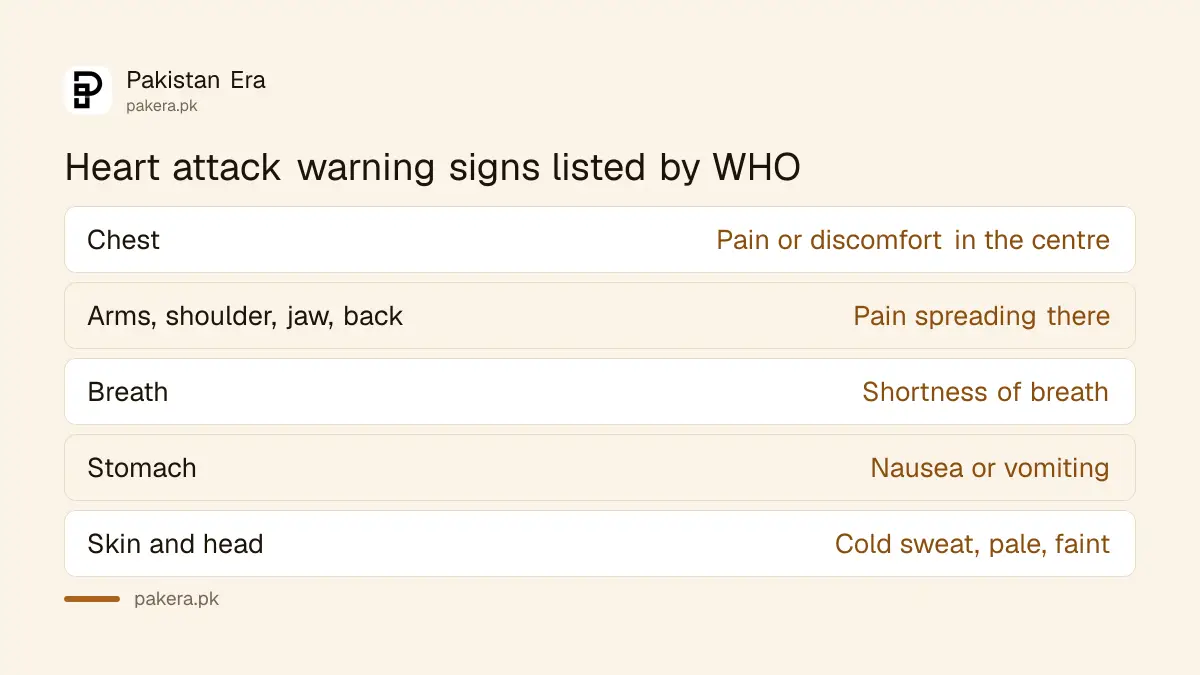
Read that last point twice. A woman may not describe "chest pain" at all. She may say she is short of breath, or that her jaw or back hurts. Family members should not dismiss that.
WHO also warns that often there are no symptoms beforehand. A heart attack or stroke may be the first sign of disease.
Stroke signs come on suddenly and often on one side
WHO says the commonest stroke sign is sudden weakness of the face, arm or leg, usually on one side. Others are sudden numbness, confusion, trouble speaking, trouble seeing, dizziness, loss of balance, a severe headache with no known cause, or fainting.
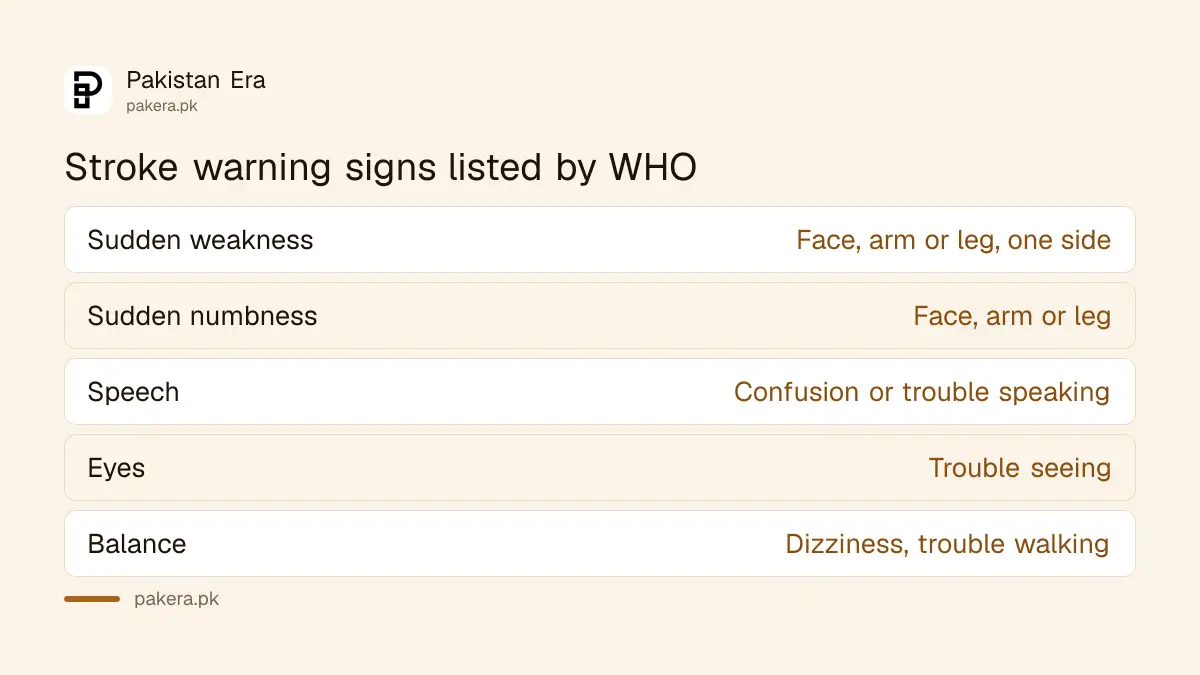
The word to hold on to is sudden. A droopy face that was not there an hour ago, an arm that will not lift, or words that come out wrong should send you to hospital, not to bed.
Note the time symptoms began and tell the doctors. That detail helps them choose treatment. WHO does not state a time limit on its page, so we do not give one.
Call for help at once and do not drive yourself
WHO says people with these symptoms should seek medical care immediately. Call an ambulance or ask someone to take you to the nearest hospital that has an emergency department. Do not wait to see whether the symptoms pass, and do not try to drive yourself.
- Stop what you are doing and sit or lie down.
- Call an ambulance. See the emergency helpline numbers in Pakistan, and Rescue 1122 numbers in Punjab.
- Tell someone near you and unlock your phone so they can call your family.
- Say that you think it is a heart attack or stroke, and when the symptoms began.
- Do not eat, drink or take other people's medicine while you wait.
The last two steps are common first aid advice, not WHO wording. In Sindh, see how to call a free 1122 ambulance. In Punjab, see how to learn CPR with Rescue 1122.
Risk factors can be measured and lowered
WHO names unhealthy diet, physical inactivity, tobacco, harmful alcohol use and air pollution as risks, along with raised blood pressure, blood glucose and blood fats, and overweight. Poverty, stress and family history also play a part. Many of these can be checked and treated.
| Risk | What to do |
|---|---|
| High blood pressure | Measure it. See how to check your blood pressure |
| High blood sugar | Get a test. See how to spot type 2 diabetes |
| Tobacco | Quit |
| Salt, fruit and vegetables | Eat less salt and more fruit and vegetables |
| Air pollution | See smog advice for heart patients |
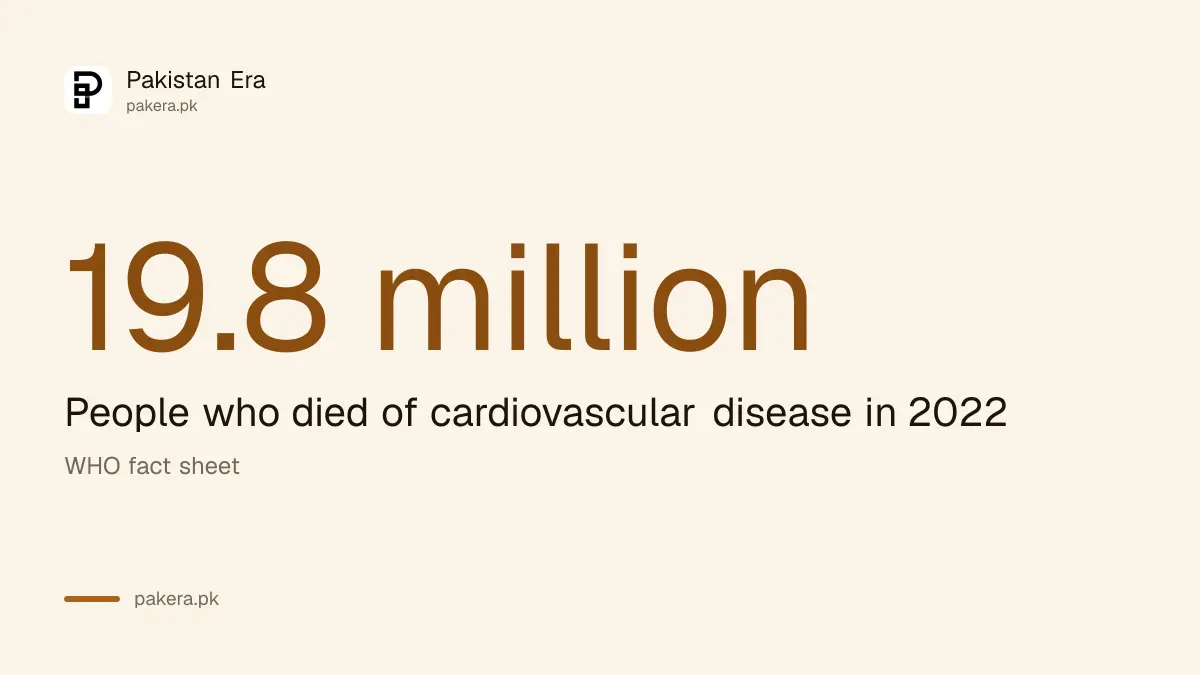
WHO says CVDs are the leading cause of death worldwide: an estimated 19.8 million deaths in 2022, about 32 percent of all deaths, and 85 percent of those were from heart attack and stroke.
Free and low cost care exists in some provinces
Government hospitals in Pakistan treat heart attacks and strokes, and some run dedicated programmes. We list two below. The WHO sheet does not name Pakistani hospitals, so check with your nearest government hospital which services it offers and whether your health card is accepted.
In Karachi, see free heart treatment at NICVD. In Punjab, see the plan for stroke centres in every division, which we reported as planned, not as open everywhere.
We could not verify which hospitals near you are ready for a stroke today. Ask in advance, not in the emergency.
Common questions
What are the main signs of a heart attack?
WHO lists chest pain or discomfort spreading to the arms, jaw or back, with breathlessness, nausea, a cold sweat or faintness.
Do women have different heart attack signs?
WHO says women are more likely than men to have shortness of breath, nausea, vomiting, and back or jaw pain.
What is the commonest stroke sign?
WHO says sudden weakness of the face, arm or leg, usually on one side of the body.
Can a heart attack happen with no warning?
Yes. WHO says there are often no symptoms beforehand and a heart attack or stroke may be the first sign of disease.
What should I do if I notice these signs?
WHO says to seek medical care immediately. Call an ambulance, and do not wait to see whether symptoms pass.
How we verified this
What we checked, where we read it, and what we could not confirm.
Last checked on 14 October 2026, Pakistan time. We read the WHO cardiovascular diseases fact sheet. The symptom lists, risk factors and death figures come from it. The first aid steps on eating, drinking and driving are common advice, not WHO wording, and we marked them as such. WHO gives no Pakistan figures, so we give none. This page is not medical advice.
About the author

Tax, Bills and Technology Writer
Ali Akhtar is a young and curious voice here at Pakistan Era. He is currently pursuing his A-Levels and has a growing interest in Pakistan’s changing industrial landscape and educational trends. Ali likes to write in a way that helps him explain and explore the world around him. His writing reflects the perspective of the new generation navigating the evolving trends of Pakistan where technology, youth innovation, and shifting opportunities are reshaping the country’s future.