Spot Type 2 Diabetes Early in Pakistan: WHO's Symptoms and Why to Get a Blood Glucose Test
WHO says type 2 diabetes symptoms can be mild for years: thirst, frequent urination, tiredness. Learn the signs and why a blood glucose test finds it early.
Short answer: WHO says type 2 diabetes symptoms are often mild and can take years to notice. They include thirst, passing urine often, blurred vision, tiredness and weight loss you did not plan. A blood glucose test is how it is found early. If you have the signs, or a family history, ask a doctor for the test.
An uncle at a wedding finishes his third glass of water and leaves for the bathroom again. He says he is just tired. Nobody thinks about sugar until a wound on his foot will not heal.
We read the World Health Organization (WHO) fact sheet on diabetes on 14 October 2026. It has global figures and no Pakistan-specific numbers, so we give none for Pakistan. It also does not give test thresholds such as a fasting glucose cut-off, so we do not state any. A doctor must read your result. World Diabetes Day is on 14 November, a good reminder to book a test.
Type 2 diabetes grows slowly and often shows few signs
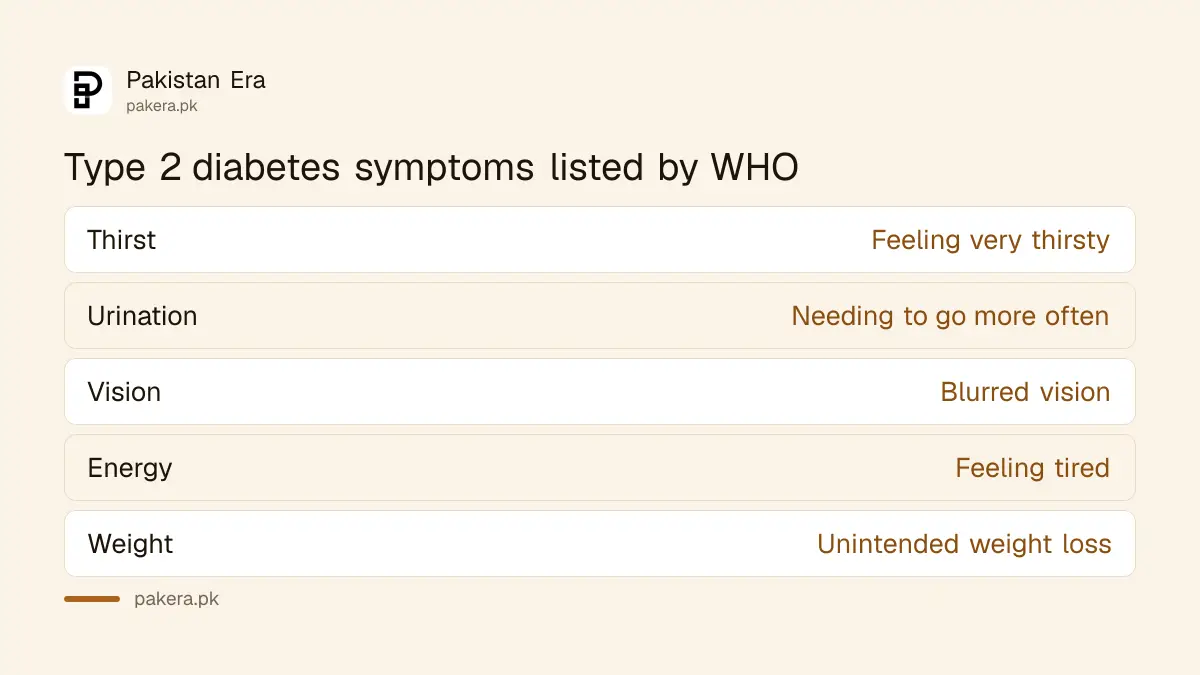
WHO says symptoms of type 2 diabetes are often mild and may take years to notice. They include thirst, passing urine often, blurred vision, tiredness and unintended weight loss. Many people find out only after a complication has started.
WHO also says gestational diabetes, which happens in pregnancy, is found through prenatal screening, not through symptoms. If you are pregnant, ask your doctor about the screening.
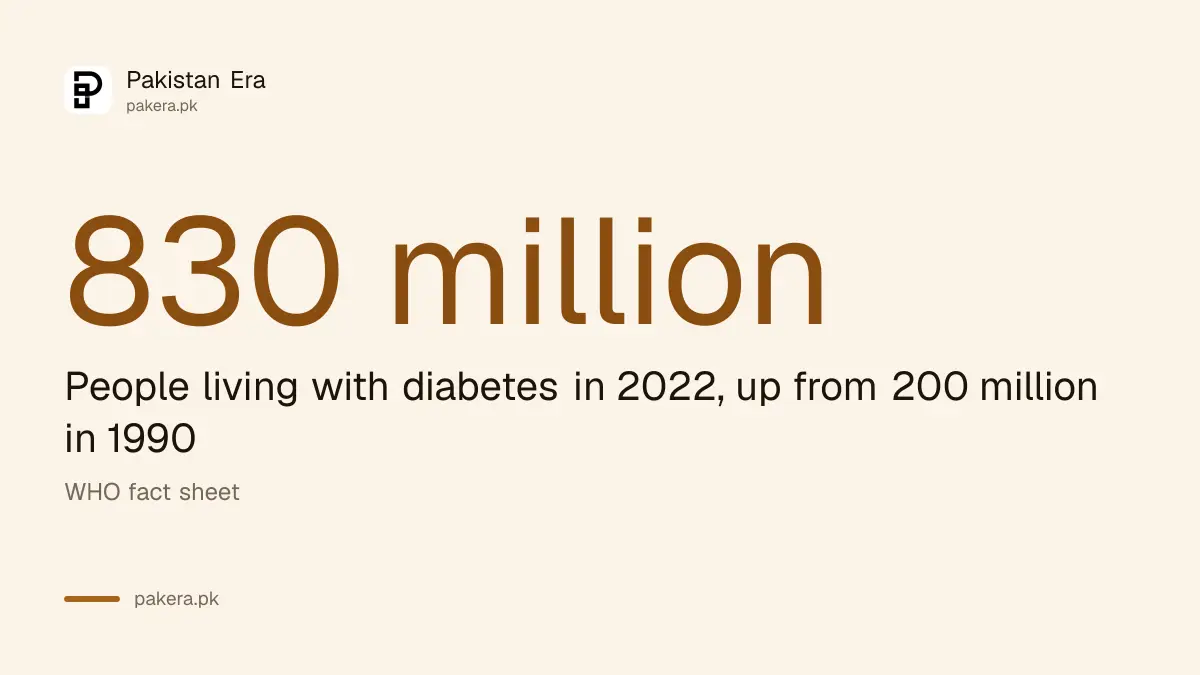
The numbers explain the urgency. WHO says 14 percent of adults aged 18 and over had diabetes in 2022, double the 7 percent of 1990.
A blood glucose test finds it early and cheaply
WHO says early diagnosis is possible through relatively inexpensive blood glucose testing. The fact sheet gives no cut-off numbers, so a doctor or lab must read your result. If you have symptoms or a family history, ask for the test.
Tests are sold at most labs and many clinics. We did not find a price on the WHO page. Prices vary by lab and city, so ask before you go.
For free care, see free diabetes care in Punjab, including the NCD clinics and the CM Insulin Card.
Untreated diabetes can damage eyes, kidneys, heart and feet
| Part of the body | Harm WHO lists |
|---|---|
| Eyes | Blindness |
| Kidneys | Kidney failure |
| Heart and brain | Heart attacks and stroke |
| Feet and legs | Ulcers and lower limb amputation |
WHO says diabetes can cause blindness, kidney failure, heart attacks, stroke and lower limb amputation. Foot nerve damage and poor blood flow can lead to ulcers. In 2021, diabetes directly caused 1.6 million deaths worldwide.
That list is why WHO lists eye exams, kidney screening and foot care as part of complication care for people with diabetes. Ask your doctor how often you need each one. Look at your feet every day. A cut that does not heal is a reason to see a doctor the same week.
Diabetes also raises heart risk. See how to check your blood pressure, since WHO says people with diabetes often need blood pressure medicine and statins too.
Weight, movement and food cut the risk of type 2
WHO says people can lower their risk by keeping a healthy weight, getting 150 minutes of moderate exercise a week, eating a healthy diet low in sugar and saturated fat, and not smoking. These steps also help control type 2.
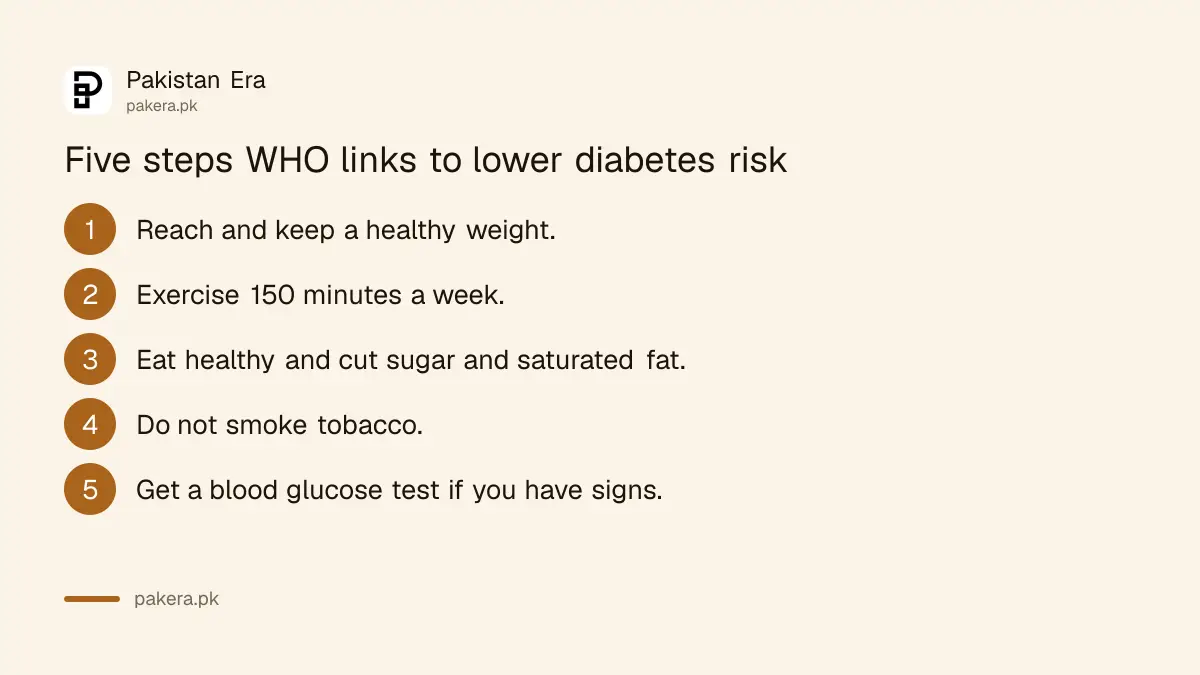
- Reach a healthy weight and keep it.
- Walk briskly or do other moderate exercise for 150 minutes a week, about 30 minutes on five days.
- Cut sugary drinks, sweets and fried food.
- Do not smoke.
- Ask a doctor for a blood glucose test if you have symptoms or a close relative with diabetes.
Those 30 minutes on five days are our simple split of the 150 minutes WHO gives.
Treatment mixes lifestyle with tablets or insulin
WHO says lifestyle is central to treatment, and some people with type 2 need medicine such as metformin, sulfonylureas, SGLT-2 inhibitors or insulin. Over half of people with diabetes were not taking diabetes medicine in 2022. Never stop or change medicine without your doctor.
The fact sheet says people with diabetes often also need blood pressure medicines and statins, plus foot care, kidney screening and eye exams.
It does not discuss insulin access in Pakistan, and we cannot say what it costs. Check that any medicine you buy is genuine with DRAP's registration check. If your health is worsening, see how to file a health insurance claim for hospital costs.
Common questions
What are the first signs of type 2 diabetes?
WHO lists thirst, passing urine often, blurred vision, tiredness and unintended weight loss. They are often mild and can take years to notice.
How is diabetes diagnosed?
WHO says early diagnosis uses relatively inexpensive blood glucose testing. A doctor reads the result against the proper cut-offs.
Can I prevent type 2 diabetes?
WHO says a healthy weight, 150 minutes of moderate exercise a week, a healthy diet low in sugar and saturated fat, and not smoking all lower risk.
What complications can diabetes cause?
WHO lists blindness, kidney failure, heart attack, stroke and lower limb amputation, and foot ulcers from nerve damage and poor blood flow.
Does WHO give a Pakistan diabetes figure?
The fact sheet we read has no Pakistan-specific figure, so we give none.
How we verified this
What we checked, where we read it, and what we could not confirm.
Last checked on 14 October 2026, Pakistan time. We read the WHO diabetes fact sheet. The global numbers, symptoms, complications and prevention steps come from it. It gives no Pakistan figures, no diagnostic cut-offs and no insulin prices, so we state none. The 30 minutes on five days is our own split of WHO's 150 minutes. This page is not medical advice.
About the author

Public Services and Education Journalist
Fajr Riaz is a journalist and content writer at Pakistan Era, based in Lahore. She covers the questions people meet in everyday life in Pakistan: how a public service works, what a change in the rules means, and where to find a reliable answer.