Free Dialysis Centres in Punjab: 227 Hospitals by District Under the CM Dialysis Program
Punjab's free dialysis list has 227 hospitals in 40 districts, Lahore 53, Faisalabad 17, Multan 15. Find yours, the Rs 1,000,000 package and how to register.
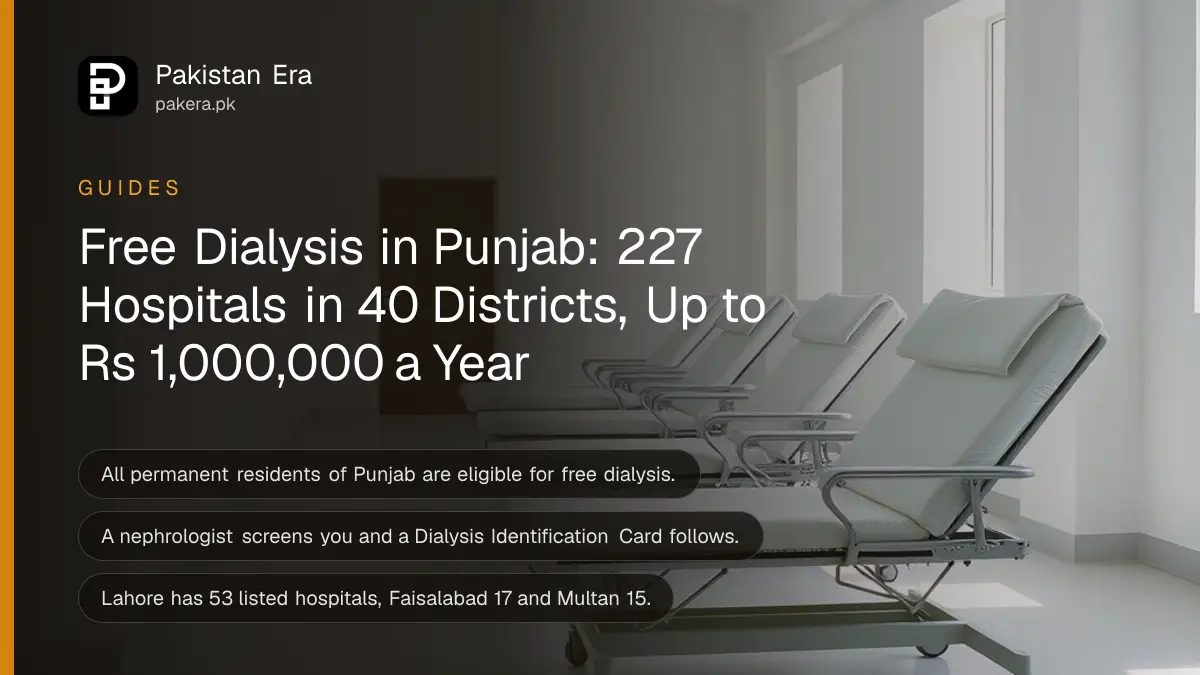
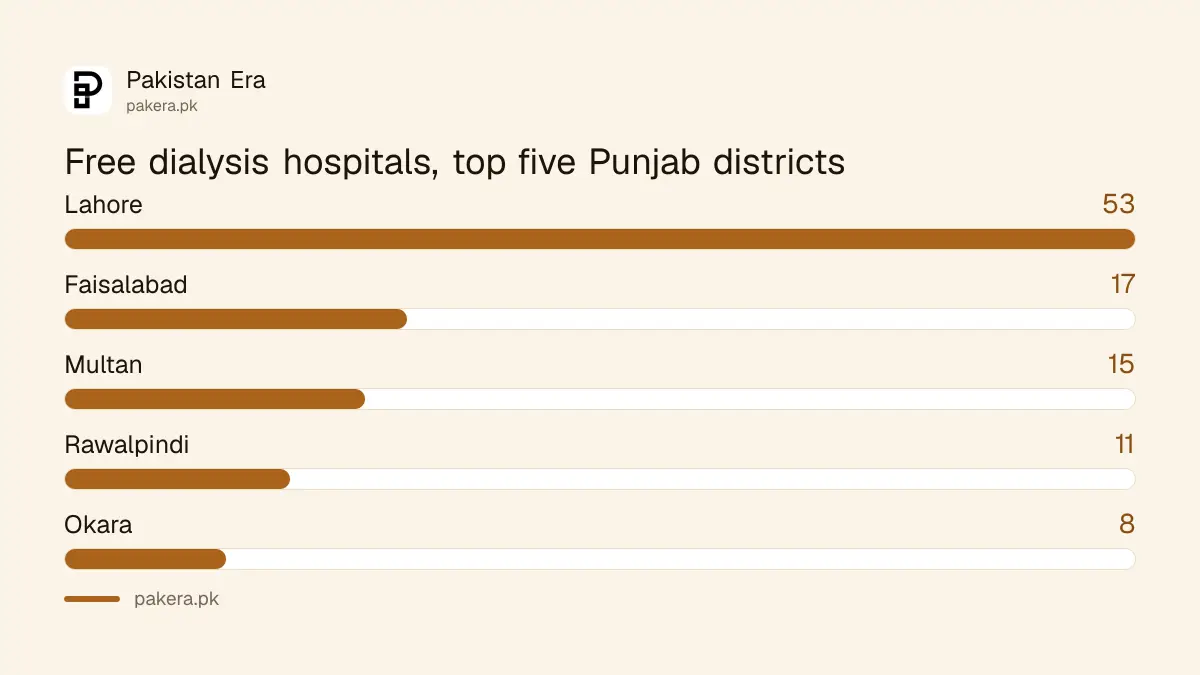
Punjab's free dialysis programme now lists 227 hospitals in 40 districts: 114 government and 113 private. Lahore has 53, Faisalabad 17, Multan 15 and Rawalpindi 11. Every permanent resident of Punjab can get dialysis free, up to Rs 1,000,000 a year. Find your district below, then call 0800-07542 to confirm a slot.
The Chief Minister's Special Initiative for Dialysis Program is run by the Punjab Health Initiative Management Company (PHIMC). A nephrologist, a kidney specialist, screens the patient and registers them. The patient then gets a Dialysis Identification Card and can use any listed hospital with no out-of-pocket cost.
The Punjab health department says more than 2.56 million free dialysis sessions have been given so far, at a cost of over Rs 13.5 billion. This page is the district list. For the programme's rules in full, see free dialysis in Pakistan.
Dialysis hospitals in every Punjab district
PHIMC's list covers 40 districts, and every one of them has at least one government hospital. Twelve districts, including Khushab, Layyah, Muzaffargarh, Nankana Sahib, Rajanpur and Sheikhupura, have only government hospitals listed. Lahore has the most private options by far.
| District | Government | Private | Total |
|---|---|---|---|
| Lahore | 13 | 40 | 53 |
| Faisalabad | 9 | 8 | 17 |
| Multan | 6 | 9 | 15 |
| Rawalpindi | 3 | 8 | 11 |
| Okara | 5 | 3 | 8 |
| Gujranwala | 3 | 4 | 7 |
| Bahawalpur, Jhang, Kasur, Mianwali | 2 to 5 | 1 to 4 | 6 each |
| Rahim Yar Khan, Sialkot | 3 to 4 | 1 to 2 | 5 each |
| Bahawalnagar, Bhakkar, Khanewal, Lodhran, Mandi Bahauddin, Narowal, Sahiwal, Sargodha, Toba Tek Singh | 1 to 4 | 0 to 3 | 4 each |
| DG Khan, Gujrat, Jhelum, Khushab, Layyah, Muzaffargarh, Nankana Sahib, Pakpattan, Rajanpur, Sheikhupura, Vehari | 1 to 3 | 0 to 2 | 3 each, DG Khan 4 |
| Attock, Chakwal, Hafizabad, Wazirabad | 1 to 2 | 0 to 1 | 2 each |
| Chiniot, Kot Addu, Murree, Talagang | 1 | 0 | 1 each |
Lahore's 13 government dialysis hospitals
In Lahore, the government hospitals on the list are Mayo, Services, Sir Ganga Ram, Lahore General, Shaikh Zayed, PKLI, the Children's Hospital and Institute of Child Health, and the teaching hospitals at Shahdara, Kot Khawaja Saeed, Mian Meer, Mian Munshi, Said Mitha and Muhammad Nawaz Sharif.
Lahore's 40 private hospitals on the list include Hameed Latif, Doctors Hospital, Fatima Memorial, Shalamar, Surgimed, Sharif Medical City, Farooq Hospital (DHA, Iqbal Town and Westwood), Gulab Devi, National Hospital, Akhtar Saeed Trust, Al Khidmat Mansoorah and two dialysis-focused centres, MSK Dialysis and Medical Complex and Al Makki Al Madni Dialysis Centre.
Faisalabad, Multan and Rawalpindi lists
Faisalabad lists 17 hospitals, Multan 15 and Rawalpindi 11. Multan's government list includes the Multan Institute of Kidney Diseases and Nishtar Hospital. Rawalpindi's government list is Benazir Bhutto, Holy Family and DHQ Rawalpindi, with eight private hospitals alongside.
| District | Government hospitals | Private hospitals |
|---|---|---|
| Faisalabad | Allied-I, DHQ Faisalabad, Children's Hospital, Nusrat Fateh Ali Khan Hospital, General Hospital Samanabad, THQ Chak Jhumra, Jaranwala, Sammundri, Tandlianwala | Ayesha Amir Memorial, Madina Teaching, Mian Muhammad Trust, Rabia Trust, Rehman Maternity and General, Surriya Majeed Trust, Mujahid, Cheema Heart Complex |
| Multan | Multan Institute of Kidney Diseases, Nishtar, Shahbaz Sharif DHQ, Children's Hospital, Mushtaq Laang THQ, THQ Shujabad | Al Khaliq, Alfalah General, Ali General, Al-Kareem, Bakhtawar Amin, Ibn-e-Sina, Laeeque Rafique, Medicare, Mukhtiar A Sheikh |
| Rawalpindi | Benazir Bhutto, Holy Family, DHQ Rawalpindi | Bilal Hospital, Al-Khidmat Razi, Bahria International, Safari Hospital, Bewal International, Farooq Hospital Bahria Golf City, Islamic International Medical College Trust, Mega Medical Complex |
| Gujranwala | DHQ Gujranwala, Gujranwala Medical College Teaching Hospital, THQ Kamoke | Fatima Bashir, Salamat, Siddique Sadiq Memorial Trust, Bashir Hospital |
| Bahawalpur | Bahawal Victoria, THQ Ahmedpur East, Hasilpur, Khairpur Tamewali, Yazman | Muhammad Kidney Center and Surgical Complex |
In smaller districts the DHQ hospital is usually the place to start. Khushab's three are THQ Khushab, Noorpur Thal and Qaidabad. Rajanpur's are DHQ Rajanpur and THQ Jampur and Rojhan. Murree has THQ Murree and Talagang has Government City Hospital.
How to start free dialysis at a listed hospital
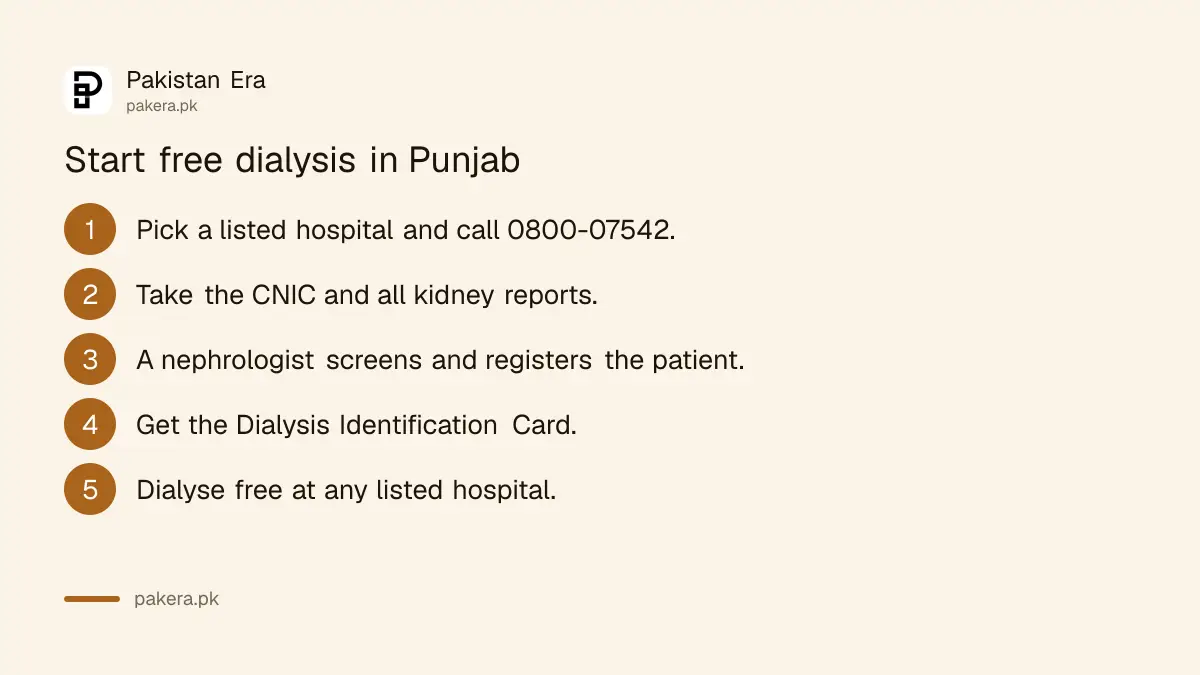
Go to a listed hospital with the patient's original CNIC and kidney reports. A certified nephrologist screens the patient and registers them at a designated centre. After verification, the patient gets a Dialysis Identification Card linked to their record, and can then dialyse at any listed hospital.
- Choose the nearest listed hospital from the tables above and call 0800-07542 to ask about a slot.
- Take the CNIC and all kidney reports and earlier dialysis records.
- Screening and registration by a certified nephrologist at a designated centre.
- Get your Dialysis Identification Card. It links your sessions to your record.
- Dialyse free at any listed hospital, with no out-of-pocket payment.
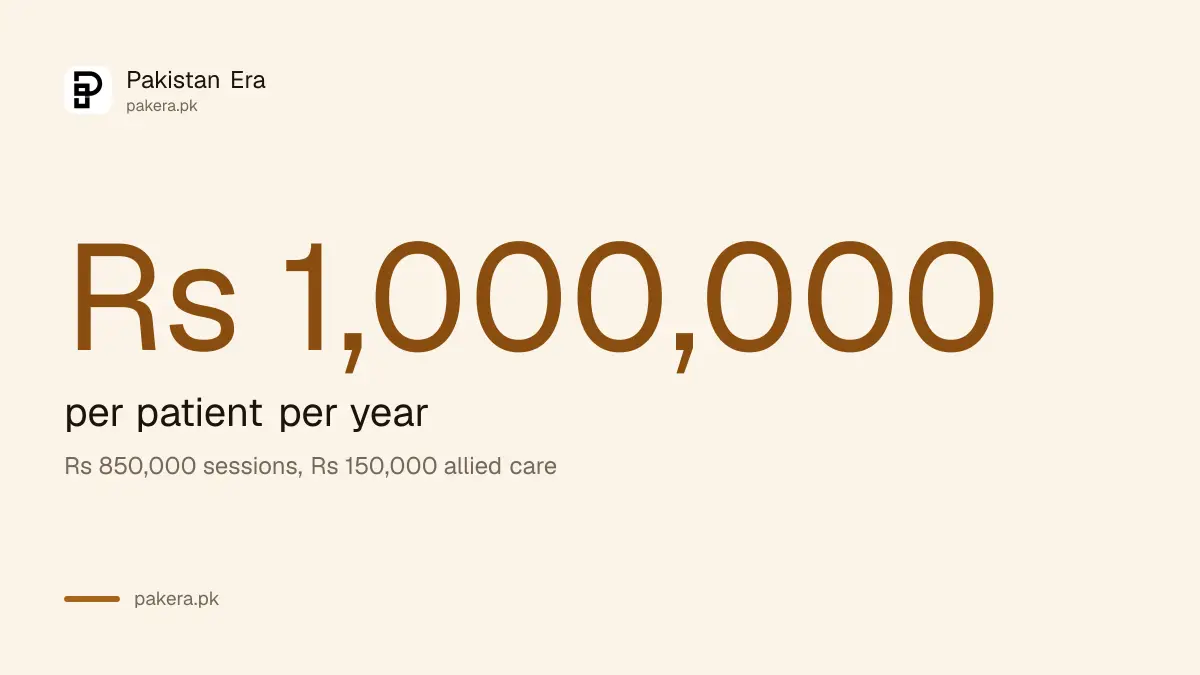
The yearly package is Rs 1,000,000 per patient: Rs 850,000 for dialysis sessions and Rs 150,000 for allied care such as an AV fistula, catheters, a permacath and lab tests. If a hospital asks you to pay, call the helpline, which runs 24 hours, or WhatsApp 0333-6756390 from Monday to Saturday, 8 am to 11 pm.
Some private names on the list, such as eye hospitals, look unusual for dialysis. The programmes share hospital lists in places. Always call before travelling to a private hospital for dialysis.
When a transplant or other help fits better
Dialysis keeps a kidney patient alive, but a transplant can end the need for it. Punjab pays for kidney transplants separately, under the CM Transplant Program, for patients registered with PHOTA, the Punjab Human Organ Transplantation Authority. Patients from outside Punjab can try SIUT or Indus, covered in kidney care at SIUT and PKLI.
Diabetes and high blood pressure are the usual roads to kidney failure. Free checks are available at government clinics; our page on free diabetes care in Punjab lists them.
Common questions
How many hospitals give free dialysis in Punjab?
PHIMC's current list has 227 hospitals in 40 districts: 114 government and 113 private. Lahore has 53 of them.
Who can get free dialysis in Punjab?
PHIMC says all permanent residents of Punjab are eligible. A nephrologist screens and registers the patient, and a Dialysis Identification Card is issued.
Is there a limit on free dialysis sessions?
The package is Rs 1,000,000 per patient per year, with Rs 850,000 for sessions and Rs 150,000 for allied care such as fistula surgery and tests.
Can I change my dialysis hospital?
PHIMC says registered patients can use dialysis sessions at any empanelled facility. Call 0800-07542 to arrange a slot at the new hospital.
Which Lahore government hospitals give free dialysis?
Mayo, Services, Sir Ganga Ram, Lahore General, Shaikh Zayed, PKLI, the Children's Hospital and the teaching hospitals at Shahdara, Kot Khawaja Saeed, Mian Meer, Mian Munshi, Said Mitha and Muhammad Nawaz Sharif.
How we verified this
What we checked and where we read it.
Last checked 15 November 2026. The hospital list, by district and sector, comes from PHIMC's dialysis programme page and its list of empanelled hospitals (227 rows, counted by us). Eligibility, the card, the Rs 1,000,000 package and helplines come from the programme overview PDF on the same page, which says "over 225" hospitals. The session count and spending figure come from the Punjab Specialized Healthcare and Medical Education Department's notice of 6 November 2026. One DG Khan private entry, Abwa Hospital, appears under Faisalabad on PHIMC's other lists.
About the author
Public Services and Education Journalist
Fajr Riaz is a journalist and content writer at Pakistan Era, based in Lahore. She covers the questions people meet in everyday life in Pakistan: how a public service works, what a change in the rules means, and where to find a reliable answer.