Iron Temperature Setting by Fabric in Pakistan: Lawn, Khaddar, Silk, Chiffon and Wool
Iron temperature by fabric in Pakistan: lawn and khaddar on high, wool and silk on medium, chiffon and nylon on low, plus what the dots on a care label mean.
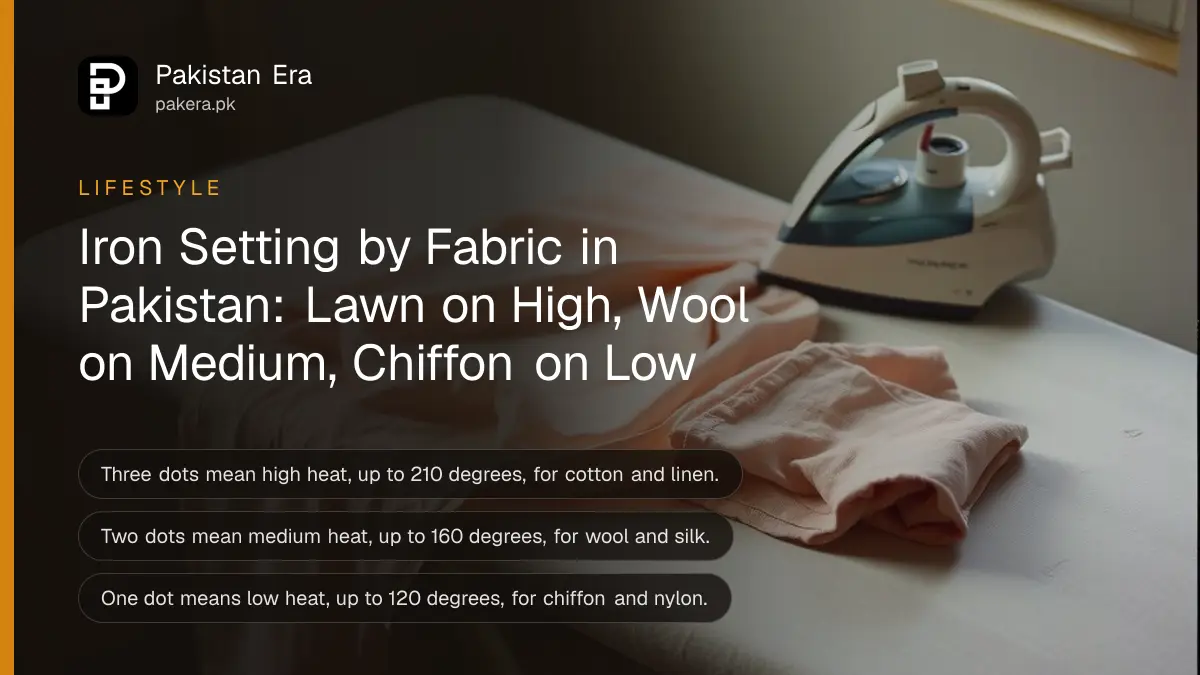
Set the iron by fabric: cotton lawn, khaddar and linen on high (three dots, up to 210°C) with steam; wool, silk and polyester blends on medium (two dots, up to 160°C) with a pressing cloth; chiffon, georgette, nylon and acrylic on low (one dot, up to 120°C) with no steam. For a blend, use the setting of the most delicate fibre. When unsure, start low and test inside a seam.
Most iron damage in Pakistani homes happens on a busy morning. The dial is still on cotton from the school uniform, and the next thing on the board is a polyester chiffon dupatta. One touch leaves a shiny, melted patch that never comes out. Matching the dial to the fabric takes five seconds and saves the outfit.
Iron settings by fabric at a glance
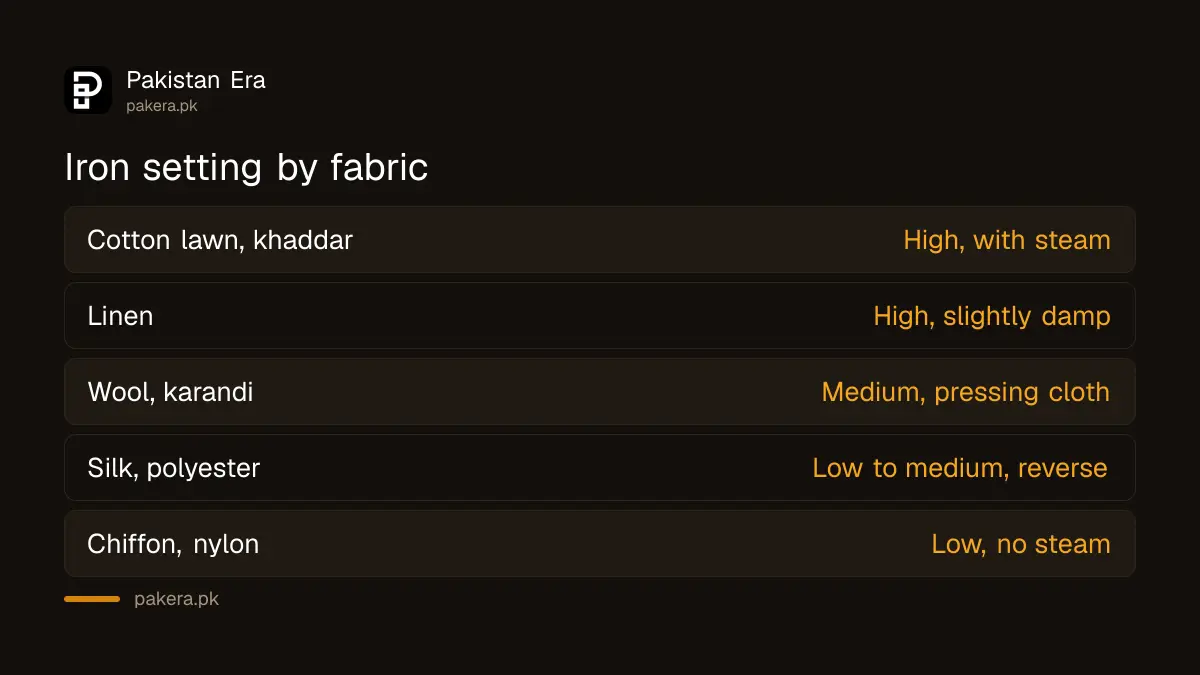
Cotton and linen take the most heat, wool and silk take medium heat, and synthetics like polyester, nylon and acrylic need low heat. The care label symbol confirms it: one dot is low, two dots medium, three dots high, and a crossed iron means no ironing.
| Fabric | Dial setting | Max heat | Steam | Tip |
|---|---|---|---|---|
| Cotton lawn, cambric, latha | High, three dots | 210°C | Yes | Iron while slightly damp |
| Khaddar | High, three dots | 210°C | Yes | Iron inside out to avoid shine |
| Linen | High, three dots | 210°C | Yes | Iron while slightly damp |
| Wool, karandi with wool | Medium, two dots | 160°C | Light | Pressing cloth, do not press hard |
| Silk, raw silk | Low to medium | 120 to 160°C | No | Reverse side, steam can mark it |
| Polyester, poly blends | Low to medium | 120 to 160°C | Light | Reverse side |
| Chiffon, georgette (synthetic) | Low, one dot | 120°C | No | Pressing cloth, keep the iron moving |
| Nylon, acrylic | Low, one dot | 120°C | No | Melts easily |
The temperatures come from the international care label system. The maximum sole plate heat is 120°C for low, 160°C for moderate and 210°C for hot. The meaning of every symbol on a label is set out under laundry care label symbols.
Read the label before you read the dial
The care label inside the seam is the brand's own instruction. If it shows one dot, use low heat even if the fabric looks like cotton. Many Pakistani suits that feel like lawn or khaddar are blends with polyester, and the label is the only way to know.
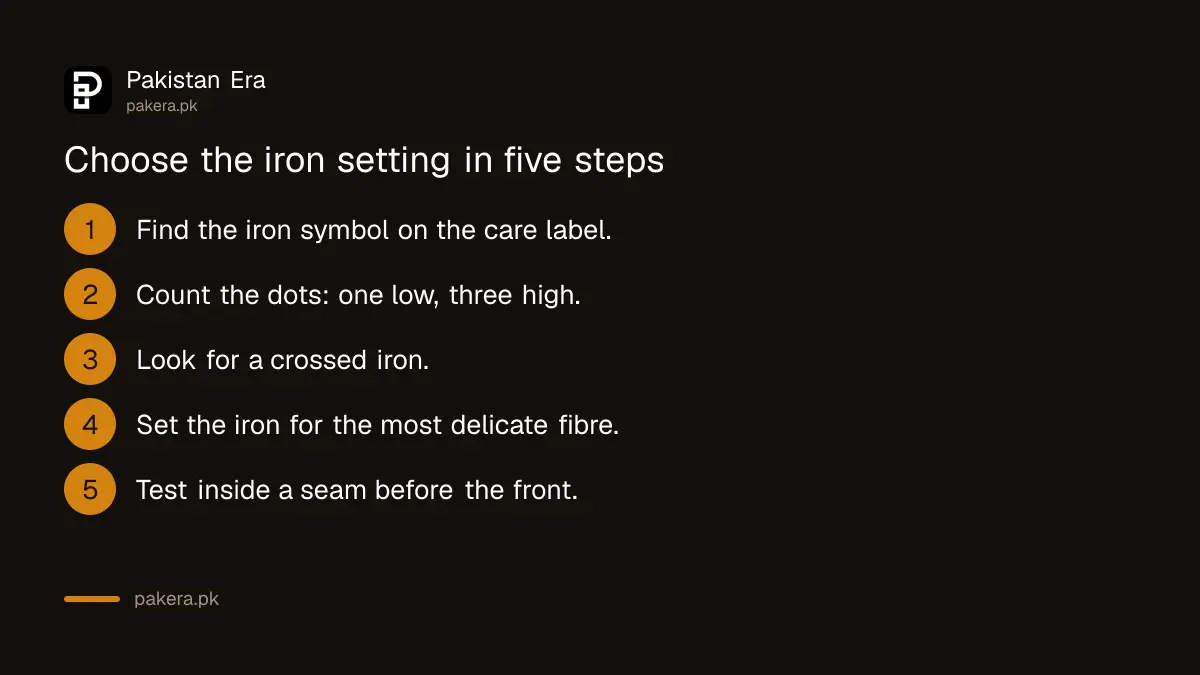
- Find the iron symbol on the care label, usually on the side seam of the kameez or the waistband of the trouser.
- Count the dots. One dot low, two dots medium, three dots high.
- Look for a crossed iron. That means do not iron at all, often on printed or coated fabric.
- Read the fibre content. For a blend, set the iron for the most delicate fibre.
- Test inside a seam or the hem before you touch the front.
No label? Treat it as the most delicate fabric it could be. Start on low, test on the hem, and turn the dial up one step at a time until the creases release.
How to iron lawn, khaddar and cotton suits
Cotton takes high heat and steam, and irons best when slightly damp. Iron darker cotton and khaddar inside out to avoid a shiny finish. Iron printed lawn on the back so the print does not fade or stick to the sole plate.
- Iron the kameez in this order: collar, cuffs, sleeves, then front and back panels.
- Spray dry cotton lightly with water if you have no steam.
- Iron embroidered necklines face down on a folded towel so the threadwork stays raised.
- Hang the kameez straight away so new creases do not form.
Heavy embroidery, sequins and velvet need a different approach, mostly steam with the iron held off the fabric. That method is set out step by step under ironing embroidered and velvet wedding clothes.
How to iron silk, chiffon and wool safely
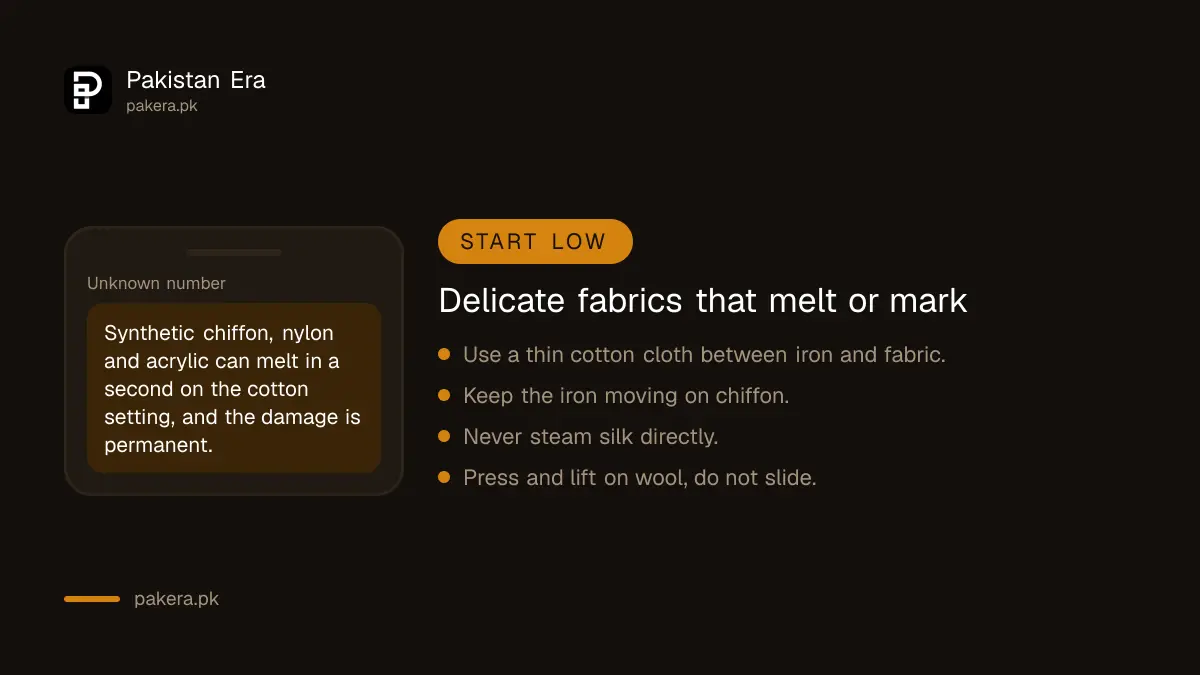
Use low or medium heat, iron on the reverse side, and put a thin cotton cloth between the iron and the fabric. Keep the iron moving. Never steam silk directly, because water can leave marks. For wool, press and lift rather than sliding.
| Fabric | Do | Do not |
|---|---|---|
| Silk dupatta | Low heat, reverse side, cloth on top | Spray water or steam on it |
| Chiffon or georgette | Lowest setting, keep the iron moving | Leave the iron still for a second |
| Wool shawl or sweater | Medium heat, damp pressing cloth, press and lift | Slide the iron or press hard |
| Polyester blends | Low to medium, reverse side | Use cotton setting |
Pashmina and fine wool shawls rarely need an iron at all. Hang them in a steamy bathroom for ten minutes, or hold a steam iron a few centimetres away. The full washing routine for them is under washing wool and cashmere at home.
Fix shine, scorch and melted spots
A shiny patch on dark cotton often lifts with a damp cloth and a quick pass of steam. A light yellow scorch on white cotton can fade with a wash. A melted patch on polyester or nylon is permanent, because the fibre itself has changed.
Clean the sole plate if anything melted onto it, while the iron is cold. A dirty plate drags and can mark the next garment. Buying a new iron? Look for a clear fabric dial and an adjustable steam control. Models and prices are in the iron price list for Westpoint and Anex.
Common questions
What iron setting is used for lawn?
Pure cotton lawn takes high heat, the three dot or cotton setting, with steam. Iron printed lawn on the reverse side. If the label shows fewer dots, the fabric is likely a blend and needs lower heat.
What temperature should I use for chiffon?
Use the lowest setting, one dot, up to 120°C, with no steam. Put a thin cotton cloth on top and keep the iron moving, because synthetic chiffon melts quickly.
Can I iron khaddar on high heat?
Yes, if it is cotton khaddar. Iron it inside out so it does not turn shiny. Khaddar blended with polyester needs medium heat.
What do the dots on an iron mean?
One dot is low heat, up to 120°C. Two dots are medium, up to 160°C. Three dots are high, up to 210°C. A crossed iron means do not iron.
How do I iron a blend of cotton and polyester?
Set the iron for the most delicate fibre, which is polyester. Start on low to medium and test on the hem first.
How do I remove an iron shine mark?
Lay a damp cotton cloth over the shiny patch and pass a steam iron over it lightly. If the fabric has melted, the mark cannot be removed.
How we verified this
What we checked and where we read it.
We checked the three heat levels on the GINETEX care symbols page on 15 November 2026: maximum sole plate temperatures of 120°C, 160°C and 210°C, a steam warning on the low setting, and "avoid heavy pressure" on moderate. The fabric by fabric settings, reverse-side ironing, pressing cloth for wool and no steam on silk come from the Panasonic fabric ironing chart, read the same day. The page does not set dots against temperatures, so the dot mapping follows the standard care label system. The Pakistani fabric names (lawn, khaddar, karandi) are matched to their fibre.
About the author

Lifestyle & Clothing Writer
Mahnoor Siddiqui is a lifestyle and clothing writer at Pakistan Era, joining the new lifestyle desk in November 2026.