How to Iron Embroidered and Velvet Wedding Clothes at Home in Pakistan: Heat for 5 Fabrics, 7 Steps
How to iron embroidered and velvet wedding clothes at home in Pakistan: heat for 5 fabrics, 7 steps for embroidery, steam for velvet, and 5 mistakes to avoid.
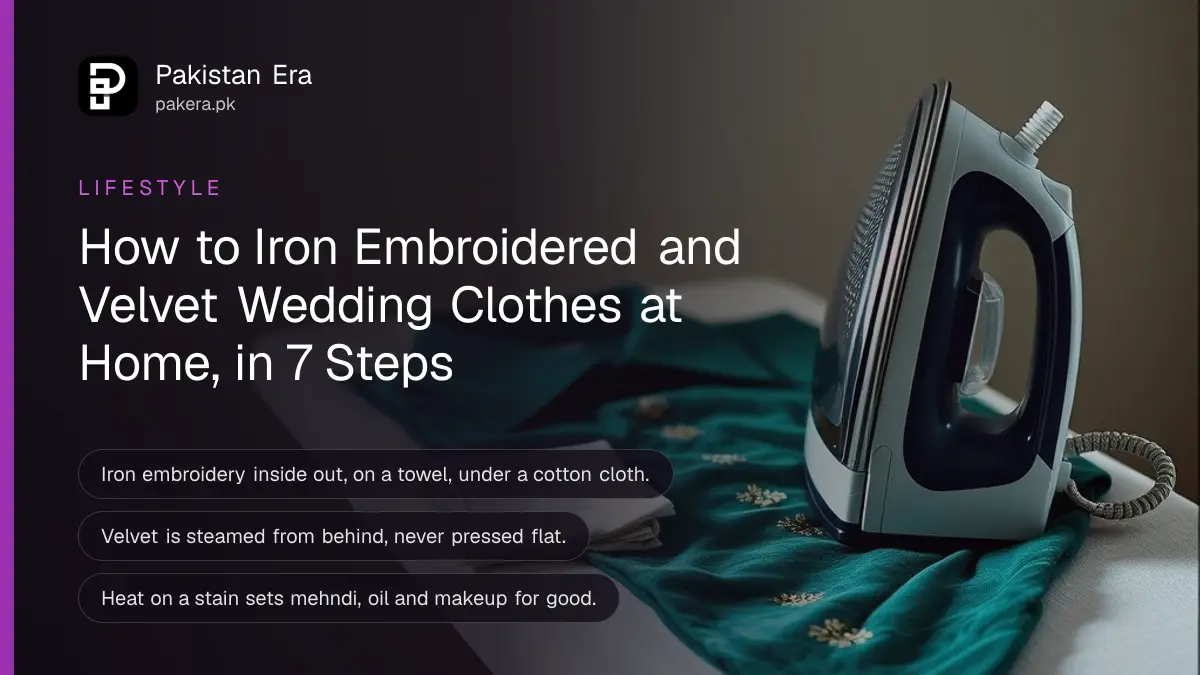
Iron embroidered and velvet wedding clothes inside out, on low to medium heat, with a thin cotton cloth between the iron and the fabric. Never press velvet flat: steam it from behind or hang it in a steamy bathroom. Keep the iron off sequins, stones and zari work completely.
A heavy wedding suit costs more than anything else in most wardrobes, and one careless press can leave a shiny patch on velvet or melt a row of sequins. The tailor will do it for you, but in a wedding week there is rarely time to send it out and wait. So it helps to know how to do it at home, safely.
This guide covers every common wedding fabric, the heat to use, a seven step method for embroidered suits, and how to rescue velvet that has gone flat.
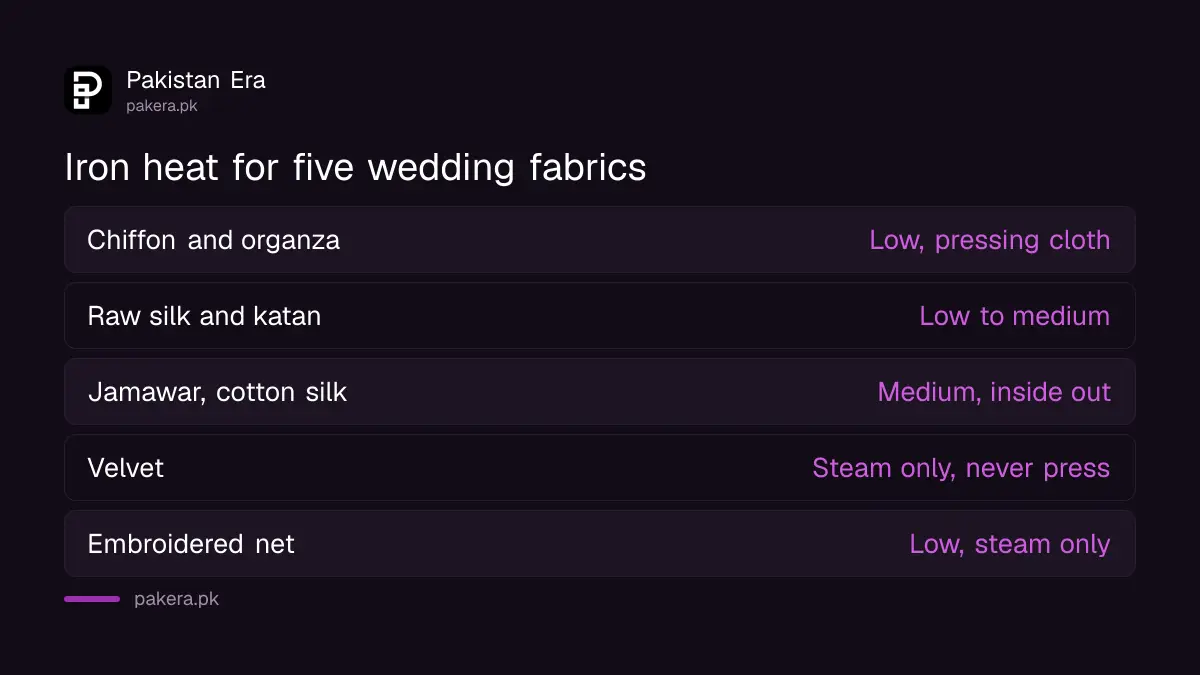
Set the heat by fabric, not by how creased it is
Each fabric has a safe heat limit. Silk, chiffon and organza need low heat. Cotton silk and jamawar take medium. Velvet should not be pressed at all. Turning the heat up to beat a deep crease is how most wedding clothes get scorched.
| Fabric | Iron setting | Method |
|---|---|---|
| Chiffon and organza | Low (one dot) | Inside out, pressing cloth, no steam spray |
| Raw silk and katan | Low to medium | Inside out, pressing cloth, light steam |
| Jamawar and cotton silk | Medium (two dots) | Inside out, pressing cloth |
| Velvet | Do not press | Steam from behind, or bathroom steam |
| Net with embroidery | Low | Steam only, iron held off the fabric |
The dots on the care label tell you the limit. Our chart of laundry care symbols explains each one. If there is no label, start at the lowest setting and test on the inside of a hem.
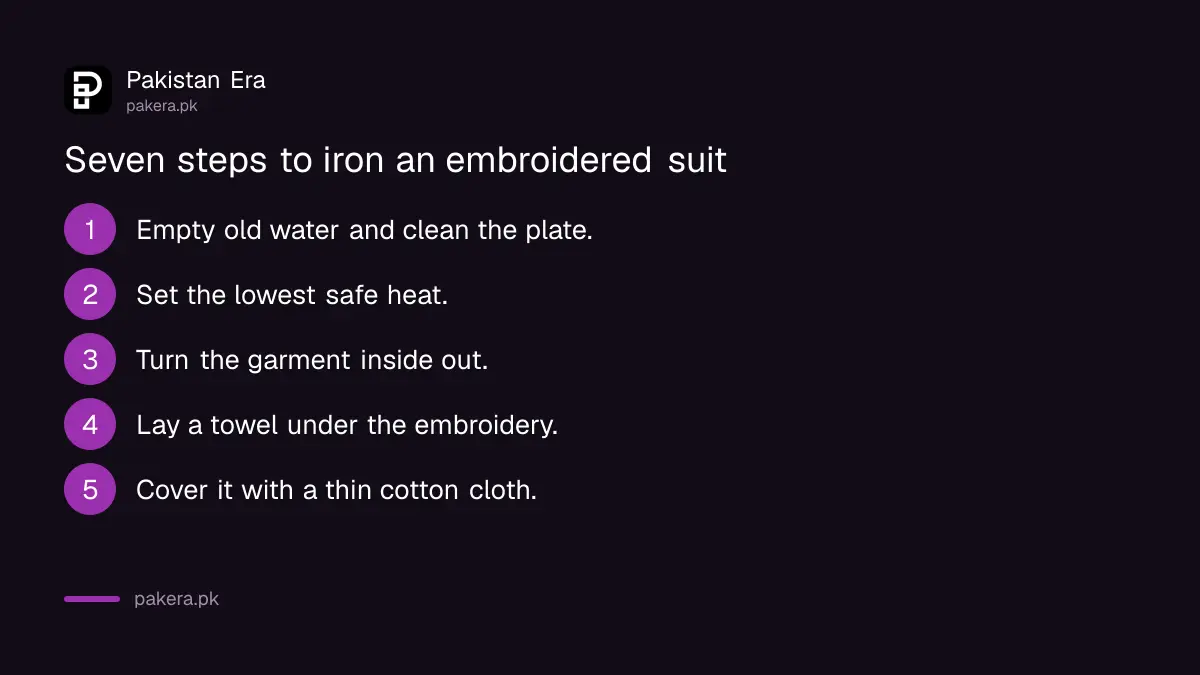
How to iron an embroidered suit in seven steps
Turn the shirt inside out, lay a soft towel under the embroidered panel, cover it with a thin cotton cloth and press, do not slide. The towel lets the raised work sink in instead of being crushed flat.
- Empty the iron of old water and wipe the plate clean.
- Set the lowest heat that suits the fabric and let it settle.
- Turn the garment inside out.
- Lay a folded soft towel under the embroidered area.
- Cover it with a thin white cotton cloth, such as an old dupatta or pillowcase.
- Press down for two seconds, lift, and move. Do not slide the iron.
- Hang it at once on a padded hanger so new creases do not set.
Plain areas such as the back of the shirt or the trouser can be ironed the normal way, still on the inside. Keep the iron well away from sequins, stones, mirror work and gota. Heat can melt plastic sequins and turn metallic thread dull.
Velvet needs steam, never a flat iron
Pressing velvet crushes its pile, the short raised fibres that give it its shine, and leaves a flat, shiny mark. Steam it from the back instead, with the iron held a few centimetres away, or hang it in the bathroom while a hot shower runs for 10 minutes.
For a garment steamer, hold it on the inside of the fabric and move slowly from top to bottom. After steaming, brush the pile gently in one direction with a soft clothes brush or your palm. Let it dry on a hanger for an hour before wearing.
Already have a flat patch? Steam that area from behind for a few seconds, then lift the pile with a soft brush. Many marks come back. A deep scorch will not. Buying new? Our velvet suit price list compares the main brands.
Five mistakes that ruin a wedding outfit
Most damage comes from a few common habits. Avoid these and your outfit will last many weddings.
- Spraying water on silk. It leaves water spots. Use steam or a damp pressing cloth.
- Ironing over a stain. Heat sets oil, mehndi and makeup for good.
- Ironing on the right side. It leaves a shine on dark fabrics.
- Leaving the iron on one spot while you answer the phone.
- Hanging a heavy lehenga by its waist on a thin wire hanger.
Clean stains before you iron. Our guide to removing mehndi, oil and makeup stains has the method for each one.
Store it so it needs less ironing next time
Hang heavy suits on padded hangers inside a cotton garment bag, or fold them with a sheet of tissue between the folds. Plastic dry cleaning covers trap damp and can yellow light fabrics. Refold along different lines every few months so the creases do not become permanent.
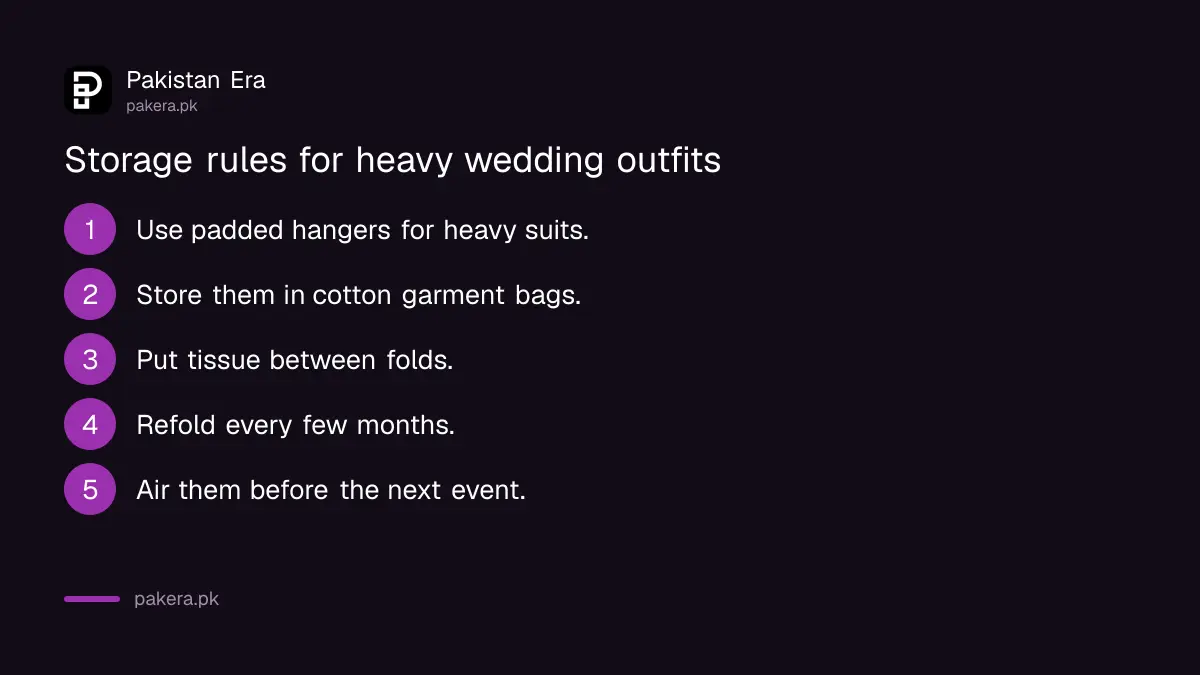
Keep wedding clothes away from naphthalene balls placed directly on the fabric, and air them for a few hours before the next event. If they smell of the trunk, the steps in our guide to removing the musty smell from stored clothes help.
Common questions
Can I iron velvet?
Not directly. Pressing crushes the pile. Steam it from the inside with the iron held off the fabric, or hang it in a steamy bathroom.
How do I iron an embroidered shirt without damaging it?
Turn it inside out, lay a towel under the embroidery, cover it with a cotton cloth and press on low heat without sliding.
What heat should I use for chiffon?
The lowest setting, usually one dot, with the shirt inside out and a pressing cloth. Do not spray water on chiffon.
Can I iron over sequins?
No. Many sequins are plastic and melt. Iron the plain areas only and steam around the work from behind.
How do I remove a shiny mark from ironing?
Steam the spot and brush it gently. On wool and velvet the shine often lifts. A scorch mark is permanent.
Should I send a bridal outfit to a dry cleaner instead?
Yes, for heavy bridal lehengas and anything with stones or delicate zari. Home steaming is fine for a quick touch up between functions.
About the author

Lifestyle & Clothing Writer
Mahnoor Siddiqui is a lifestyle and clothing writer at Pakistan Era, joining the new lifestyle desk in November 2026.