Remove the Musty Smell From Stored Winter Clothes in Pakistan: 5 Steps, Naphthalene Smell and Moth Holes
How to remove the musty or naphthalene smell from winter clothes stored all summer in Pakistan: 5 steps, a vinegar rinse, mould, moth holes and better storage.

To remove the musty smell from winter clothes that sat in a trunk or cupboard all summer, air them first, then wash what the label allows and treat the rest with sun-free airing, a vinegar rinse or a dry cleaner. Start by hanging everything in fresh air in the shade for a day. Most of the smell is trapped damp and goes with air alone. Wash sweaters and suits in cold water with a cup of white vinegar in the rinse if the smell stays. Look for moth holes and mould spots before anything goes back in the cupboard.
November is unpacking month. The pethi (storage trunk) comes down from the loft, the bed box opens, and out comes a year of shawls, sweaters and jackets that smell of naphthalene balls, damp walls or both. After a humid monsoon in Lahore or Karachi, the smell can be strong. It is fixable in a weekend.
Find out what kind of smell it is
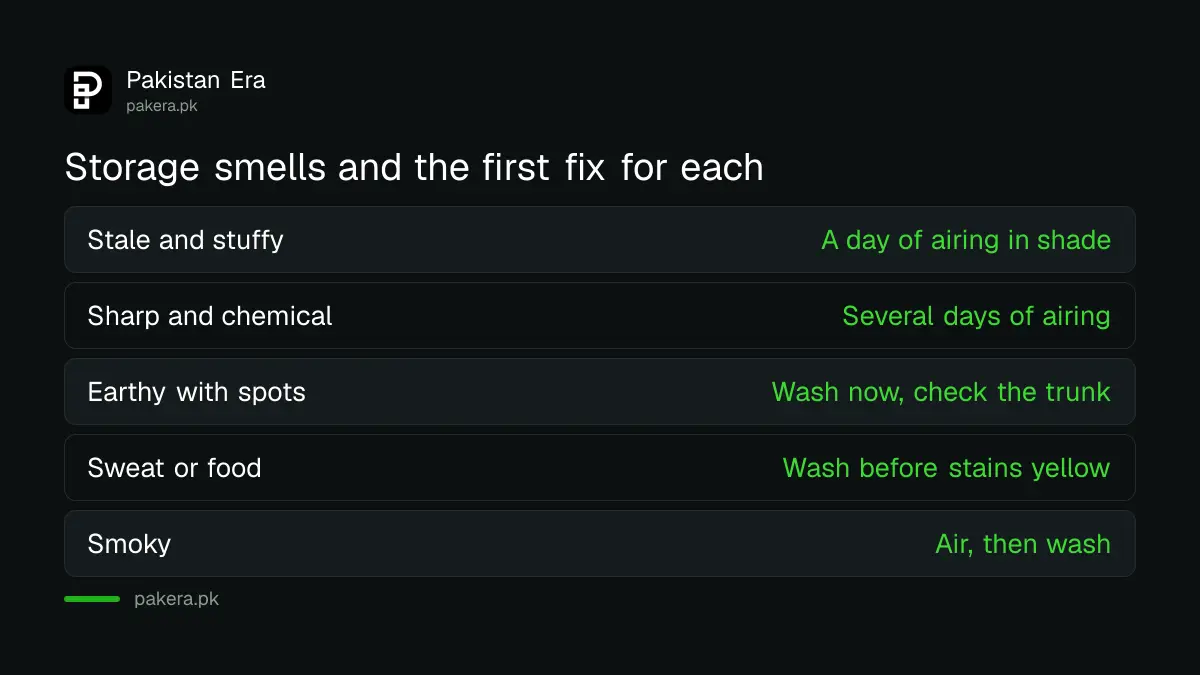
Stored clothes usually smell of one of three things: trapped damp, naphthalene or moth balls, or mould. Damp smells stale and goes with airing. Naphthalene smells sharp and chemical and needs more airing. Mould smells earthy and often shows as small grey, green or black spots.
| Smell | Likely cause | First fix |
|---|---|---|
| Stale, stuffy | Damp air trapped in the fabric | A day of airing in shade with a breeze |
| Sharp, chemical | Naphthalene or moth balls | Several days of airing, then a wash |
| Earthy, sour, with spots | Mould from damp storage | Wash at once, check the trunk |
| Sweat or food | Stored without washing | Wash, as the stain may also yellow |
| Smoky | Kitchen or heater smoke | Airing, then a wash |
Smell each piece and sort them into piles before you start. It saves washing things that only need air.
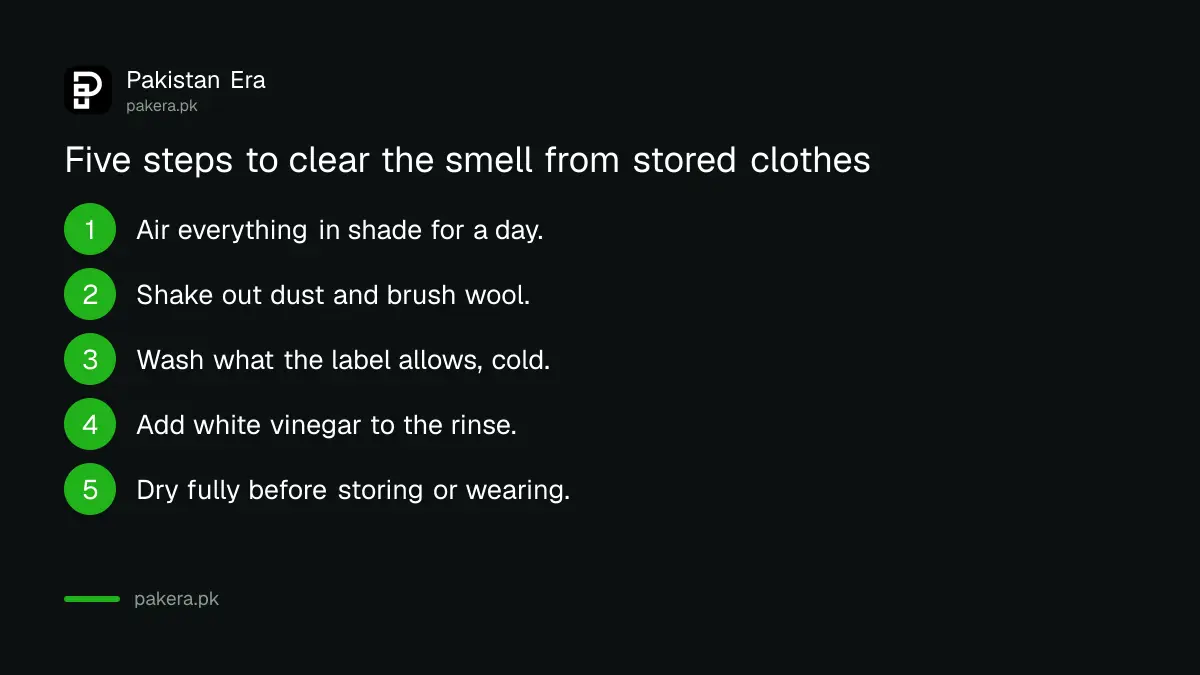
Five steps to get rid of the smell
Work from the gentlest fix to the strongest. Air everything first, wash what still smells, add vinegar to the rinse if needed, dry fully, and only then put clothes away or wear them. Do not wear a strongly naphthalene-smelling garment straight from the trunk, especially on a child.
- Air them. Hang each piece on a hanger or a line in the shade, with a breeze, for a full day. A covered balcony or veranda is ideal. Bring them in before the evening damp.
- Shake and brush. Shake out dust and moth eggs, and brush wool along the grain with a soft clothes brush.
- Wash what the label allows. Cold water and a mild liquid detergent for wool, khaddar and karandi. Follow the care label for everything else.
- Add white vinegar to the rinse. About one cup in a bucket of rinse water helps lift stubborn smells. Rinse again in plain water after.
- Dry completely. A garment that goes back damp will smell again within days. Dry in the shade until there is no cool feeling left in the seams.
For items you cannot wash, such as an embroidered shawl, a coat with a lining or a velvet suit, keep airing for two or three days. If the smell stays, take it to a dry cleaner.
Naphthalene smell needs extra care
Naphthalene balls (keede maar goliyan) are the classic moth guard in Pakistani trunks, and their smell clings to wool for days. Air the clothes for several days, wash what you can, and keep the clothes away from babies until the smell has gone completely.
Naphthalene is a pesticide, not a perfume. Breathing it in a closed room is not a good idea, and small children are more sensitive to it. Handle the balls with gloves, keep them out of reach of children, and never put them loose on clothes. Put them in a small cloth pouch in a corner of the trunk instead.
Safer, gentler choices for next year are dried neem leaves, cedar wood blocks or cloves wrapped in muslin. They are milder deterrents rather than a guarantee, so the most reliable protection is still to store clothes clean and dry in a closed box.
Mould spots and moth holes
Check every piece for small spots and holes while you air them. Mould spots on cotton can often be washed out if caught early. Moth holes in wool show that larvae have been feeding, so check the other woollens and clean the trunk before anything goes back in.
- Mould on cotton or khaddar: brush off outdoors, then wash. For white cotton only, an oxygen bleach may help if the care label allows it.
- Mould on wool or silk: a dry cleaner is safer, as home scrubbing can damage the fibre.
- Moth holes: small holes in a sweater can be darned. Larger damage on a good shawl is worth showing to a rafoogar (darning specialist).
- The trunk itself: empty it, wipe it with a cloth and a little vinegar water, and leave it open in the air for a day.
Mould means the storage spot was damp. A trunk against an outside wall or under a leaking roof will do it again next year. Move it, or lift it off the floor on bricks or a stand.
Store winter clothes properly in February
The best fix for next November is how you pack in February. Wash or dry clean everything first, dry it completely, fold it with a cotton cloth between layers, and store it in a clean trunk or box away from damp walls. Air the trunk once in summer, on a dry day.
- Never store worn clothes. Sweat and food attract moths and turn into yellow stains.
- Pick a dry day, not a foggy week, to pack.
- Wrap good shawls in old cotton dupattas or muslin, not plastic bags, which trap damp.
- Put a pouch of neem leaves or cloves in each corner.
- Open and air the trunk for an hour once in the summer, before the monsoon if you can.
Our steps to wash wool and cashmere at home show how to clean woollens before storage. For printed suits, the rules to wash khaddar and karandi without fading keep colours intact. And the winter 2026 outlook shows how soon you will need the heavy pieces.
Common questions
How do I get the musty smell out of stored clothes without washing?
Hang them in fresh air in the shade for a day or two. Most damp smells leave with airing alone.
Does vinegar remove smell from clothes?
A cup of white vinegar in the rinse water helps lift stubborn smells. Rinse again in plain water afterwards.
How long does the naphthalene smell take to go?
Usually several days of airing in shade with a breeze. Washing speeds it up for washable items.
Is it safe to use naphthalene balls for clothes?
Naphthalene is a pesticide. Keep the balls in a pouch, away from children, and air clothes well before wearing them.
Can I put stored clothes in direct sun to remove the smell?
Shade is better. Strong sun fades dark wool and printed suits. Use a breezy shaded place.
What can I use instead of naphthalene for winter clothes?
Dried neem leaves, cedar blocks or cloves in muslin pouches are gentler options. Store clothes clean and dry in a closed box as well.
How we verified this
What we checked, where we read it, and what we could not confirm.
This is a general home care guide written on 5 November 2026. The steps are standard garment care practice for stored clothes, and care label meanings follow the GINETEX care symbol system (ginetex.net), which we read on 5 November 2026. Neem, cedar and cloves are traditional moth deterrents, not tested products. We did not test any of these methods for this page.
About the author

Lifestyle & Clothing Writer
Mahnoor Siddiqui is a lifestyle and clothing writer at Pakistan Era, joining the new lifestyle desk in November 2026.