How to Measure for a Sherwani in Pakistan: 8 Measurements and a Size Chart in Inches
Measure for a sherwani at home in 8 steps: collar, chest, waist, shoulder and more, plus a size chart in inches and what a tailor can and cannot alter later.
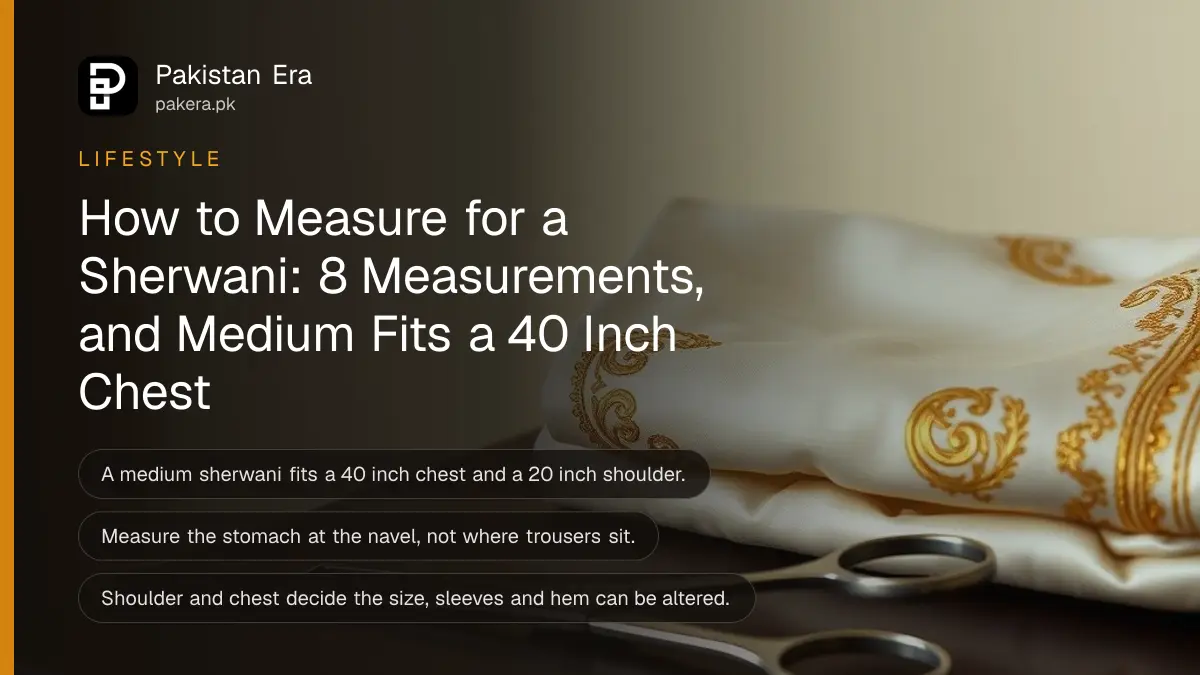
To measure for a sherwani, take eight numbers with a soft tape over a thin kurta: collar, chest, waist, hip, shoulder, sleeve, length and bicep. A medium sherwani on one Pakistani maker's chart fits a 40 inch chest, a 20 inch shoulder and a 36 inch waist. Write the numbers down, take them to the store or the tailor, and order four to six weeks before the barat.
December is the busiest month for grooms and their brothers. Tailors are booked, and a sherwani that is tight at the shoulder is very hard to fix in a week. Getting the measurements right once saves a second trip and a rushed alteration.
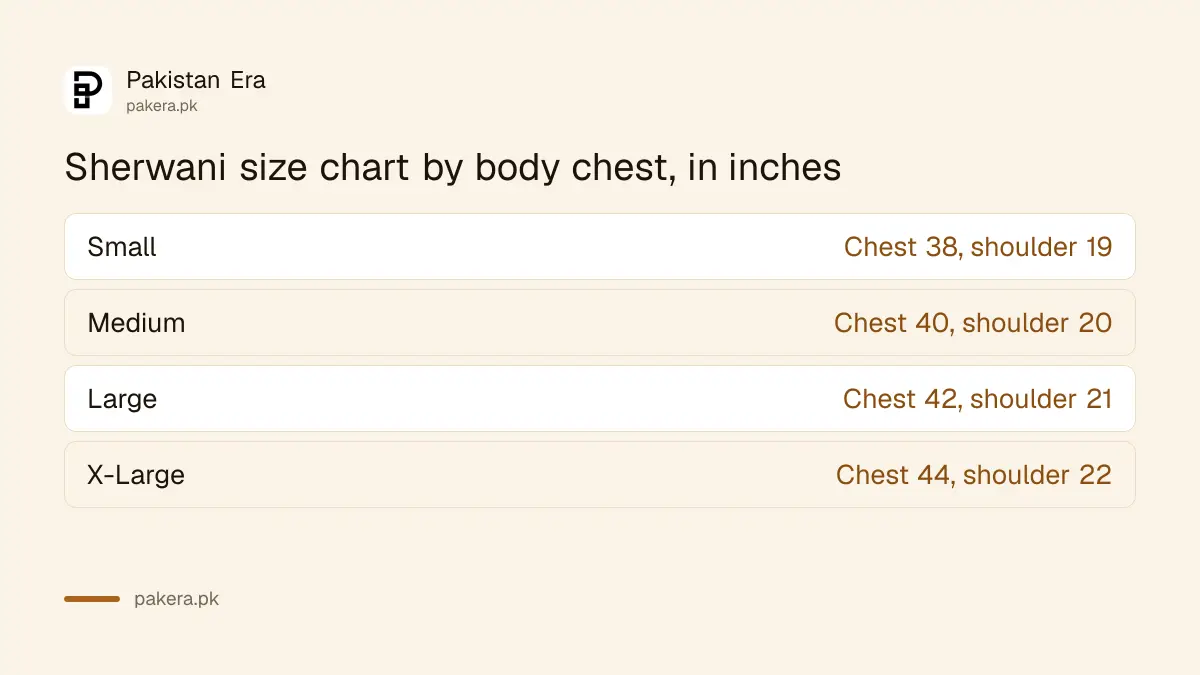
| Size | Collar | Shoulder | Chest | Waist | Hip | Sleeve | Length |
|---|---|---|---|---|---|---|---|
| Small | 16 | 19 | 38 | 34 | 40 | 24.5 | 40 |
| Medium | 16.5 | 20 | 40 | 36 | 41 | 25 | 41 |
| Large | 17 | 21 | 42 | 38 | 42 | 25.5 | 42 |
| X-Large | 17.5 | 22 | 44 | 40 | 44 | 26 | 44 |
All figures are in inches, from the sherwani size chart that Amir Adnan publishes. Chest, waist and hip are body sizes, meaning your own measurements, not the width of the garment. Other brands cut slightly differently, so check each label's own chart before you pay.
Measure for a sherwani at home in eight steps
You need a soft cloth tape, a thin kurta and a second person. Stand straight, breathe normally and keep the tape flat without pulling it tight. Take every number twice. If the two readings differ, use the larger one.
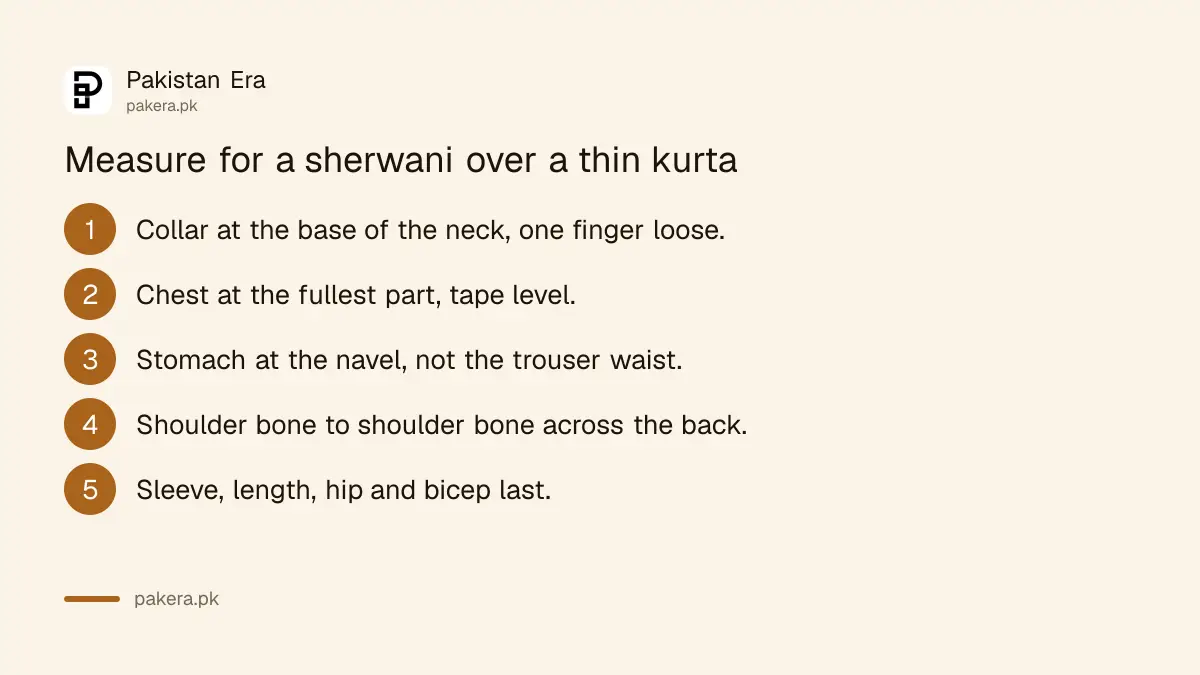
- Collar: measure around the base of the neck, where a band collar sits. Slip one finger under the tape so the collar is not tight when buttoned.
- Chest: measure around the fullest part of the chest, under the arms and across the shoulder blades. Keep the tape level with the floor.
- Waist: measure around the stomach at the navel, not where your trousers sit. A sherwani buttons straight down the front, so the stomach decides the fit.
- Hip: measure around the widest part of the seat. A long sherwani must not pull across the hips when you sit.
- Shoulder: measure across the back from one shoulder bone to the other, in a straight line.
- Sleeve: measure from the shoulder bone down to the wrist bone, with the arm hanging straight.
- Length: measure from the top of the shoulder, next to the neck, down to where the sherwani should end. Most end at or just below the knee.
- Bicep: measure around the widest part of the upper arm. Tailors use it to cut the armhole and sleeve.
For a ready sherwani, match your chest and shoulder to the chart first. For a tailored one, give all eight numbers and let the tailor add room. The same chest and shoulder method is used on a men's blazer size chart, so a blazer that fits you well is a good guide.
Shoulder and chest decide the size, the rest can be altered
Pick the size whose shoulder and chest match yours. A tailor can shorten sleeves, take in the waist and shorten the hem. Widening the shoulder or the chest of an embroidered sherwani is rarely possible, because there is little spare cloth.
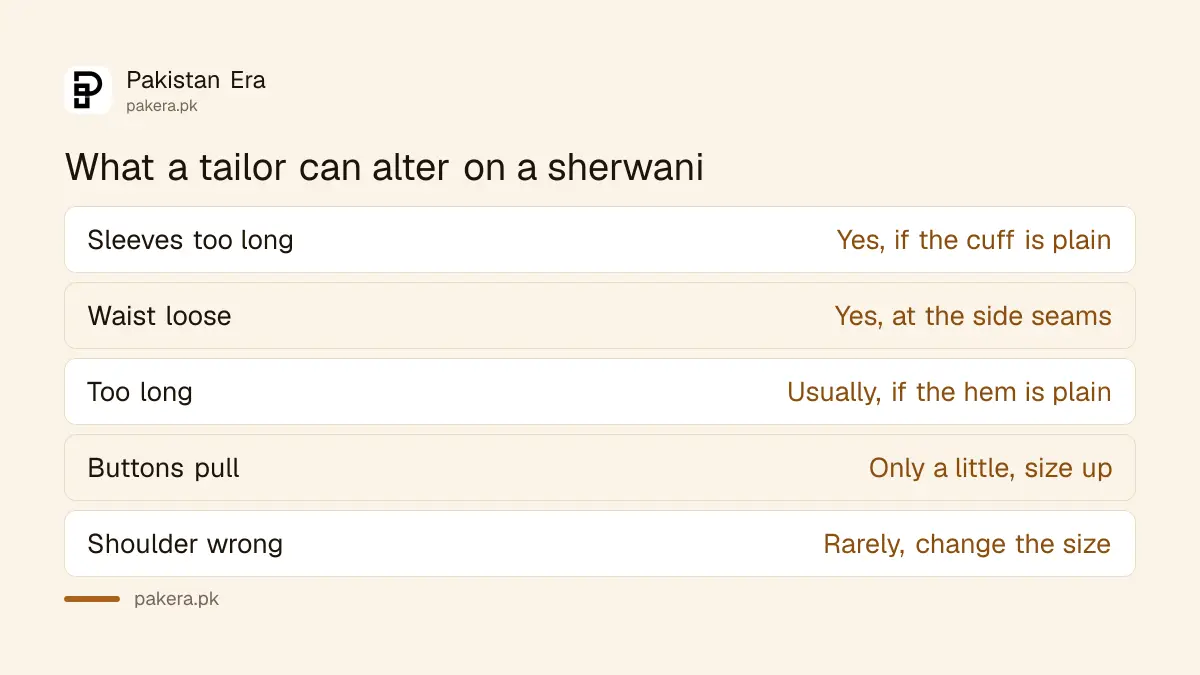
| Problem at the trial | Can it be fixed? |
|---|---|
| Sleeves too long | Yes, unless the cuff is embroidered |
| Waist or stomach loose | Yes, at the side seams |
| Sherwani too long | Usually, if the hem border is plain |
| Buttons pull across the stomach | Only a little, size up instead |
| Shoulder too narrow or too wide | Rarely, choose another size |
Embroidery changes everything. When the border runs along the cuff or the hem, shortening means unpicking and restitching the work, which costs more and takes days. Ask about this before you buy, not after.
The kurta and pajama under the sherwani need their own numbers
The kurta under a sherwani should be loose enough to sit smoothly. The churidar or pajama needs waist, length, thigh, calf and ankle numbers. Measure them on the same day as the sherwani, in the shoes you will wear.
We compared the maker's sherwani chart with its own regular kurta chart. The medium sherwani is for a 40 inch body chest, while the medium regular kurta measures 23.5 inches across half the chest, which is 47 inches all round. That gap is the room a kurta needs so it does not bunch under the coat. The men's kurta and shalwar size chart lists the full kurta sizes.
- Churidar length: from the waist to the ankle, plus extra for the gathers. Tell the tailor you want a churidar so he adds the length.
- Thigh and calf: around the widest part of each, standing.
- Ankle: around the ankle bone. The opening must pass over the heel.
- Kulla or turban: measure around the head, across the forehead and above the ears.
Order early and get the trial date in writing
Order four to six weeks before the barat in wedding season. Ask for one trial fitting at least ten days before the function, so there is time for a second fitting. Write the delivery date, price and included pieces on the receipt.
Bring the shoes, the waistcoat if any, and the kurta to the trial. Sit down, raise your arms and walk a few steps. A sherwani that only fits while standing still will pull all evening. Sherwani prices at Pakistani brands, and what a usual price includes, are listed in sherwani price in Pakistan.
If a tailor misses the agreed date or will not fix a fault he made, keep the receipt and send a written notice first. The next step is a consumer court complaint in your district.
Common mistakes that lead to a bad sherwani fit
Most bad fits come from three things: measuring over a sweater, measuring the trouser waist instead of the stomach, and ordering too late for a second fitting. Each one is easy to avoid once you know it.
- Measuring over a thick sweater or waistcoat adds two or three inches.
- Pulling the tape tight gives a size that is too small.
- Guessing the length. Decide it with the shoes on, in front of a mirror.
- Skipping the sitting test. Sit in a chair at the trial and check the buttons.
- Steaming embroidery with a hot iron. Velvet and zari need steam held away from the cloth, as set out in ironing embroidered wedding clothes.
Common questions
What size sherwani do I need for a 40 inch chest?
Medium, on the Amir Adnan sherwani chart. It is cut for a 40 inch body chest, a 20 inch shoulder and a 36 inch waist. Check the shoulder too before you choose.
Should I measure my chest over a kurta or a vest?
Over a thin kurta or vest. Never over a sweater. A thick layer adds inches and the sherwani will be loose on the day.
How long should a sherwani be?
Most sherwanis end at or just below the knee. On the maker's chart the length runs from 40 inches for small to 44 inches for extra large.
How long does a tailor take to stitch a sherwani?
It depends on the tailor and the season. Order four to six weeks before the barat in December, and ask for a trial at least ten days before the function.
Can a tight sherwani be let out?
Only a little, and only if there is spare cloth in the side seams. Embroidered fronts rarely have any. Size up if the buttons pull.
What should I measure for a churidar pajama?
Waist, length from waist to ankle, thigh, calf and ankle. Tell the tailor it is a churidar so he adds extra length for the gathers.
How we verified this
What we checked and where we read it.
We checked the Amir Adnan size guide on 24 November 2026. It lists the sherwani chart used in the table (collar, shoulder, body chest, body waist, sleeve, body hip and length for small to extra large) and the regular and slim fit kurta charts we compared it with. The measuring steps follow the method used for tailored jackets and kurtas in Pakistan. Brand charts differ, so check the chart of the label you buy from.
About the author

Lifestyle & Clothing Writer
Mahnoor Siddiqui is a lifestyle and clothing writer at Pakistan Era, joining the new lifestyle desk in November 2026.