Hepatitis B and C Cases in Pakistan, Week 42 2026: 3,837 Suspected, Sindh Labs Find 988 Hepatitis C
Pakistan reported 3,837 suspected hepatitis B, C and D cases in week 42 of 2026, NIH says. Sindh labs found hepatitis C in 988. See districts and free tests.
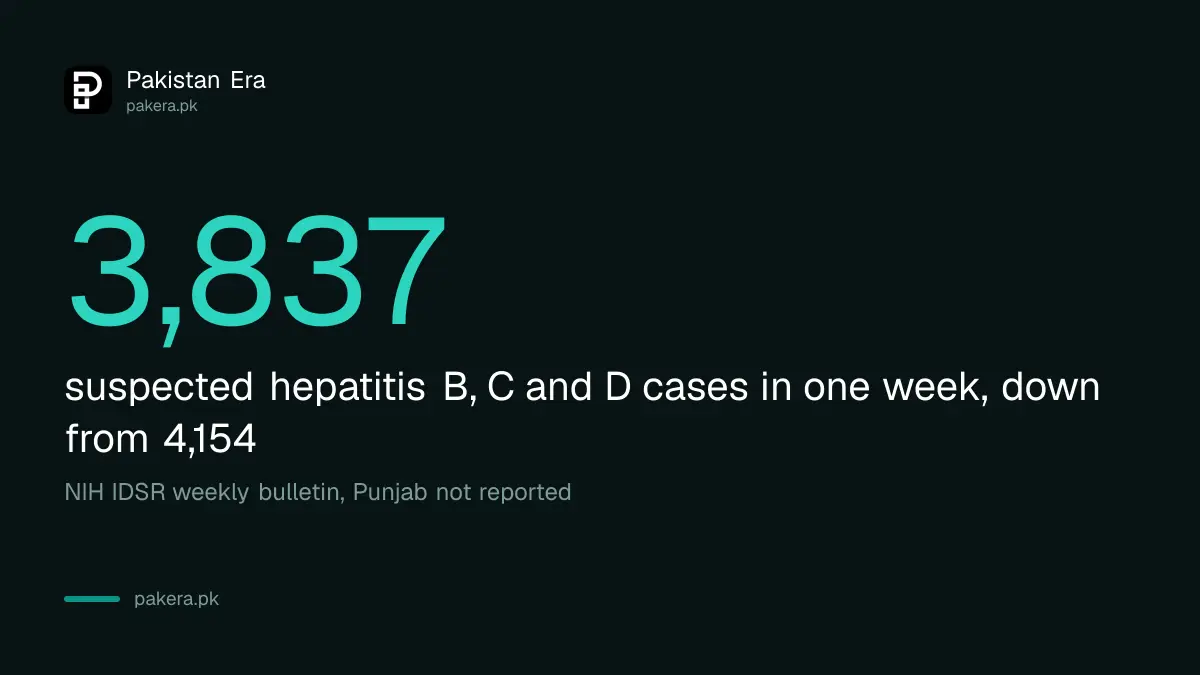
Pakistan reported 3,837 suspected cases of hepatitis B, C and D in week 42 of 2026, down from 4,154 a week earlier, the National Institutes of Health (NIH) said in its weekly bulletin posted on 11 November 2026. Sindh's public health labs found hepatitis C in 988 of 13,955 people tested, about 7 in every 100.
Sindh sent 3,549 of the suspected cases, almost all of the national count. Sanghar led every district with 502. Balochistan's labs found hepatitis B in 95 of 798 samples, a much higher share than anywhere else. Punjab did not report. Below are the province and district figures, the lab results, and where to get a free test.
Suspected hepatitis B, C and D fell 8 per cent to 3,837
The NIH bulletin groups hepatitis B, C and D together as "VH (B, C and D)". These three spread mainly through blood, for example unsafe injections, reused needles, unscreened blood transfusions and shared razors. Hepatitis B can also pass from mother to baby.
The count fell by 317 in week 42, a drop of about 8 per cent. NIH lists hepatitis B, C and D among the diseases that decreased this week. The figures are suspected cases logged at clinics; many people with long-term hepatitis have no symptoms and are never counted.
| Province or area | Week 41 | Week 42 | Change |
|---|---|---|---|
| Sindh | 3,921 | 3,549 | down 372 |
| Khyber Pakhtunkhwa | 136 | 139 | up 3 |
| Balochistan | 46 | 73 | up 27 |
| Gilgit-Baltistan | 31 | 53 | up 22 |
| Azad Jammu and Kashmir | 20 | 23 | up 3 |
| Islamabad | 0 | 0 | no change |
| Punjab | not reported | not reported | |
| Total | 4,154 | 3,837 | down 317 |
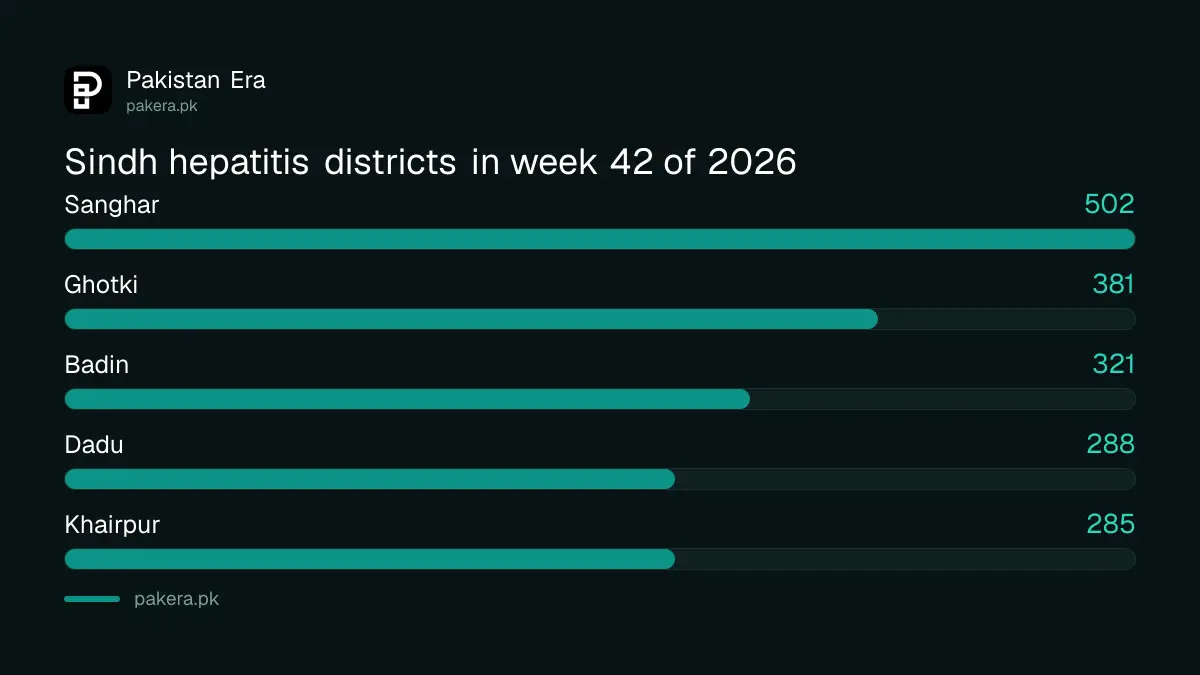
Sanghar, Ghotki and Badin lead Sindh's hepatitis count
Sanghar reported 502 suspected cases of hepatitis B, C and D in week 42. Ghotki had 381, Badin 321, Dadu 288 and Khairpur 285. Tando Allahyar followed with 263.
Karachi's seven districts together reported 116, far fewer than these rural districts. Karachi Central had 77 and Karachi West 19. In Khyber Pakhtunkhwa the count was 139 for the whole province.
Sindh's labs found hepatitis C in 988 of 13,955 people tested
Lab testing gives a clearer picture than clinic counts. In week 42, Sindh's public health labs tested 13,955 people for hepatitis C and found 988 positive, about 7.1 per cent. They tested 13,278 people for hepatitis B and found 267 positive, about 2 per cent.
Balochistan's labs found a much higher share of hepatitis B. They tested 798 samples and 95 were positive, about 12 per cent. For hepatitis C they found 50 of 762. Gilgit-Baltistan and Azad Kashmir found very few positives.
| Lab test, week 42 | Sindh | Balochistan | Gilgit-Baltistan | Azad Kashmir |
|---|---|---|---|---|
| Hepatitis B | 267 of 13,278 | 95 of 798 | 21 of 1,705 | 0 of 403 |
| Hepatitis C | 988 of 13,955 | 50 of 762 | 3 of 1,463 | 4 of 403 |
| Hepatitis D | 46 of 129 | 3 of 21 | not tested | not tested |
Hepatitis D only infects people who already have hepatitis B, so it is tested in fewer people. The NIH table has no hepatitis lab figures for Khyber Pakhtunkhwa, Islamabad or Punjab this week.
Hepatitis A and E, the water-borne kinds, fell to 552
NIH counts hepatitis A and E separately, because they spread through dirty water and food rather than blood. In week 42 there were 552 suspected cases, down from 584. Sindh had 329 and Khyber Pakhtunkhwa 205.
Sindh's labs confirmed hepatitis A in 62 of 316 samples and hepatitis E in 15 of 109. Yellow eyes and dark urine after drinking unsafe water are the usual signs. Our guide on jaundice and dark urine explains what to do, including the extra risk for pregnant women.
How to get tested and protect your family
Hepatitis B and C can damage the liver for years without symptoms. A simple blood test finds them, and hepatitis C can now be cured with tablets. Hepatitis B can be prevented by a vaccine.
- Get a blood test if you have had a blood transfusion, surgery, dental work with reused tools, injections from an unqualified provider, or a family member with hepatitis.
- Use a government hepatitis programme centre for a free test and treatment. Our list of free hepatitis B and C tests by province gives the places.
- Make sure every baby gets the hepatitis B vaccine, which is part of the free routine schedule.
- Ask for a new, sealed syringe for every injection, and never share razors or toothbrushes.
- Adults who were never vaccinated can ask a doctor about the hepatitis B vaccine. See our page on adult vaccines in Pakistan.
Common questions
How many hepatitis cases did Pakistan report in week 42 of 2026?
3,837 suspected cases of hepatitis B, C and D, down from 4,154 in week 41, according to the NIH bulletin posted on 11 November 2026.
Which district has the most hepatitis cases?
Sanghar in Sindh, with 502 suspected cases of hepatitis B, C and D in week 42. Ghotki was second with 381.
How common is hepatitis C among people tested in Sindh?
Sindh's labs found hepatitis C in 988 of 13,955 people tested in week 42, about 7 in every 100.
Is hepatitis C curable?
Yes, with a course of tablets prescribed by a doctor. Government hepatitis programmes give the test and treatment free.
Why is Punjab missing from the count?
Punjab did not report into the NIH system in week 42. It is marked "not reported" for every disease.
How we verified this
What we checked, where we read it, and what we could not confirm.
We read the NIH Integrated Disease Surveillance and Response weekly bulletin for week 42 of 2026 on the NIH weekly bulletin page on 12 November 2026. The file was posted on the evening of 11 November. We used Table 1 for provinces, Table 2 for Sindh districts and Table 5 for lab results, and compared them with the week 41 bulletin. Lab results are for samples sent to public health labs, which may include people referred because they were already suspected, so they are not a population rate. The bulletin does not give the calendar dates of week 42.
About the author
Public Services and Education Journalist
Fajr Riaz is a journalist and content writer at Pakistan Era, based in Lahore. She covers the questions people meet in everyday life in Pakistan: how a public service works, what a change in the rules means, and where to find a reliable answer.