Check Jaundice and Dark Urine for Hepatitis A or E in Pakistan: Water, Pregnancy and What to Do
Yellow eyes, dark urine and fever after unsafe water can mean hepatitis A or E in Pakistan. See the signs, the pregnancy risk and when to call a doctor.
Short answer: Yellow eyes or skin, dark urine, fever, nausea and belly discomfort after drinking unsafe water can mean hepatitis A or E. Both spread through contaminated food and water and have no specific antiviral drug. See a doctor, because a pregnant woman with hepatitis E can become very ill.
A teenager in a village near Sukkur eats well, then refuses food for two days. His eyes turn yellow and his urine looks like strong tea. His family blames the heat. It may be the water.
We read the National Institute of Health (NIH) advisory on monsoon-related diseases, dated June 2026, and the World Health Organization (WHO) fact sheets on hepatitis A and hepatitis E on 13 October 2026. Hepatitis A and E are different from the B, C and D types that are counted in NIH's weekly bulletin, and they spread differently.
Hepatitis A and E spread through water and food
NIH lists viral hepatitis A and E among the diseases that rise with flooding, waterlogging and unsafe drinking water. WHO says both spread by the faecal-oral route, which means swallowing food or water that has been contaminated with the faeces of an infected person.
That is why they follow broken sewers, mixed drains and unwashed hands. They are not spread by the blood contact that drives hepatitis B and C. A single sick person in a crowded house or camp can pass it on if hygiene fails. Wading through flood water carries a separate risk, covered in the steps for checking for leptospirosis after rain or flood water.
For the B, C and D types, NIH counted 4,048 suspected cases in one week. This page is about the water borne pair.
The signs to look for
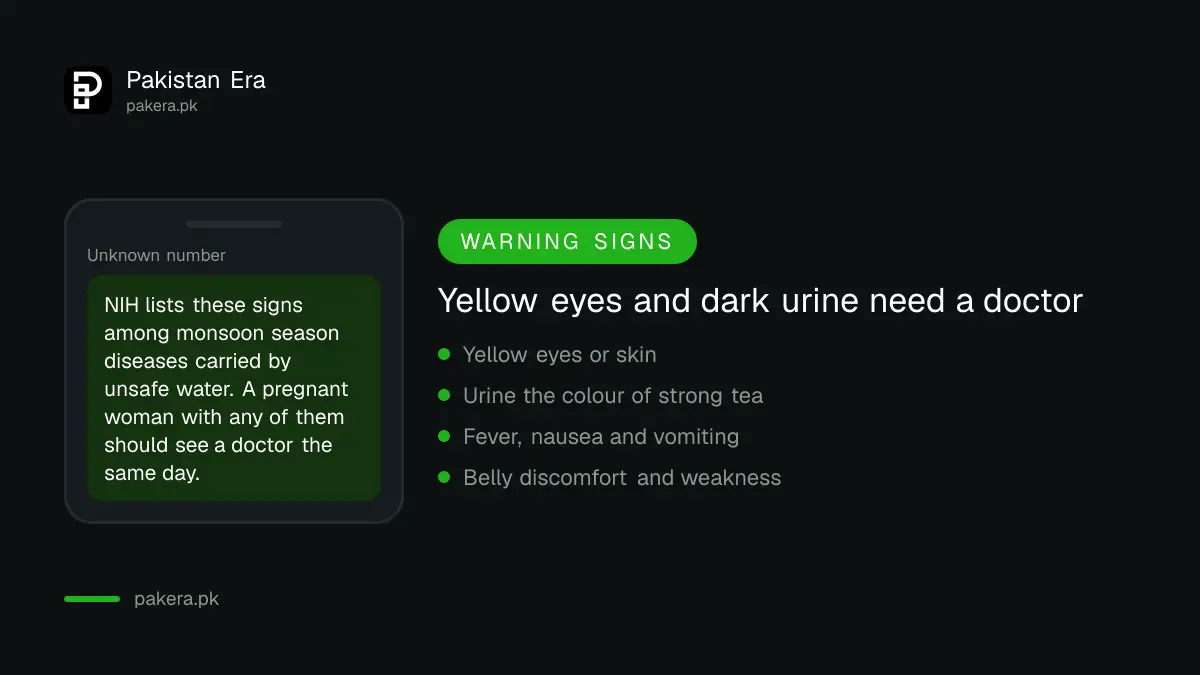
NIH names fever, general weakness, nausea, vomiting, belly discomfort, dark urine, yellowing of the eyes and skin (jaundice) and tenderness over the liver. WHO adds loss of appetite for hepatitis A. These signs often come together.
The timing is different for each type. WHO says hepatitis A usually appears 14 to 28 days after exposure. Hepatitis E takes longer: 2 to 10 weeks, with an average of 5 to 6 weeks. A person may have drunk the bad water a month or more before the yellow eyes appear.
Children under 6 often have no clear symptoms with hepatitis A, WHO notes, so a child can pass it on silently while adults in the home become visibly ill.
Pregnant women need care at once
WHO says pregnant women face the greatest danger from hepatitis E. In the last three months of pregnancy it can cause severe liver failure, with death rates of 20 to 25 percent reported in that group. Any yellowing of the eyes in pregnancy needs a doctor the same day.
In most other people, WHO says, hepatitis E settles by itself within 1 to 6 weeks. The risk is greatest in pregnancy and in people who already have liver disease.
Treatment is rest, fluids and a doctor's guidance
WHO says there is no specific antiviral treatment for hepatitis A or for acute hepatitis E. Care is supportive: rest, drinking enough, eating what is tolerated and watching for complications. NIH's advisory gives the same direction, with hydration and nutritional support.
Ask the doctor before taking any painkiller, herbal remedy or injection while the eyes are yellow. The liver processes most medicines, and WHO advises avoiding unnecessary medicines during hepatitis A. A drip or a "liver tonic" from a local clinic is not a cure.
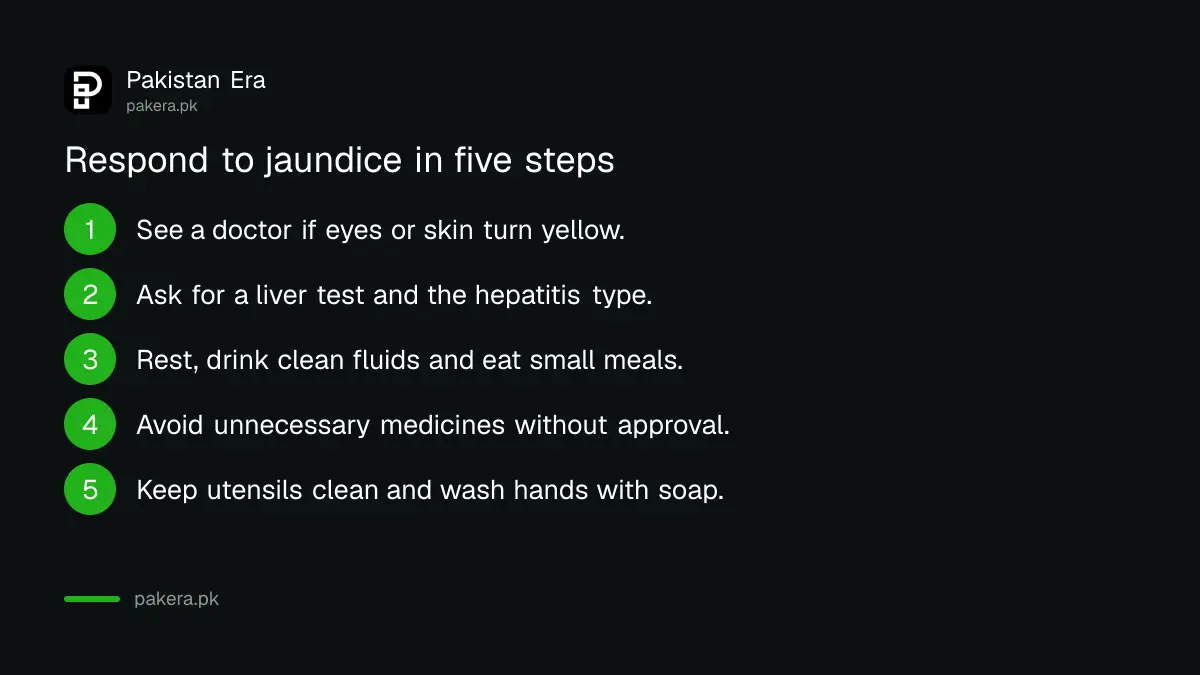
- See a doctor if the eyes or skin turn yellow, or urine turns dark.
- Ask for a liver test, and for tests to tell the hepatitis type.
- Rest, drink clean fluids and eat small meals.
- Avoid unnecessary medicines unless the doctor approves them.
- Keep the patient's cups, plates and toilet clean, and wash hands with soap.
How to avoid hepatitis A and E at home
WHO ties prevention to safe drinking water, proper sewage disposal and handwashing. NIH's list of monsoon measures adds chlorination of water, safe food handling and hygiene in crowded places. Boil water when the supply is doubtful, and keep drinking water covered.
Vaccines exist for hepatitis A internationally, according to WHO. For hepatitis E, the HEV 239 vaccine is licensed in China only and has been used in outbreaks elsewhere. We did not check which vaccines are registered or sold in Pakistan, so ask a doctor.
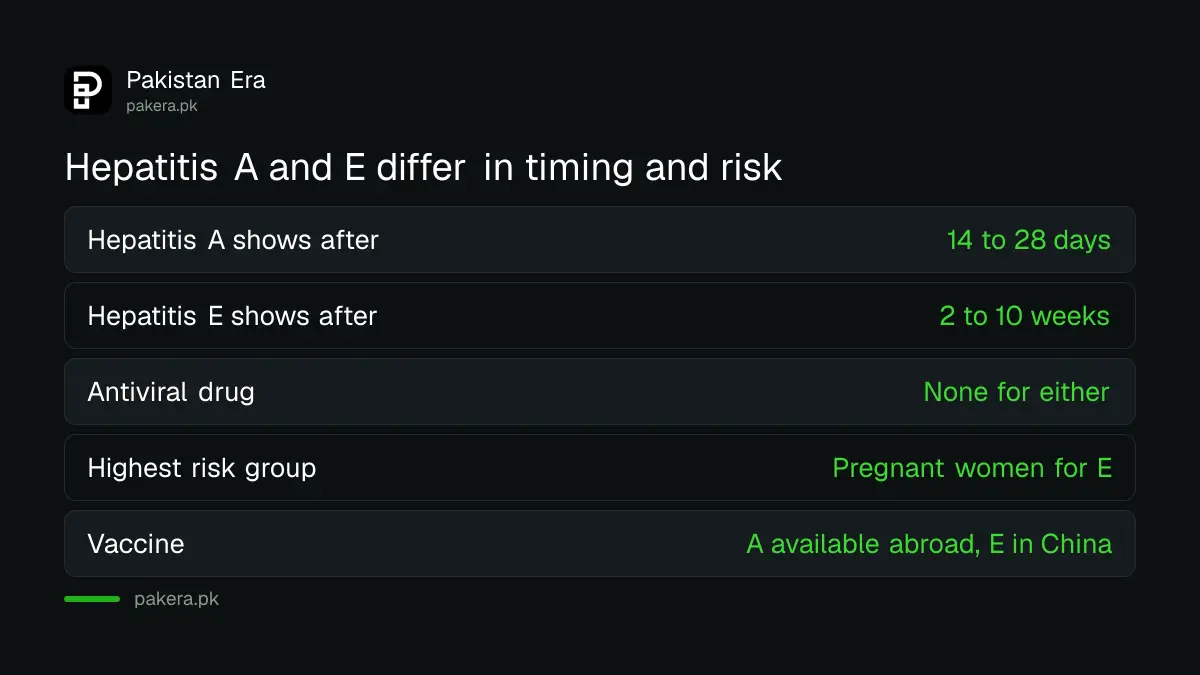
| Point | Hepatitis A | Hepatitis E |
|---|---|---|
| How it spreads | Contaminated food and water | Contaminated water |
| Time to symptoms | 14 to 28 days | 2 to 10 weeks, average 5 to 6 |
| Antiviral drug | None specific | None specific |
| Highest risk group | Adults, people with liver disease | Pregnant women |
| Vaccine | Available internationally | Licensed in China only |
Free tests and treatment are available for B and C at government sites, as set out in the guide to free hepatitis B and C tests. Those programmes do not cover A and E.
Common questions
Is yellow urine and yellow eyes always hepatitis?
No. Yellow eyes and dark urine point to a liver or bile problem, and hepatitis is one cause. A doctor and a liver test are needed to be sure.
Can hepatitis A or E be cured with a medicine?
There is no specific antiviral for either. WHO says care is supportive, and most people recover without lasting damage.
Why is hepatitis E dangerous in pregnancy?
WHO says it can cause severe liver failure in the last trimester, with death rates of 20 to 25 percent reported. A pregnant woman with jaundice needs urgent medical care.
How long after bad water do symptoms appear?
For hepatitis A, usually 14 to 28 days. For hepatitis E, 2 to 10 weeks, with an average of 5 to 6 weeks, according to WHO.
Can I catch it from a sick family member?
Yes, if hands, food or water become contaminated. Wash hands with soap after the toilet and before eating, and keep the patient's utensils clean.
How we verified this
What we checked, where we read it, and what we could not confirm.
Last checked on 13 October 2026, Pakistan time. We read NIH's advisories page and its advisory on monsoon-related diseases, June 2026, plus the WHO fact sheets on hepatitis A and hepatitis E. We found no Pakistan case count for hepatitis A and E, and we did not check vaccine registration. This page does not replace a doctor.
About the author

Public Services and Education Journalist
Fajr Riaz is a journalist and content writer at Pakistan Era, based in Lahore. She covers the questions people meet in everyday life in Pakistan: how a public service works, what a change in the rules means, and where to find a reliable answer.