Pakistan Reports 4,048 Suspected Hepatitis B, C and D Cases in One Week, Sindh 3,794
NIH's week 38 bulletin counts 4,048 suspected hepatitis B, C and D cases in Pakistan, down from 4,693. See the worst Sindh districts and the lab results.
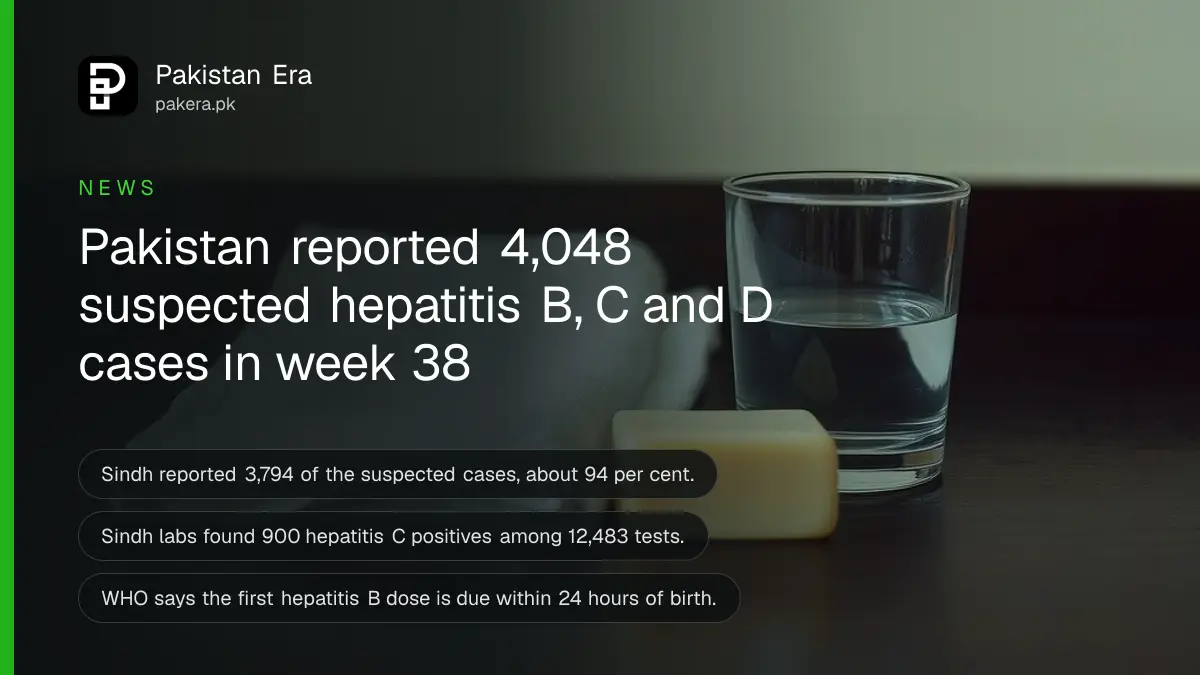
Short answer: Pakistan reported 4,048 suspected viral hepatitis B, C and D cases in week 38 of 2026, down from 4,693, the National Institutes of Health (NIH) says. Sindh sent 3,794 of them, or 94 per cent. Lab tests in Sindh found 900 positive for hepatitis C. A free blood test is the next step.
The NIH put the bulletin online on Friday 9 October 2026. We read the week 38 and week 37 tables ourselves. The NIH reports these three viruses as one group, called VH (B, C and D). Punjab did not report, so the national count leaves out the largest province.
Sindh reported 3,794 of Pakistan's 4,048 hepatitis cases
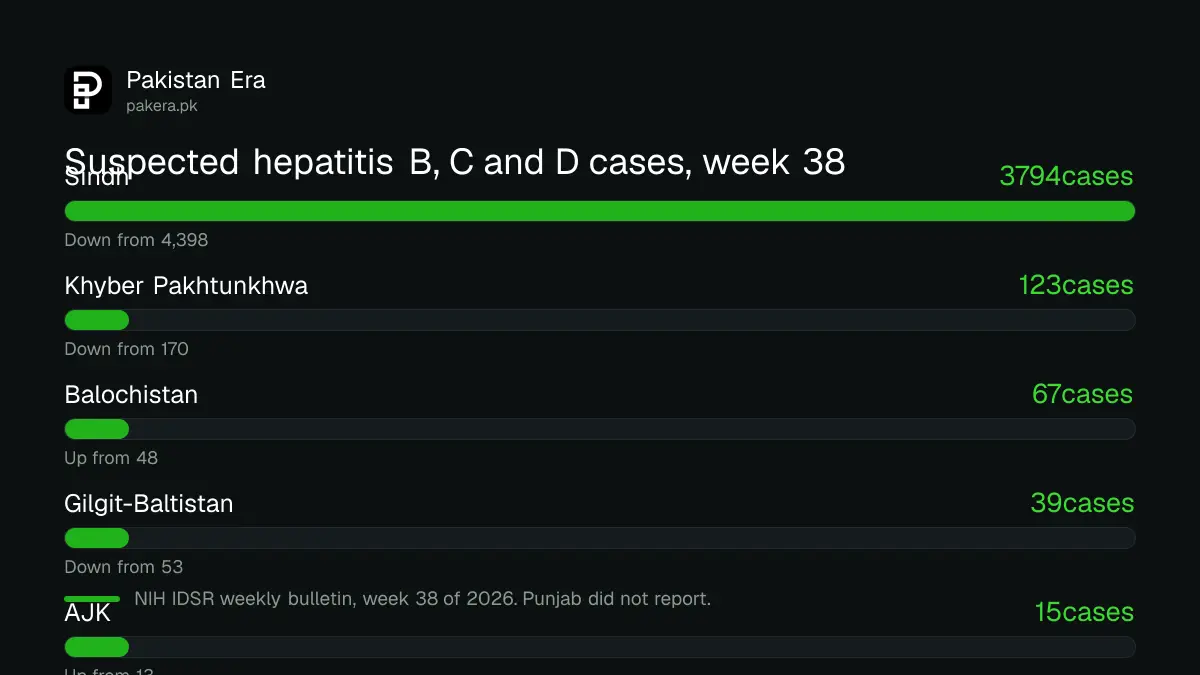
Pakistan's weekly count of suspected hepatitis B, C and D fell by 645 cases in week 38, from 4,693 to 4,048. Sindh reported 3,794, down from 4,398. Khyber Pakhtunkhwa had 123, Balochistan 67, Gilgit-Baltistan 39, AJK 15 and Islamabad 10.
Viral hepatitis ranked eighth among the diseases reported most often that week, just behind dog bites. The NIH counts these cases through its Integrated Disease Surveillance and Response system, called IDSR. Clinics in 158 districts send weekly forms. Each figure is a suspected case, not a confirmed one.
| Area | Week 37 | Week 38 |
|---|---|---|
| Sindh | 4,398 | 3,794 |
| Khyber Pakhtunkhwa | 170 | 123 |
| Balochistan | 48 | 67 |
| Gilgit-Baltistan | 53 | 39 |
| AJK | 13 | 15 |
| Islamabad | 11 | 10 |
| Punjab | NR | NR |
| Pakistan | 4,693 | 4,048 |
Sanghar, Ghotki and Sukkur lead Sindh's districts
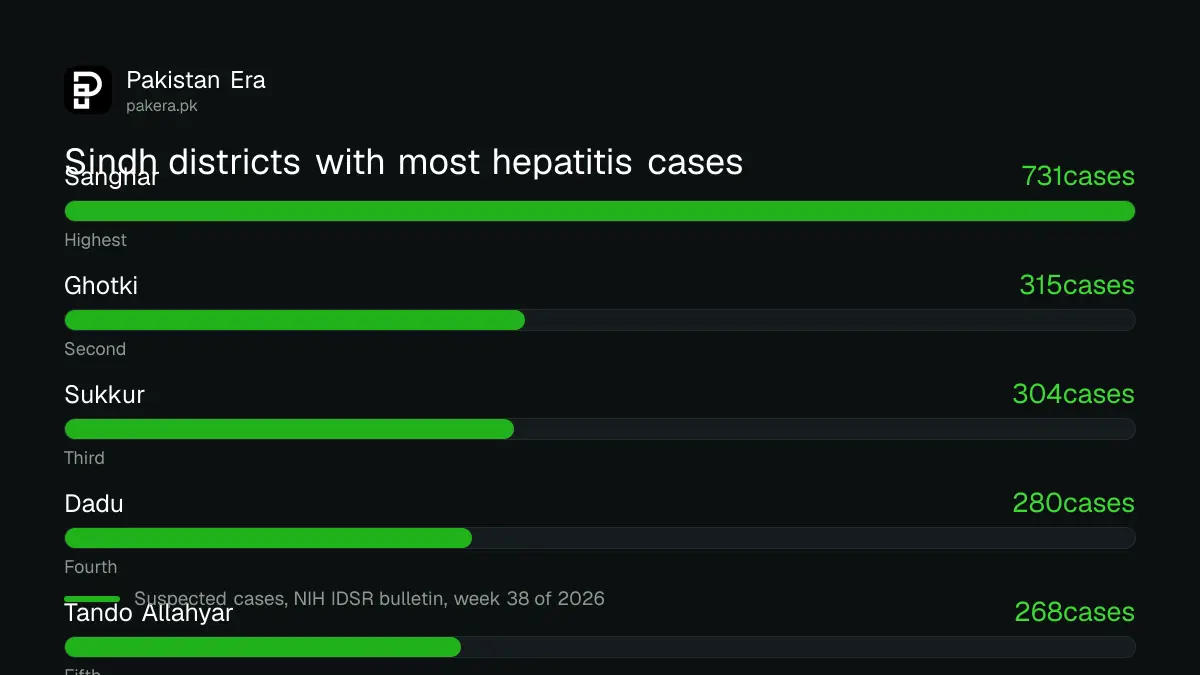
Sanghar reported the most suspected viral hepatitis cases in Sindh in week 38, with 731. Ghotki had 315, Sukkur 304, Dadu 280 and Tando Allahyar 268. Those five districts account for about half of the province's 3,794 cases.
Karachi's districts report very little by comparison, with Keamari at none and Korangi at 1. That is more likely a pattern of where patients are counted than a sign that Karachi is free of hepatitis. Big-city patients often attend private labs and clinics that do not send IDSR forms.
The NIH does not say why the weekly count fell. A drop in one week can come from fewer clinics reporting. Sindh's reporting rate was 100 per cent, so the fall is not explained by missing forms in that province.
Lab tests found 900 hepatitis C positives in Sindh in one week
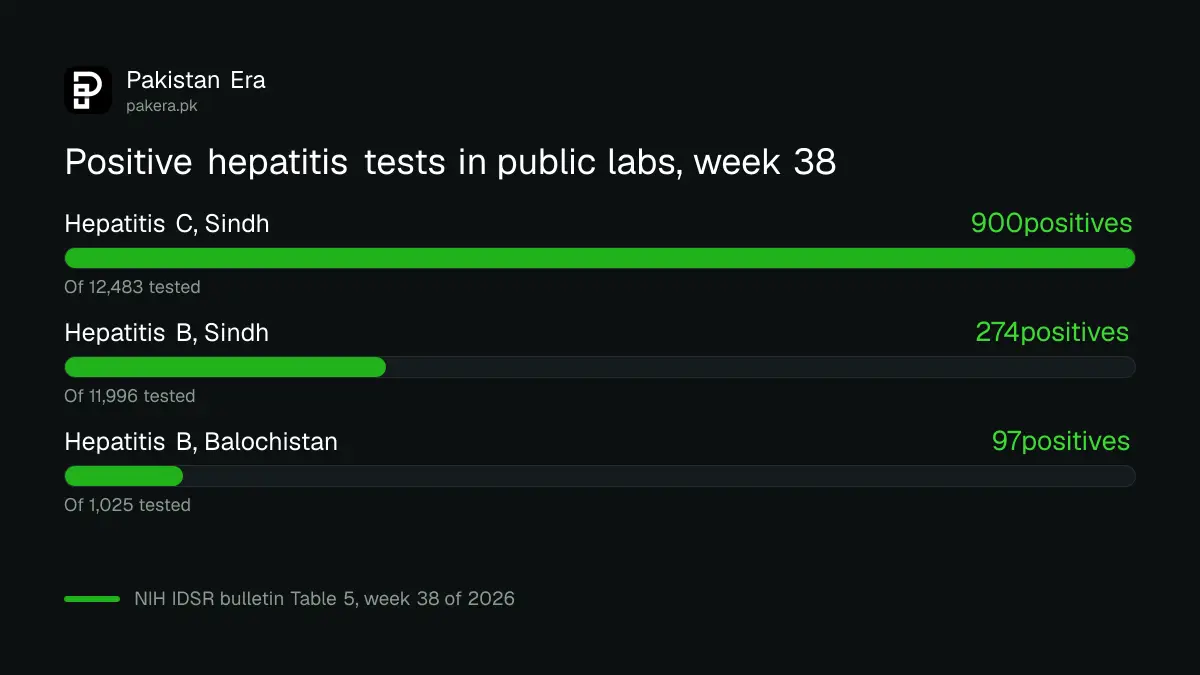
Sindh's public health laboratories tested 12,483 samples for hepatitis C in week 38 and 900 were positive, about 7 in 100. For hepatitis B, 274 of 11,996 tested positive. Balochistan found 97 positives among 1,025 hepatitis B tests, a higher share of about 9 in 100.
These are tests on people who came to a lab, so they do not show how common hepatitis is across the whole population. Still, they show what a screening test can find. The table below sets out the week 38 lab results.
| Test and area | Tested | Positive |
|---|---|---|
| Hepatitis B, Sindh | 11,996 | 274 |
| Hepatitis B, Balochistan | 1,025 | 97 |
| Hepatitis B, Gilgit-Baltistan | 1,905 | 17 |
| Hepatitis C, Sindh | 12,483 | 900 |
| Hepatitis C, Balochistan | 987 | 65 |
| Hepatitis C, Gilgit-Baltistan | 1,730 | 8 |
| Hepatitis D, Sindh | 317 | 42 |
Hepatitis D is a virus that only infects people who already carry hepatitis B. Sindh found 42 positives among 317 hepatitis D tests, and Balochistan found 6 among 46. Hepatitis A and E, which spread through dirty water, had 631 suspected cases nationwide, with 369 in Sindh and 235 in Khyber Pakhtunkhwa.
The NIH asks for more screening, safe injections and birth-dose vaccine
In its public health actions for week 38, the NIH asks health departments to widen hepatitis B and C screening, ensure safe injections and sterilisation, improve safe blood transfusion, and give the hepatitis B vaccine, including the birth dose. These are recommendations to departments, not orders.
The World Health Organization says hepatitis B passes mostly from mother to baby at birth and through infected blood. Babies infected early become long-term carriers in about 95 per cent of cases, against under 5 per cent of adults. Most people have no symptoms, and WHO says only 27 per cent of people with hepatitis B knew their status in 2024.
The vaccine is the strongest protection. WHO says babies should get the first dose within 24 hours of birth, and the full course gives close to 100 per cent protection. We list who can get a free test and treatment in free hepatitis B and C tests and treatment in Pakistan, and the adult vaccine schedule in adult vaccines in Pakistan.
- Get a hepatitis B and C blood test if you have never had one, especially if you had surgery, a transfusion or dental work in an unregulated clinic.
- Ask your doctor about the hepatitis B vaccine if you are not vaccinated.
- Insist on a new, sealed syringe for every injection and see how to check a clinic syringe against DRAP alerts.
- Do not share razors, toothbrushes or nail tools.
- If pregnant, ask for a hepatitis B test and plan the baby's birth-dose vaccine.
- Keep copies of every test result and take them to the specialist.
Common questions
How many hepatitis cases did Pakistan report in week 38?
The NIH counted 4,048 suspected viral hepatitis B, C and D cases in week 38 of 2026, down from 4,693. Sindh reported 3,794. Punjab did not report.
Are these confirmed hepatitis cases?
No. The NIH says all reported cases are suspected. Lab results are listed separately, and they cover only the people who were tested.
How is hepatitis C spread?
Hepatitis C spreads through infected blood, for example through unsafe injections and unsterilised equipment. We took this from the NIH's call for safe injections and sterilisation, and from general medical advice, so ask your doctor for your own risk.
Can hepatitis B be prevented?
Yes. WHO says the vaccine gives nearly 100 per cent protection, and babies should get the first dose within 24 hours of birth.
What is hepatitis D?
It is a virus that infects only people who already have hepatitis B. Sindh's labs found 42 positives among 317 tests in week 38.
What week does week 38 cover?
The bulletin prints no dates. On the standard week calendar, week 38 of 2026 runs from 14 to 20 September.
How we verified this
What we checked, where we read it, and what we could not confirm.
Last checked on 11 October 2026. We read the NIH's Public Health Bulletin, Pakistan, Week 38, 2026 and the Week 37 bulletin, both listed on the NIH's IDSR weekly reports page. Province figures are from Table 1, Sindh districts from Table 2, laboratory results from Table 5 and the public health actions from page 4. Hepatitis B facts are from the WHO hepatitis B fact sheet. The week dates are our own calculation.
About the author

Tax, Bills and Technology Writer
Ali Akhtar is a young and curious voice here at Pakistan Era. He is currently pursuing his A-Levels and has a growing interest in Pakistan’s changing industrial landscape and educational trends. Ali likes to write in a way that helps him explain and explore the world around him. His writing reflects the perspective of the new generation navigating the evolving trends of Pakistan where technology, youth innovation, and shifting opportunities are reshaping the country’s future.