Check for Leptospirosis After Wading in Rain or Flood Water in Pakistan: NIH's Signs
NIH says leptospirosis spreads from animal urine in rain and flood water, with fever and calf pain after 5 to 14 days. See the signs and how to cut the risk.
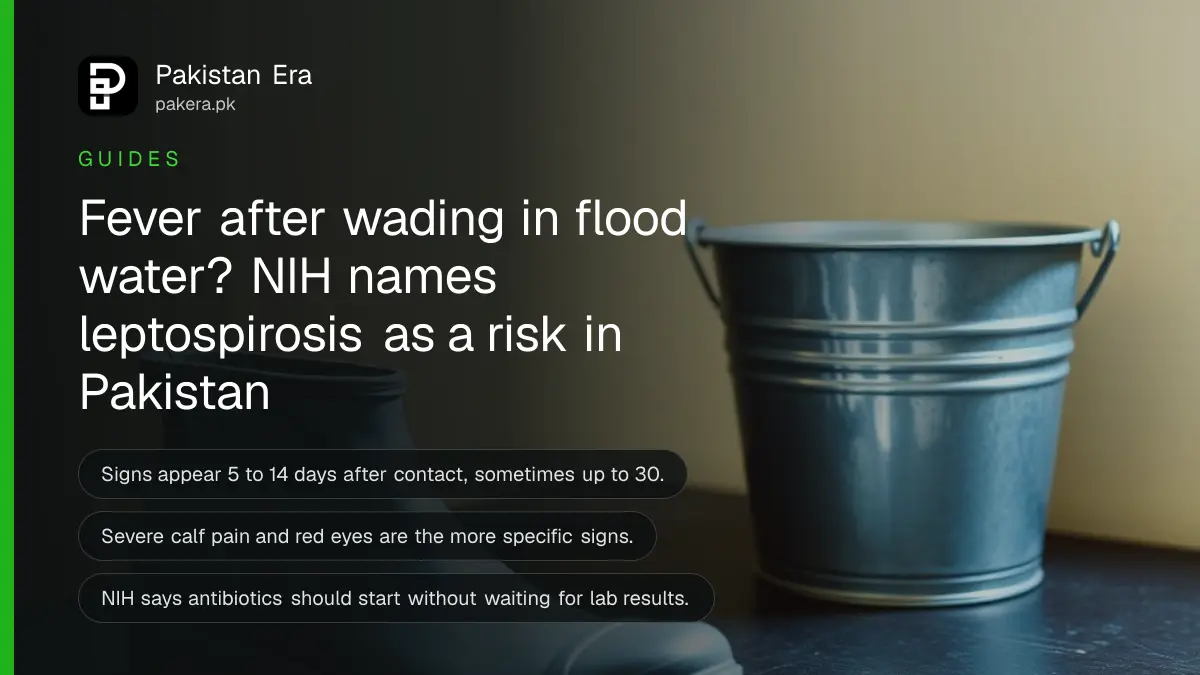
Short answer: If you waded through rain or flood water and a fever with severe calf or back pain, headache and red eyes follows within 5 to 14 days, see a doctor and say you were in dirty water. NIH says leptospirosis can be treated with antibiotics, and early treatment matters.
After a heavy rain, a street in Lahore or Karachi fills with water that carries everything: sewage, rubbish and animal waste. Most people wade through it, take a bath and forget about it. Leptospirosis is the disease that tends to be remembered only when the fever starts a week later.
We read the National Institutes of Health (NIH) alert on human leptospirosis, dated 10 November 2023, on 12 October 2026. The Pakistan Meteorological Department and NDMA have both warned of rain and thunderstorms in the north and centre until 15 October, so this is a good week to know the signs.
Leptospirosis spreads from animal urine in water and soil
NIH describes leptospirosis as a bacterial disease passed from animals, mostly rodents but also pets and cattle, to people through contact with the urine of infected animals. Water and mud that carry the urine are the usual route. Spread from person to person is very rare.
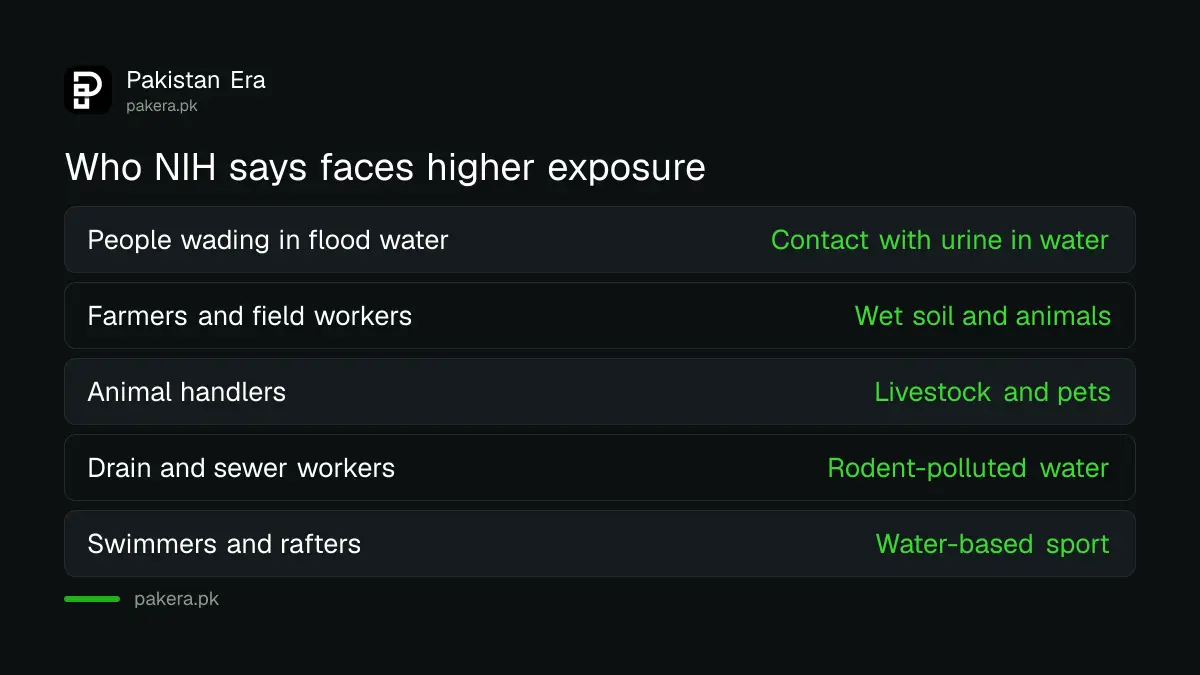
The alert says the bacteria are more common in tropical and subtropical areas with high rainfall. It calls the illness an occupational hazard for people who work outdoors, with animals or in water. It also lists flooding and water sports such as wading and swimming as exposure events.
NIH is careful on one point. It says sporadic cases have been reported in Pakistan in recent years. It does not give a national case count in the alert, and neither will we. The disease is not common, but the risk after floods is real.
The signs look like many other fevers
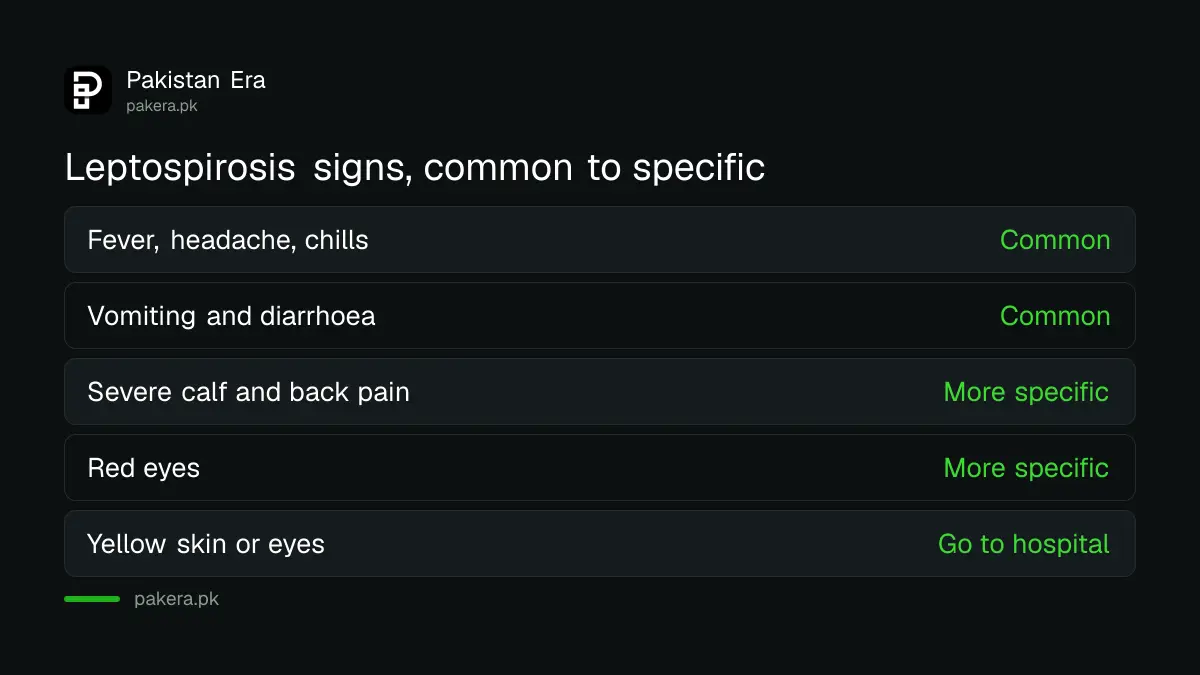
The NIH alert lists fever, headache, chills, vomiting, stomach pain, diarrhoea, cough, jaundice, rash and anaemia. Severe muscle aches in the calves and lower back, and red eyes, are the specific signs, though less common. Tell the doctor about any contact with dirty water.
The incubation period, the time from contact to the first signs, is 5 to 14 days and can stretch to 30 days. That gap is why people do not link the fever to the flood. Left untreated, NIH says severe cases can lead to meningitis, lung bleeding, heart inflammation and kidney or liver failure.
| Sign | Common or specific | Notes |
|---|---|---|
| Fever, headache, chills | Common | Looks like flu, dengue or typhoid |
| Vomiting, stomach pain, diarrhoea | Common | Can look like a stomach bug |
| Severe calf and lower back pain | More specific | Less often seen, says NIH |
| Red eyes | More specific | Called conjunctival suffusion |
| Yellow skin or eyes (jaundice) | Warning | Go to hospital the same day |
Tell the doctor about the water, because it changes the test
NIH says treatment with antibiotics should begin as soon as possible, without waiting for lab results. Doctors need to know about the exposure. Several illnesses in this season look alike, so the history of contact with dirty water is the clue.
The alert says lab confirmation uses blood or urine tests. A PCR test works best in the first week of illness, in the first four days ideally. Antibody tests, including the gold-standard microscopic agglutination test, are less sensitive early on. A negative early test does not always rule the disease out.
For the clinician, NIH names doxycycline as the drug of choice, with other antibiotics and intravenous penicillin for severe cases. We mention it only so you can follow the doctor's decision. Do not start any antibiotic on your own. Dengue is also common now, so see the dengue warning signs as well.
How to lower the risk after rain
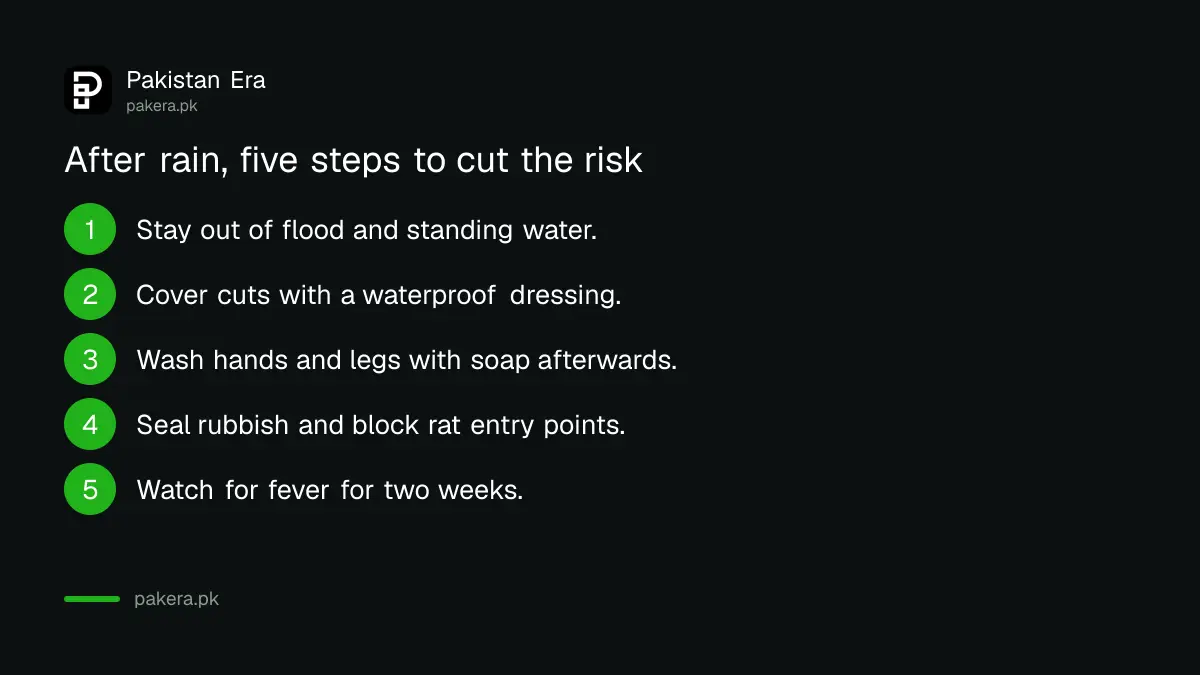
NIH's advice is simple: avoid wading and swimming in dirty water, cover cuts with waterproof dressing, wash hands often, control rats around the house and use protective gear if your job brings you near animals or water. Everything else follows from those five.
- Stay out of flood water and standing rain water if you can.
- If you must wade, cover cuts and scrapes with a waterproof dressing.
- Wash your legs and hands with soap and clean water afterwards.
- Keep rubbish sealed and block rodent entry points at home.
- Watch for fever and body pain for the next two weeks and see a doctor early.
Flooded streets carry other dangers. Our guide on what to do when your street floods covers drowning and live wires, and NDMA's advice on the 10 to 15 October rain and hail alert lists the districts.
Farmers and animal handlers carry more risk
The alert says staff who work with potentially infected animals, tissues or secretions should wear protective equipment. Animal handlers should ask a vet about preventing the disease in pets and livestock. People who clean drains or sewers, or who work in wet fields, belong in the same risk group.
If you work in such a job, make waterproof boots and gloves part of the routine and treat any fever after work as a reason to say where you were. The alert also asks doctors to report any suspected or confirmed case to the health authorities so a source can be found.
Common questions
What is leptospirosis?
It is a bacterial disease spread from animals, mostly rodents, to people through contact with the urine of infected animals, often in water or mud.
How soon do signs appear after contact with flood water?
Usually after 5 to 14 days, and in some cases up to 30 days, according to NIH.
Can leptospirosis spread from one person to another?
NIH says person-to-person spread is very rare. People who fall ill together usually shared the same source, such as the same flooded street.
Is leptospirosis treatable?
Yes. NIH says antibiotics given early can lessen the severity and length of the illness, and treatment should start without waiting for lab results.
Is leptospirosis common in Pakistan?
NIH calls it rare and says sporadic cases have been reported in recent years. The alert gives no national count.
How we verified this
What we checked, where we read it, and what we could not confirm.
We read the NIH leptospirosis alert of 10 November 2023 on 12 October 2026. It is the latest NIH document on the disease that we found. This is general information, not medical advice. See a doctor for any fever after contact with dirty water.
About the author

Public Services and Education Journalist
Fajr Riaz is a journalist and content writer at Pakistan Era, based in Lahore. She covers the questions people meet in everyday life in Pakistan: how a public service works, what a change in the rules means, and where to find a reliable answer.