Dengue Season Has Started. Know the Signs That Mean Go to Hospital.
Most dengue clears in a week. A few cases turn dangerous fast, often as the fever drops. The warning signs, and where it really breeds.
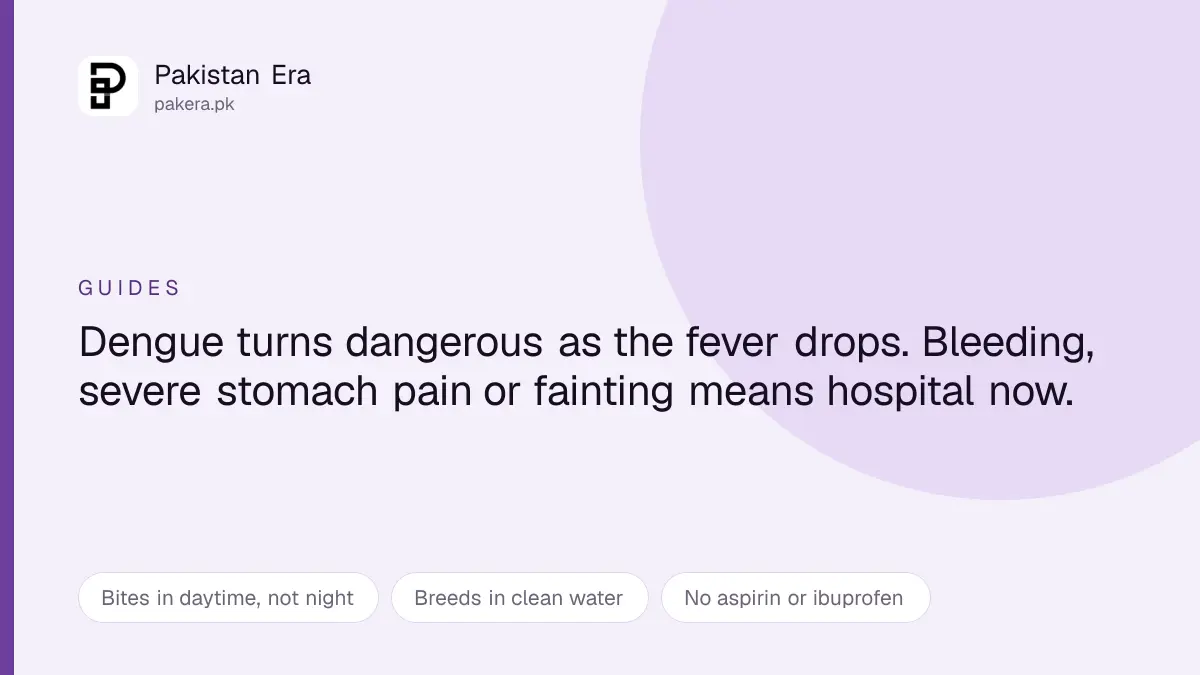
Dengue season has started. Punjab has 541 teams doing surveillance and killing mosquito larvae from 1 to 15 August under the Dengue Action Plan 2026.
Update, 11 October 2026: NIH counted 578 suspected dengue cases in week 38.
Most people who get dengue recover at home in about a week. A small number get much worse, very fast. This article is about knowing the difference, because that is what decides who survives.
The warning signs that mean go to hospital now
Read this part even if you read nothing else.
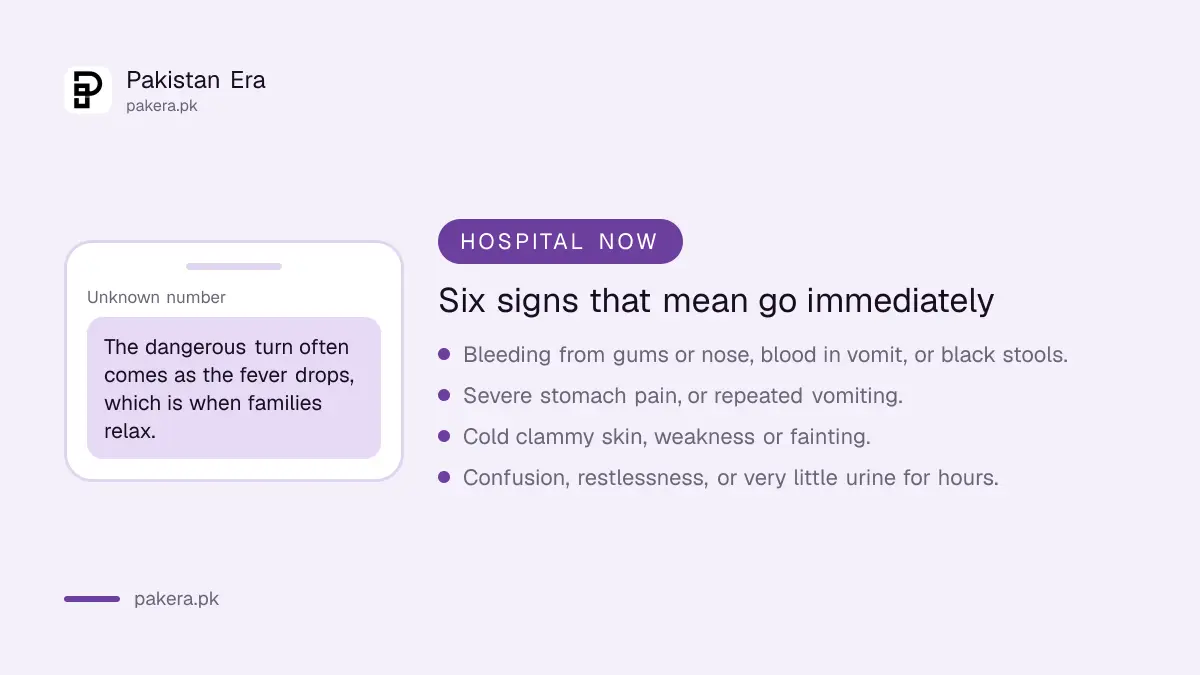
Ordinary dengue is miserable but usually safe. Severe dengue is a medical emergency, and the dangerous turn often comes as the fever drops, which is exactly when families relax.
Go to a hospital immediately if any of these appear:
- Bleeding of any kind. Gums, nose, blood in vomit, black stools, or unusual bruising.
- Severe stomach pain that will not settle.
- Repeated vomiting, so the person cannot keep fluids down.
- Cold, clammy skin, weakness, or fainting.
- Restlessness or confusion, or a sudden drop in alertness.
- Very little urine over many hours.
Severe dengue involves fluid leaking from the blood vessels, serious bleeding or organ damage. With proper hospital care, deaths from severe dengue can be kept below one per cent. Without it, people die of something treatable.
What ordinary dengue feels like
| Sign | Detail |
|---|---|
| When it starts | 4 to 10 days after the mosquito bite |
| Fever | Sudden and high |
| Headache | Severe, often with pain behind the eyes |
| Body | Strong muscle and joint pain |
| Stomach | Nausea and vomiting |
| Skin | Rash |
| How long | About 5 to 7 days, and most people recover fully |
There is no medicine that cures dengue. Treatment is rest, fluids and watching carefully for the warning signs above.
Do not take these painkillers
This matters and many people get it wrong.
For a suspected dengue fever, standard medical guidance is to use paracetamol for fever and pain, and to avoid aspirin, ibuprofen and similar anti-inflammatory painkillers. Those medicines increase the risk of bleeding, and bleeding is exactly what makes dengue dangerous.
People reach for a stronger painkiller because dengue hurts a great deal. That instinct is the wrong one here. Confirm with a doctor, but do not self-medicate with anti-inflammatory tablets during a fever in dengue season.
This mosquito is not the one you think
Almost everything people assume about dengue mosquitoes is wrong, and that is why prevention fails.
It bites in the daytime. Aedes aegypti is most active in the early morning and before dusk. A mosquito net at night protects you from the wrong insect.
It breeds in clean water, not drains. This is the big one. Dirty standing water and sewage are not where it lays eggs. It uses clean, still water in and around your home.
You can recognise it. It has distinctive black and white stripes on its body and legs.
The clean water in your own house
Because it breeds in clean water, the breeding site is usually something you own. Check all of these:
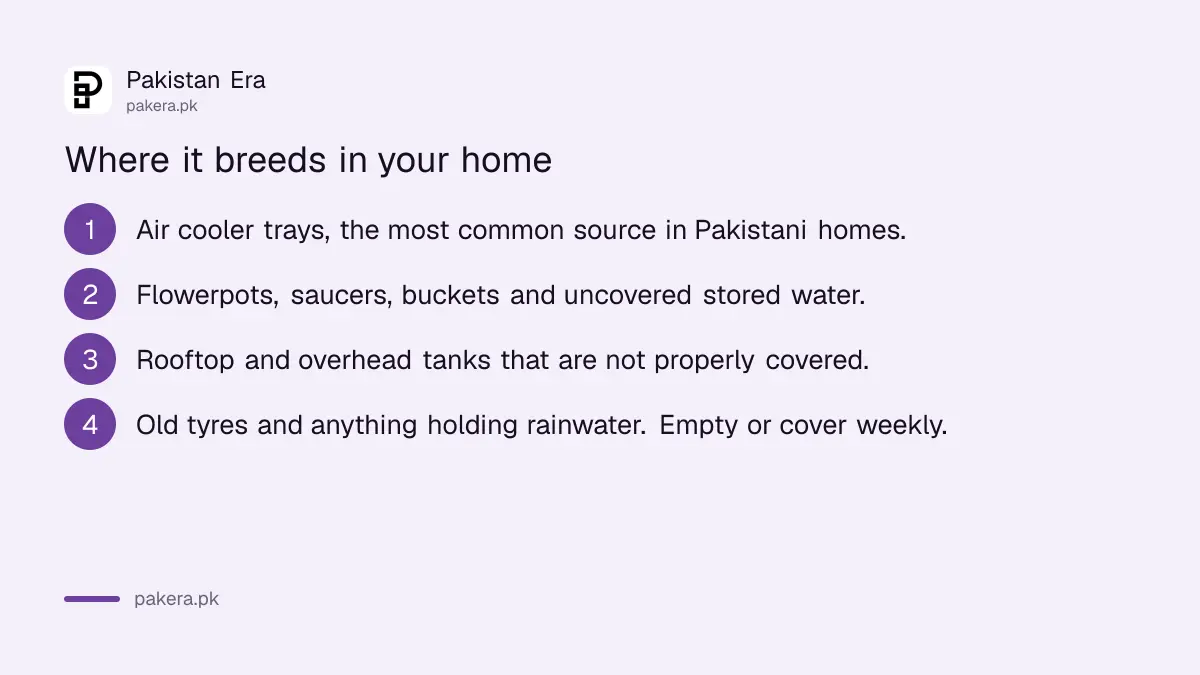
- Air cooler trays. The single most common one in Pakistani homes during summer.
- Flowerpots and their saucers.
- Rooftop and overhead water tanks that are not properly covered.
- Buckets and stored water left uncovered.
- Old tyres in a yard or on a roof.
- Bird feeders and animal water bowls.
- Anything holding rainwater after this monsoon, including discarded containers and blocked drains on a roof.
The rule is simple. Empty it, cover it, or turn it over, once a week, every week. Eggs need standing water for days. Break that and you break the cycle.
This is the same monsoon that has already brought flood alerts across the country, and standing water is the connection between the two. We covered the wider risks in the piece on monsoon deaths and the district-level flood picture in the NDMA alert.
Why a second dengue can be worse than the first
There are four types of dengue virus, and all four circulate in Pakistan.
Recovering from one type gives you lasting protection against that type only. If you are later infected by a different type, the risk of severe dengue is higher, not lower.
So "I already had dengue" is not protection. For anyone who has had it before, the warning signs matter more, not less.
What to do this week
Ten minutes, once a week, is the whole prevention plan.
Walk around your home and roof. Empty every container holding water. Drain and dry the air cooler tray. Cover the water tank. Turn over anything that collects rain.
Then tell your neighbours, because a mosquito does not respect a boundary wall. One uncovered tank next door undoes a clean house.
If someone at home develops a sudden high fever in dengue season, do not wait it out quietly. Get a blood test, keep fluids going, use paracetamol only, and watch for the warning signs at the top of this page, especially when the fever starts to fall.
Questions readers are asking
What are the first signs of dengue?
Sudden high fever, severe headache, pain behind the eyes, strong muscle and joint pain, nausea, vomiting and a rash. Symptoms start 4 to 10 days after the bite and usually last 5 to 7 days.
When should I go to hospital?
Immediately if there is bleeding from gums or nose, blood in vomit, black stools, severe stomach pain, repeated vomiting, cold clammy skin, fainting, confusion, or very little urine. The dangerous turn often comes as the fever drops.
Which painkiller is safe in dengue?
Standard guidance is paracetamol for fever and pain, and avoiding aspirin, ibuprofen and similar anti-inflammatory medicines because they raise the risk of bleeding. Confirm with a doctor.
When does the dengue mosquito bite?
In the daytime, mostly early morning and before dusk. A night-time mosquito net protects against a different mosquito.
Where does it breed?
In clean, still water around the home. Air cooler trays, flowerpots, uncovered water tanks, buckets, old tyres and anything holding rainwater. Not in drains or dirty water.
Can I get dengue twice?
Yes. Four types of the virus circulate in Pakistan, and recovering from one only protects you against that one. A second infection with a different type carries a higher risk of severe dengue.
Is there a cure for dengue?
No specific medicine cures it. Care is rest, fluids and close monitoring, with hospital treatment if warning signs appear. Timely care keeps deaths from severe dengue below one per cent.
About the author

Senior Writer, Public Services and Technology
Shahid joined us in 2024 as an author. He is a senior contributor to Pakistan's leading technology websites. He writes detailed articles, mostly covering his expertise in the latest tech, mobiles, apps, gadgets, and step-by-step guides. His ideology is to help people understand the latest trends and explain complex methods through very easy-to-understand guides.