Tell a Cold From Flu in Pakistan: NIH's Symptom Chart and When to See a Doctor
NIH says a cold starts slowly and flu starts suddenly with fever, chills and body aches. See its cold vs flu chart, risk groups and when to see a doctor.
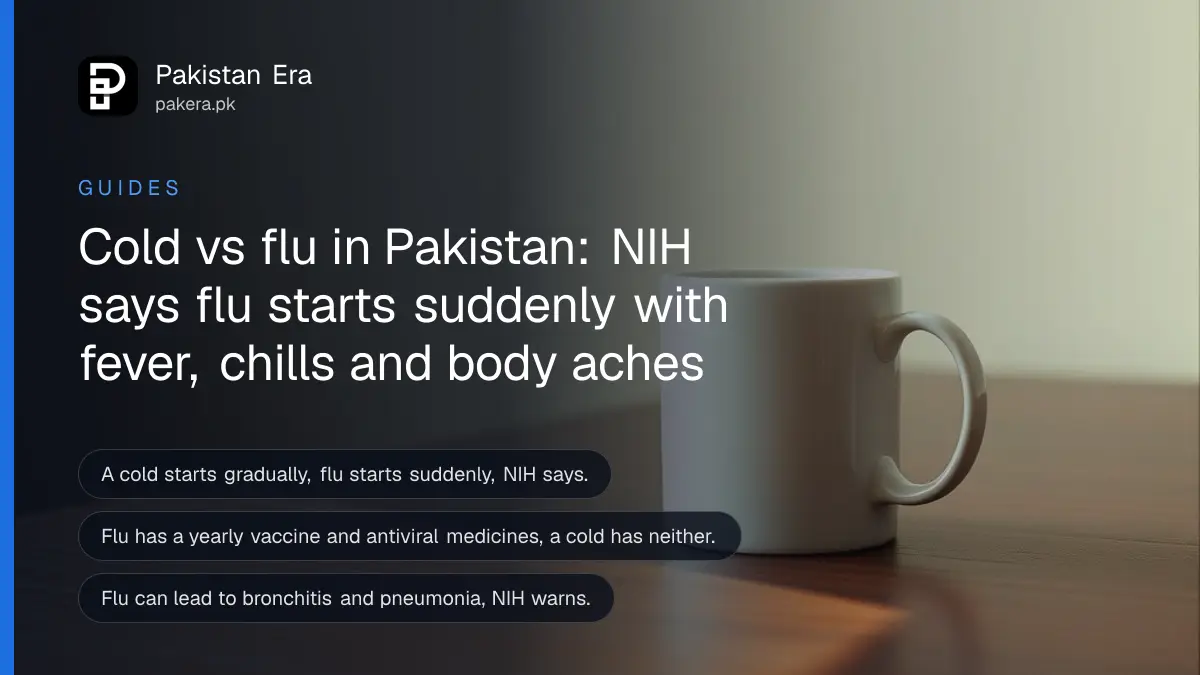
NIH says a cold comes on gradually with a runny or stuffy nose, while flu hits suddenly with fever, headache, chills and body aches. Both cause sneezing, coughing, sore throat and weakness. Only flu has a yearly vaccine and antiviral medicines, and NIH says to see a healthcare provider for those.
We read NIH's "Cold vs. Flu: Know the Difference" sheet on 14 October 2026. It is a Ministry of National Health Services, Regulations and Coordination and NIH poster, and it is undated. The sheet is simple, so this page builds on it with the checks that matter in a Pakistani autumn, when dengue and flu overlap.
A cold starts slowly and a flu starts suddenly
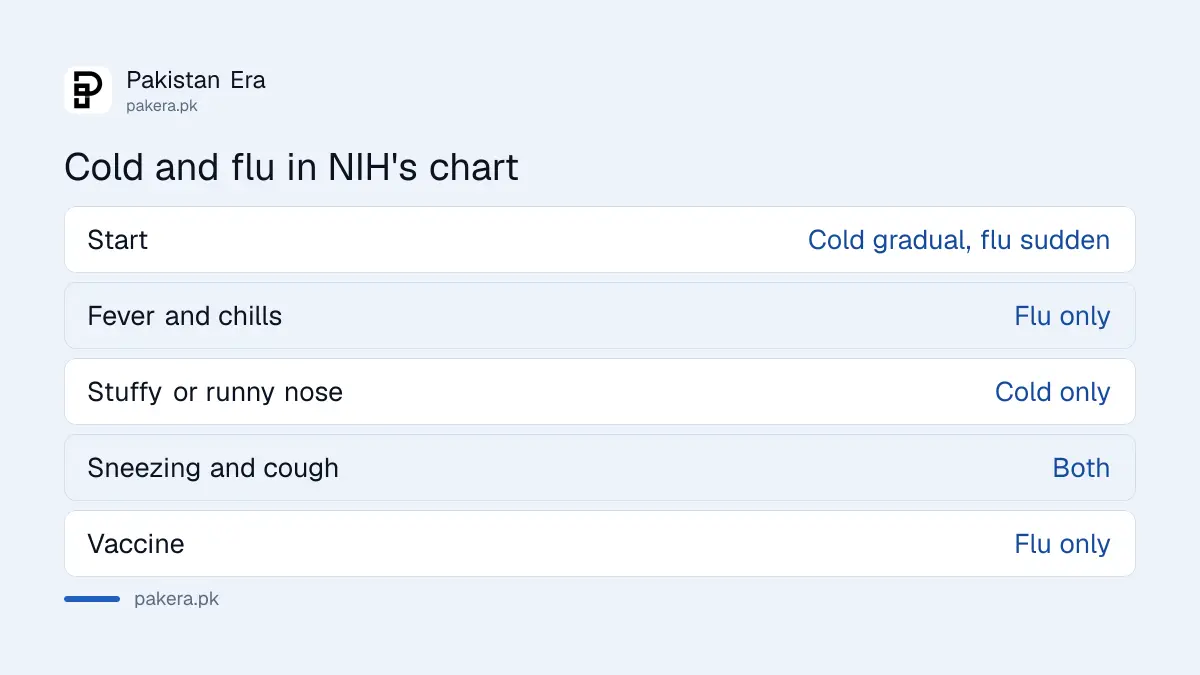
NIH's chart puts "gradual onset" under cold and "sudden onset" under flu. A cold builds over a day or two. Flu can hit within hours, and you feel flattened by midday.
The sheet lists a stuffy nose, a runny nose, milder illness and a short duration for a cold. For flu it lists fever, headache, chills and body aches. These are NIH's own lists, in its own words.
Sneezing, cough, sore throat and weakness appear in both
NIH lists four shared symptoms: sneezing, coughing, a sore throat and weakness. So a cough alone cannot tell you which illness you have. Look for the fever, chills and body aches that NIH puts only under flu.
| Sign | Cold | Flu |
|---|---|---|
| Start | Gradual | Sudden |
| Fever, chills, body aches | Not listed | Listed |
| Headache | Not listed | Listed |
| Stuffy or runny nose | Listed | Not listed |
| Sneezing, cough, sore throat, weakness | Listed | Listed |
| Severity | Less severe, short | Can be life threatening |
Take the table as a guide, not a diagnosis. Only a doctor or a lab test can say which virus you have. NIH's own sheet gives no way to test at home.
Flu has a vaccine and antiviral medicine, a cold has neither
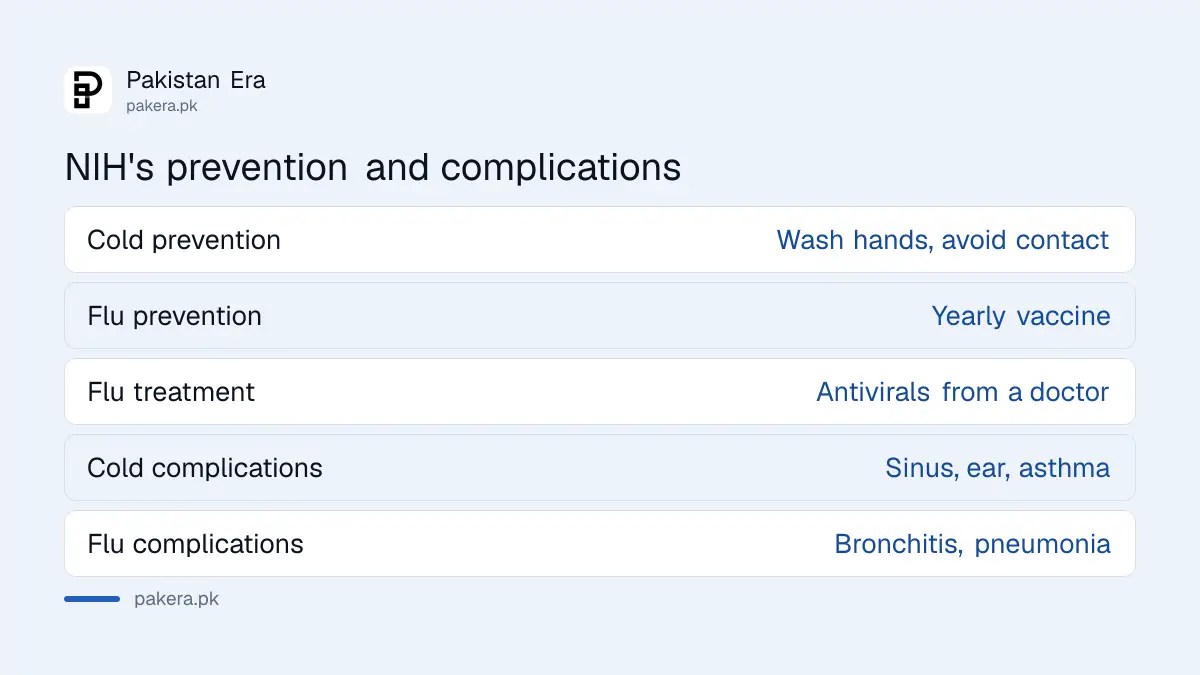
NIH's sheet says flu can be prevented by yearly vaccination and treated with antiviral medicines, and it tells you to see your healthcare provider for the antivirals. For a cold it lists antihistamines, decongestants and anti-inflammatory medicines, plus hand washing with soap and water.
The vaccine question is local. Our guide to the flu vaccine in Pakistan in 2026 covers who should get it and where. For antivirals, read who counts as high risk in the NIH list for Tamiflu.
Antibiotics are missing from both columns. They fight bacteria, not these viruses, and NIH's separate antibiotic poster says to avoid self-medication.
Flu can lead to pneumonia, a cold usually does not
NIH lists sinus infection, middle ear infection and asthma as cold complications. For flu it lists bronchitis and pneumonia, and it says flu can worsen chronic conditions. It warns complications are more likely in the elderly, young children, pregnant women and people with chronic conditions.
That warning is the reason to act early. If a child has fast or hard breathing, read the signs of pneumonia in a child and go to a doctor. We do not give treatment advice beyond NIH's sheet.
Fever and body aches in October may also be dengue
NIH's cold and flu sheet does not mention dengue, but the symptoms overlap. Fever, headache and body aches also appear in dengue, which is active in autumn. Do not assume flu without a doctor's check.
If dengue is possible, NIH separately says to avoid aspirin and ibuprofen. Our guide on avoiding aspirin and ibuprofen in dengue explains the advice. The cold column of the poster lists anti-inflammatory medicines, so a doctor should confirm which illness it is first.
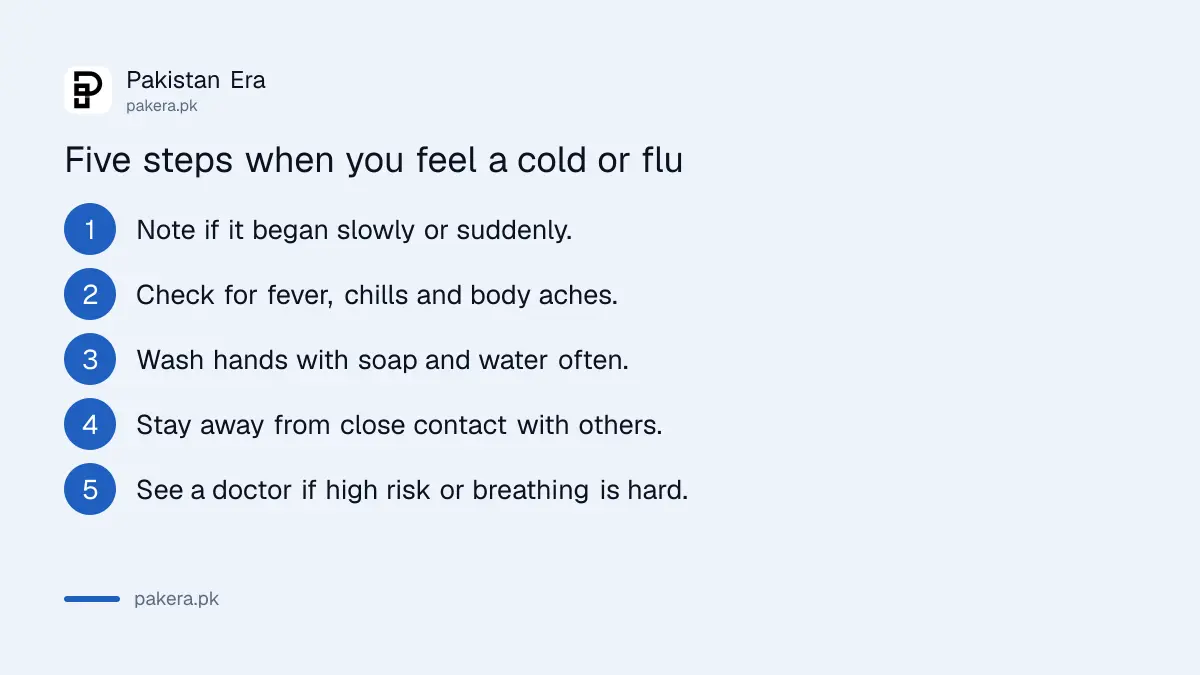
- Note when the symptoms began: over a day or two, or within hours.
- Check for fever, chills and body aches, which NIH lists under flu.
- Wash your hands with soap and water often, as NIH advises for a cold.
- Stay away from close contact with others while you are ill.
- See a healthcare provider if you are in a high-risk group, if breathing is hard, or if fever does not settle.
Rest at home is the usual plan, but know the limits of this page
NIH's sheet is a poster, not a medical guide. It does not give doses, test advice or how long a flu lasts. So we give none. What it does give is a clear way to sort your symptoms and a clear list of who is at risk.
If you are in a high-risk group, do not wait to see if it passes. The elderly, young children, pregnant women and people with chronic conditions are the groups NIH names. A call to your doctor early costs little, and it is the step NIH points to for antivirals.
If you are healthy, the sheet's prevention advice is plain: wash hands often with soap and water, and avoid close contact with anyone who has a cold. Those are the same two habits for a flu, with the yearly vaccine added on top.
Common questions about cold and flu in Pakistan
How can I tell a cold from flu at home?
Look at the start. NIH says a cold begins gradually and flu begins suddenly, with fever, chills and body aches. A doctor must confirm it.
Do antibiotics help a cold or flu?
NIH's sheet lists no antibiotics for either one. Both are caused by viruses, and NIH's antibiotic poster warns against self-medication.
Is there a vaccine for the common cold?
NIH's sheet names no vaccine for a cold. It names annual vaccination for flu only.
Who is at higher risk from flu?
NIH names the elderly, people with chronic conditions, young children and pregnant women.
Can a cold turn into something serious?
NIH lists sinus infection, middle ear infection and asthma as cold complications. Flu is listed with bronchitis and pneumonia.
How we verified this
What we checked, where we read it, and what we could not confirm.
Last checked 14 October 2026. Every symptom, treatment and complication above comes from the NIH "Cold vs. Flu" sheet, which has no date. The dengue overlap is our own note, and NIH's dengue advisories are on its advisories page. This page is not medical advice.
About the author

Public Services and Education Journalist
Fajr Riaz is a journalist and content writer at Pakistan Era, based in Lahore. She covers the questions people meet in everyday life in Pakistan: how a public service works, what a change in the rules means, and where to find a reliable answer.