Check Your Child for Pneumonia in Pakistan: Breathing Rate and Danger Signs
Count your child's breaths for one minute and learn the danger signs WHO lists for pneumonia, before the winter cough season. Read the steps and when to go.
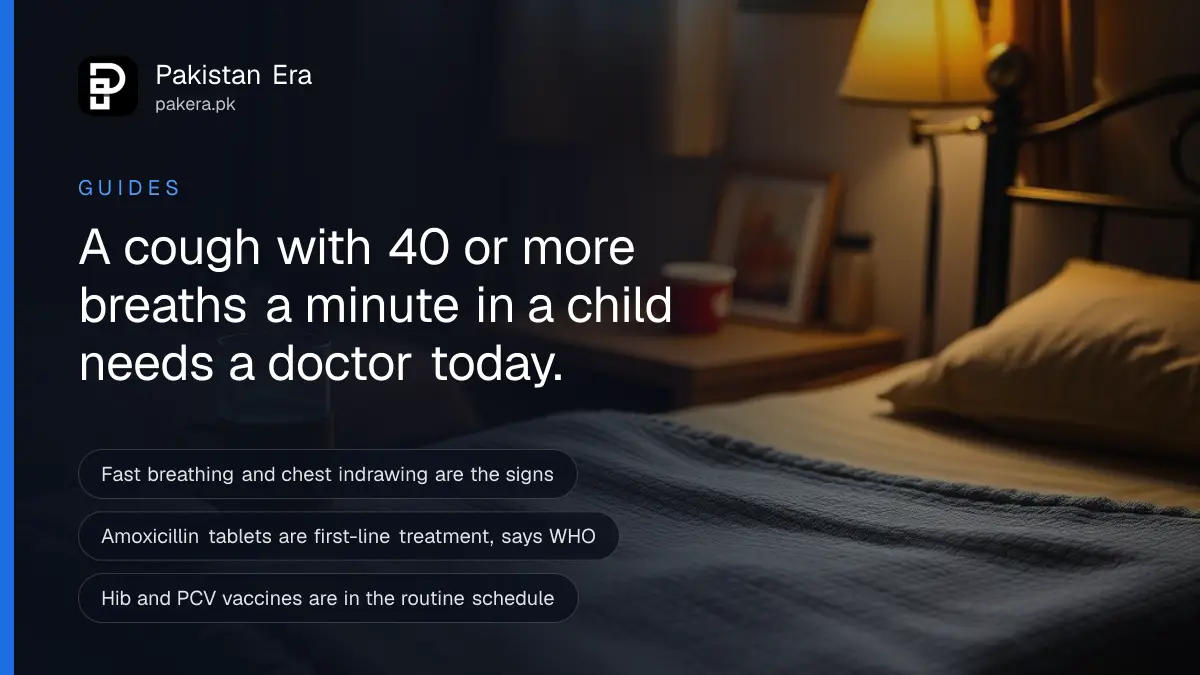
If your child under five has a cough and is breathing fast, or the skin between the ribs sinks in with each breath, treat it as possible pneumonia and see a doctor the same day. Count the breaths for one full minute while the child is calm. Fifty or more at 2 to 11 months, or forty or more at 12 to 59 months, counts as fast.
Winter brings more coughs to every house. Most are colds. A few are pneumonia, and that is the one that cannot wait for a second opinion from a neighbour.
We read the World Health Organization's pneumonia fact sheet on 8 October 2026. The breathing-rate cut-offs come from WHO's child illness guidance as summarised in a clinical reference, and we did not open the WHO guideline itself, so ask your doctor to confirm them for your child.
Fast breathing and a sunken chest are the two signs doctors use
WHO says pneumonia in a child under five with cough or difficult breathing is diagnosed by either fast breathing or lower chest wall indrawing. Indrawing means the chest moves in, instead of out, as the child breathes in. A healthy chest expands.
| Child's age | Fast breathing counts as |
|---|---|
| 2 to 11 months | 50 breaths a minute or more |
| 12 to 59 months | 40 breaths a minute or more |
| Any age under five | Chest pulling in with each breath |
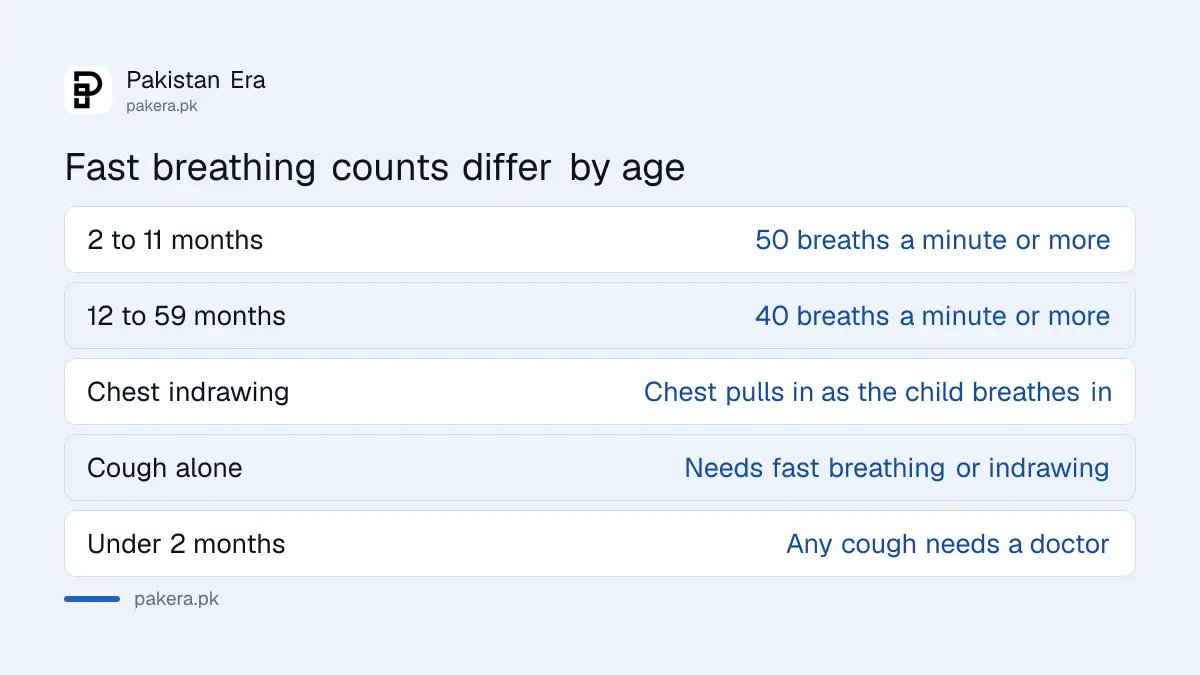
These are reported thresholds. A baby under two months is a separate case and should go straight to a doctor with any cough or fast breathing.
Wheezing is more common with viral chest infections, WHO notes. It does not rule pneumonia out.
Count the breaths at home in one full minute
Take your child's shirt up so you can see the chest and belly rise. Time one full minute on your phone. Count each rise as one breath. Do it when the child is calm, because crying and fever raise the count.
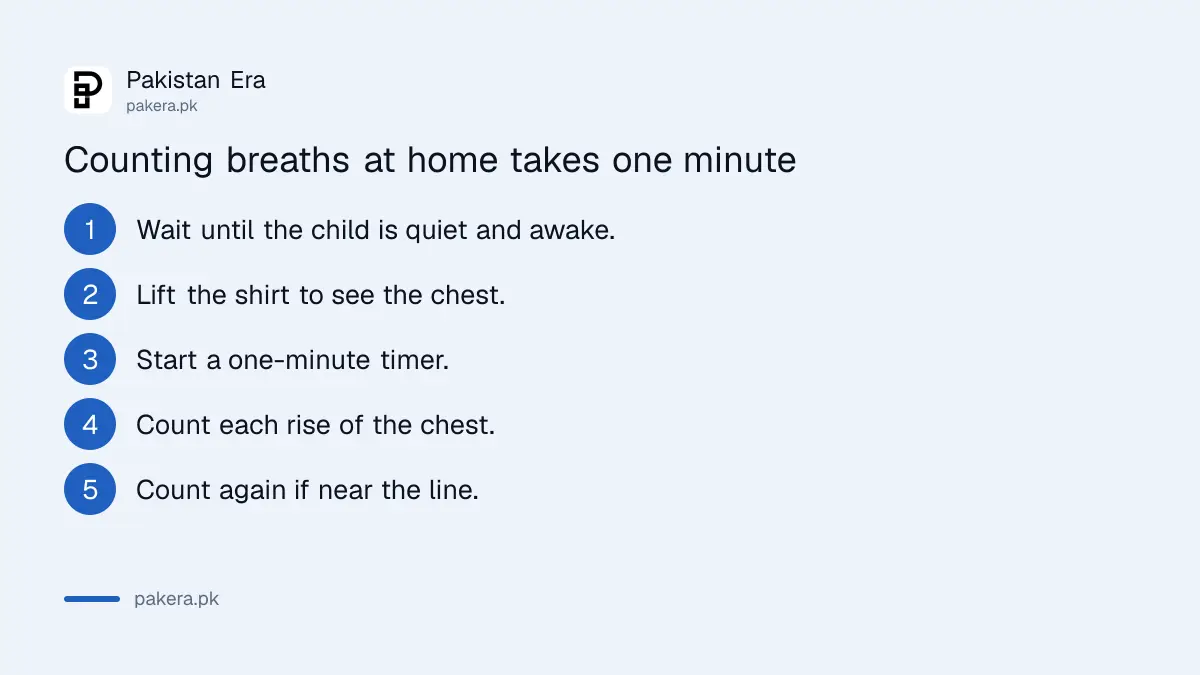
- Wait until the child is quiet, awake and not feeding.
- Lift the shirt so the chest and belly are visible.
- Start a one-minute timer on your phone.
- Count each rise of the chest as one breath.
- Count again if the number is close to the cut-off, and write both down for the doctor.
A sleeping child gives the cleanest count. If you are near the line, do not argue with the number. Go.
Danger signs mean go to a hospital now
WHO says very sick infants may be unable to feed or drink, may become unconscious or have convulsions, or have a body temperature that is too low. Any of these, with a cough, needs emergency care at once. Do not wait for the morning clinic.
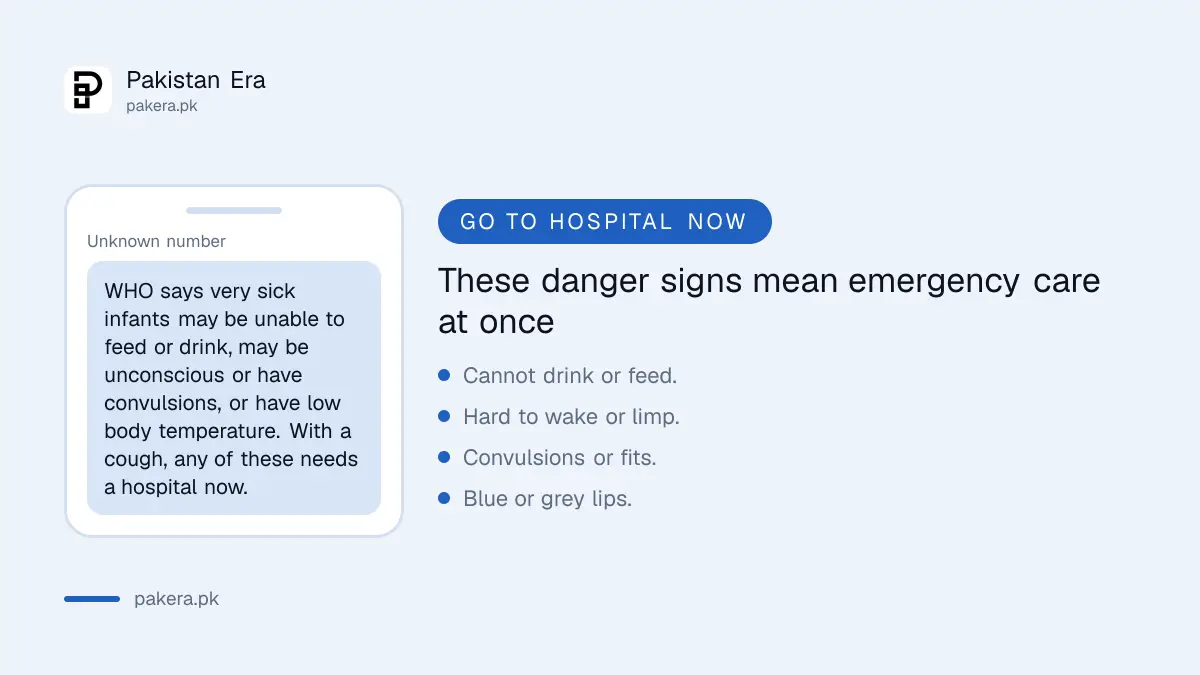
Add what any parent can see: blue or grey lips, a child who is hard to wake, and breathing so hard the nostrils flare. These are our plain-words list, not a quote from WHO. They need no counting. Take the child in.
If you are unsure where the nearest emergency room is, the emergency numbers every household should keep cover ambulance services in most cities.
Treatment is usually a short course of antibiotics
WHO says pneumonia should be treated with antibiotics, and that amoxicillin dispersible tablets are the first choice. Most cases need only oral antibiotics from a health centre. Hospital is for severe cases. The dose depends on weight, so do not give leftovers from another child.
Antibiotics do not work on a simple cold. That is why a doctor decides, not you and not the pharmacy counter. Take the child in, then follow the course to the end.
Vaccines and clean air stop most of it
WHO says the most effective protection is immunisation against Hib, pneumococcus, measles and whooping cough, plus hand washing with soap and less household air pollution. In Pakistan the routine schedule gives pentavalent, which includes Hib, and PCV, which protects against pneumococcal pneumonia.
Our schedule lists the visits at 6, 10 and 14 weeks. If your child missed one, the full list is in the free EPI vaccines from birth to 15 months. Older children and parents can ask about the flu vaccine before the season starts.
Smoke at home is the part families can change this week. A closed room with a gas heater or a wood fire is bad for small lungs, and smog days outside are worse. Read how to protect children from smog in Punjab, and check the gas heater safety rules before you light it.
Common questions
How fast is too fast for a baby's breathing?
For a child aged 2 to 11 months, 50 or more breaths a minute counts as fast. This is a reported WHO threshold, so confirm it with your doctor.
Can pneumonia happen without a fever?
Yes. WHO describes the diagnosis as cough or difficult breathing with fast breathing or chest indrawing, with or without fever.
Is pneumonia contagious?
The germs spread in droplets from a cough or sneeze, and the viruses and bacteria that live in a child's nose or throat can reach the lungs. Keep sick children home and wash hands.
Does my child need to be admitted?
Not always. WHO says hospital is recommended only for severe pneumonia. Most children are treated with oral antibiotics at a health centre.
Which vaccines protect against pneumonia?
Hib, pneumococcal (PCV), measles and whooping cough vaccines, according to WHO. The first three infant doses of pentavalent and PCV are part of the routine schedule.
What is the first-choice antibiotic?
WHO names amoxicillin dispersible tablets, but only a doctor should prescribe it and set the dose.
How we verified this
What we checked, where we read it, and what we could not confirm.
Last checked 8 October 2026. The facts on diagnosis by fast breathing or chest indrawing, danger signs in very sick infants, amoxicillin dispersible tablets as first-line treatment, hospital only for severe cases and the vaccines that prevent pneumonia come from the WHO fact sheet on pneumonia in children on who.int. The fact sheet says pneumonia killed 740,180 children under five in 2019, or 14 per cent of deaths in that age group worldwide. It does not list the 50 and 40 breath cut-offs; those are the WHO child illness thresholds as given in a clinical reference we read, not on the WHO page itself, and we have marked them as reported. We did not find a current Pakistan case count for this winter. This page is general information and does not replace a doctor.
About the author

Public Services and Education Journalist
Fajr Riaz is a journalist and content writer at Pakistan Era, based in Lahore. She covers the questions people meet in everyday life in Pakistan: how a public service works, what a change in the rules means, and where to find a reliable answer.