Pakistan Reports 578 Suspected Dengue Cases in a Week, Up From 461
NIH's week 38 bulletin counts 578 suspected dengue cases in Pakistan, up from 461, plus 88 chikungunya cases. See districts and lab results, then get tested.
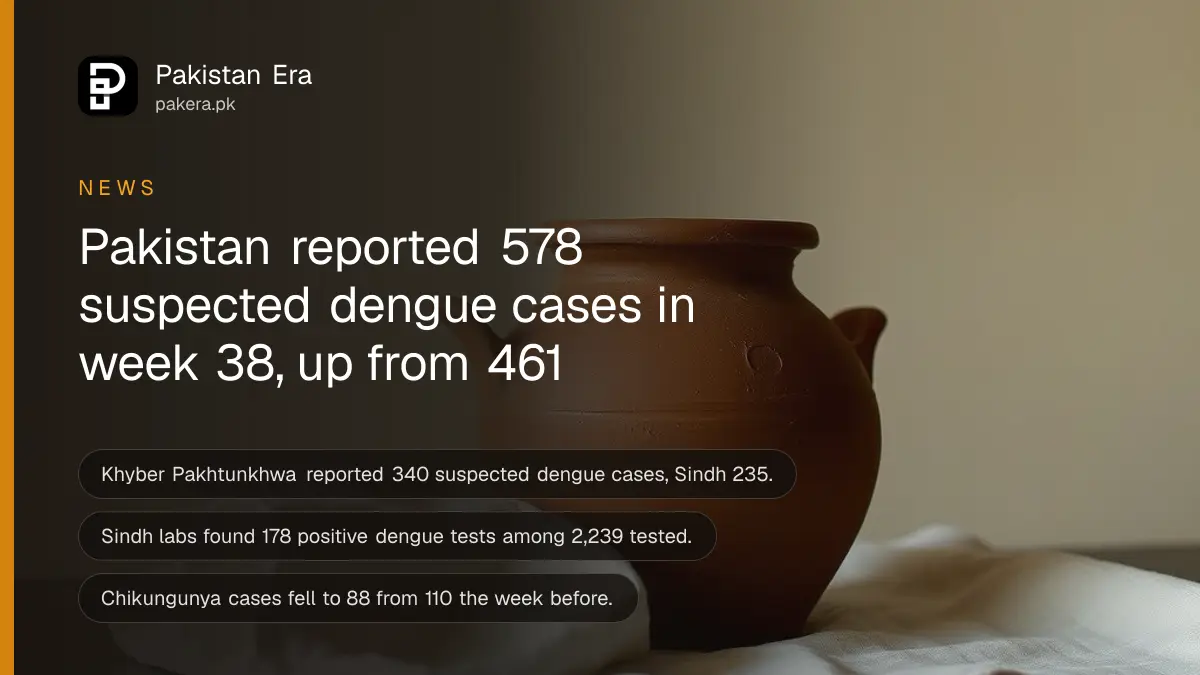
Short answer: Pakistan reported 578 suspected dengue cases in week 38 of 2026, up from 461 the week before, the National Institutes of Health (NIH) says. Khyber Pakhtunkhwa had 340 and Sindh 235. Chikungunya cases fell to 88. A high fever with severe headache and body pain is the cue to get a test.
The NIH put the bulletin online on Friday 9 October 2026. We read the week 38 and week 37 tables ourselves. Punjab did not report in either week, so the national count leaves out the largest province and the real total is higher.
Dengue cases rose by 117 in one week to 578
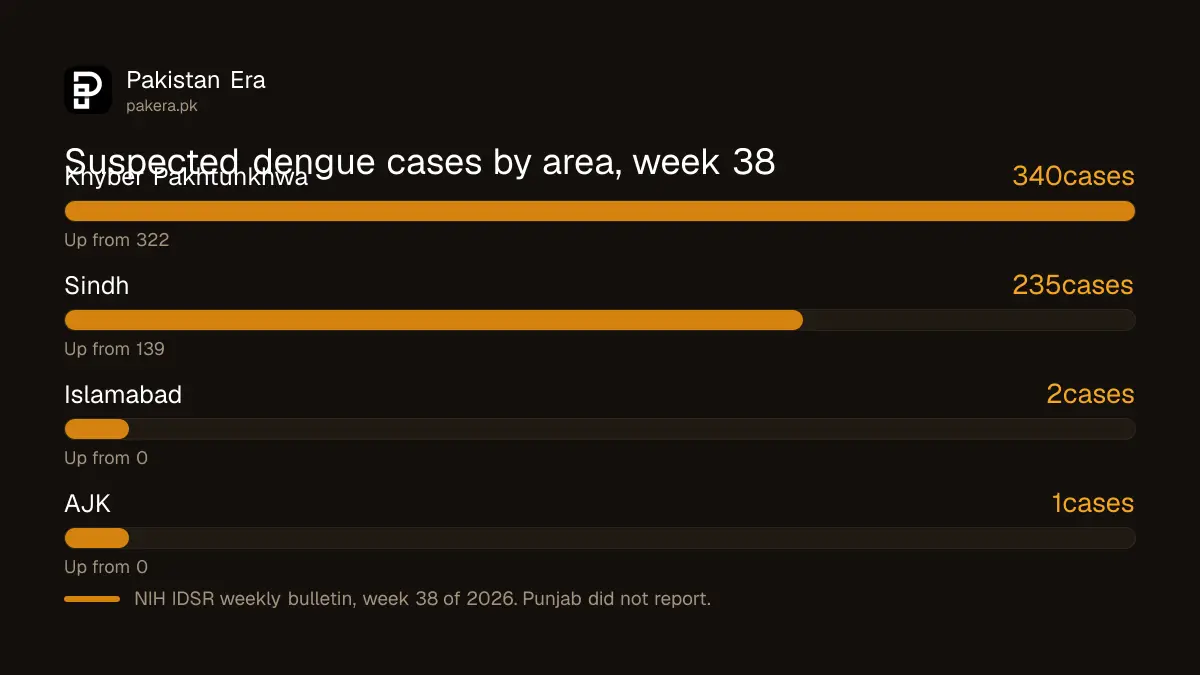
Suspected dengue cases in Pakistan rose by about 25 per cent in week 38, from 461 to 578. Khyber Pakhtunkhwa reported 340, up from 322. Sindh reported 235, up from 139, a rise of about 69 per cent. Islamabad had 2 and AJK had 1.
The NIH counts these cases through its Integrated Disease Surveillance and Response system, called IDSR. Clinics in 158 districts send weekly forms. Every figure is a suspected case, not a confirmed one. The bulletin lists dengue among the diseases whose cases increased in Khyber Pakhtunkhwa and AJK this week.
| Area | Week 37 | Week 38 |
|---|---|---|
| Khyber Pakhtunkhwa | 322 | 340 |
| Sindh | 139 | 235 |
| Islamabad | 0 | 2 |
| AJK | 0 | 1 |
| Balochistan | 0 | 0 |
| Gilgit-Baltistan | 0 | 0 |
| Punjab | NR | NR |
| Pakistan | 461 | 578 |
NR means not reported. The bulletin does not explain why Punjab is missing.
Bannu and Kohat account for 225 of Khyber Pakhtunkhwa's 340 cases
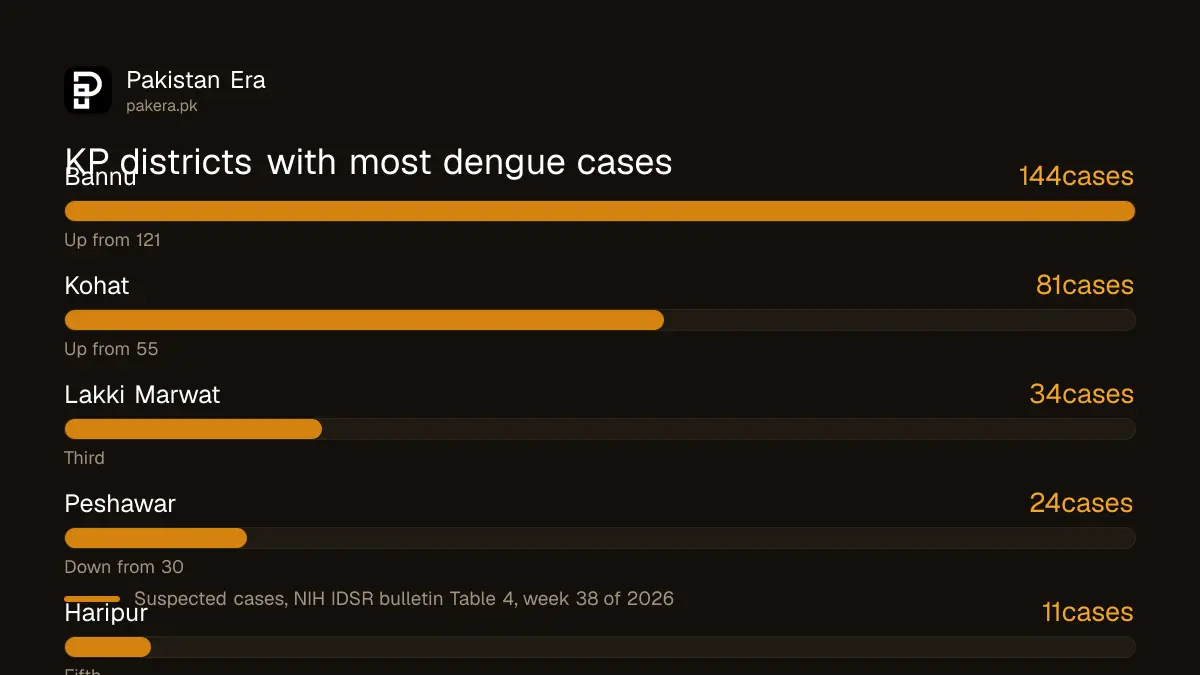
Bannu reported 144 suspected dengue cases in week 38, up from 121. Kohat had 81, up from 55. Lakki Marwat had 34 and Peshawar 24, down from 30. These four districts hold 283 of the province's 340 cases, about 83 per cent.
The NIH bulletin gives district dengue figures only for Khyber Pakhtunkhwa. It does not break out Sindh's 235 cases by district. Provincial health departments publish their own counts, which can differ from this weekly bulletin because the NIH counts suspected cases from clinics that report to it. For provincial and city figures, see Islamabad and Khyber Pakhtunkhwa dengue cases and Karachi dengue cases.
Sindh labs found 178 positive dengue tests among 2,239
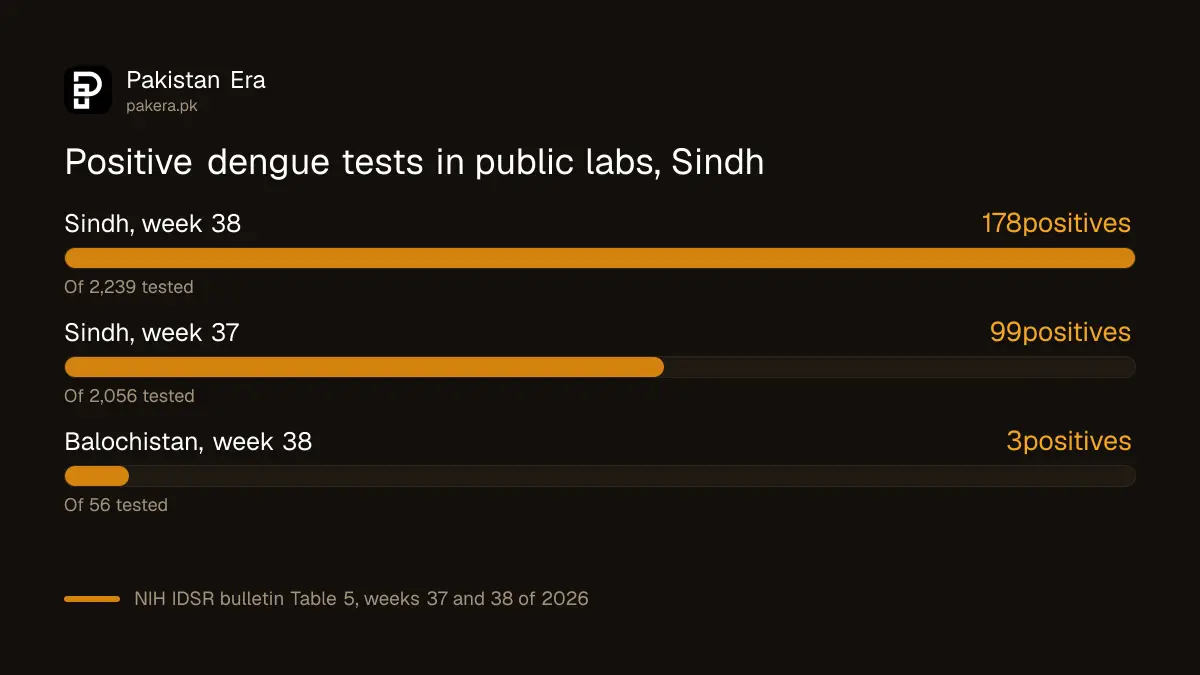
The NIH's laboratory table for week 38 lists 2,239 dengue tests in Sindh's public health laboratories and 178 positives, about 8 per cent. A week earlier it was 99 positives from 2,056 tests, about 5 per cent. Balochistan found 3 positives in 56 tests.
The share of tests that came back positive rose in Sindh. That is consistent with the rise in suspected cases, but one week is not a trend, and the table covers only people who were tested in these labs. Gilgit-Baltistan tested 6 people and found none.
| Dengue tests, public labs | Week 37 tested | Week 37 positive | Week 38 tested | Week 38 positive |
|---|---|---|---|---|
| Sindh | 2,056 | 99 | 2,239 | 178 |
| Balochistan | 19 | 0 | 56 | 3 |
| Gilgit-Baltistan | - | - | 6 | 0 |
Chikungunya cases fell to 88, with 52 in Khyber Pakhtunkhwa
Chikungunya is a mosquito-borne illness that can look like dengue. The NIH counted 88 suspected cases in week 38, down from 110. Khyber Pakhtunkhwa had 52, down from 89. Sindh had 35, up from 21. Balochistan had 1. A Sindh lab found 1 positive in 1 test.
Chikungunya and dengue both cause fever and joint pain, and a blood test is the way to tell them apart. We explain the difference in chikungunya and dengue symptoms and tests.
High fever with severe pain means get tested and avoid some painkillers
The World Health Organization (WHO) lists high fever, severe headache, pain behind the eyes, muscle and joint pain, nausea and rash as dengue symptoms. WHO says severe warning signs often appear after the fever goes down, and anyone with them should seek care immediately.
WHO warns that there is no specific treatment for dengue. It says pain can be managed with paracetamol, and that ibuprofen and aspirin should be avoided because they can raise the risk of bleeding. Mosquitoes that carry dengue bite during the day, so cover arms and legs and use repellent, and remove standing water. We list the warning signs in dengue warning signs in Pakistan and test costs in the NS1 dengue test price.
- See a doctor if you have a high fever with severe headache or body pain.
- Ask for a dengue test, as the doctor advises.
- Drink plenty of fluids and rest.
- Do not take aspirin or ibuprofen unless your doctor says so.
- Go to a hospital at once for severe stomach pain, repeated vomiting, bleeding gums or nose, blood in vomit or stool, or fast breathing.
- Empty and scrub containers that hold water at home once a week.
Step 3 and step 6 are general advice that we did not take from the bulletin. Follow your own doctor's instructions.
Common questions
How many dengue cases did Pakistan report in week 38?
The NIH counted 578 suspected dengue cases in week 38 of 2026, up from 461. Khyber Pakhtunkhwa reported 340 and Sindh 235. Punjab did not report.
Are these confirmed dengue cases?
No. The NIH says all reported cases are suspected. Sindh's labs found 178 positives among 2,239 tests that week.
Which district in Khyber Pakhtunkhwa has the most dengue?
Bannu reported 144 suspected cases in week 38, followed by Kohat with 81, Lakki Marwat with 34 and Peshawar with 24.
Is chikungunya the same as dengue?
No. They are different viruses spread by mosquitoes, and both can cause fever and joint pain. A blood test tells them apart. The NIH counted 88 suspected chikungunya cases in week 38.
Which painkiller is safe for dengue?
WHO says pain can be managed with paracetamol and that ibuprofen and aspirin should be avoided because they can increase bleeding risk. Ask your doctor for the dose.
Why are the Punjab numbers missing?
Punjab is marked NR, not reported, in both week 37 and week 38. The bulletin does not give a reason, so the national figure is a partial count.
How we verified this
What we checked, where we read it, and what we could not confirm.
Last checked on 11 October 2026. We read the NIH's Public Health Bulletin, Pakistan, Week 38, 2026 and the Week 37 bulletin, both listed on the NIH's IDSR weekly reports page. Province figures are from Table 1, Khyber Pakhtunkhwa districts from Table 4 and laboratory results from Table 5. Symptoms and painkiller advice are from the WHO dengue fact sheet.
About the author

Tax, Bills and Technology Writer
Ali Akhtar is a young and curious voice here at Pakistan Era. He is currently pursuing his A-Levels and has a growing interest in Pakistan’s changing industrial landscape and educational trends. Ali likes to write in a way that helps him explain and explore the world around him. His writing reflects the perspective of the new generation navigating the evolving trends of Pakistan where technology, youth innovation, and shifting opportunities are reshaping the country’s future.