Pakistan Reports 1,397 Suspected Dengue Cases in a Week, Up From 578
Pakistan reported 1,397 suspected dengue cases in week 39 of 2026, up from 578, NIH says. KP sent 1,150, Sindh 241. See the district split and what to do.
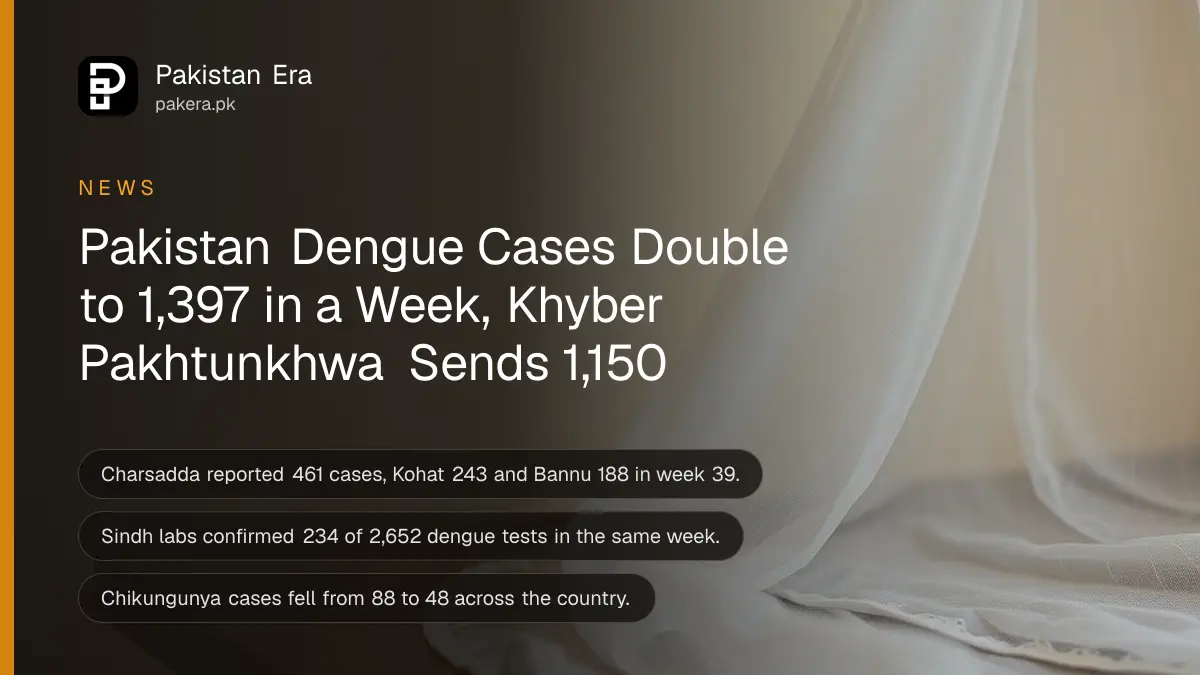
Short answer: Pakistan reported 1,397 suspected dengue cases in week 39 of 2026, more than double the 578 of week 38, the National Institutes of Health (NIH) says. Khyber Pakhtunkhwa sent 1,150 of them and Sindh 241. Chikungunya fell to 48. A fever with a severe headache, pain behind the eyes and body pain is the cue to get a test.
The NIH put the week 39 bulletin online on Friday 16 October 2026. We downloaded the week 39 and week 38 PDFs and read every table ourselves. Punjab did not report in either week, so the national count leaves out the largest province and the real figure is higher. Every number here is a suspected case reported by a clinic, not a lab result, unless we say otherwise.
Dengue cases rose by 819 in one week to 1,397
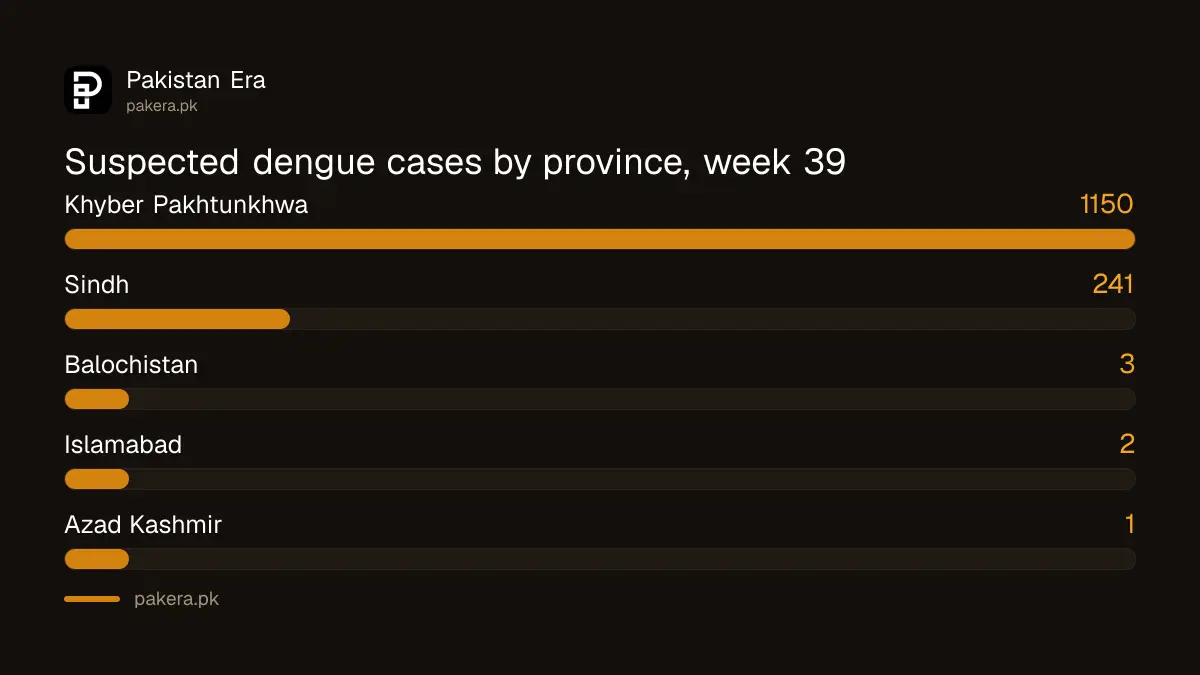
The national dengue count went from 578 in week 38 to 1,397 in week 39, a rise of 819 cases, or about 142 per cent. Almost all of the rise came from Khyber Pakhtunkhwa, which went from 340 to 1,150. Sindh moved only from 235 to 241 in the same week.
| Province or area | Week 38 | Week 39 | Change |
|---|---|---|---|
| Khyber Pakhtunkhwa | 340 | 1,150 | up 810 |
| Sindh | 235 | 241 | up 6 |
| Balochistan | 0 | 3 | up 3 |
| Islamabad | 2 | 2 | no change |
| Azad Jammu and Kashmir | 1 | 1 | no change |
| Gilgit-Baltistan | 0 | 0 | no change |
| Punjab | not reported | not reported | |
| Pakistan | 578 | 1,397 | up 819 |
The bulletin does not print the dates of each week. On the standard week calendar, week 39 runs from 21 to 27 September 2026. The bulletin itself lists dengue among the vector-borne diseases that increased this week, alongside malaria. The week 38 dengue count had already risen from 461 to 578, so this is the third weekly rise in a row.
Khyber Pakhtunkhwa sent 82 per cent of the week's cases
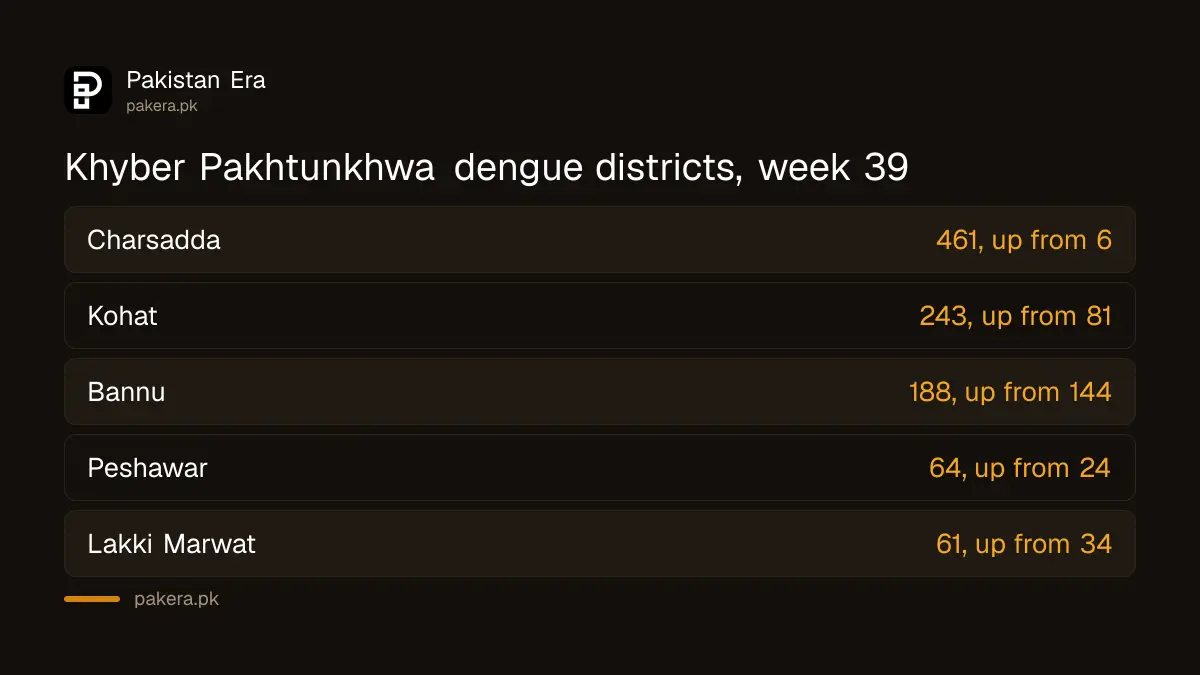
Khyber Pakhtunkhwa reported 1,150 of the 1,397 suspected cases, which is 82 per cent, our arithmetic. Charsadda alone sent 461, Kohat 243 and Bannu 188. In week 38 those three districts had 6, 81 and 144. The district table in the bulletin names 20 districts with at least one case.
Peshawar reported 64, Lakki Marwat 61, Khyber 37, Haripur 21, Nowshera 17, Karak 12 and Mansehra 10. The rest of the province sent single digits. The jump in Charsadda, from 6 to 461 in a week, is the biggest single move in the table. The bulletin gives no explanation, and we have not found one on the provincial health department's site. The district picture and the provincial government's response are in the report on Khyber Pakhtunkhwa's week 39 dengue figures.
Earlier in October the capital had reported 21 cases for the year, and Kohat had been declared a high-risk district. Those figures are in the report on dengue in Islamabad and Khyber Pakhtunkhwa.
Sindh labs found 234 positive dengue tests among 2,652
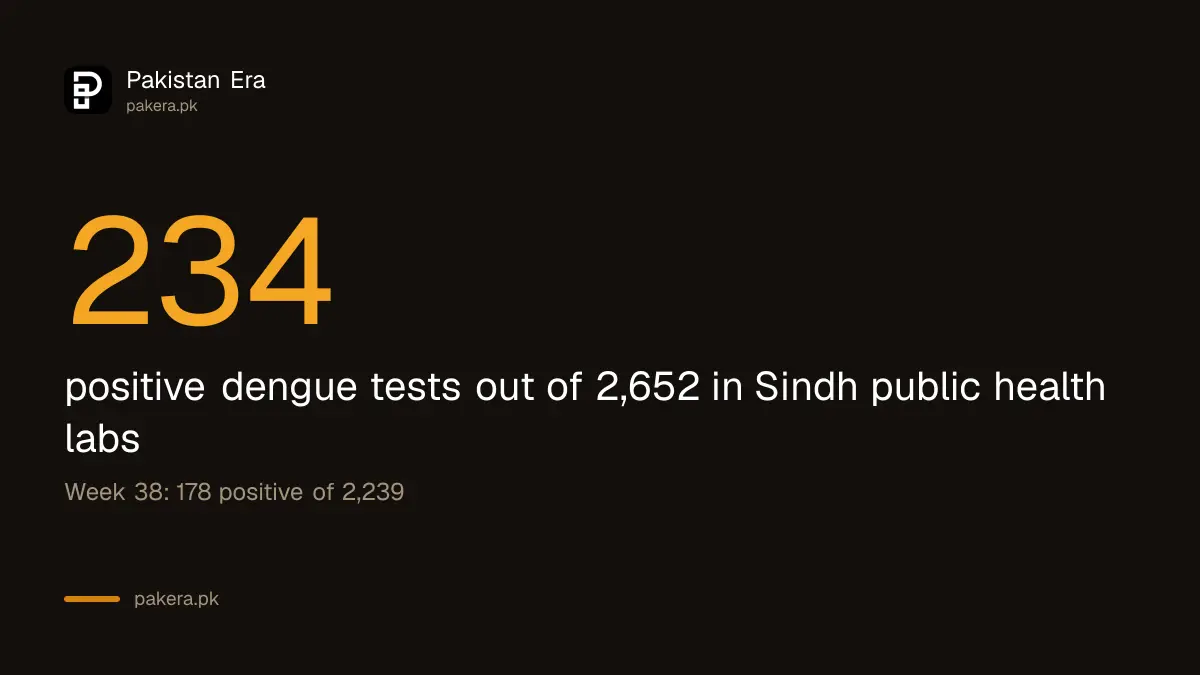
Public health laboratories in Sindh tested 2,652 samples for dengue in week 39 and found 234 positive, which is 8.8 per cent, our arithmetic. In week 38 the same labs tested 2,239 and found 178 positive, or 7.9 per cent. Balochistan tested 40 and found 1. Azad Kashmir tested 1 and found none.
No lab figures are printed for Khyber Pakhtunkhwa, Islamabad, Gilgit-Baltistan or Punjab in the dengue row. That matters, because the province with 1,150 suspected cases has no confirmed count in this bulletin. The Sindh district table also has no dengue column, so we cannot say how many of Sindh's 241 came from Karachi. The city's own numbers are in the Karachi dengue report.
Chikungunya fell to 48 cases
Suspected chikungunya cases dropped from 88 in week 38 to 48 in week 39. Khyber Pakhtunkhwa reported 31, down from 52. Sindh reported 16, down from 35. Balochistan reported 1 in both weeks. The Sindh lab tested 2 samples for chikungunya and neither was positive.
Both diseases are carried by the same Aedes mosquito, which bites in the daytime. The fever looks the same at first. Chikungunya tends to bring joint pain that can last weeks, while dengue carries the risk of bleeding and a dangerous drop in blood pressure. The differences, and which test to ask for, are in chikungunya versus dengue.
What to do if you have a fever this week
Treat any fever in a dengue season as possible dengue until a test says otherwise. The World Health Organization (WHO) says most people recover in one to two weeks, but severe dengue can be fatal and shows itself after the fever drops. These steps are ours, built on the WHO fact sheet and NIH advice.
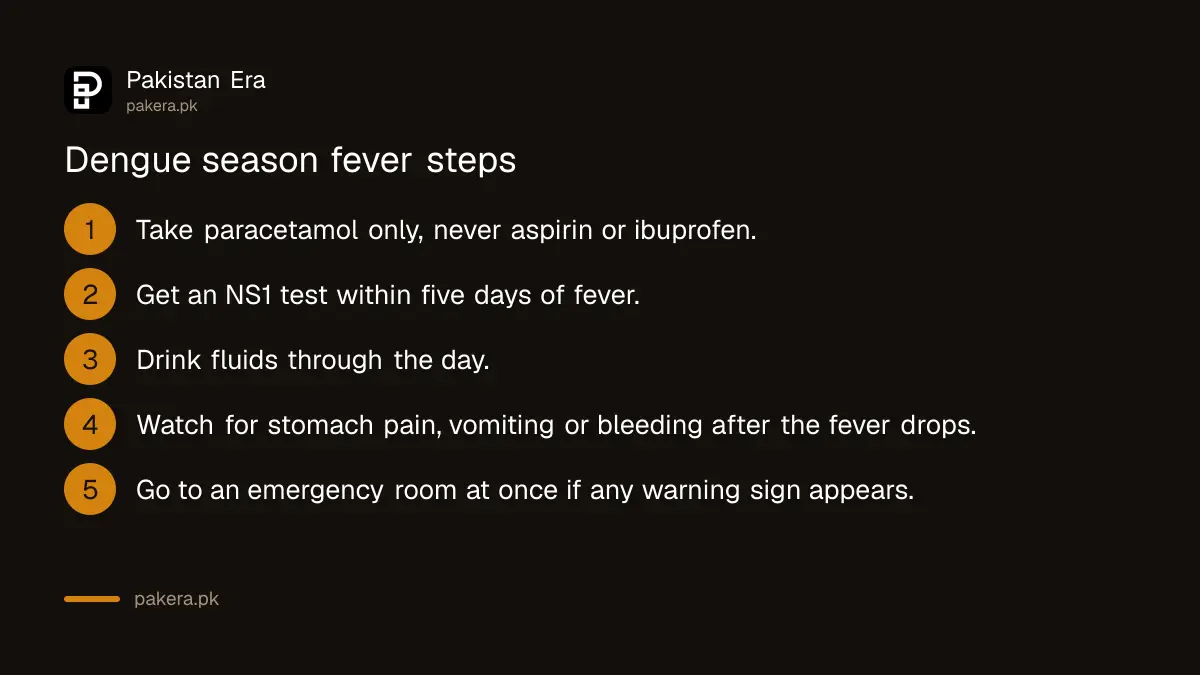
- Take paracetamol for fever and pain. Do not take aspirin or ibuprofen, which raise the risk of bleeding.
- Get an NS1 antigen test in the first five days of fever, or an IgM test after that. Prices are in the guide to the dengue test price.
- Drink fluids through the day: water, ORS, juice, soup.
- Watch for warning signs after the fever falls: severe stomach pain, repeated vomiting, bleeding gums, blood in vomit, breathing trouble, or being very restless or very sleepy.
- Go to an emergency room at once if any warning sign appears. The full list is in dengue warning signs.
- Empty and scrub every water container at home once a week, including coolers, drums and plant saucers.
The reason to avoid some common painkillers is explained in why NIH says use paracetamol. A weekly home routine is in the NIH home checklist.
Common questions about the week 39 dengue figures
How many dengue cases did Pakistan report in week 39 of 2026?
1,397 suspected cases, up from 578 in week 38, according to the NIH bulletin published on 16 October 2026. Punjab is not included.
Which province had the most dengue cases?
Khyber Pakhtunkhwa, with 1,150 of the 1,397. Charsadda, Kohat and Bannu reported 892 between them.
Are these confirmed cases?
No. The bulletin counts suspected cases reported by clinics. Only the lab table gives confirmed results, and it shows 234 positives in Sindh and 1 in Balochistan.
Why is Punjab missing?
The bulletin marks Punjab as not reported in every row. The NIH does not say why, and we could not find a reason on its site.
What dates does week 39 cover?
The bulletin does not print dates. On the standard week calendar, week 39 of 2026 runs from 21 to 27 September.
Did chikungunya go up too?
No. Suspected chikungunya cases fell from 88 to 48, with 31 in Khyber Pakhtunkhwa and 16 in Sindh.
How we verified this
What we checked, where we read it, and what we could not confirm.
Last checked 19 October 2026. All case counts come from the NIH Integrated Disease Surveillance and Response bulletins for weeks 38 and 39 of 2026, listed on the NIH weekly bulletin page. We read Table 1 for provinces, Table 4 for the Khyber Pakhtunkhwa districts and Table 5 for lab results in the week 39 PDF, whose file date on the NIH server is 16 October 2026. Percentages and week-on-week changes are our own arithmetic. Fever advice is from the WHO dengue fact sheet. We could not verify why Punjab did not report, or the exact dates of the reporting week, because the bulletin does not state them.
About the author

Tax, Bills and Technology Writer
Ali Akhtar is a young and curious voice here at Pakistan Era. He is currently pursuing his A-Levels and has a growing interest in Pakistan’s changing industrial landscape and educational trends. Ali likes to write in a way that helps him explain and explore the world around him. His writing reflects the perspective of the new generation navigating the evolving trends of Pakistan where technology, youth innovation, and shifting opportunities are reshaping the country’s future.