Dengue in Islamabad and Khyber Pakhtunkhwa: 21 Cases in the Capital, Kohat High Risk
Islamabad reports 21 dengue cases in 2026 and Kohat is high risk with 1,347. See the reported KP district numbers and a weekly home check. Check yours now.
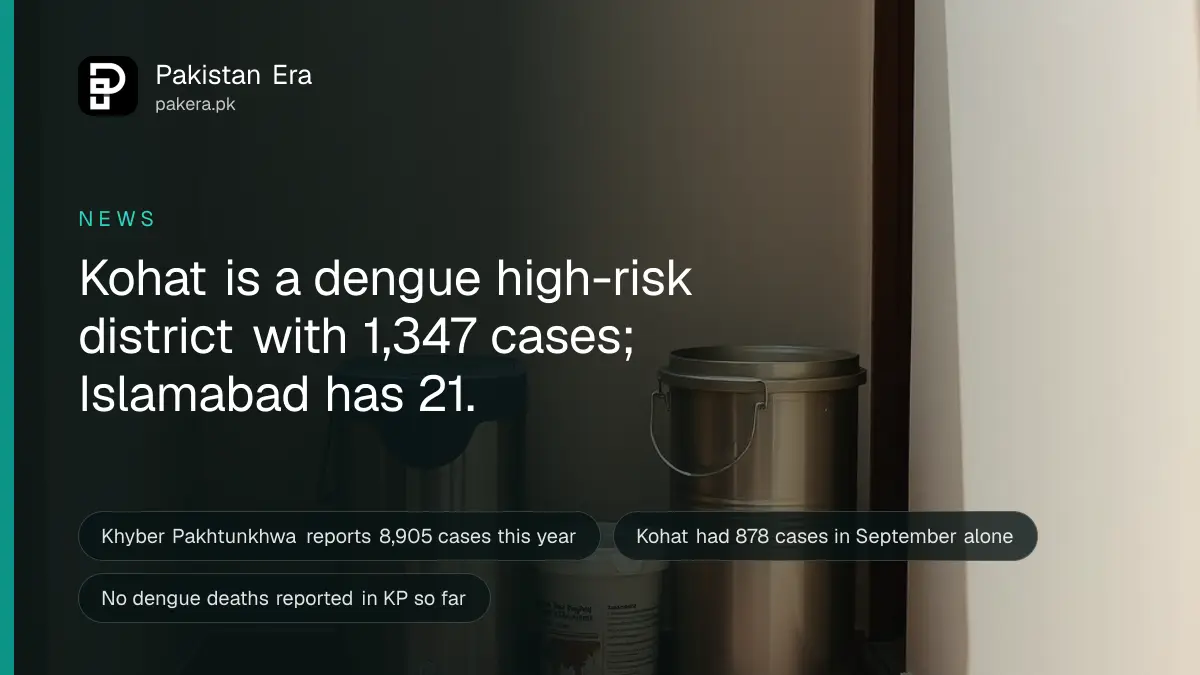
Islamabad has reported 21 dengue cases in 2026, from 1 January to 5 October. In Khyber Pakhtunkhwa, Kohat has been declared a high-risk district after 1,347 cases, and the province counts 8,905 cases for the year with no deaths reported so far.
All of these numbers are reported, not read on a health department page. We did not find either tally on a health department page on 8 October 2026. The details below come from reports of 3 and 6 October 2026, described in the sources section.
Islamabad has 21 dengue cases so far this year
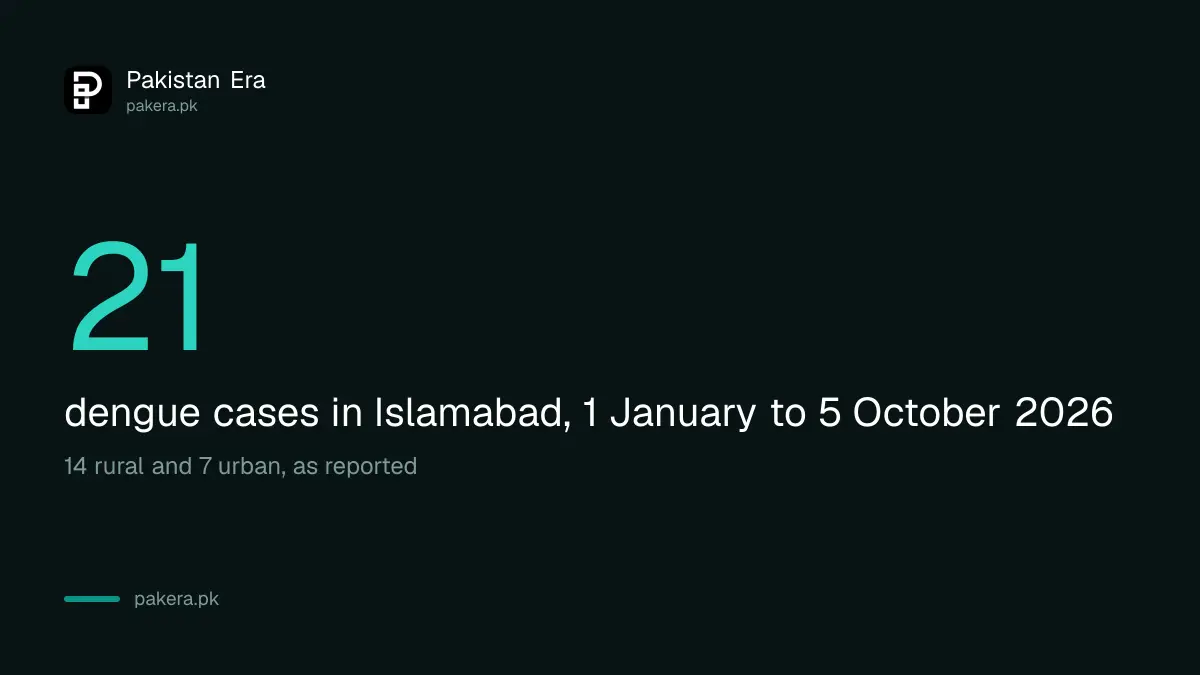
The Islamabad District Health Office is reported to have counted 21 cases between 1 January and 5 October 2026. Of these, 14 are from rural areas and 7 from urban localities. No death was reported in the figures we saw.
| Place | Reported dengue figure |
|---|---|
| Islamabad, 1 Jan to 5 Oct | 21 cases (14 rural, 7 urban) |
| Khyber Pakhtunkhwa, year to date | 8,905 cases |
| Khyber Pakhtunkhwa, laboratory confirmed | 2,175 |
| Khyber Pakhtunkhwa, active cases | 112 |
| Kohat district | 1,347 cases, high risk |
The capital's total is small. The rural split is the part to notice. Two thirds of the cases came from rural areas, so a home on the edge of the city should not feel safe because the city count is low.
Islamabad teams did 36,167 control activities in one day
For 5 October alone, the district is reported to have carried out 36,167 surveillance and control activities. Teams visited 2,602 hotspot locations, inspected 7,103 houses indoors and found and cleared 740 sites where mosquitoes were breeding.
Residents are urged to cooperate with the teams and keep water containers, rooftops, courtyards and other places free of standing water. If a team knocks, let them in. They are looking for larvae in flower pots, trays under coolers and old tyres.
The dengue mosquito breeds in clean standing water, not drains. We cover how to find it in a house in the dengue signs that mean go to hospital, which also lists what to avoid taking for the fever.
Kohat is the high-risk district in Khyber Pakhtunkhwa
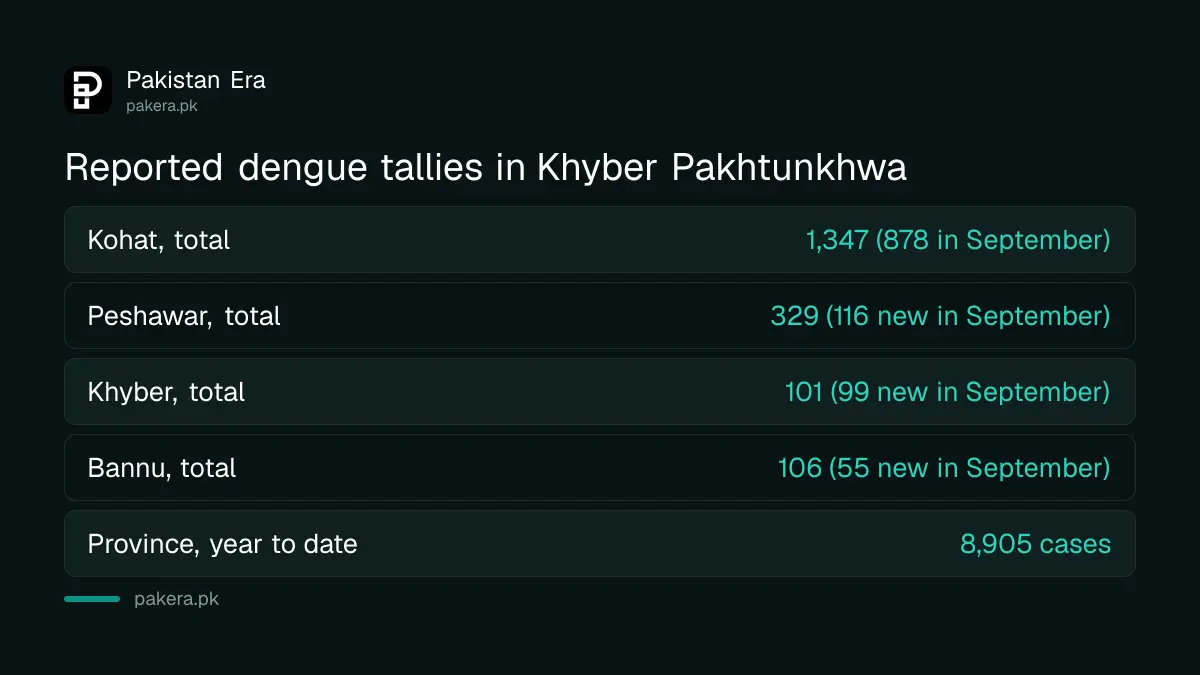
Kohat has been declared a high-risk area. It is reported to have 1,347 cases in total, and 878 of them were reported in September alone. The province counted about 100 new cases in 24 hours, and September was its worst month of the year.
Other September figures reported: Peshawar 116 new cases (329 in total), Khyber 99 new (101 total), Bannu 55 new (106 total) and Haripur 3 new (37 total). The change in weather is given as the reason cases are rising.
We have not seen the provincial table itself, so treat the district numbers as reported tallies.
October is still a dengue month, so check the home weekly
Dengue does not end when the heat does. In Khyber Pakhtunkhwa, September was the worst month of the year, and the reports say cases are rising with the change in weather. A mosquito can still breed in a bucket on a warm day. A weekly check of the house takes ten minutes.
- Empty and scrub water coolers, flower pots, trays and buckets once a week.
- Cover water tanks and drums with a tight lid.
- Remove old tyres and loose containers from the roof and yard.
- Use a repellent and wear long sleeves in the morning and afternoon.
- Take a child or elder with fever for two days or more to a doctor, not a pharmacy.
If you live in Punjab, reporting dengue larvae or standing water in Punjab shows the helpline and portal. In Rawalpindi, the latest tally is in Rawalpindi's dengue cases in September 2026. For Sindh, read the Karachi dengue count.
Know the test and the warning signs
An NS1 test works in the first days of fever, and an IgM test later. A doctor decides which one. Prices are in what an NS1 and CBC test costs. And remember there is no routine dengue vaccine here, as the dengue vaccine status in Pakistan explains.
The danger starts when the fever drops. Bleeding gums, black stool, severe stomach pain, repeated vomiting or fainting means hospital now.
Common questions
How many dengue cases does Islamabad have in 2026?
It is reported to have 21 from 1 January to 5 October 2026: 14 from rural areas and 7 from urban areas.
Which Khyber Pakhtunkhwa district is high risk?
Kohat has been declared high risk after reporting 1,347 cases, 878 of them in September.
Have any dengue deaths been reported?
In the reports we saw, none in Islamabad and none in Khyber Pakhtunkhwa so far this year.
Does dengue stop in October?
No. Khyber Pakhtunkhwa reports rising cases with the weather change. Standing water in a warm house or yard can still breed mosquitoes.
Where does the dengue mosquito breed?
In clean standing water, such as buckets, coolers, flower pots and tyres. Clear these weekly.
Who counts these cases?
Islamabad's figure is attributed to its District Health Office. The provincial count is attributed to health reports.
How we verified this
What we checked, where we read it, and what we could not confirm.
Last checked 8 October 2026. The Islamabad figures, including 21 cases, the 14 and 7 split and the 5 October control activity numbers, were reported on 6 October 2026 and attributed to the Islamabad District Health Office. The Khyber Pakhtunkhwa figures, including Kohat's 1,347, the provincial 8,905, 2,175, 112 and the district tallies, were reported on 3 October 2026. We did not find either tally on an official health website on 8 October 2026, so none of it is confirmed by a health department page we could open. The 3 October report is five days old and the counts will have grown, so look for a newer figure from your district health office before you rely on these.
About the author

Public Services and Education Journalist
Fajr Riaz is a journalist and content writer at Pakistan Era, based in Lahore. She covers the questions people meet in everyday life in Pakistan: how a public service works, what a change in the rules means, and where to find a reliable answer.