Rawalpindi Dengue Cases Rise to 15 in 2026, With No Deaths So Far
Rawalpindi has 15 confirmed dengue cases in 2026 and no deaths. See the latest figures, where to get tested, the 1033 helpline and what to do at home.
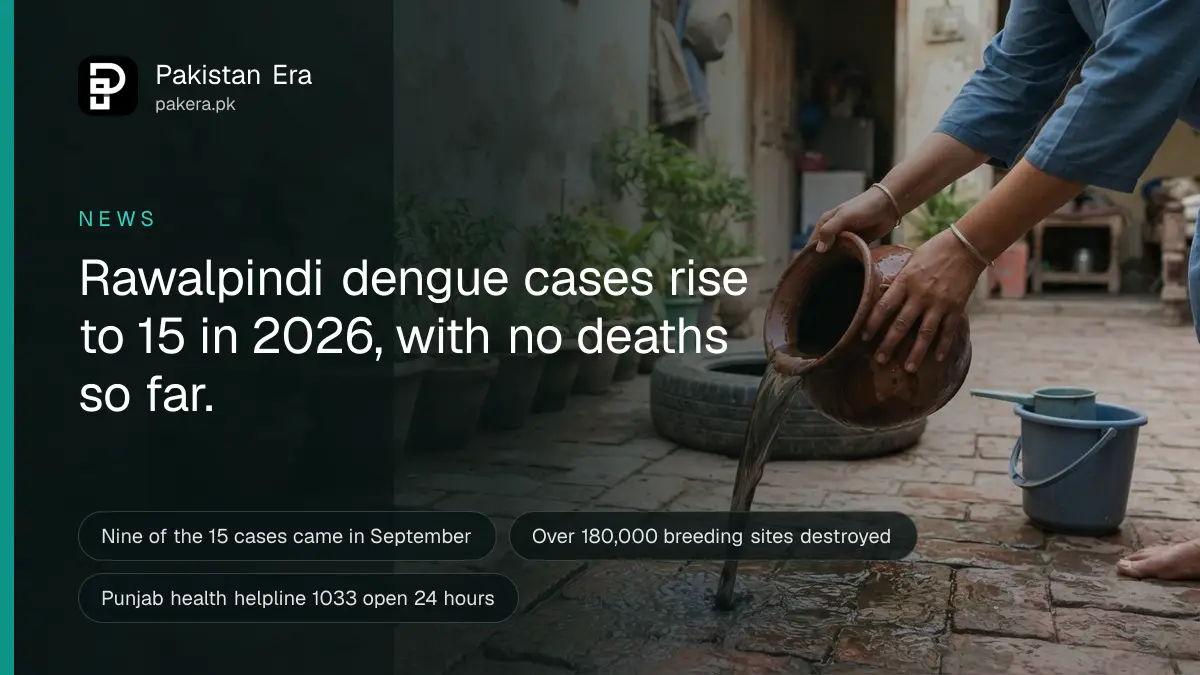
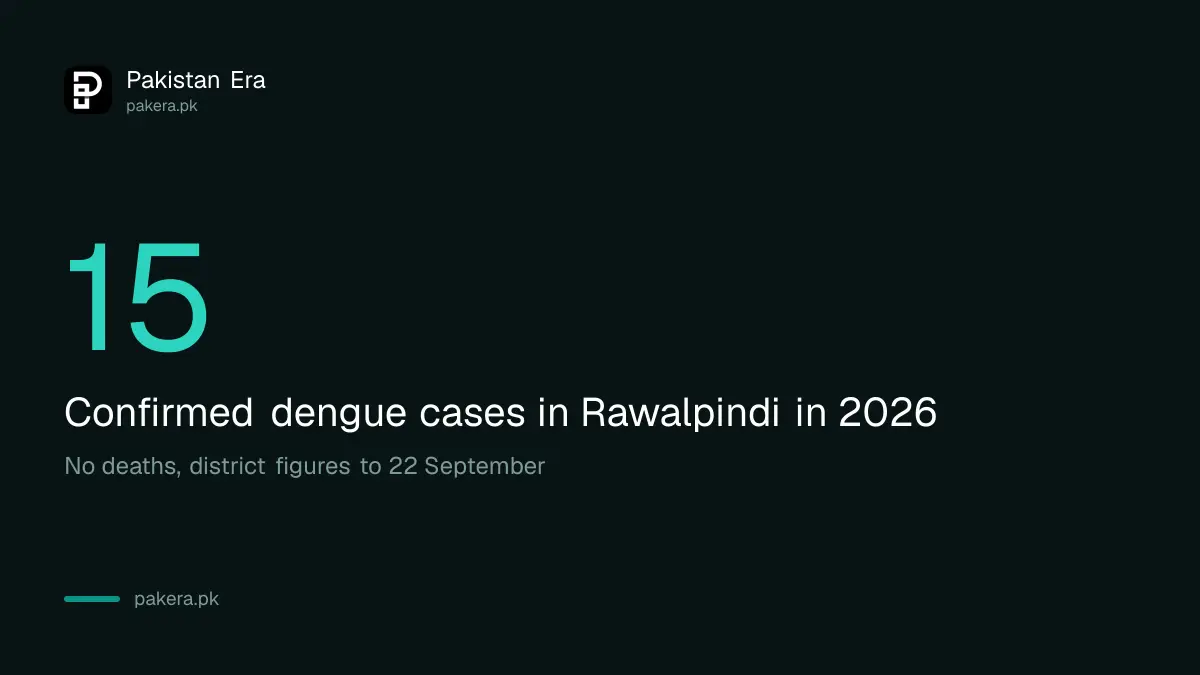
Rawalpindi has confirmed 15 dengue cases so far in 2026, and no one has died. That is the latest district figure, given by the District Health Officer on 22 September. Nine of those cases came in September alone, so the Rawalpindi dengue count is now rising at the height of the season.
Hospitals in the district had screened 4,506 people by 22 September and treated 4,165 of them as suspected dengue, according to press reports of the District Health Authority data.
Below are the figures, where to get checked in Rawalpindi, the helpline, and the jobs every household should do this week.
Rawalpindi has 15 confirmed dengue cases in 2026 and no deaths
Rawalpindi had 15 confirmed dengue cases in 2026 by 22 September, with no deaths, the District Health Officer said in press reports. Three were confirmed that day at Holy Family Hospital. Nine cases came in September. The count rose from 9 on 20 September.
The count moved fast in three days. The District Health Authority's report of Saturday 20 September showed 9 confirmed cases. By 21 September it was 12, and by 22 September it was 15. The three newest patients came from UC CTR-1, UC City I and Mandra, the District Health Officer, Dr Jawad, told the press.
| Date of report | Screened | Suspected | Confirmed | Deaths |
|---|---|---|---|---|
| 7 September | 3,753 | 3,462 | 6 | 0 |
| 20 September | 4,339 | 4,010 | 9 | 0 |
| 21 September | 4,459 | 4,122 | 12 | 0 |
| 22 September | 4,506 | 4,165 | 15 | 0 |
All four rows are District Health Authority figures as reported in the press. The authority does not publish its daily report on a public website we could find, so we could not read it at source.
Teams destroyed more than 180,000 breeding sites this year
Anti-dengue teams in Rawalpindi found larvae at 157,530 homes and 22,767 outdoor spots, and destroyed 180,297 breeding sites by 20 September, the District Health Authority reported. By 22 September the figure had risen to 185,139, the District Health Officer said.
The district runs 1,400 surveillance teams. By 22 September they had checked more than 4.95 million houses, according to the health officer. A district emergency meeting on 23 September was told that teams logged 17,377 larva finds in one week, from 14 to 21 September.
The cantonment areas had the highest share of positive samples, the 20 September report said. Earlier in September, the report named Girja, Gulistan Colony and Rahimabad as the worst larval hotspots.
Enforcement is real, too. By 20 September the authorities had registered 2,543 FIRs, sealed 652 premises, issued 2,119 challans and imposed fines of Rs 2,568,000 over larvae and breaches of anti-dengue rules, according to the same reports.
Get a dengue test at a Rawalpindi government hospital
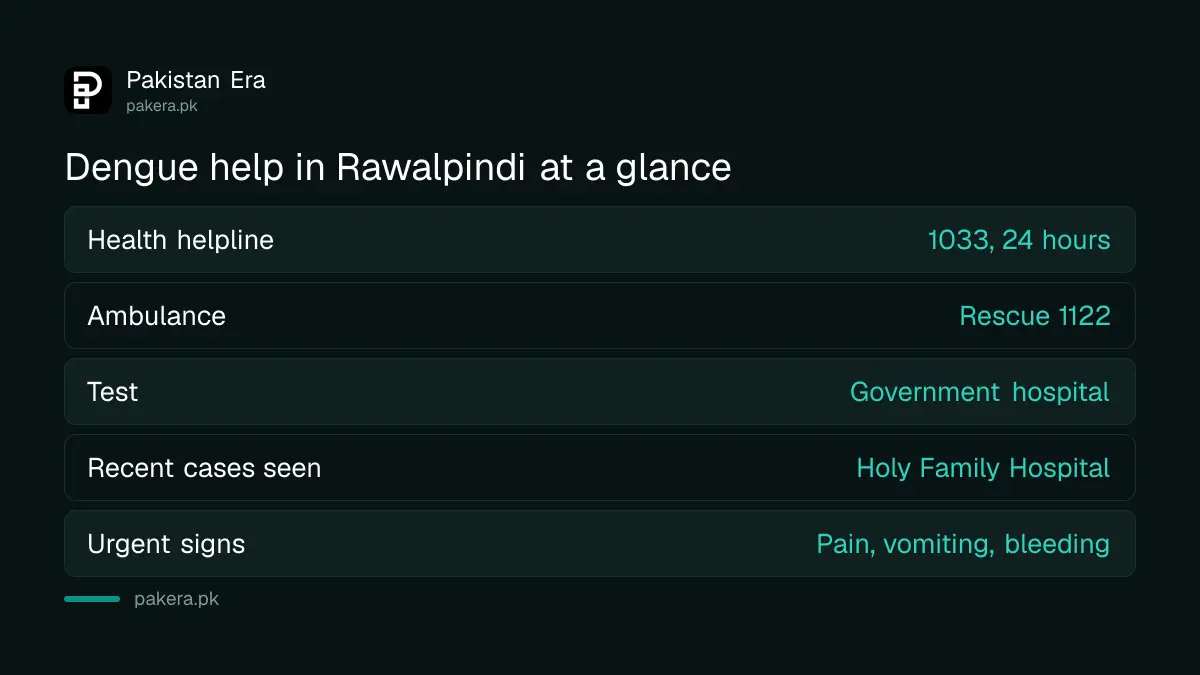
If you have a sudden high fever, go to a government hospital and ask for dengue screening. The latest Rawalpindi cases were confirmed at Holy Family Hospital. Call the Punjab health helpline on 1033 first if you are unsure where to go.
Rawalpindi Medical University runs three public teaching hospitals: Holy Family Hospital in Satellite Town, Benazir Bhutto Hospital and the District Headquarters Hospital. The university also has a divisional dengue expert group that reviews dengue care in the area.
We could not find a current official notice on dengue test fees in Rawalpindi. Ask at the hospital desk, or ask 1033, before you pay a private lab. Some of the free health programmes in Punjab may also cover your care.
Call 1033 for dengue advice, any time of day
Healthline 1033 is the Punjab Health and Population Department's free helpline. The department says it runs 24 hours a day, every day of the year, with women medical officers answering calls. It covers dengue, typhoid, malaria and other illnesses.
For an emergency, call Rescue 1122 for an ambulance. Other numbers are in the list of emergency and helpline numbers in Pakistan.
Know when a fever becomes urgent. Severe stomach pain, repeated vomiting, bleeding from the gums or nose, and cold, clammy hands are among the dengue warning signs. Danger often comes as the fever falls, not at its peak. Punjab's rules on when a dengue patient must be admitted include any warning sign or a platelet count under 70,000.
Empty standing water at home every week
The dengue mosquito breeds in clean standing water in and around homes. So the most useful thing a Rawalpindi household can do is to empty, scrub and cover every container of water once a week.
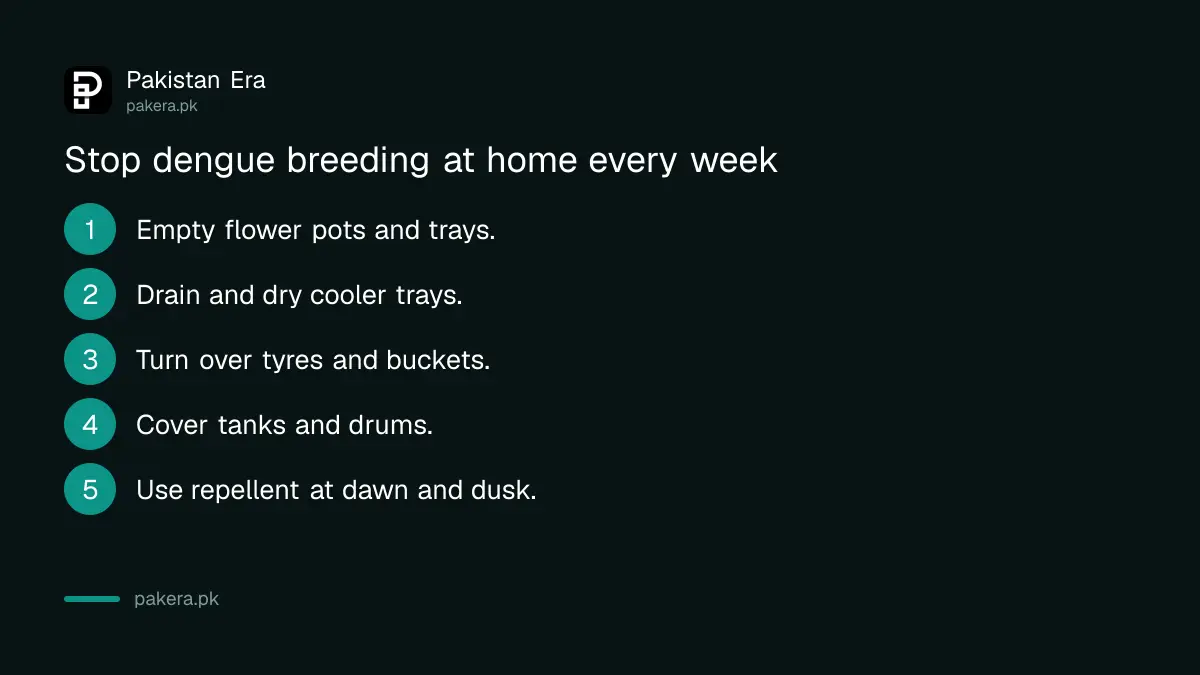
- Empty flower pots, pot trays and bird water bowls.
- Drain and dry air cooler trays.
- Turn over or cover old tyres, buckets and tins on the roof.
- Cover water tanks and drums tightly.
- Use a repellent and full sleeves in the early morning and before dusk, when this mosquito bites.
Larvae found on your premises can lead to a challan or worse, as the enforcement figures show.
Punjab has not published a 2026 provincial dengue total we could find
We looked for a 2026 dengue total for the whole of Punjab on the Health and Population Department's website and found none. Its news page shows cabinet committee meetings on dengue this year, but no case count. So we give Rawalpindi figures only.
Common questions
How many dengue cases are there in Rawalpindi in 2026?
15 confirmed cases by 22 September 2026, with no deaths, according to the District Health Officer as reported in the press.
Has anyone died of dengue in Rawalpindi this year?
No. The district reported zero dengue deaths in 2026 up to 22 September.
Where can I get a dengue test in Rawalpindi?
At a government hospital, such as Holy Family Hospital, Benazir Bhutto Hospital or the District Headquarters Hospital. Call 1033 if you are unsure.
What is the Punjab dengue helpline number?
1033. It is the Punjab health helpline, free and open 24 hours a day.
Can I be fined if dengue larvae are found at my home?
Yes. Rawalpindi authorities had issued 2,119 challans and registered 2,543 FIRs over larvae and rule breaches by 20 September, according to reports.
How we verified this
What we checked, where we read it, and what we could not confirm.
Last checked on 26 September 2026. The 1033 helpline details and the Punjab cabinet committee meetings on dengue are from the Punjab Health and Population Department. The three teaching hospitals and the divisional dengue expert group are from Rawalpindi Medical University. The Rawalpindi case, screening, larvae and enforcement figures are District Health Authority data and statements by the District Health Officer, as reported in the press between 8 and 24 September 2026. We could not read the daily report at source. The breeding sites and biting times are standard public health guidance.
About the author

Public Services and Education Journalist
Fajr Riaz is a journalist and content writer at Pakistan Era, based in Lahore. She covers the questions people meet in everyday life in Pakistan: how a public service works, what a change in the rules means, and where to find a reliable answer.