Rawalpindi Dengue Cases Rise to 58 in 2026, Up From 15 in September
Rawalpindi has 58 confirmed dengue cases in 2026 and no deaths, up from 15 on 22 September, district figures say. See where to get tested and the 1033 helpline.
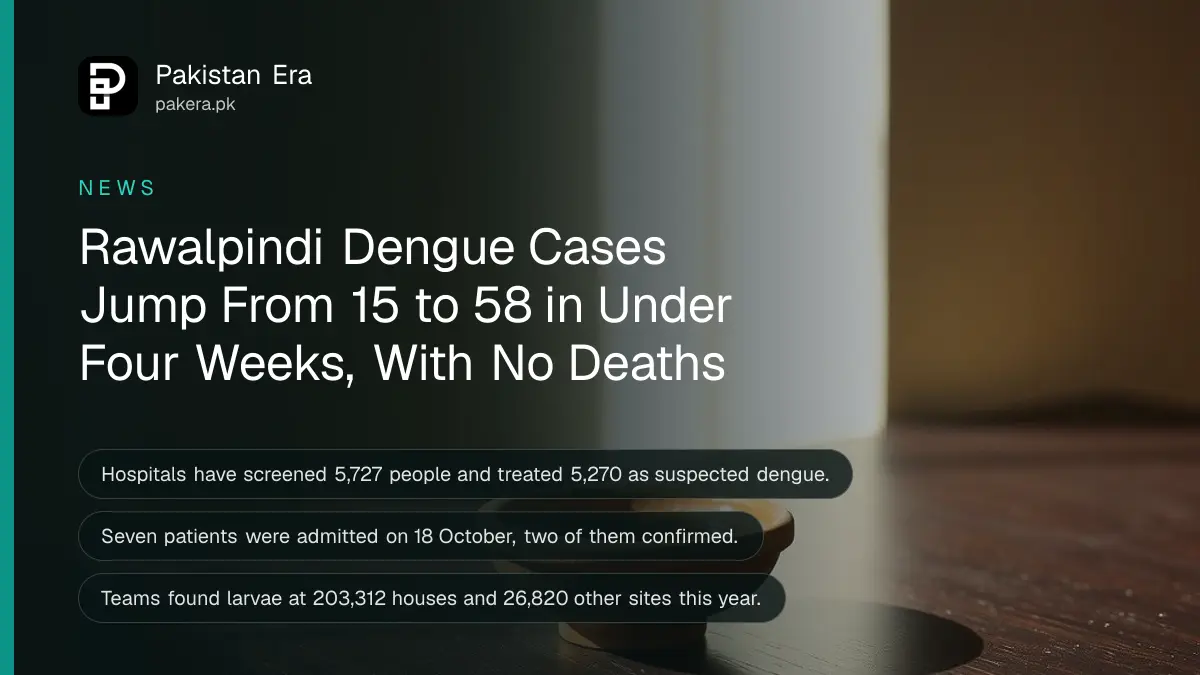
Short answer: Rawalpindi has 58 confirmed dengue cases in 2026 and no deaths, according to a District Health Authority report of 18 October 2026 carried in press reports. That is up from 15 confirmed cases on 22 September. Hospitals have screened 5,727 people, 7 patients are admitted, and field teams have found larvae at 230,132 places this year.
We could not find the report on an official page, so every figure here is marked as reported. The District Health Authority does not publish its daily dengue report online, and the Punjab health department's site carries meeting notes but no district counts. The earlier numbers come from the 22 September figures in the report on Rawalpindi's dengue cases in September.
Rawalpindi has 58 confirmed dengue cases and no deaths
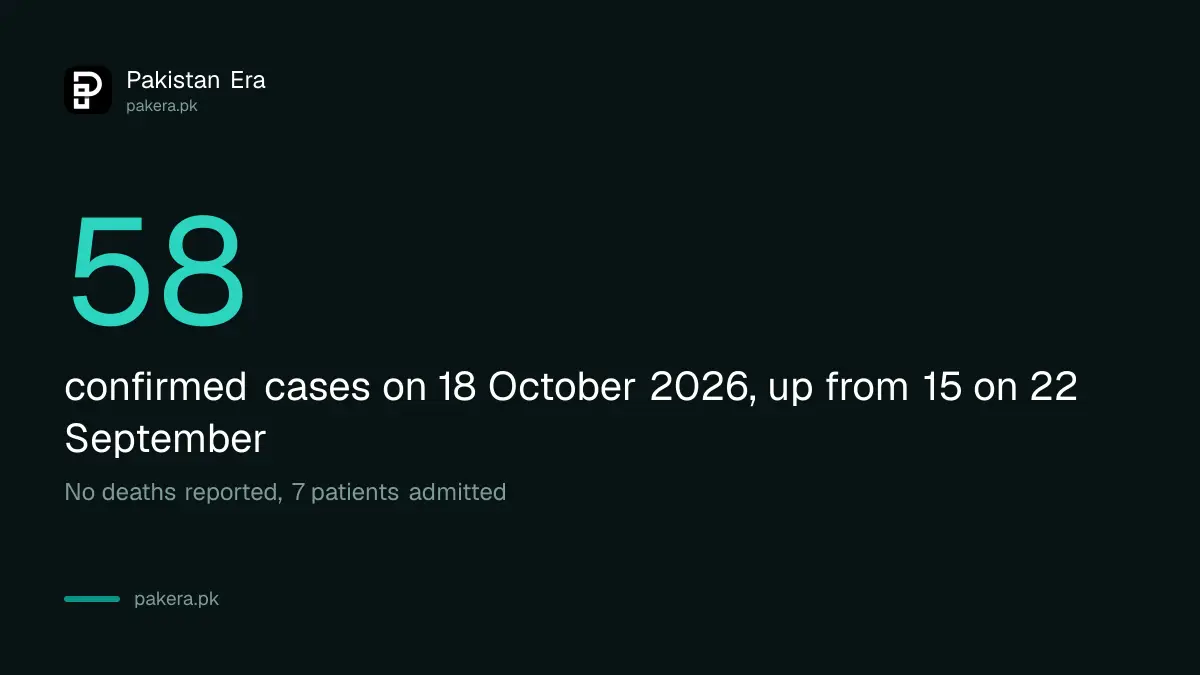
The 18 October report gives 58 confirmed cases, 5,270 suspected cases, 3 probable cases and 396 people who tested negative, for 5,727 patients screened at district hospitals in 2026. Seven patients were in hospital on the day of the report, two of them confirmed. No death has been reported in the district this year.
Confirmed means a positive NS1 or antibody test. Suspected means a fever with dengue-like symptoms that was treated as dengue while tests were pending or not done. Probable is the category in between. These are the standard surveillance categories, and the confirmed count is the one to watch.
43 of the 58 cases came in under four weeks
On 22 September the District Health Officer had given 15 confirmed cases for the year, nine of them in September. By 18 October the count was 58. So 43 confirmed cases arrived in 26 days, our arithmetic, against 15 in the first 265 days of the year. The season is now at its peak in Rawalpindi.
| Measure | 22 September | 18 October | Change |
|---|---|---|---|
| Confirmed cases | 15 | 58 | up 43 |
| Patients screened | 4,506 | 5,727 | up 1,221 |
| Suspected cases | 4,165 | 5,270 | up 1,105 |
| Deaths | 0 | 0 | none |
| Admitted on the day | not given | 7 |
The pattern matches the rest of the country. The NIH counted 1,397 suspected dengue cases in Pakistan in week 39, more than double the week before, as set out in the report on Pakistan's week 39 dengue count. Punjab does not send its figures to that bulletin, so Rawalpindi's cases are not in the national number.
Teams found larvae at 230,132 places this year
The same report says field teams inspected 5,603,818 houses and found mosquito larvae in 203,312 of them. They checked 1,935,348 other sites, such as shops, tyre dumps, junkyards and construction sites, and found 26,820 positive. Together that is 230,132 places where larvae were found and destroyed in 2026.
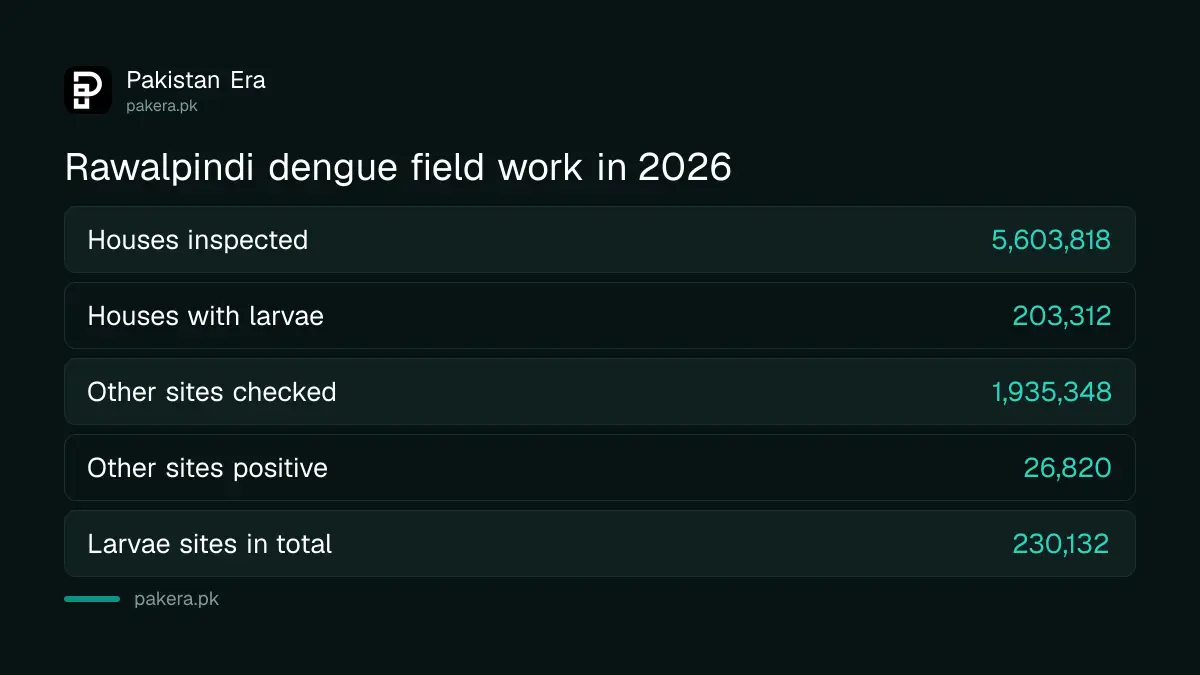
Hotspot coverage over the week before the report was described as 100 per cent, meaning every listed hotspot was visited. Hotspots are registered on a Punjab Information Technology Board system, and district and tehsil emergency response committees review them. By 22 September the count of breeding sites destroyed had been a little over 180,000, so about 50,000 were added in under four weeks.
If you see standing water or larvae on a neighbour's roof or an empty plot, you can report it. The steps are in the guide on how to report dengue larvae in Punjab.
Where to get tested in Rawalpindi
The district's three public teaching hospitals, Holy Family, Benazir Bhutto and District Headquarters Hospital, run dengue counters and wards under Rawalpindi Medical University. Their outpatient hours and departments are in the guide to Benazir Bhutto Hospital. The Punjab health department's 1033 helpline, free and open all day, takes calls on dengue and other fevers.
Not every fever needs a bed. Punjab's dengue expert group sets the rules for who is admitted and who goes home with advice, and they are in the guide to the dengue admission criteria in Punjab. The rule of thumb is simple. Fever alone can be managed at home. Any warning sign after the fever drops means an emergency room, at once.
What to do at home this week
These steps are ours, drawn from the NIH dengue advice and the WHO fact sheet. They cover both stopping the mosquito and handling a fever safely.
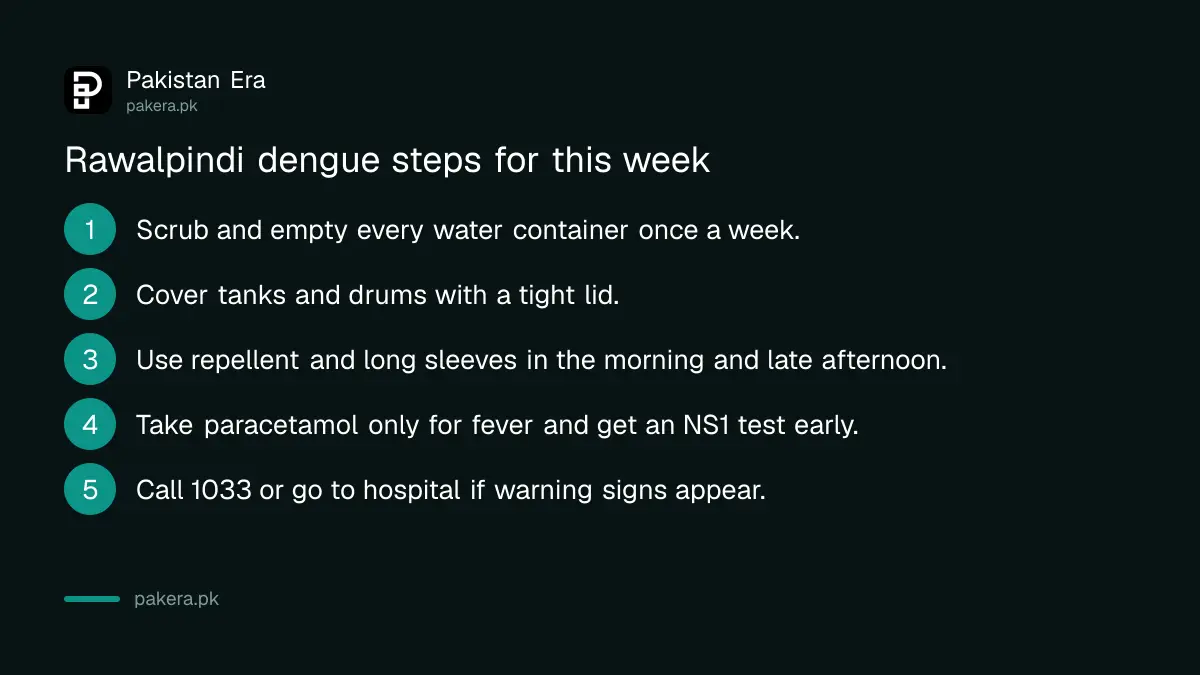
- Empty and scrub every water container once a week. Aedes larvae need only a bottle cap of clean water.
- Cover water tanks and drums with a tight lid, and keep coolers dry when not in use.
- Wear long sleeves and use repellent in the morning and late afternoon.
- For fever, take paracetamol only. Aspirin and ibuprofen raise the risk of bleeding in dengue.
- Get an NS1 test within five days of the fever starting. Prices are in the guide to the dengue test price.
- Drink fluids through the day and watch for severe stomach pain, vomiting, bleeding or drowsiness after the fever drops.
Common questions about dengue in Rawalpindi
How many dengue cases does Rawalpindi have in 2026?
58 confirmed cases as of 18 October 2026, according to a District Health Authority report carried in press reports. There have been no deaths.
How fast are cases rising?
From 15 confirmed cases on 22 September to 58 on 18 October, which is 43 new confirmed cases in 26 days.
Where can I get a dengue test in Rawalpindi?
At Holy Family, Benazir Bhutto or District Headquarters Hospital, or at a private lab. An NS1 test works in the first five days of fever.
Is there a helpline?
Yes. The Punjab health department's 1033 helpline is free and open 24 hours, and it covers dengue.
Are these figures official?
They are attributed to the District Health Authority Rawalpindi, but the authority does not publish the report online, so we could only read them in press reports.
How we verified this
What we checked, where we read it, and what we could not confirm.
Last checked 19 October 2026. The 58 confirmed cases, 5,270 suspected, 5,727 screened, 7 admitted, no deaths and the larvae figures are from press reports of the District Health Authority Rawalpindi's report of 18 October 2026, which we could not find on any official page. The 22 September figures are from the District Health Officer's statement reported at the time. The 1033 helpline details were read on the Punjab health department's site, pshealthpunjab.gov.pk, for our September report. The national count comes from the NIH week 39 bulletin on the NIH weekly bulletin page. Changes between the two dates are our arithmetic. Fever advice follows the WHO dengue fact sheet.
About the author

Tax, Bills and Technology Writer
Ali Akhtar is a young and curious voice here at Pakistan Era. He is currently pursuing his A-Levels and has a growing interest in Pakistan’s changing industrial landscape and educational trends. Ali likes to write in a way that helps him explain and explore the world around him. His writing reflects the perspective of the new generation navigating the evolving trends of Pakistan where technology, youth innovation, and shifting opportunities are reshaping the country’s future.