Malaria Cases in Pakistan, Week 40 2026: 80,137 Suspected, Sindh 69,294 and Sanghar Leads
Pakistan reported 80,137 suspected malaria cases in week 40 of 2026, NIH says, with Sindh at 69,294 and Sanghar at 5,867. See every district and lab results.
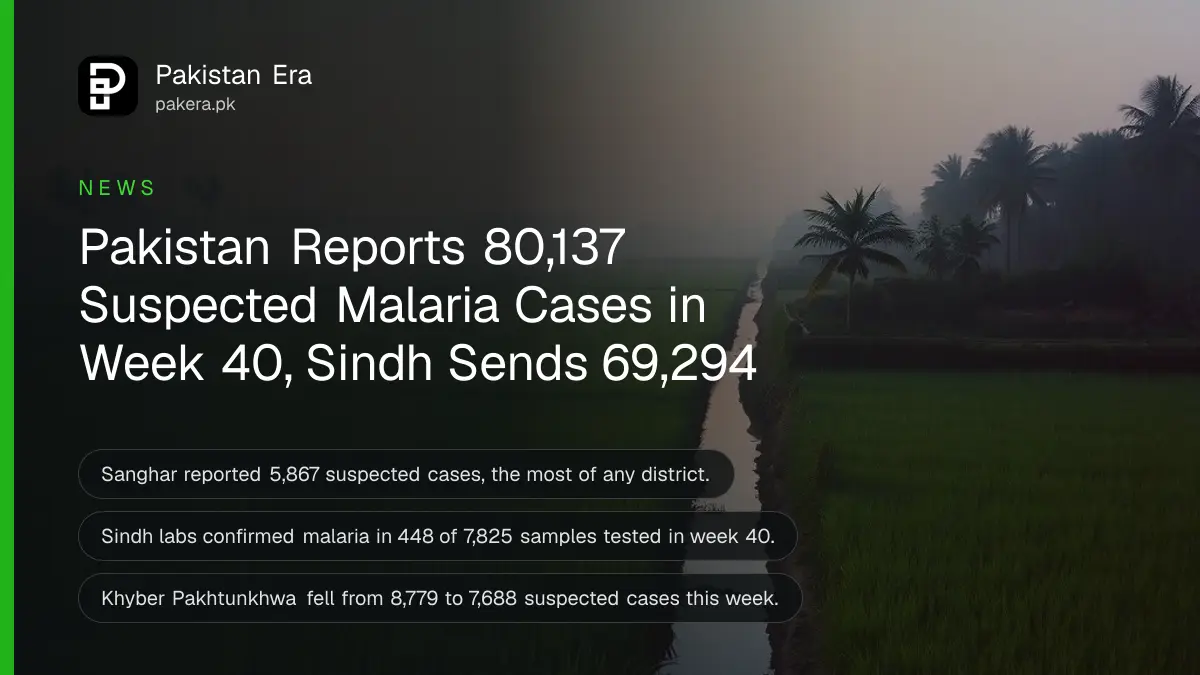
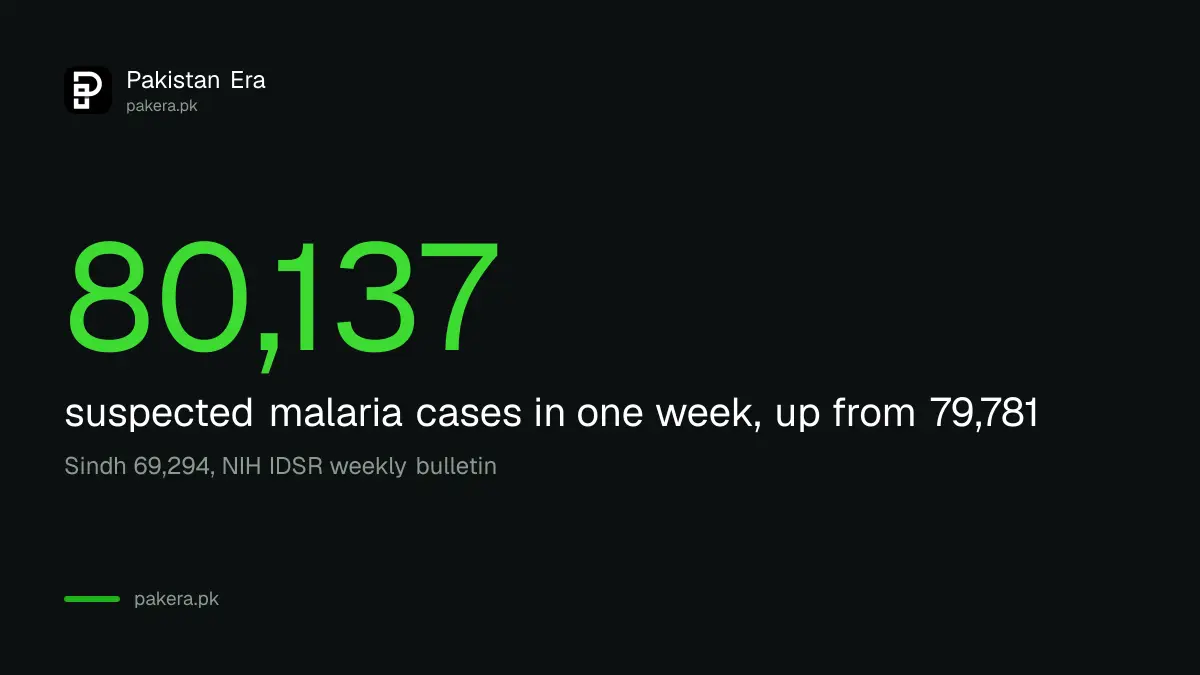
Pakistan reported 80,137 suspected malaria cases in epidemiological week 40 of 2026, up from 79,781 the week before, according to the National Institute of Health (NIH) bulletin posted on 24 October 2026. Sindh sent 69,294 of them, and Sanghar was again the worst district with 5,867.
The national total barely moved, but the map shifted. Sindh rose by about 1,500 cases while Khyber Pakhtunkhwa fell by about 1,100. The lab results tell a quieter story: only a small share of tested fevers were malaria. Here are the figures by province and district, and what to do before taking any malaria medicine.
Malaria cases edged up to 80,137 in week 40
NIH counted 80,137 suspected malaria cases in week 40, against 79,781 in week 39. That is a rise of 356, less than half of one per cent. Malaria was the second most reported disease in the country this week, after diarrhoea.
Suspected means a health worker recorded a fever that could be malaria. Many such fevers are not tested, and many that are tested turn out to be something else. So treat the number as a measure of fever pressure in malaria areas.
| Province or area | Week 39 | Week 40 | Change |
|---|---|---|---|
| Sindh | 67,795 | 69,294 | up 1,499 |
| Khyber Pakhtunkhwa | 8,779 | 7,688 | down 1,091 |
| Balochistan | 3,183 | 3,137 | down 46 |
| Islamabad | 10 | 12 | up 2 |
| Azad Jammu and Kashmir | 12 | 5 | down 7 |
| Gilgit-Baltistan | 2 | 1 | down 1 |
| Punjab | not reported | not reported | |
| Total | 79,781 | 80,137 | up 356 |
Sindh carries 86 per cent of the country's malaria count
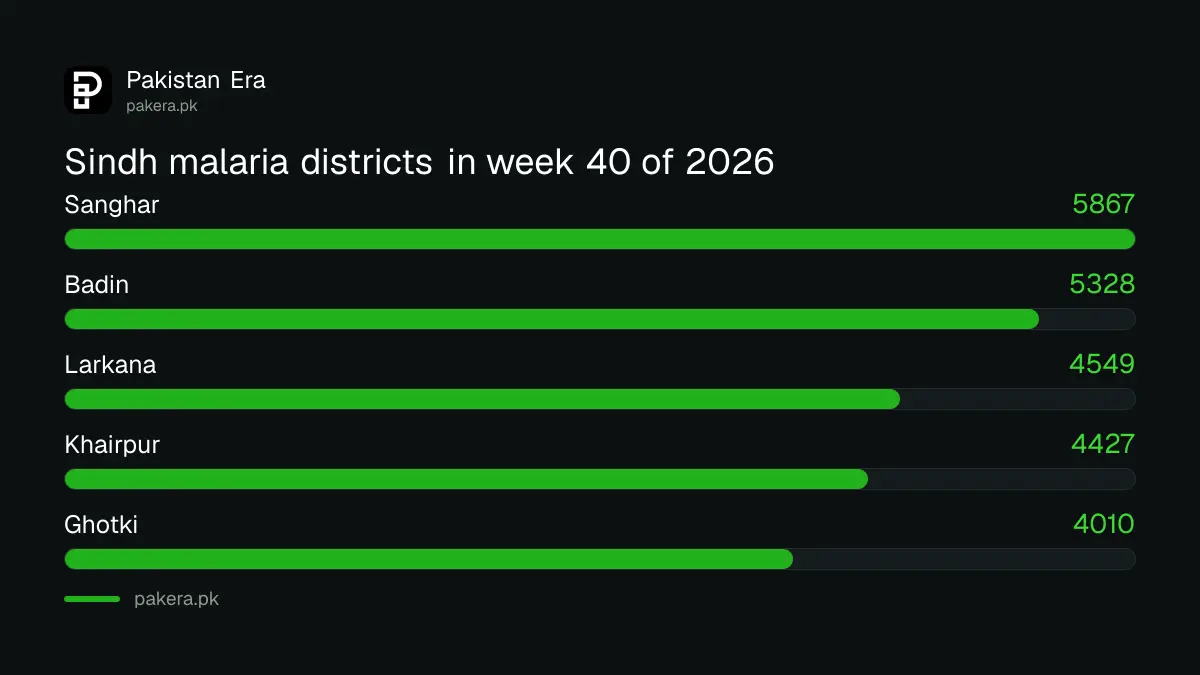
Sindh reported 69,294 suspected cases, about 86 per cent of the national total. Sanghar led with 5,867, followed by Badin with 5,328, Larkana with 4,549, Khairpur with 4,427 and Ghotki with 4,010.
Sanghar, Larkana and Khairpur all rose this week. Khairpur jumped by about 500 cases. Ghotki and Umerkot fell. The NIH note for Sindh says malaria cases were mostly from Sanghar, Badin and Larkana.
| Sindh district | Week 39 | Week 40 |
|---|---|---|
| Sanghar | 5,175 | 5,867 |
| Badin | 5,133 | 5,328 |
| Larkana | 4,335 | 4,549 |
| Khairpur | 3,923 | 4,427 |
| Ghotki | 4,123 | 4,010 |
| Umerkot | 4,072 | 3,728 |
Karachi is far lower. Its seven districts together reported 1,206 suspected cases, led by Karachi Malir with 492. Interior Sindh, with its canals and rice fields, remains the centre of the problem.
Khyber Pakhtunkhwa and Balochistan fell this week
Khyber Pakhtunkhwa reported 7,688 suspected malaria cases, down from 8,779. Nowshera was highest with 910, then Mardan with 838 and Bannu with 764. Balochistan reported 3,137, down slightly, with Kech (Turbat) highest at 452.
Other high districts in Khyber Pakhtunkhwa were Dera Ismail Khan with 654 and Khyber with 595. In Balochistan, Musakhel reported 365 and Lasbela 301. A fall of one week does not mean the season is over; October still brings plenty of mosquito breeding in warm areas.
Only about 6 in 100 tested fevers in Sindh were malaria
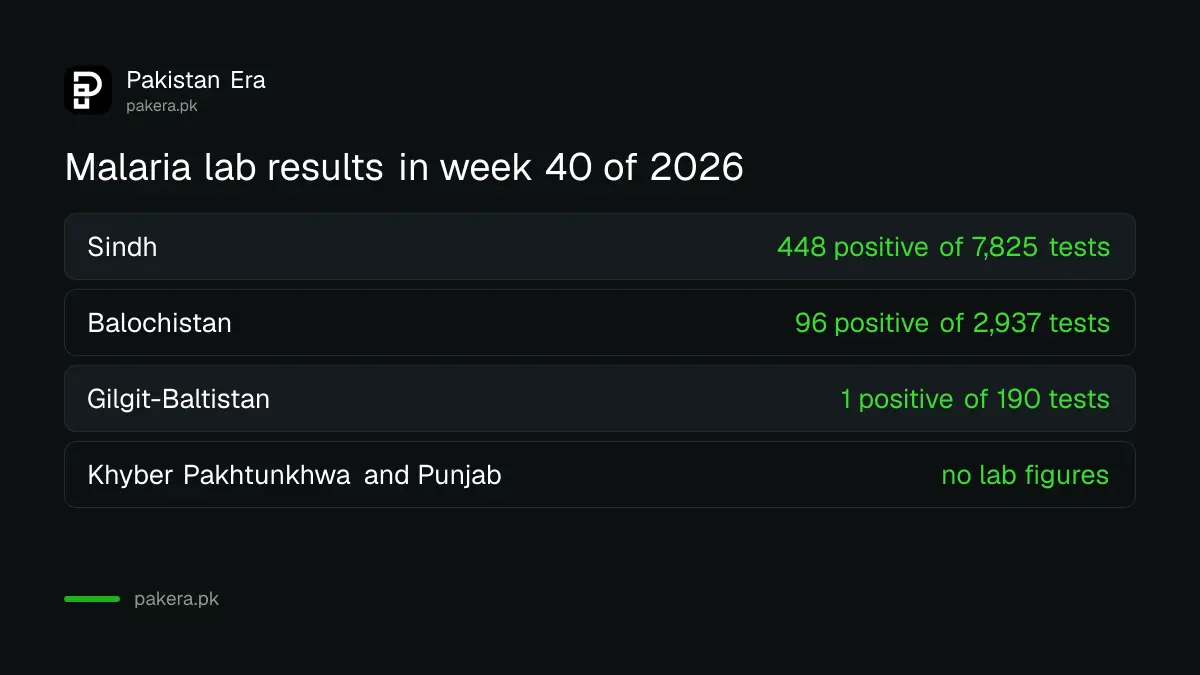
Sindh's public health labs tested 7,825 samples for malaria in week 40 and found 448 positive, about 5.7 per cent. Balochistan's labs found 96 positive from 2,937 tests, about 3.3 per cent. Gilgit-Baltistan found 1 in 190.
That gap matters for families. If most fevers in a malaria area are not malaria, treating every fever with malaria tablets wastes money and can hide the real illness, such as dengue or typhoid. A test first is the safer path.
Get a malaria test before taking any malaria medicine
WHO and NIH advice is to confirm malaria with a blood test before treatment. A rapid test gives a result in minutes and a blood smear in a few hours. Treatment then depends on the result and on a doctor's advice.
- If you have a fever with chills, sweating or headache in a malaria area, see a doctor within a day.
- Ask for a malaria test, either a rapid diagnostic test or a blood smear. The steps to check a fever for malaria explain both.
- Do not buy malaria tablets on your own. Take only what a doctor prescribes, and finish the course as directed on the label.
- If the malaria test is negative, ask about dengue and typhoid tests too.
- Go to hospital at once for confusion, fits, very dark urine, yellow eyes or breathing trouble.
At home, sleep under a treated net and remove standing water near the house. For the wider fever picture this month, dengue is rising fastest in Khyber Pakhtunkhwa, with 1,553 suspected dengue cases in week 40.
Common questions
How many malaria cases did Pakistan report in week 40 of 2026?
80,137 suspected cases, up from 79,781 in week 39, in the NIH bulletin posted on 24 October 2026.
Which district has the most malaria in Pakistan this week?
Sanghar in Sindh, with 5,867 suspected cases. Badin was second with 5,328.
Are all these cases confirmed malaria?
No. They are suspected cases. In Sindh, labs confirmed 448 of 7,825 tested samples, about 5.7 per cent.
Why is Punjab missing from the malaria figures?
Punjab is marked "not reported" in the NIH tables for week 40, so its cases are not in the national total.
Can I take malaria tablets without a test?
It is not advised. Health authorities ask for a blood test first, because most fevers in these areas are not malaria. A doctor should decide the treatment.
How we verified this
What we checked, where we read it, and what we could not confirm.
We read the NIH Integrated Disease Surveillance and Response bulletin for week 40 of 2026 on the NIH weekly bulletin page on 24 October 2026, and compared it with the week 39 bulletin. Provinces come from Table 1, Sindh districts from Table 2, Balochistan from Table 3, Khyber Pakhtunkhwa from Table 4 and lab results from Table 5. The bulletin does not give calendar dates for week 40, does not split malaria by type, and has no lab data for Khyber Pakhtunkhwa or Punjab.
About the author

Public Services and Education Journalist
Fajr Riaz is a journalist and content writer at Pakistan Era, based in Lahore. She covers the questions people meet in everyday life in Pakistan: how a public service works, what a change in the rules means, and where to find a reliable answer.