How to Remove Blood Stains From Clothes in Pakistan: Fresh, Dried and Period Stains, Cold Water Only
Remove fresh, dried and period blood stains from clothes and sheets in Pakistan: rinse in cold water from the back, rub in detergent, soak, and never use heat.
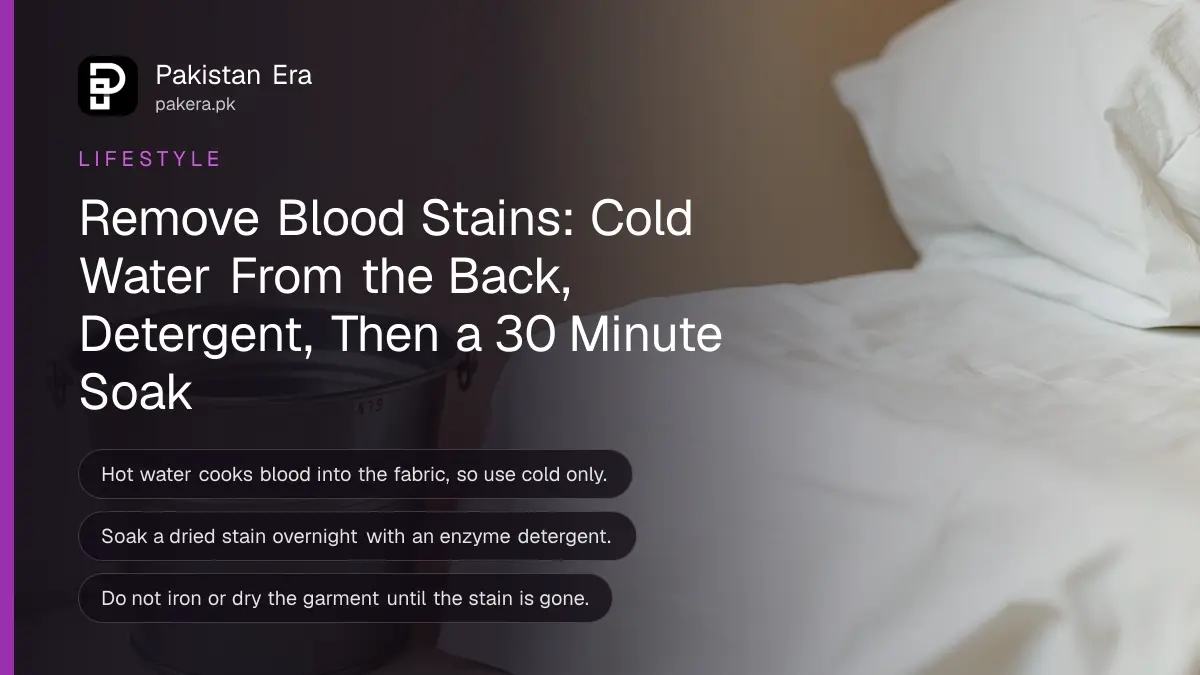
To remove a blood stain from clothes, rinse it from the back under cold running water straight away, then rub in liquid detergent and soak the garment in cold water for at least 30 minutes. For a dried stain, soak it overnight in cold water with an enzyme detergent. Never use hot water, and never iron or dry it until the stain is gone.
Blood ends up on shalwars, bedsheets, school shirts and prayer clothes, from periods, nosebleeds, cuts and injections. Most people reach for hot water, which is exactly the wrong move. Blood is a protein. Heat cooks it into the cloth, the same way an egg sets in a hot pan.
This method covers fresh and dried blood on cotton, lawn, khaddar, polyester and bedding, plus what to do for silk, wool and mattresses.
Cold water is the rule for every blood stain
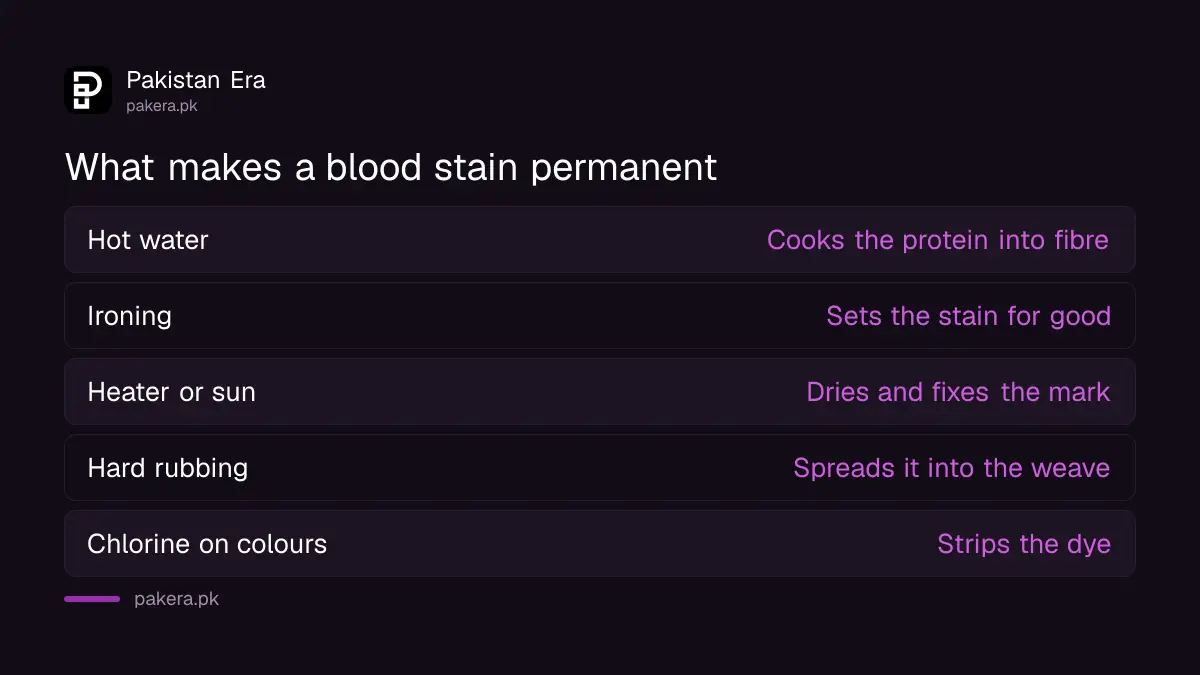
Always use cold water on blood. Warm or hot water sets the protein in blood into the fibres and turns a red mark into a brown one that may never fully leave. Cold water from the tap in a Pakistani winter is ideal for this job.
The Texas A&M AgriLife Extension stain guide groups blood with egg, dairy and other protein stains. Its treatment is to apply liquid detergent freely, work it in, wash with detergent, and if the stain remains, soak the item for 1 or 2 days, stirring the water now and then, then wash again and air dry. The New Mexico State University extension guide says an overnight soak in a laundry presoak is very good for blood and perspiration stains.
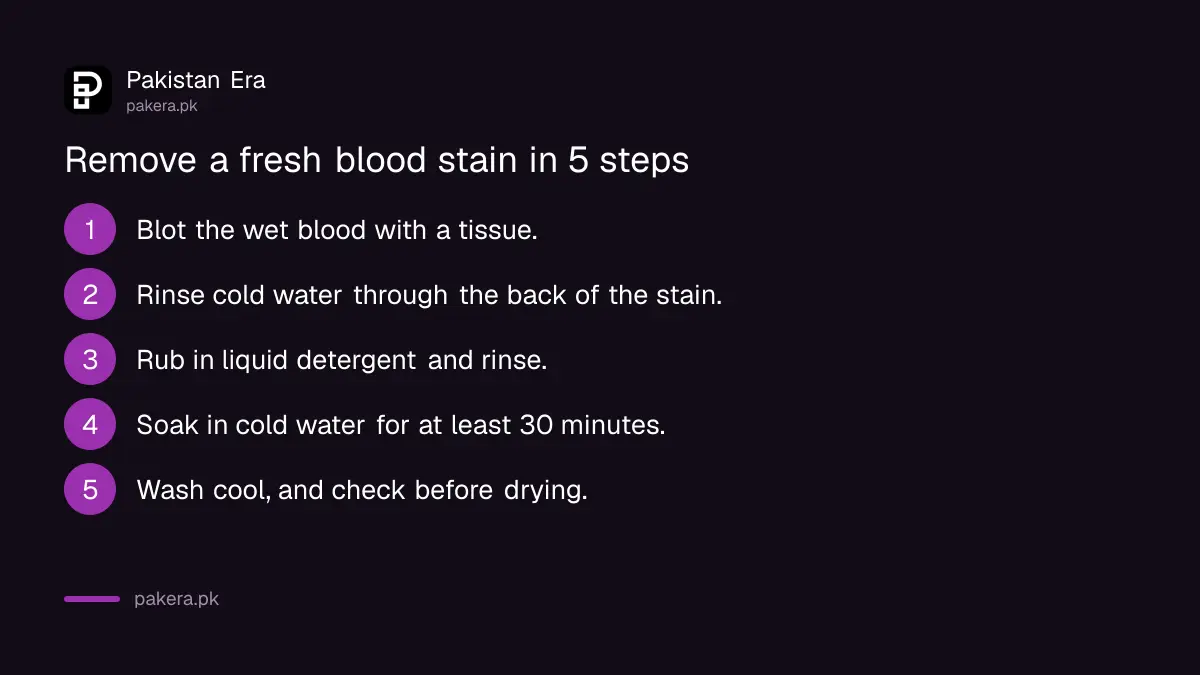
How to remove a fresh blood stain in 6 steps
Act within the first hour if you can. Rinse cold water through the back of the stain, rub in liquid detergent, then soak. A fresh stain on cotton usually clears with one round. Check it in daylight before drying.
- Blot, do not rub. Press a tissue or cloth on the wet blood to lift what is still on the surface.
- Rinse from the back. Hold the stain under a cold tap with the wrong side facing the water, so the blood is pushed out the way it came in.
- Rub in liquid detergent. Work a few drops of liquid detergent or a plain bar of laundry soap into the stain with your fingers. Rinse again in cold water.
- Soak in cold water. Soak the garment in a bucket of cold water with a little detergent for at least 30 minutes.
- Wash as normal. Wash by the care label, in cold or cool water.
- Check before drying. If a mark remains, repeat the soak. Do not iron, tumble dry or sun dry the garment until the mark is gone.
Dried and old blood stains need a long enzyme soak
A dried blood stain needs time rather than force. Soak it overnight in cold water with an enzyme detergent, which breaks down protein. Look for the word enzyme or biological on the detergent pack. Repeat for two or three nights if the stain is old.
- Scrape first. Gently scrape off crusted blood with a blunt knife before soaking.
- Use enough water. The garment should move freely in the bucket.
- Stir now and then. The Texas A&M guide suggests stirring the water occasionally during a long soak.
- Oxygen bleach for whites. On white cotton, follow the soak with oxygen bleach made up to the pack's directions.
- Hydrogen peroxide, carefully. A few dabs of 3% hydrogen peroxide from a pharmacy can lift the last brown mark on white cotton. It can bleach colours, so test a hidden seam first and rinse it out well.
Salt in cold water is a common home method for a fresh stain when nothing else is around. It does no harm on cotton, but it does not break down protein the way an enzyme detergent does.
Match the method to the fabric
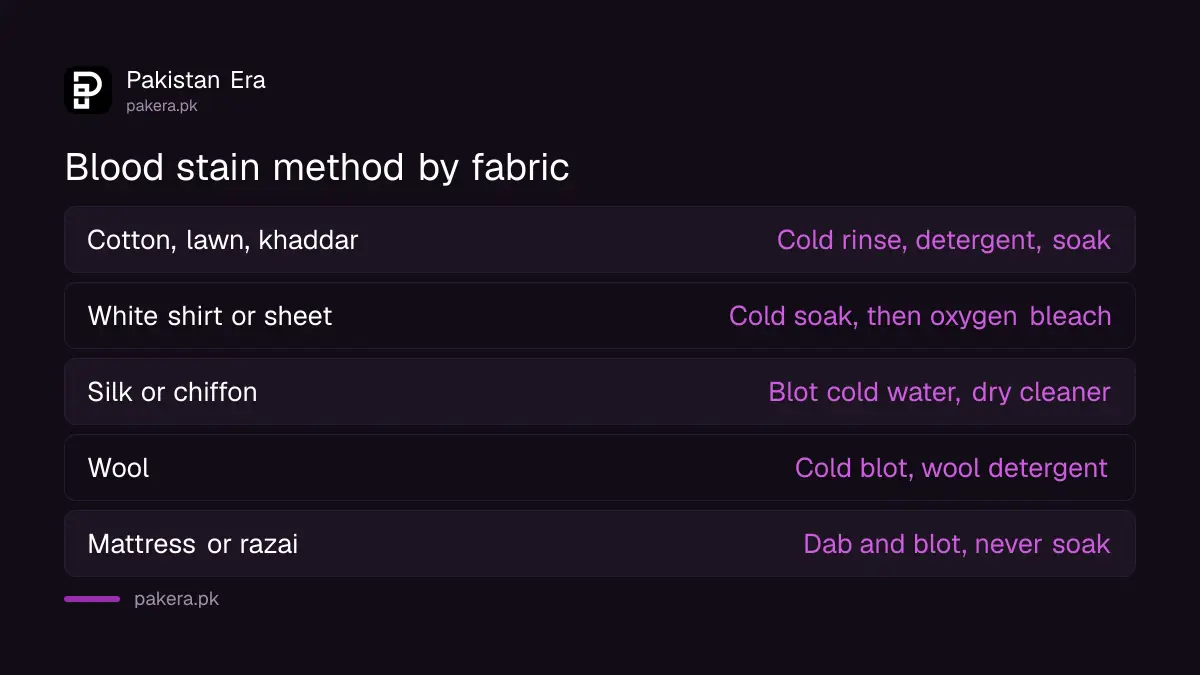
Cotton, lawn, khaddar and polyester can all take cold water, detergent and a long soak. Silk, chiffon, wool and velvet need gentle blotting only, as enzyme detergents can damage animal fibres like silk and wool. Mattresses and razais cannot be soaked, so they need spot cleaning.
| Item | What to do | Avoid |
|---|---|---|
| Cotton, lawn, khaddar shalwar | Cold rinse, detergent, 30 minute to overnight soak | Hot water, ironing over the mark |
| White school shirt or bedsheet | Cold soak, then oxygen bleach per pack | Chlorine bleach on polyester blends |
| Silk, chiffon, wedding wear | Blot with cold water only, then a dry cleaner | Enzyme detergent, peroxide, rubbing |
| Wool sweater or shawl | Cold water blotting, wool detergent | Enzyme detergent, hot water |
| Mattress or razai | Dab cold water and detergent, blot dry | Soaking the filling |
Wool needs its own care at every step. The routine for washing wool and cashmere sweaters and shawls at home applies once the blood is blotted out. For a quilt, the drying steps in washing a razai or comforter at home stop the filling from staying damp.
Period stains on shalwars and bedsheets come out the same way
Period blood is treated like any other blood stain: cold water first, from the back, then detergent and a soak. Rinse the shalwar or sheet as soon as you notice, even before work or school, and leave it soaking. Overnight stains on sheets usually lift after one enzyme soak.
Many women in Pakistan keep a separate bucket for this, which is a sensible habit. A dark cotton shalwar hides any faint mark that stays. For pale sheets, oxygen bleach after the soak brings back the white. Hot water, often used in winter because the tap is so cold, is the reason so many period stains turn permanent.
Stop a stain from setting while you are away from home
If you cannot wash the garment straight away, keep the stain wet and cool. Dab it with cold water, blot it, and do not let it dry in a warm room or in front of a heater. A damp stain is far easier to remove later than one that has dried hard.
At school or office, cold water from a tap and a little hand soap is enough first aid. Rinse from the back, blot, and treat it properly at home. Check the care label before the full wash; the care label symbols show the safe water temperature and whether bleach is allowed.
Common questions
Does hot water remove blood stains?
No. Hot water sets blood into the fabric. Always use cold water until the stain is gone.
How do I remove an old dried blood stain?
Scrape off the crust, then soak overnight in cold water with an enzyme detergent. Repeat for two or three nights if needed.
Can hydrogen peroxide remove blood from clothes?
It can lift the last mark on white cotton. It may bleach colours and harm silk, so test a hidden seam first and rinse well.
How do I get blood out of a mattress?
Dab cold water and a little detergent on the stain, blot with a dry towel, and repeat. Do not pour water on it, as the filling stays damp.
Does salt remove blood stains?
Salt in cold water can help a fresh stain. An enzyme detergent works better on dried blood.
Can I wash a blood stained shalwar in the machine?
Yes, after rinsing and soaking in cold water. Use a cold or cool cycle and check the stain before drying.
How we verified this
What we checked and where we read it.
We checked the Texas A&M AgriLife Extension Quick Stain Removal Guide for washable fabrics (publication L-5199) for its plant and protein stain entry, which lists blood, and the New Mexico State University extension guide Removing Clothing Stains (Guide C-502, revised August 2019) for its overnight presoak advice and its rules on heat, on 15 November 2026.
About the author

Lifestyle & Clothing Writer
Mahnoor Siddiqui is a lifestyle and clothing writer at Pakistan Era, joining the new lifestyle desk in November 2026.