How to Wash a Razai, Quilt or Comforter at Home in Pakistan: 7 Steps by Filling Type
How to wash a razai, quilt or comforter at home in Pakistan: 7 steps for polyester and microfibre, why a cotton razai needs sun, not water, and drying rules.
یہ صفحہ اردو میں پڑھیں
You can wash most comforters and polyester quilts at home in Pakistan, but a traditional cotton razai should not go in water at all. Check the filling first. Polyester and microfibre wash in cold water on a gentle cycle. Cotton razais get aired, beaten and covered instead.
November is when the razai comes down from the top shelf. It usually smells of the trunk, it may have a few stains from last winter, and it is far too big for a normal bucket. So the question every house asks is simple: can I wash it, and how?
The answer depends on what is inside. Below is the method for each filling, a 7 step home wash for the ones that can take water, and the drying rules that stop a quilt from going lumpy or smelly.
Check the filling before you wash anything
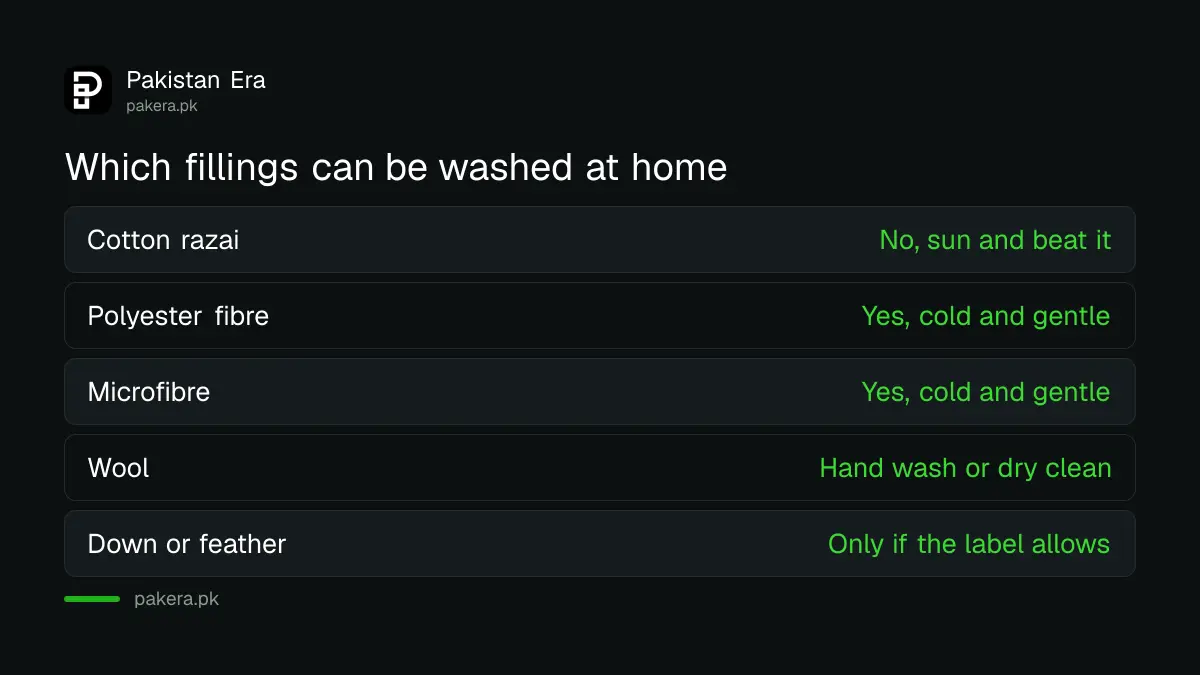
The filling decides the method. A comforter with polyester or microfibre filling can be washed. A cotton razai filled by a pinjara (the cotton carder) should be aired and beaten, not soaked. Wool and down need gentle hand washing or dry cleaning.
Look for a sewn label in one corner. Pakistani brands print the filling and care symbols there. If the label is gone, press the quilt hard in the middle. Cotton feels dense and heavy and stays flat. Polyester springs back fast. Down feels light and you may feel small quills.
| Filling | How to tell | Can you wash it at home? |
|---|---|---|
| Cotton (traditional razai) | Heavy, dense, stays flat when pressed | No. Air it, beat it, wash only the cover |
| Polyester fibre | Light, springs back, label says polyester | Yes, cold water, gentle cycle |
| Microfibre | Very soft, thin, light | Yes, cold water, gentle cycle |
| Wool | Warm, slightly springy, label says wool | Hand wash cold, or dry clean |
| Down or feather | Very light, puffy, quills may poke out | Gentle machine wash if the label allows, dry fully |
If you are not sure what a symbol on the label means, read our chart of laundry care symbols. A tub with a cross means do not wash in water.
How to wash a polyester or microfibre comforter at home
A single comforter fits in most 8 kg or larger front load or top load machines. Use cold water, a mild liquid detergent and the gentle or blanket cycle. A double comforter may need a bathtub or a large tub on the roof.
Follow these steps in order:
- Shake the comforter outside to remove dust and loose hair.
- Spot clean any stain first with a little liquid detergent on a soft cloth.
- Put it in the machine alone, folded loosely. Do not add other clothes.
- Choose cold water and the gentle, delicate or blanket cycle.
- Use half the normal amount of liquid detergent. Skip powder, it leaves white marks.
- Run an extra rinse so no soap stays in the filling.
- Spin on low, then take it out at once and start drying.
If it does not fit in the machine, fill a bathtub with cold water and detergent. Press the comforter down with your palms for 10 minutes, drain, refill with clean water and press again until the water runs clear. Never wring it. Wringing tears the stitches that hold the filling in place.

A cotton razai needs air, sun and a beating, not water
Water makes the cotton inside a razai clump into hard lumps that never spread out again. So do not soak it. Remove the cover and wash that separately. Then hang the razai in the sun for 4 to 6 hours and beat it gently with a stick or a carpet beater.
Sunlight dries out damp and helps the musty trunk smell fade. Turn the razai over halfway so both sides get the sun. Beating it loosens the dust and fluffs the cotton. A wooden cricket bat or the old style chhari works fine. Be gentle near the seams.
For a small stain on a cotton razai, dab it with a damp cloth and a drop of liquid detergent, then dry that spot in the sun. Do not rub hard.
If the cotton has gone hard and lumpy after years of use, a pinjara can open the razai, card the cotton and fill it again. This is cheaper than a new razai in most bazaars. Prices vary by city and by weight of cotton, so ask before work starts.
Still smells after sunning? The method for removing the musty smell from stored winter clothes works for bedding too.
Drying is where most quilts are ruined
A comforter that stays damp inside will smell sour within a day and can grow mould. Dry it flat or over two lines in shade with good air, and shake and turn it every hour. It needs a full day in winter, sometimes two.
Here is what helps:
- Spread it over two parallel washing lines so air reaches both sides.
- Break up any clumps of filling with your hands every hour.
- Bring it inside before evening dew, then put it out again the next day.
- Press the thickest part. If it feels even slightly cool, it is still wet.
Do not put a comforter near a gas heater to dry it faster. It is a fire risk. In smog weeks, dry it indoors near an open window or a fan instead, because smoky air leaves a smell. Our guide to washing a puffer jacket at home has the same drying tricks for filled fabric.
Keep it clean longer with a cover and a yearly routine
A washable cover is the cheapest way to protect a razai or comforter. Wash the cover every two to three weeks in winter and the filling only once or twice a season. That keeps the filling fluffy and saves you a full day of drying.

At the end of winter, sun the razai one last time, let it cool, then fold it into a cotton bag or an old bedsheet. Plastic traps damp. Add a few neem leaves or cloves instead of strong naphthalene balls, which leave a smell. Store it on a high shelf, away from the wall in damp houses.
Common questions
Can I wash a razai in a washing machine?
Only if it has polyester or microfibre filling and fits loosely in the drum. A traditional cotton razai should not be washed in water, because the cotton clumps. Air it in the sun and wash the cover instead.
How often should I wash a comforter?
Once or twice a winter is enough if you use a cover. Wash the cover every two to three weeks. Wash the comforter sooner if someone was ill or there is a spill.
Which detergent is best for a comforter?
A mild liquid detergent in cold water. Use half the usual amount. Powder can stay in the filling and leave white patches.
How long does a comforter take to dry in winter?
Usually a full day in shade with good air, and sometimes two. Turn it and break up clumps every hour, and bring it in before the evening dew.
Can I dry clean a razai?
Yes. Many dry cleaners in Pakistan take razais and comforters. It is the safest choice for wool, silk or heavy cotton razais. Ask about the price and the days needed before you leave it.
How do I get the trunk smell out of a razai?
Sun it for 4 to 6 hours on both sides and beat it gently. Air it again the next day if the smell stays. Do not spray perfume, it mixes with the smell rather than removing it.
About the author

Lifestyle & Clothing Writer
Mahnoor Siddiqui is a lifestyle and clothing writer at Pakistan Era, joining the new lifestyle desk in November 2026.