How to Check a Cricket Helmet Is Safe Before You Buy in Pakistan: Read the BS 7928 Label
Check a cricket helmet in Pakistan before you buy: the ICC standard, the ball size on the label, the approved list and when to replace it. Read the label first.
Short answer: Read the label inside the helmet. The ICC requires international batters to wear a helmet marked "BS 7928; 2013 + A1:2019", and the label should say whether it was tested against a men's ball, a junior ball or both. If the label is missing, do not buy.
A cricket ball weighs about 156 grams (5.5 ounces) and leaves a fast bowler's hand at speed. A helmet is the one purchase where saving a few thousand rupees can cost you a lot more. Pakistani shops sell helmets in every price range, many with no clear standard on the box.
We read the ICC's helmet and head protector page on 14 October 2026. It names the British standard that international players must meet and tells buyers what to look for on the label. We did not test any helmet ourselves, and we do not name any shop or brand here.
The ICC names one standard for batting helmets
The ICC says any player who chooses to wear a helmet while batting in international cricket must use one that meets the British Standard BS 7928; 2013. In 2019 the standard was updated to add neck protectors, so the full mark now reads BS 7928; 2013 + A1:2019.
That is a rule for international matches, but it is a sensible guide for every buyer. A club batter facing a hard ball needs the same protection. The standard tests how a ball behaves when it hits the grille and how the helmet absorbs a blow.
The ICC page lists what the standard checks. There is a facial contact test that looks at whether the ball can pass through the faceguard or push the faceguard onto the face. There is also a drop test for neck protectors that cuts the risk of injury at the base of the skull.
The ball size on the label matters
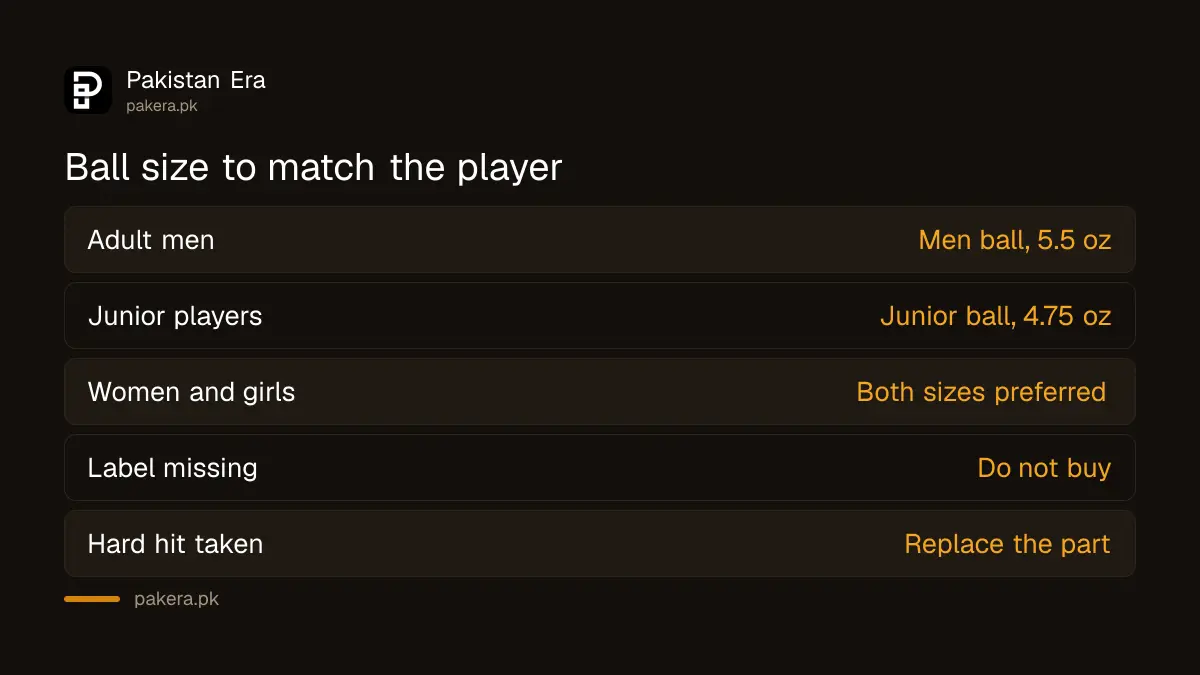
The ICC says a compliant helmet is labelled with the standard and also states which ball it was tested against: a men's ball of 5.5 ounces, a junior ball of 4.75 ounces, or both. A helmet tested only on the larger ball may leave a gap for a smaller one.
| Who is buying | Ball size to look for on the label |
|---|---|
| Adult men | Men's ball, 5.5 ounces |
| Junior players | Junior ball, 4.75 ounces |
| Women and girls | Both sizes, or at least the junior ball |
The ICC explains the women's advice. There is no women's helmet standard. The women's ball sits between the men's and the junior size, so the smaller ball could get through the gap above the faceguard on a men's-only helmet. This is why the ICC recommends a helmet tested against both sizes.
If your son or daughter is on a trials list, take the helmet with you when you shop. The PCB age-group trials mean many young players move up to hard-ball cricket quickly.
Check the ICC list before you pay
The ICC publishes a list of known helmets that meet the standard. The page we read says the list was updated as of 29 September 2026 and separates helmets approved for senior, junior and both levels. Compare the maker and model on the box with that list.
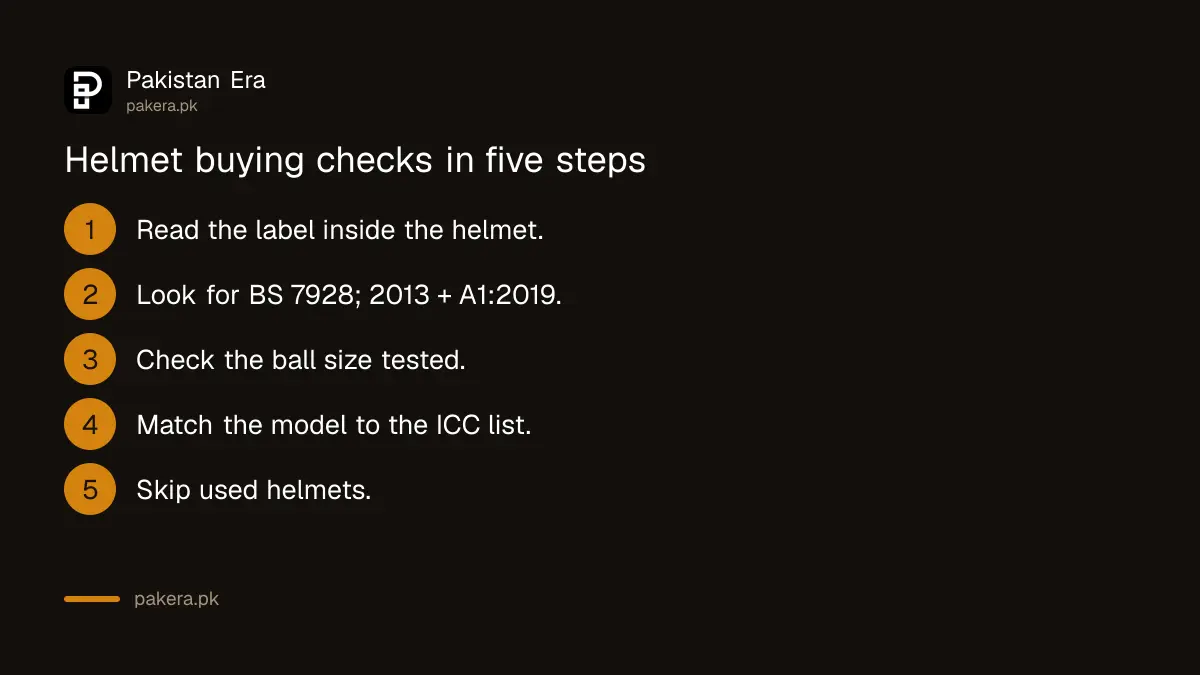
- Open the ICC helmet page and find the list of compliant helmets.
- Write down the make and model name printed on the helmet.
- Check that the label shows BS 7928; 2013 + A1:2019.
- Check the ball size on the label for the player.
- Walk away if the model is not on the list or the label is blank.
A shop may stock a helmet that is sold under a different name from the one on the list. Ask to see the label and the paperwork rather than relying on a sticker. A list on a screen can be hard to read in a busy bazaar, so save it on your phone before you go.
Replace a helmet after a hard hit
The ICC warns that a helmet absorbs part of a blow and its structure may be damaged even when nothing shows. Any component that takes a severe blow needs replacing, because the next hit may find the weak point. A cracked shell is only the obvious sign.
That advice affects budgets. A second-hand helmet may have taken a hit you cannot see, so we would avoid buying one for a child. The ICC also says wearing a helmet, faceguard or neck protector cannot always prevent death or long-term disability. It lowers the force of the blow, and it does not remove the danger.
If you are looking for a place where a young player can learn safely, the free Sports Board Punjab cricket academies are one option, and the national U19 events show what the next level looks like. Ask the coach which helmets the academy requires.
Common questions
Which standard does the ICC require?
The ICC requires BS 7928; 2013, updated in 2019 to BS 7928; 2013 + A1:2019, for any helmet worn by a batter in international cricket.
Is the standard only for international players?
The ICC rule covers international matches. The standard is still a good guide for any buyer facing a hard ball, because it tests the same impact risks.
What should a girl or woman look for?
The ICC recommends a helmet tested against both the men's and junior balls, or at least the junior ball. There is no separate women's standard.
Can I buy a second-hand helmet?
We would not. The ICC says a helmet that has taken a severe blow should be replaced even if damage is not visible, and you cannot know a used helmet's history.
Where is the official list of compliant helmets?
It is on the ICC helmet page, which says it was current as of 29 September 2026. Check the date again when you read it.
How we verified this
What we checked, where we read it, and what we could not confirm.
Last checked on 14 October 2026, Pakistan time. We read the ICC page on helmets and head protectors. We did not open the compliant helmet spreadsheet model by model, we did not test a helmet, and we could not confirm which models are sold in Pakistan. Check the label and the list yourself.
About the author

Tax, Bills and Technology Writer
Ali Akhtar is a young and curious voice here at Pakistan Era. He is currently pursuing his A-Levels and has a growing interest in Pakistan’s changing industrial landscape and educational trends. Ali likes to write in a way that helps him explain and explore the world around him. His writing reflects the perspective of the new generation navigating the evolving trends of Pakistan where technology, youth innovation, and shifting opportunities are reshaping the country’s future.