PGET 2026 Paper I in Pakistan: 100 MCQs, Anatomy 20 and Physiology 19 for MBBS
UHS PGET 2026 Paper I has 100 MCQs in two hours. See the subject split for MBBS and dental graduates, from Anatomy 20 to Behavioural Sciences 5. Plan time.
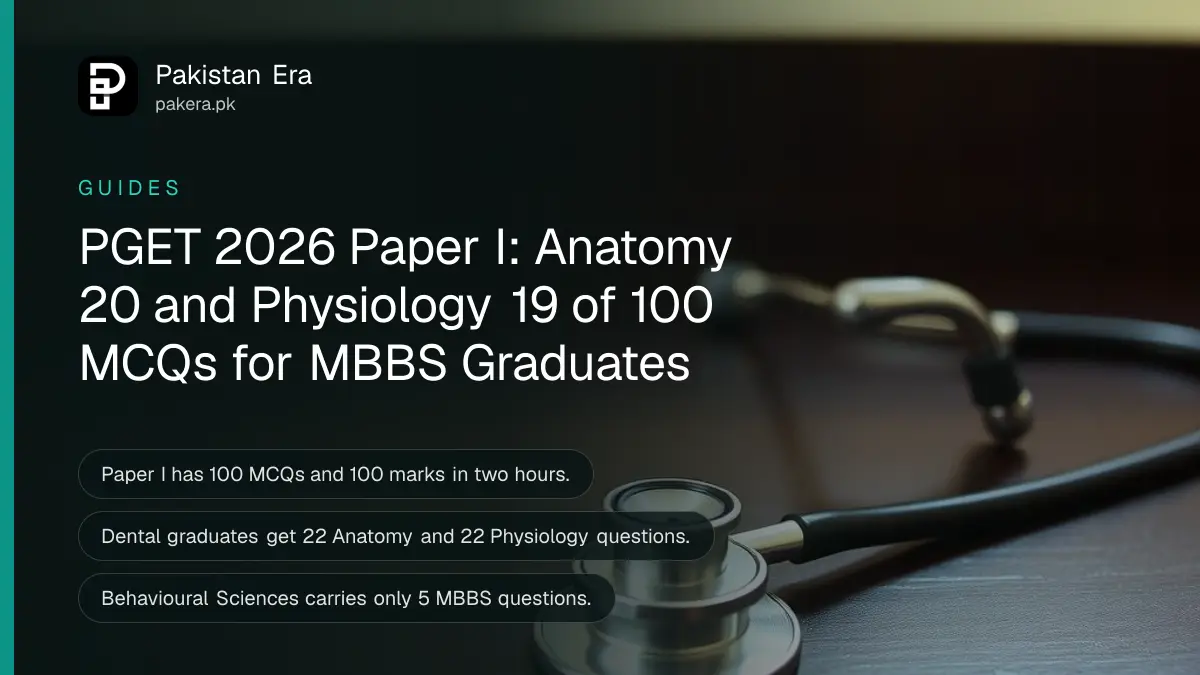
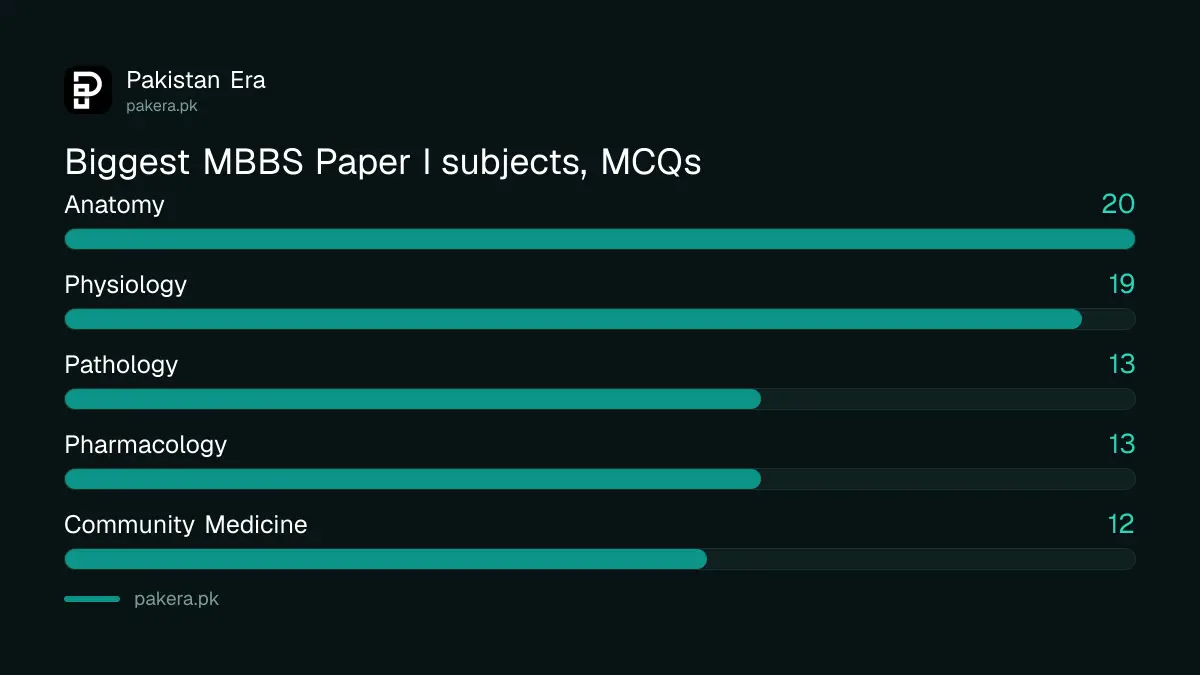
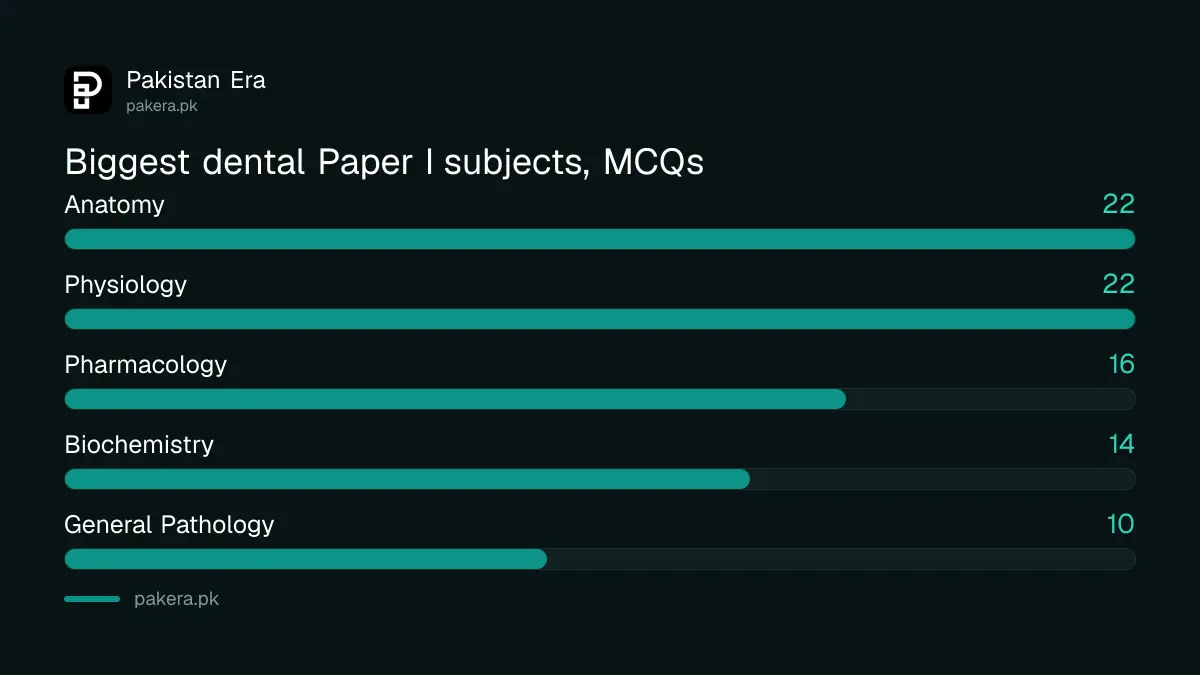
PGET 2026 Paper I is 100 multiple choice questions on basic medical sciences, worth 100 marks, in two hours. For MBBS graduates, Anatomy has 20 questions, Physiology 19, Pathology 13, Pharmacology 13 and Community Medicine 12. For dental graduates, Anatomy and Physiology have 22 each.
The University of Health Sciences (UHS) Lahore holds the Postgraduate Entrance Test (PGET) on 25 October 2026 for Level III postgraduate programmes in Punjab. Many candidates have been revising blind. We read UHS's Table of Specifications, the file that says how many questions each subject gets, on 21 October 2026. This page gives the Paper I part.
Paper I tests basic medical sciences in 100 questions
The Table of Specifications says the PGET has two papers. Each has 100 multiple choice questions (MCQs), 100 marks and a two hour limit. Paper I covers basic medical sciences, with one version for MBBS graduates and one for dental graduates.
That works out to 1.2 minutes for each question, which is our own arithmetic. Paper II is specialty specific, and we cover it in a separate page on the Paper II split for each specialty. The dates and admit card steps are in the page on the UHS PGET 2026 admit cards and pass mark.
The document says it follows Notification No. SO (ME-I) 7-1/2026 (Level-III PRP) of the Specialized Healthcare and Medical Education Department, Government of the Punjab. UHS describes it as a framework for preparation. We did not find negative marking or a pass mark stated in the file, so check the advertisement for those.
MBBS graduates get 20 Anatomy and 19 Physiology questions
For MBBS graduates, Paper I carries eight subjects. Anatomy leads with 20 questions and Physiology follows with 19. Together they make 39 of the 100 marks, so the first two subjects decide more than a third of the paper.
| Subject | MCQs | Share of paper |
|---|---|---|
| Anatomy | 20 | 20% |
| Physiology | 19 | 19% |
| Pathology | 13 | 13% |
| Pharmacology | 13 | 13% |
| Community Medicine | 12 | 12% |
| Biochemistry | 11 | 11% |
| Microbiology | 7 | 7% |
| Behavioural Sciences | 5 | 5% |
| Total | 100 | 100% |
The shares are our arithmetic from UHS's counts. Because each question is worth one mark, the count is also the marks.
Dental graduates get 22 Anatomy and 22 Physiology questions
Dental graduates sit a different Paper I. Anatomy and Physiology have 22 questions each, so 44 of 100 marks come from just two subjects. Pharmacology has 16 and Biochemistry 14, and research methods has only 4.
| Subject | MCQs |
|---|---|
| Anatomy | 22 |
| Physiology | 22 |
| Pharmacology | 16 |
| Biochemistry | 14 |
| General Pathology | 10 |
| Behavioural Sciences | 6 |
| Microbiology | 6 |
| Research | 4 |
| Total | 100 |
Notice what is missing for dental candidates: Community Medicine has no line in this table, while MBBS candidates get 12 questions there. Dental candidates sit Community Dentistry in Paper II instead.
Spend revision time in proportion to the question count
The table is a guide to where marks sit. A subject with 5 questions is worth a quarter of the effort of a subject with 20. Revise the high count subjects first, then fill the gaps with the small ones.
Behavioural Sciences is only 5 questions for MBBS graduates, but they are 5 marks all the same. A short revision of it can be worth more than a day spent on the last corner of Anatomy.
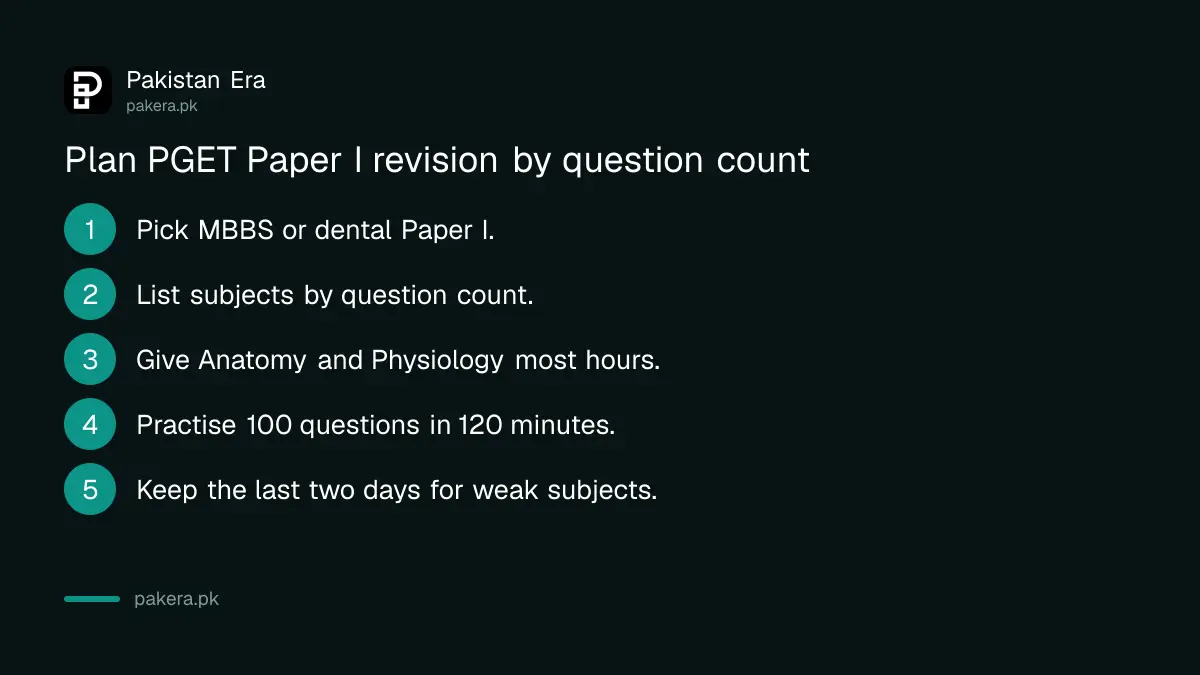
- Pick your version of Paper I: MBBS or dental.
- List the subjects in order of question count.
- Give Anatomy and Physiology the most hours.
- Practise 100 questions in 120 minutes at least twice.
- Keep the last two days for weak subjects only.
PGET is mandatory for Level III induction from January 2027
The UHS PGET page says the test is mandatory for induction into Level III postgraduate programmes (MS, MD, MDS, FCPS) from the January 2027 induction. It also says the Joint Centralized Admission Test (JCAT) for university programmes is no longer conducted or required.
Before you enrol in any course, confirm the qualification is accepted. The list of PMDC recognised postgraduate qualifications is the place to check that.
Whatever your split, do not skip the small subjects. A subject worth five or seven questions is still five to seven marks, and those marks are often the easiest to pick up with one focused revision day.
Common questions about PGET 2026 Paper I
How many questions are in PGET 2026 Paper I?
There are 100 multiple choice questions, each worth one mark, with two hours to answer.
Which subject has the most questions for MBBS graduates?
Anatomy has the most, with 20 questions. Physiology follows with 19.
Is the Paper I for dental graduates the same as for MBBS graduates?
No. The dental version has a different split, with 22 questions each in Anatomy and Physiology and no Community Medicine line.
How many Pharmacology questions are in Paper I?
MBBS graduates get 13 Pharmacology questions. Dental graduates get 16.
Does the table say there is negative marking?
We did not find negative marking stated in the part of the file we read. Check your admit card and the UHS advertisement.
Where do I download the official Table of Specifications?
It is on the UHS website at uhs.edu.pk, listed under the Postgraduate Entrance Test notices.
How we verified this
What we checked, where we read it, and what we could not confirm.
Last checked 21 October 2026. The counts come from the PGET Table of Specifications on uhs.edu.pk and the PGET portal page at admissions.uhs.edu.pk, which we read on 21 October 2026. Shares and minutes per question are our arithmetic. The file is long, so we read it in two parts and could not confirm negative marking or a pass mark in it. We did not sit or see the paper.
About the author

Public Services and Education Journalist
Fajr Riaz is a journalist and content writer at Pakistan Era, based in Lahore. She covers the questions people meet in everyday life in Pakistan: how a public service works, what a change in the rules means, and where to find a reliable answer.