PGET 2026 Paper II in Pakistan: MCQ Split for Surgery, Medicine and Dental Specialties
UHS PGET 2026 Paper II has 100 MCQs per specialty. See the topic split for Surgery, Medicine, Ophthalmology, ENT and dental papers before the 25 October test.
PGET 2026 Paper II is a separate 100 question test for each specialty, worth 100 marks. In Surgery and Allied, General Surgery alone carries 55 questions. In Ophthalmology, clinical ophthalmology carries 67. In dental specialties, the main subject carries 40 to 60.
Paper I is the same kind of test for everyone in a group. Paper II is where your specialty decides your marks. We read UHS's Table of Specifications on 21 October 2026 and counted the questions for each specialty. The University of Health Sciences (UHS) Lahore holds the Postgraduate Entrance Test (PGET) on 25 October 2026, so the numbers below are worth a look before you plan the last days of revision.
Every Paper II has 100 questions, but the split changes by specialty
UHS says each PGET paper has 100 multiple choice questions, 100 marks and two hours. Paper II is specialty specific. The Table of Specifications gives a subject split for each one, so two candidates sitting the same day can face very different papers.
The basic medical sciences side of the test is in our page on the Paper I subject split for MBBS and dental graduates. The dates and admit cards are in the page on the UHS PGET 2026 test day and pass mark.
Surgery and Allied papers give General Surgery 55 of 100 questions
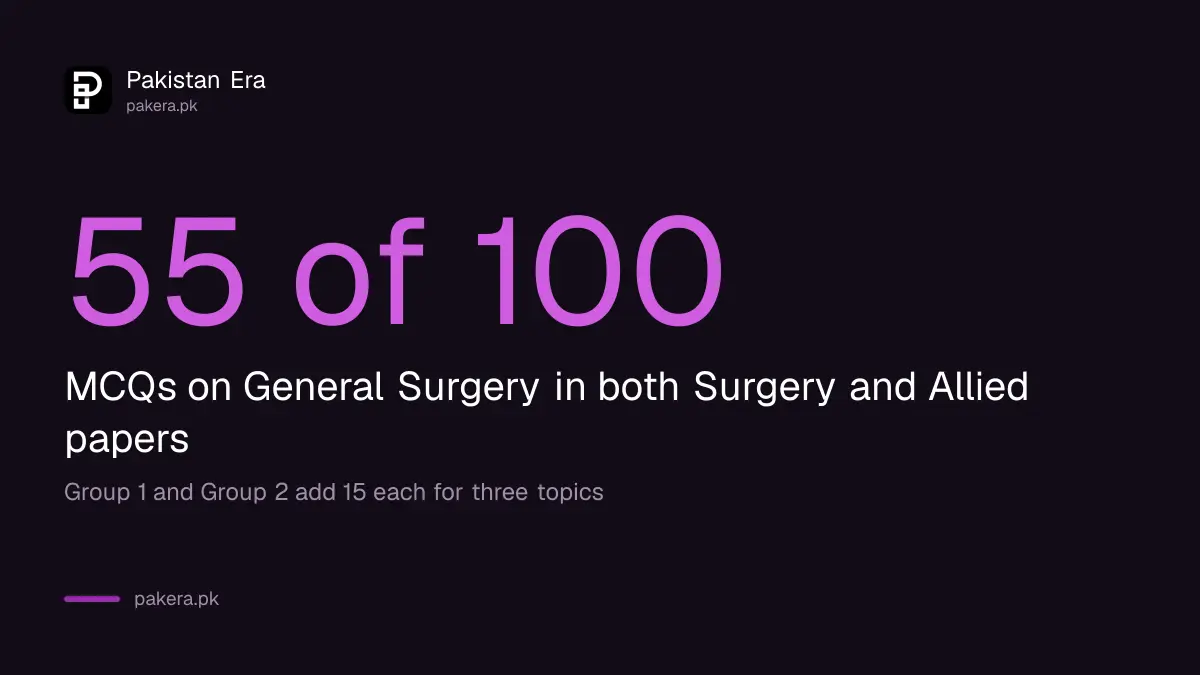
Both Surgery and Allied groups give General Surgery 55 questions. Group 1 adds Urology, Plastic Surgery and Paediatric Surgery at 15 each. Group 2 adds Orthopaedics, Cardiothoracic Surgery and Neurosurgery at 15 each.
| Specialty (Paper II) | Main split of the 100 MCQs |
|---|---|
| Surgery and Allied, Group 1 | General Surgery 55, Genito-urinary 15, Skin, Plastic and Reconstructive 15, Paediatric Surgery 15 |
| Surgery and Allied, Group 2 | General Surgery 55, Orthopaedics 15, Cardiothoracic 15, Neurosurgery 15 |
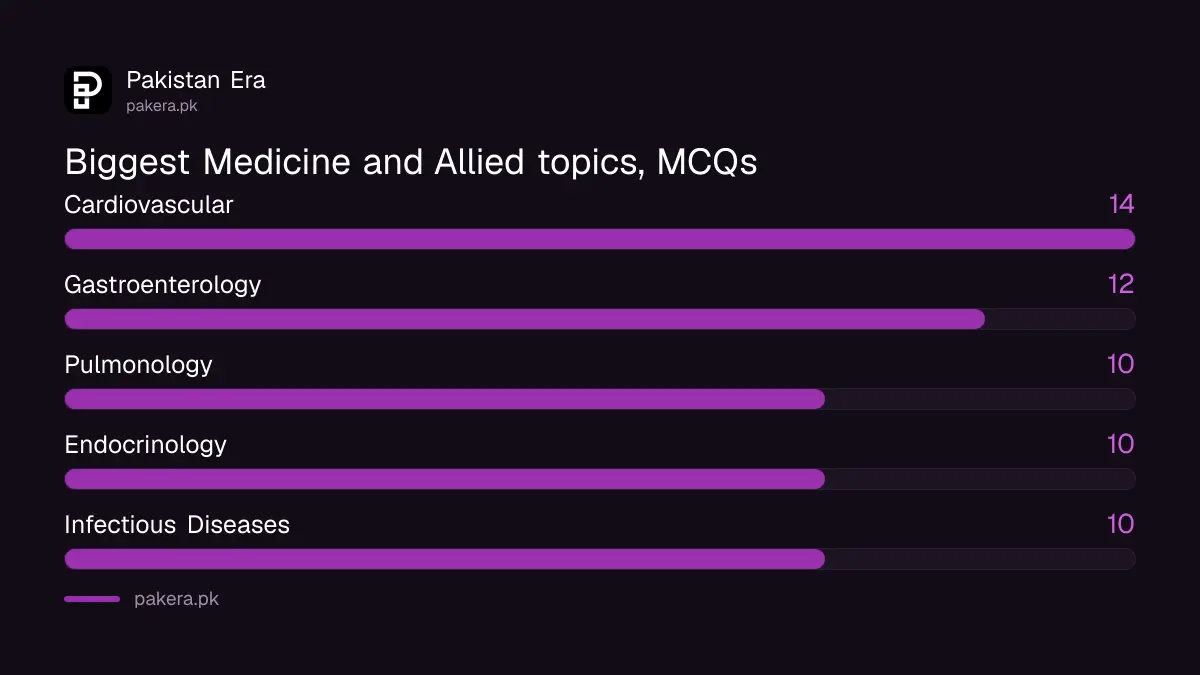
| Medicine and Allied | Cardiovascular 14, Gastroenterology 12, then 10 each for Pulmonology, Endocrinology, Infectious Diseases and CNS |
| Ophthalmology | Clinical ophthalmology 67, basic sciences 23, optics and refraction 10 |
| ENT | Ear 25, Head and Neck 25, Throat 20, Nose 15, Larynx and Oesophagus 15 |
| Psychiatry | Psychiatry 55, Neurology 15, Medicine 14, Behavioural Sciences 10 |
Medicine, Gynaecology and Pathology spread marks more evenly
Medicine and Allied has eleven topics, none above 14 questions. Pathology gives 23 each to Histopathology, Chemical Pathology, Microbiology and Haematology, plus 8 to Immunopathology. Gynaecology and Obstetrics gives 23 to Reproductive Physiology and 21 to Pathology.
That spread means a narrow revision plan is risky. In Gynaecology and Obstetrics, UHS also says at least 10 questions come from the attitude domain. In Radiology, up to 10 can be image based, and Anatomy and applied radiology carries 90. Radiology also gives Thorax 30 and Limbs 25 within that.
Dental specialties put 40 to 60 questions on the main subject
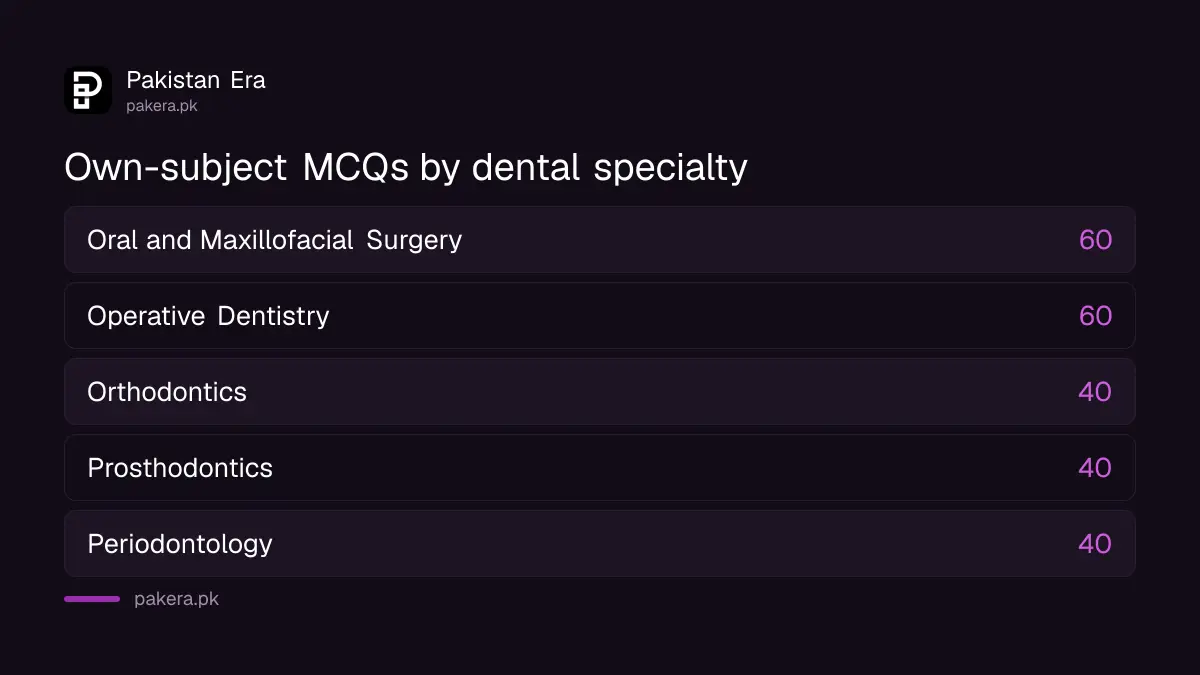
Oral and Maxillofacial Surgery and Operative Dentistry give their own subject 60 questions. Orthodontics, Prosthodontics and Periodontology give theirs 40. The rest is shared between Community Dentistry, Oral Biology, Dental Materials and Oral Pathology.
| Dental specialty | Own subject | Other subjects |
|---|---|---|
| Oral and Maxillofacial Surgery | 60 | Oral Biology 20, Oral Pathology 15, Community Dentistry 5 |
| Operative Dentistry | 60 | Community Dentistry 7, Oral Biology 11, Dental Materials 11, Oral Pathology 11 |
| Orthodontics | 40 | Oral Biology 20, Dental Materials 20, Oral Pathology 15, Community Dentistry 5 |
| Prosthodontics | 40 | Oral Biology 20, Dental Materials 20, Oral Pathology 15, Community Dentistry 5 |
| Periodontology | 40 | Spread over eight other subjects, none above 10 |
Within Operative Dentistry, Restorative has 20 questions and Endodontics 10. Anaesthesia, in the part of the file we read, gives Pharmacology 30 and Physiology 25.
Paediatric Medicine is only partly readable in our copy
We could read most of the Paediatric Medicine table but not all of it. The visible sections add up to 92 questions, with Gastrointestinal and Liver at 12 and Cardiovascular, Neonatology and Infectious Diseases at 10 each. We have not assumed the missing 8.
Open the official file and read the Nutrition section yourself before you rely on it. The same goes for any specialty not shown here, such as Family Medicine, which we did not find a table for in the part we read.
- Find your specialty in the official file.
- Mark every subject with 15 or more questions.
- Rank the rest by question count.
- Revise by count, not by interest.
- Take one timed 100 question paper in 120 minutes.
Common questions about PGET 2026 Paper II
How many questions are in PGET Paper II?
Each specialty paper has 100 multiple choice questions and 100 marks, with two hours to answer.
Which specialty gives one subject the most weight?
Ophthalmology gives clinical ophthalmology 67 of 100. General Surgery gets 55 in both Surgery groups.
Are there image based questions?
For Radiology, the file says up to 10 questions can be image based. We did not see that rule for other specialties.
Is there an attitude domain section?
Only Gynaecology and Obstetrics mentions it in what we read: at least 10 questions come from the attitude domain.
What do dental candidates sit in Paper II?
They sit a paper for their own specialty, such as Orthodontics or Prosthodontics, with Community Dentistry, Oral Biology and Oral Pathology alongside.
Where is the official table?
It is on uhs.edu.pk as the PGET Table of Specifications. It is a long file of about 116 pages.
How we verified this
What we checked, where we read it, and what we could not confirm.
Last checked 21 October 2026. Counts come from the PGET Table of Specifications on uhs.edu.pk, read on 21 October 2026, and the PGET portal at admissions.uhs.edu.pk. We read the file in two parts, and an automatic reader cut some headings, so we only used tables whose totals came to 100. We could not confirm Paediatric Medicine in full, Family Medicine, negative marking or the pass mark. We did not see the paper.
About the author

Public Services and Education Journalist
Fajr Riaz is a journalist and content writer at Pakistan Era, based in Lahore. She covers the questions people meet in everyday life in Pakistan: how a public service works, what a change in the rules means, and where to find a reliable answer.