How to Check If Police Filed the Challan in Pakistan: The 14 Day Rule
Waiting on your FIR? If police have not finished in 14 days, section 173 says an interim report goes to the magistrate within 3 days. See how to check it.
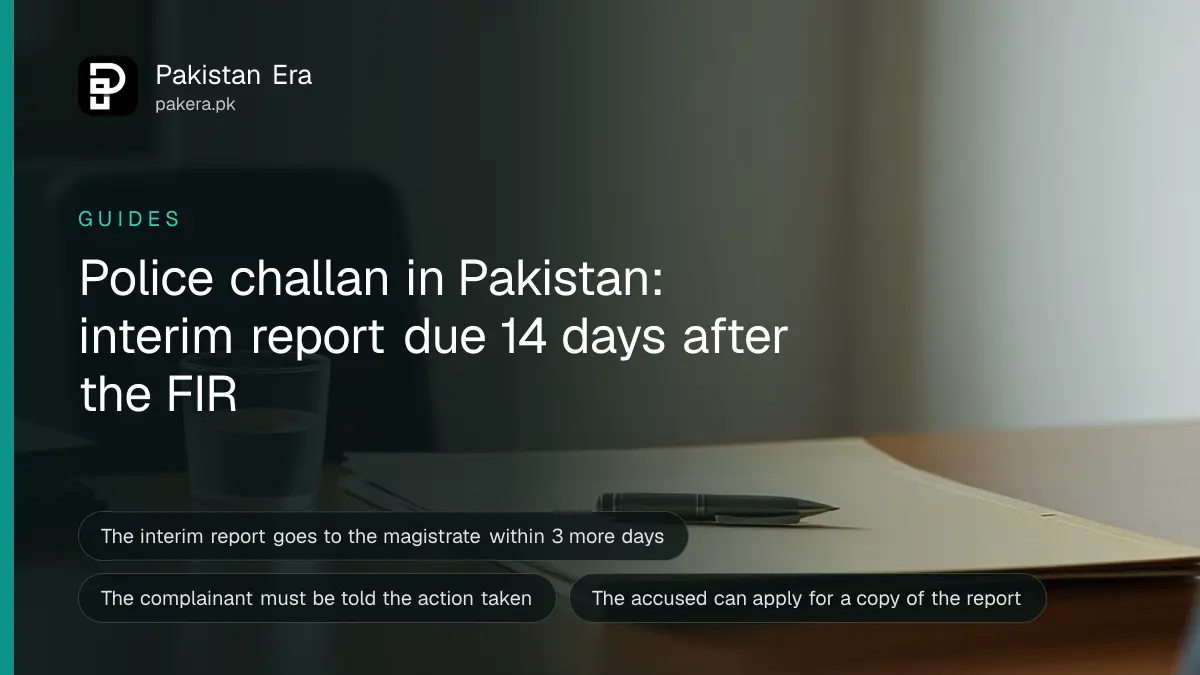
If police have not finished investigating an FIR within 14 days, the law says they must send an interim report to the magistrate within three more days. That is the proviso to section 173(1) of the Code of Criminal Procedure. It means a complainant can ask where the case stands, rather than wait in silence.
This guide explains the challan, the interim report and what a complainant or an accused person is entitled to receive. It is general information, not legal advice.
Know what a challan is and why it matters
A challan is the police report that sends a case to court. Section 173 calls it a report under the Code. It names the parties, states the nature of the information and lists the people who know about the case. It also says whether the accused is in custody or free on bond.
Until this report reaches the magistrate, the court usually cannot start the trial. A long delay can leave a complainant waiting and an accused person under suspicion. That is why the law sets the 14 day interim report.
To find the FIR first, use the guide to checking an FIR online. If the FIR was not registered at all, see the guide to what to do when police refuse to register an FIR.
Count 14 days from the date the FIR was recorded
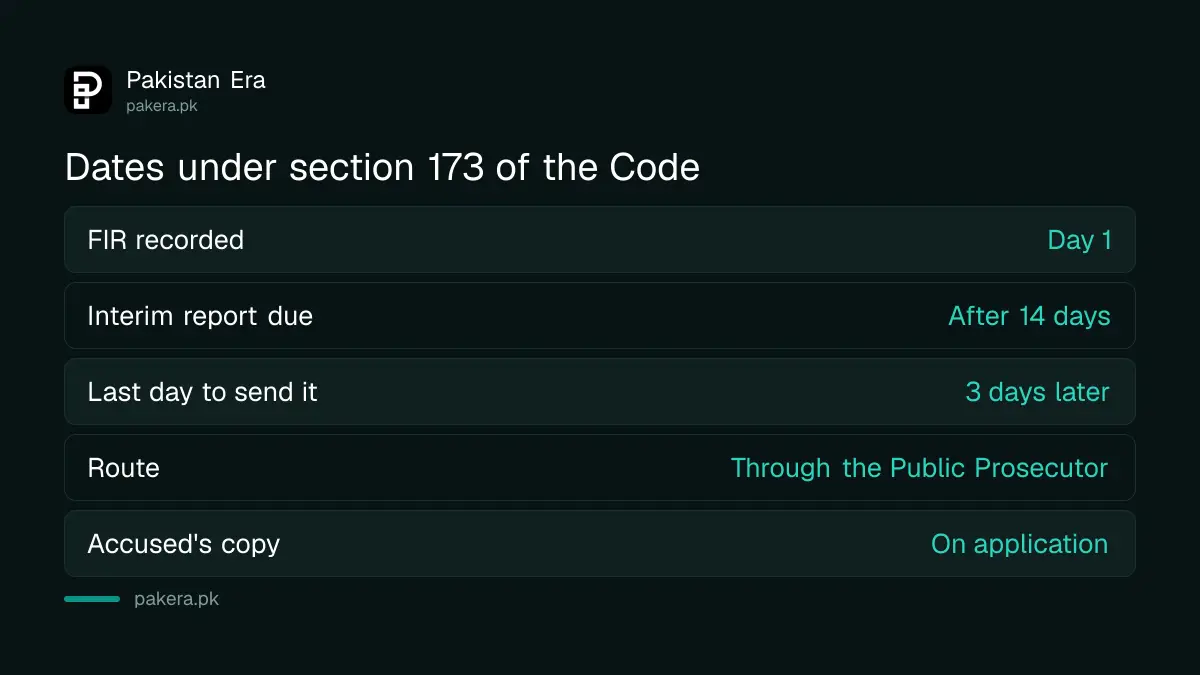
Section 173 says investigations must be completed without unnecessary delay. If the investigation is not complete within 14 days from the recording of the FIR under section 154, the officer in charge shall, within three days after that period ends, forward an interim report to the magistrate through the Public Prosecutor.
So the dates work like this. Day 1 is the day the FIR is recorded. Day 14 is when the interim report becomes due. Day 17 is the last day to send it. The court may begin the trial on the basis of that report unless it records reasons not to.
| Event | What section 173 says |
|---|---|
| Investigation not finished | Interim report due after 14 days from the FIR |
| Sending the interim report | Within 3 days of that period ending |
| Route of the report | To the Magistrate through the Public Prosecutor |
| Informant | Told of the action taken, as the province prescribes |
| Accused | May get a copy of the report, usually for a fee |
Ask the police station and the prosecutor for the status
The complainant has a right to be told the action taken. Section 173(1)(b) says the officer shall communicate the action taken to the person who gave the first information, in the manner the province prescribes.
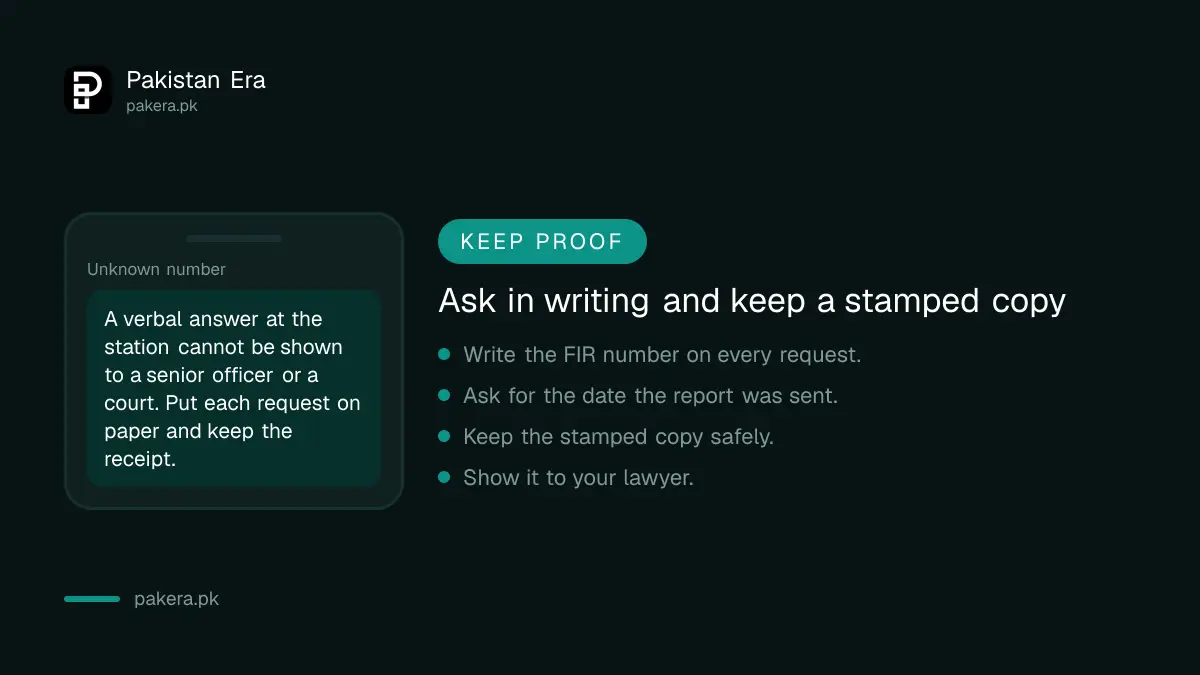
Start by asking the investigating officer, in writing, whether the interim report or challan has gone to court. Keep a stamped copy. Then ask the Public Prosecutor's office, which forwards it. In Punjab the guide to checking an FIR status and making a delay complaint shows where to take a complaint when the police do not answer.
You can also look up the case on the court side once it has a case number. The guide to checking court case status online explains how.
Use the copy of the report if you are the accused
Section 173(4) says a copy of the report shall, on application, be furnished to the accused before the inquiry or trial starts. It must be paid for unless the magistrate decides, for a special reason, to give it free.
If you are the accused, ask your lawyer to apply for it. The report tells you who the police say the witnesses are and what offence they have named. It lets you plan bail and defence. Our guide to getting bail in Pakistan explains the next step.
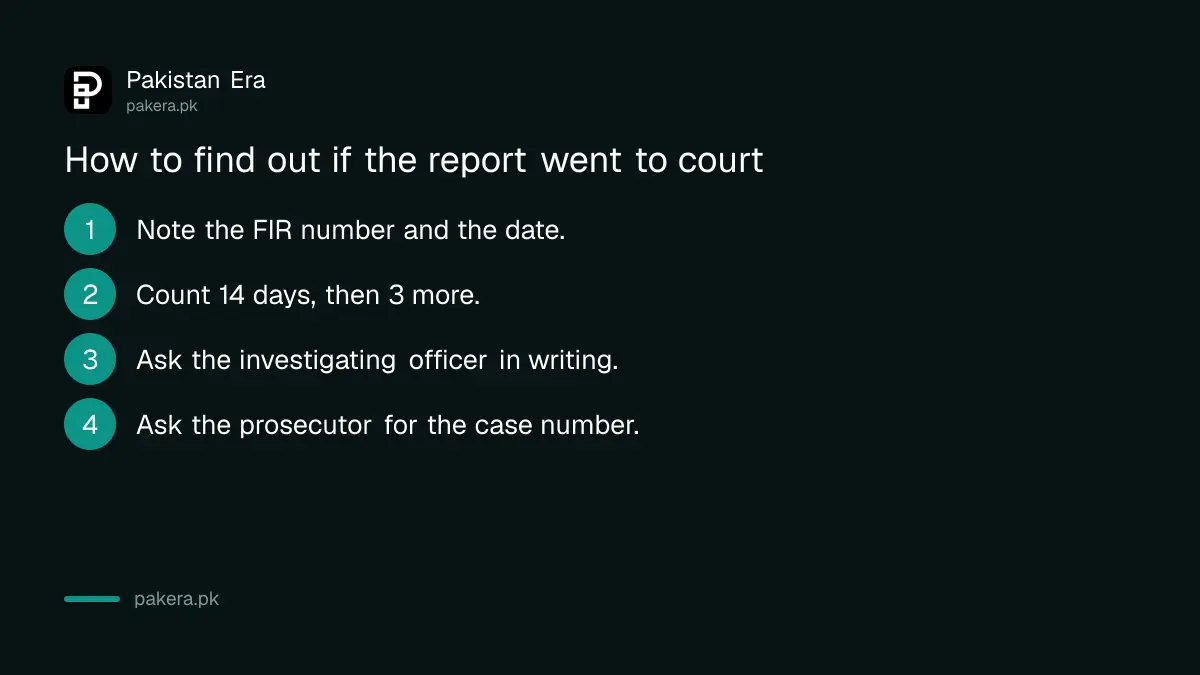
- Write down the FIR number, the date it was recorded and the police station.
- Count 14 days from that date, then three more.
- Ask the investigating officer in writing whether the report has gone to the magistrate.
- Ask the Public Prosecutor's office for the case number.
- If there is no answer, complain to the senior police officer in your district.
Common questions about the challan and interim report
What is the difference between a challan and an interim report?
A challan is the final police report when the investigation is complete. An interim report is a progress report sent when the investigation is not finished within 14 days. Both go to the magistrate.
Does the 14 days start from the crime or the FIR?
It starts from the date the FIR was recorded under section 154, not from the date of the incident. The FIR date is printed on the FIR copy.
Can the trial begin on an interim report?
Section 173 says the court shall commence the trial on the basis of the interim report unless, for reasons recorded, it decides the trial should not start. In practice this depends on the court.
Will the police tell me what they did?
The law says the officer shall communicate the action taken to the person who first gave the information. Ask in writing and keep a copy in case you need to complain later.
Can I complain if the police miss the deadline?
You can complain to senior police officers and ask a lawyer about an application to the court. A missed date does not by itself end a case, so seek advice on the next step.
How we verified this
What we checked, where we read it, and what we could not confirm.
Last checked 8 October 2026. We read section 173 of the Code of Criminal Procedure 1898 on 8 October 2026 in a published copy of the Code. The Pakistan Code website did not give us the Code on that day, so we could not confirm against the official copy whether a province has changed the wording. The report form and the way the informant is told are set by each province, so ask the district police office what applies locally.
About the author

Public Services and Education Journalist
Fajr Riaz is a journalist and content writer at Pakistan Era, based in Lahore. She covers the questions people meet in everyday life in Pakistan: how a public service works, what a change in the rules means, and where to find a reliable answer.