Gas Geyser Pilot Light Keeps Going Out in Pakistan: 5 Causes and How to Fix Each One
Gas geyser pilot light keeps going out in Pakistan? Check the 5 causes: low pressure, thermocouple, blocked jet, wind and water in the line, and fix each one.

A gas geyser pilot that keeps going out in Pakistan usually has one of five causes: low gas pressure, a weak thermocouple, a blocked pilot jet, wind blowing down the flue, or water in the gas line. Low pressure is the most common in winter, and the fix is a complaint on 1199, not a compressor. The other four are quick jobs for a gas fitter, and two of them you can check yourself in five minutes.
Work through the checks below in order. Each one says what you will see, what it means and who fixes it.
Five reasons a geyser pilot goes out
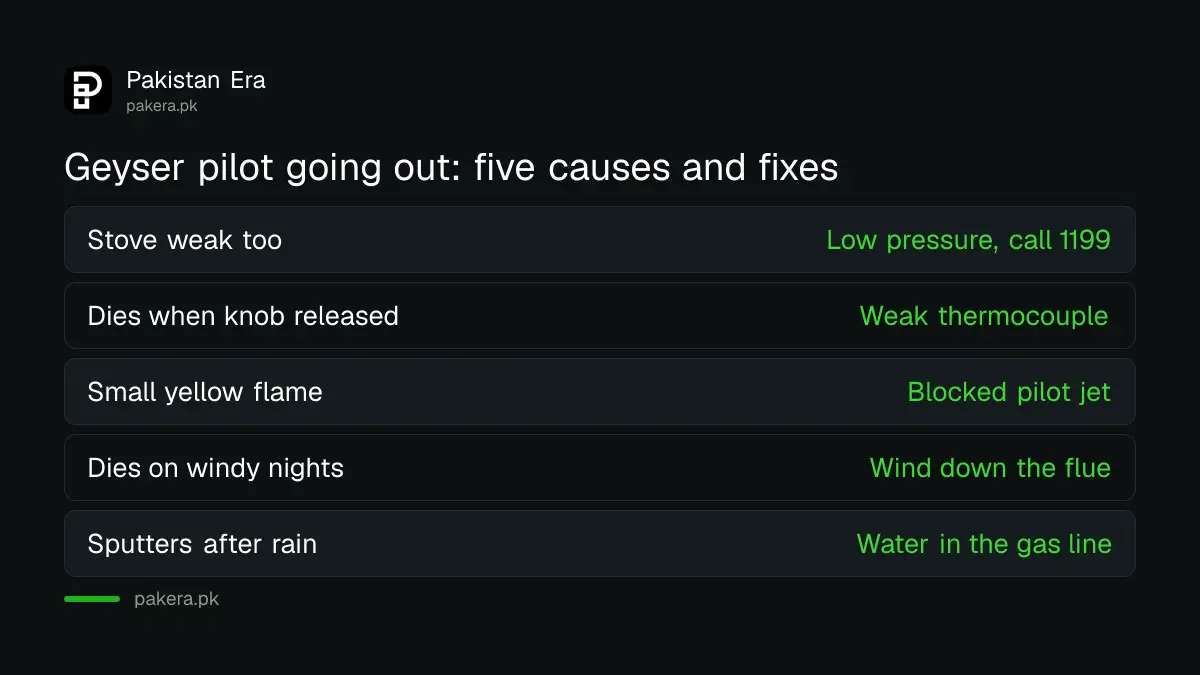
The pilot is the small flame that stays lit and lights the main burner when the water cools. If it dies, a safety device shuts the gas off, so the geyser goes cold. Match what you see to the table.
| What you see | Likely cause | Who fixes it |
|---|---|---|
| Pilot dies in the morning and evening, stove flames are also weak | Low gas pressure in the area | Complain to SNGPL or SSGC on 1199 |
| Pilot lights but goes out when you let go of the knob | Weak or loose thermocouple | Gas fitter, usually a cheap part |
| Small, yellow or lazy pilot flame | Dirty or blocked pilot jet | Gas fitter cleans it |
| Pilot dies on windy nights | Wind down the flue or an open burner door | Fit a cap on the flue, close the door |
| Flame sputters, then dies, often after rain | Water in the gas line | Gas fitter, or your gas company if it is in their pipe |
Check gas pressure first
If your stove burners are also low, the geyser is not the problem. Gas pressure in many areas drops at the morning and evening peaks in winter, and a geyser pilot is the first flame to go out because it is the smallest.
- Light one stove burner on full and look at the flame. A weak, short flame means low pressure.
- Ask a neighbour on the same line whether their stove is low too.
- Check whether your company has a low pressure or shutdown notice for your area. SNGPL posts them online, as our SNGPL low pressure notices page explains.
- Call 1199 to register the complaint and note the complaint number.
- Relight the geyser pilot once pressure returns.
Do not fit a gas compressor to get round low pressure. SNGPL says a connection caught with a compressor is cut at once, without notice.
Test the thermocouple when the pilot will not stay lit
A thermocouple is a thin copper rod whose tip sits in the pilot flame. While it is hot, it holds the gas valve open. If it is weak, loose or not in the flame, the valve closes the moment you let go of the knob.
- Turn the knob to pilot, press it and light the pilot.
- Keep the knob pressed for a full 30 to 60 seconds so the rod heats up.
- Release it slowly. If the pilot goes out straight away every time, the thermocouple is the likely fault.
- Check the pilot flame wraps the top of the rod. If the rod has been knocked aside, the fitter can move it back.
Replacing a thermocouple is a short job for a gas fitter. Do not try to bypass it or wedge the knob down. It is what stops raw gas pouring into the room when the flame dies.
Clean the pilot jet and check the flame colour
A healthy pilot flame is blue and steady, with a small yellow tip at most. A large, floppy yellow flame means the jet is partly blocked with dust or rust, or the air opening is dirty.
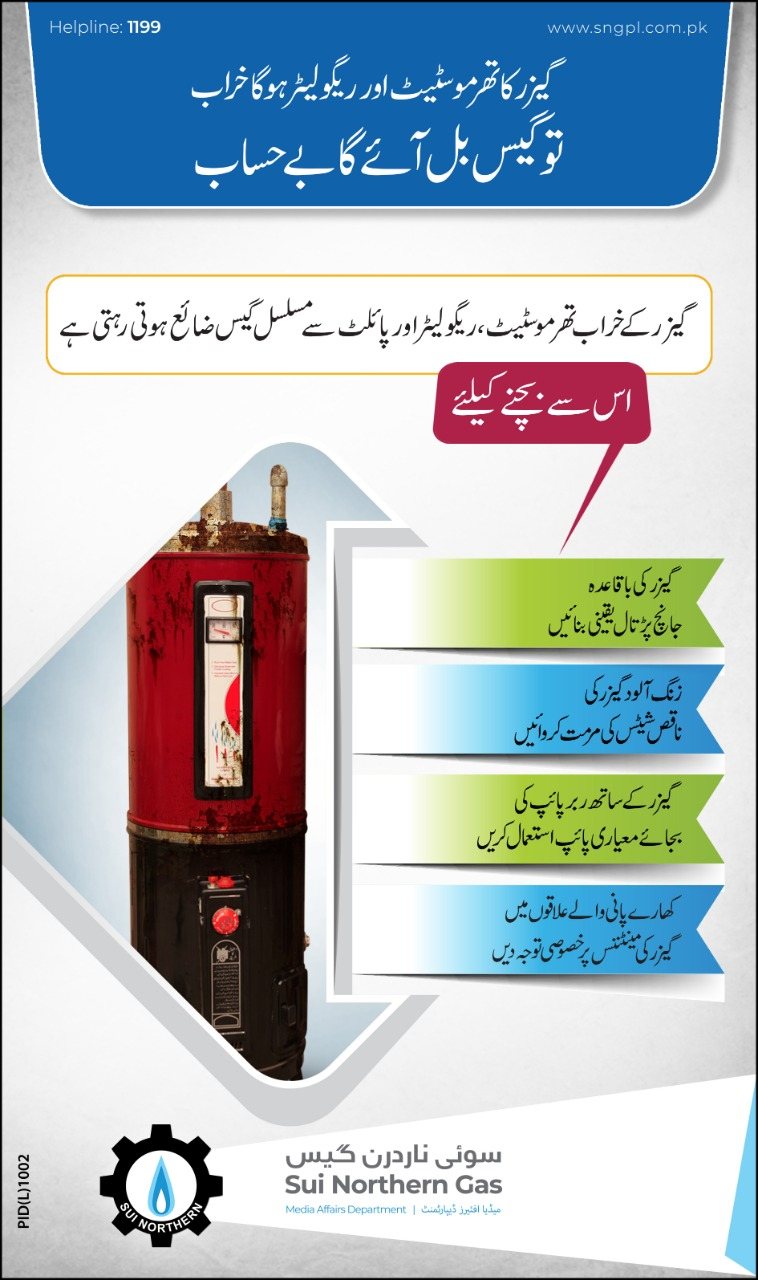
SNGPL's own maintenance poster says a faulty thermostat, regulator or pilot wastes gas all the time. It lists four steps:
- Have the geyser checked regularly.
- Repair a rusted geyser's damaged sheets.
- Use a standard gas pipe instead of a rubber pipe.
- Give extra care to the geyser in hard, salty water areas.
A fitter can clean the pilot jet in a few minutes with the gas off. A yellow main flame is also a carbon monoxide risk, so do not leave it.
Stop wind and water from killing the flame
Rooftop geysers are open to the weather, and winter wind is a common reason a pilot dies only at night. Water in the gas line is the other weather fault, and it often shows up after heavy rain.
- Wind: make sure the flue has a proper cap and the burner door is shut. Shield an exposed geyser from the side the wind comes from, without blocking the flue or the air inlet.
- Water in the line: a sputtering flame that keeps dying on the stove and the geyser together points to water in the pipe. A fitter can drain your house line. If the water is in the company's pipe, complain on 1199.
- Rubber pipe: a cracked or kinked rubber pipe starves the pilot. Replace it with a standard gas pipe.
Relight the pilot safely
Most Pakistani tank geysers have the same control: a knob with off, pilot and on positions, and a push button or a spark button to light the pilot.
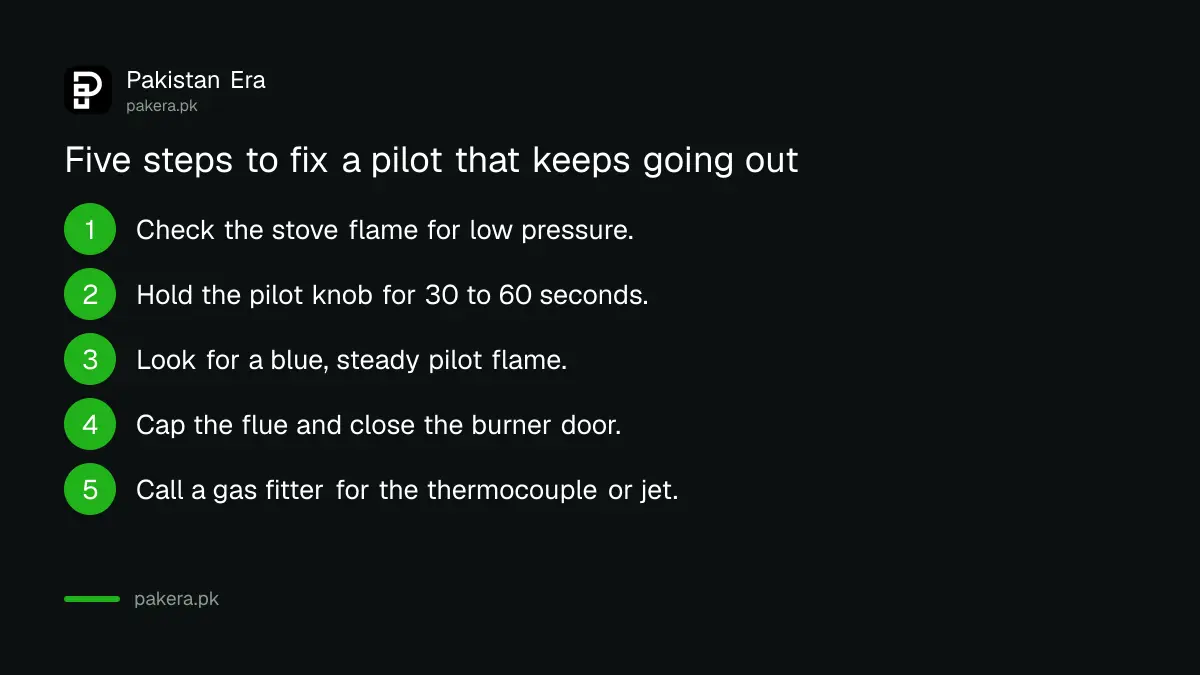
- Turn the knob to off and wait 5 minutes for any gas to clear.
- If you smell gas, stop. Do not light anything, open the doors and call 1199.
- Turn the knob to pilot, press and hold it, and light the pilot through the opening.
- Keep holding for 30 to 60 seconds, then release.
- Turn the knob to on, or leave it on pilot until you need hot water.
Keeping the geyser on pilot between uses also saves gas. The SSGC rules on using a gas heater or geyser safely cover where the geyser should sit and the warning signs of a leak.
Common questions about geyser pilot problems
Why does my geyser pilot go out in the morning?
Gas pressure is lowest at the morning peak in winter, and some areas also follow a gas load shedding schedule. If your stove is also weak at the same time, register a low pressure complaint on 1199.
Why does the pilot go out when I release the knob?
The thermocouple is not getting hot enough or is faulty. Hold the knob for 30 to 60 seconds. If it still dies, a gas fitter should check or replace it.
Is it safe to keep the knob pressed with a weight?
No. That defeats the safety device that shuts the gas off when the flame dies, and gas can fill the area.
What colour should a geyser pilot flame be?
Blue and steady, with at most a small yellow tip. A big yellow flame needs cleaning.
Can I use a compressor if gas pressure is low?
No. SNGPL says it cuts a connection found with a compressor at once, without notice. Report low pressure on 1199 instead.
Which helpline do I call for low gas pressure?
1199, for both SNGPL in Punjab and Khyber Pakhtunkhwa and SSGC in Sindh and Balochistan.
How we verified this
What we checked and where we read it.
Last checked 14 November 2026. The maintenance steps and the compressor rule come from SNGPL's Gas Conservation campaign posters on sngpl.com.pk. The 1199 helpline is listed on both the SNGPL and SSGC websites. The thermocouple, jet, wind and relighting steps are general gas appliance guidance; for any fault inside the gas valve, use a qualified gas fitter.
About the author

Lifestyle & Clothing Writer
Mahnoor Siddiqui is a lifestyle and clothing writer at Pakistan Era, joining the new lifestyle desk in November 2026.