Hailstorm Safety in Pakistan: NDMA's Rules for Home, Outdoors and the Road
NDMA's hailstorm rules for Pakistan: get indoors away from windows, cover your head outside, pull over away from trees, and secure solar panels before storms.
Short answer: When hail starts, NDMA's rules are: get indoors or into a sturdy vehicle at once, stay away from windows, and if you are caught outside, cover your head and neck with a bag, jacket or helmet. If you are driving, pull over away from traffic and trees and keep your seatbelt on. Before the storm, tie down solar panels and loose sheets, and do not touch electrical wiring while it rains.
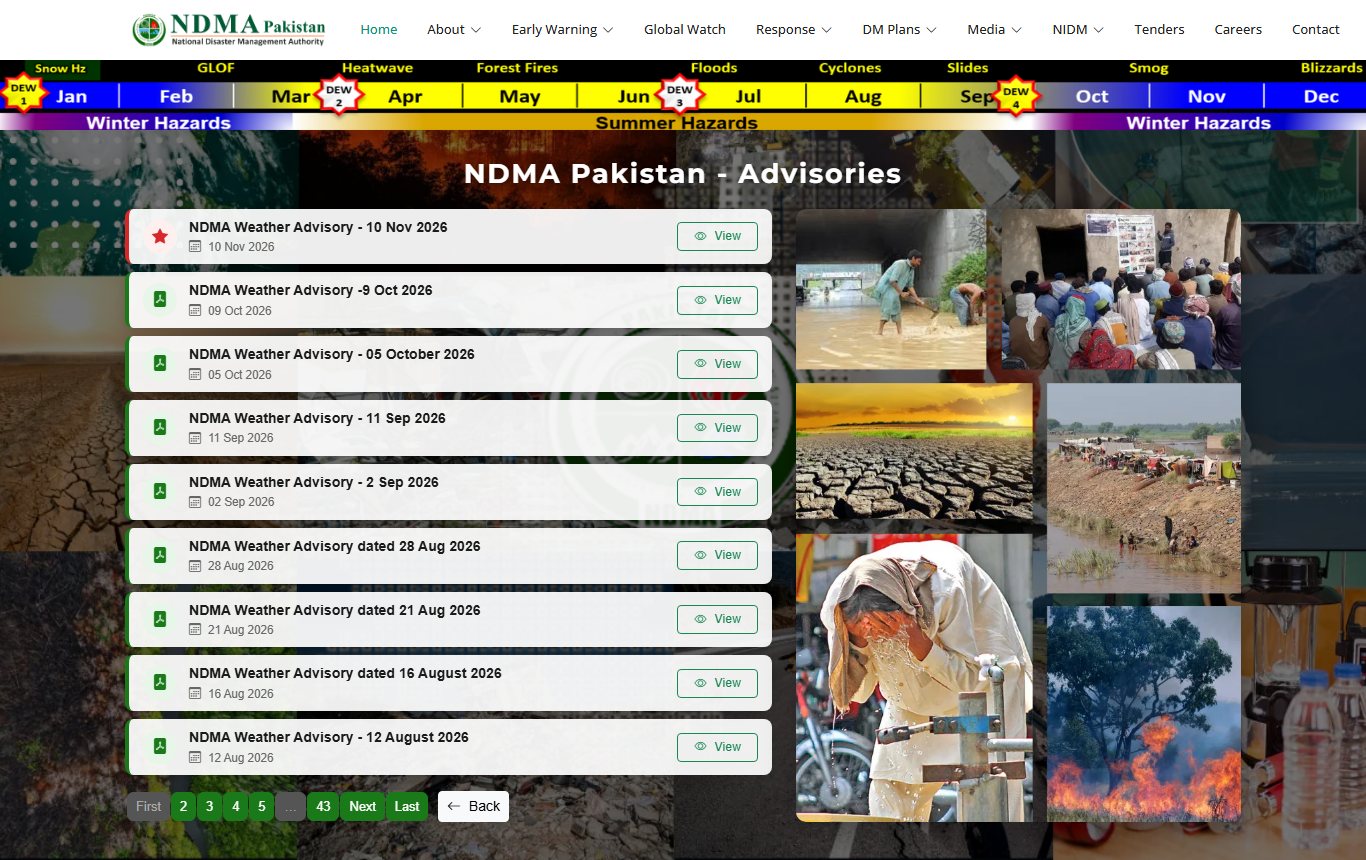
NDMA has warned of isolated hail in Islamabad, Rawalpindi, Lahore, Gujranwala, Sialkot and other Punjab districts on 12 and 13 November 2026, and of hail with heavy falls in parts of Khyber Pakhtunkhwa until 14 November. We read the hail rules in its advisory of 10 November, a 9 page PDF on ndma.gov.pk. They are on page 2, item 3a(1). Further rules on loose structures and electricity are on pages 5 and 6. This guide puts them in one place, for home, street, school run and roof.
Get indoors and stay away from windows
NDMA's first hail rule is to seek shelter immediately, inside a building or a sturdy vehicle. Its second is to stay away from windows, because hailstones can shatter glass. If you can, wait in a room with no windows, such as a corridor, store room or bathroom.
Most hail injuries at home come from broken glass, not from the ice itself. Draw curtains on windows facing the wind. That catches some of the glass if a pane breaks. Keep children away from glass doors and skylights until the hail stops.
Cover your head and neck if you are caught outside
If you are outdoors and cannot reach shelter, NDMA says to protect your head and neck with anything you have: a bag, a jacket or a helmet. Motorcyclists already have a helmet, so keep it on. Then move to the nearest solid shelter, such as a shop, an underpass or a concrete building.
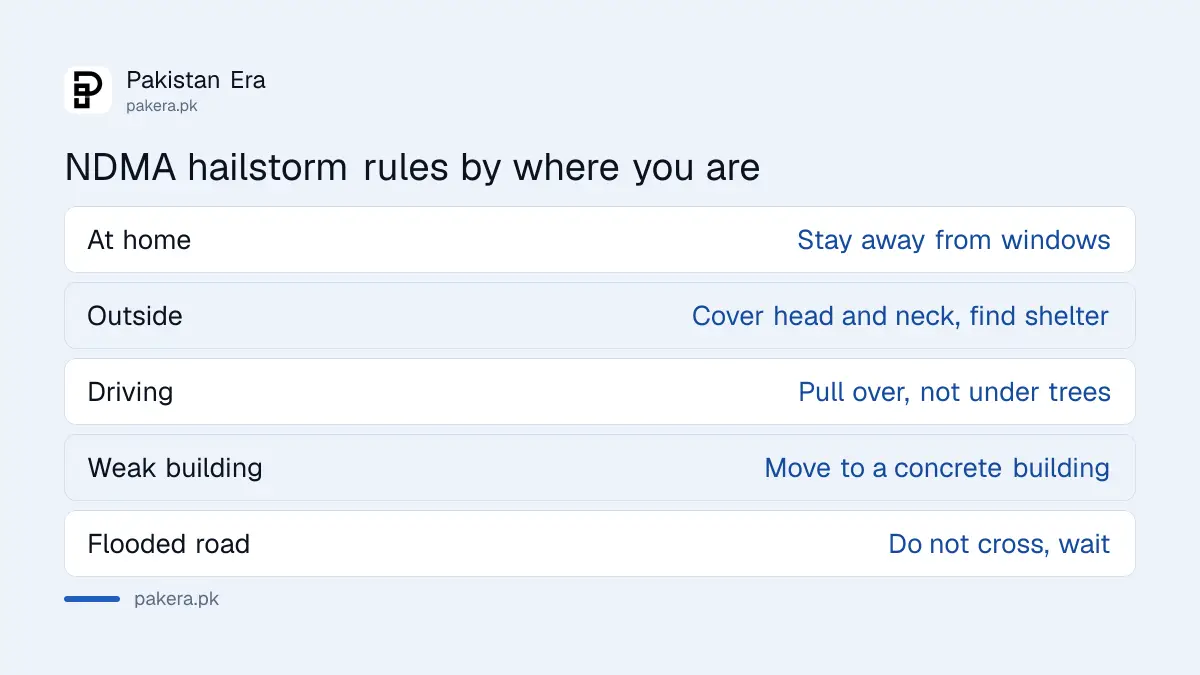
| Where you are | What NDMA says to do |
|---|---|
| At home or in an office | Stay inside, away from windows, ideally in a windowless room |
| Walking outside | Cover head and neck with a bag, jacket or helmet, then find solid shelter |
| Driving a car | Pull over safely away from traffic, not under trees, seatbelt on, stay inside |
| In a weak structure | In intense rain, move to a school, government building or concrete building |
| Near a flooded road or drain | Do not cross; wait for the water to drop |
Do not shelter under a tree. Hail usually comes with strong wind and lightning, and trees are the first thing to fall or be struck. Our guide to staying safe in lightning and thunderstorms covers the lightning rules.
Pull over if you are driving, but not under trees
For drivers, NDMA says to pull over safely away from traffic, avoid stopping under trees or unstable structures, and stay inside the vehicle with the seatbelt fastened. A car roof protects you from hail far better than running for a building. Do not stop under a billboard either. NDMA separately tells local authorities to secure billboards because wind brings them down.
Hail on the road also makes it slippery, like gravel made of ice. Once it stops, drive slowly for the first few kilometres. Our guide on how to drive safely in hail and thunderstorms covers the road rules in more detail.
Prepare your roof and home before the storm
NDMA asks local authorities to secure loose structures, including billboards, hoardings and solar panels, against windstorms and thunder showers. The same applies on your own roof. Here is a short list to do before a forecast storm:
- Check that solar panel frames are bolted tight and no clamps are loose.
- Tie down or bring in loose iron sheets, water tank lids, chairs and plant pots.
- Park the car under a roof or cover it, away from trees and walls that may fall.
- Clear roof drains so water and melted hail can run off.
- Keep a torch, power bank and charged phone ready in case the power goes.
Our guide on how to secure solar panels on a roof before a windstorm goes through the frame checks step by step.
Keep away from electrical wiring and flooded roads
NDMA tells the public not to handle or repair any electrical equipment during rain and thunderstorms, especially where wires are exposed or water has collected, because of the risk of electric shock. If a wire falls in the street, keep well away and report it to your electricity company.
It also says not to cross a drain or a road with water flowing over it, not to enter a flooded road under construction, and to keep children away from ponds, drains and potholes full of water. In Lahore and Rawalpindi, short heavy showers can turn underpasses into pools within minutes.
For the latest alert for your district, check NDMA's Advisories page. Our guide to NDMA alerts and the helpline lists every channel. In an emergency call Rescue 1122.
Common questions
What should I do when hail starts?
Go indoors or into a sturdy vehicle at once, and stay away from windows. NDMA says a windowless room is safest.
Is it safe to stay in a car during a hailstorm?
Yes. NDMA tells drivers to pull over away from traffic and trees, stay inside and keep the seatbelt fastened.
How do I protect myself if I am outside in hail?
Cover your head and neck with a bag, jacket or helmet, then move to the nearest solid building.
Will hail damage my solar panels?
Heavy hail and wind can damage panels and loosen frames. NDMA asks for solar panels to be secured before storms.
Where is hail expected in Pakistan in November 2026?
NDMA warned of isolated hail in Islamabad and north and central Punjab on 12 and 13 November, and in parts of Khyber Pakhtunkhwa until 14 November.
Can I fix a power fault during rain?
No. NDMA says not to handle or repair electrical equipment during rain or thunderstorms. Call your electricity company.
Sources: NDMA Weather Advisory F.2(E)/2026-NDMA dated 10 November 2026, pages 1, 2, 5 and 6, on ndma.gov.pk. Last checked 12 November 2026.
About the author

Global Affairs & Political Economy Writer
Muhammad Hatim is a book lover who started writing because he enjoys it. At Pakistan Era he writes about international relations, geopolitics and the global economy, with a particular interest in South Asia and the forces behind current events.