Lumpy Skin Disease in Cows in Punjab: How It Spreads, Is Milk Safe, and the Free Vaccine
Lumpy skin disease in Punjab cattle spreads by flies, mosquitoes and ticks, kills 1 to 5 per cent, and does not pass to people. Free cow vaccine on 08000-9211.
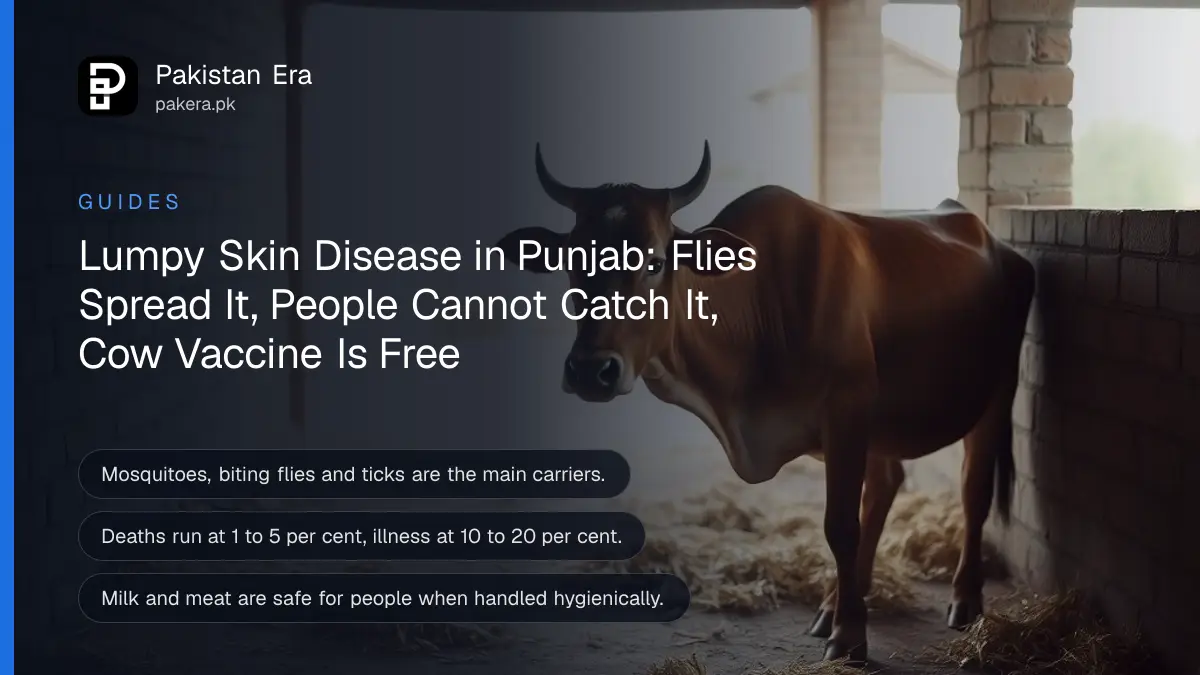
Lumpy skin disease (gilti dar jildi bimari) is a virus disease of cattle that spreads mainly through mosquitoes, biting flies and ticks. It does not pass to people, and milk and meat are safe when handled hygienically, says the Punjab Livestock and Dairy Development Department. The department gives the lumpy skin vaccine to cows free. Call its helpline, 08000-9211, to report a case or ask for vaccination.
The department's lumpy skin page puts the illness rate in a herd at 10 to 20 per cent and deaths at 1 to 5 per cent. Most sick animals survive, but milk falls, cows can abort, and hides are spoiled. That is why prevention pays.
Lumpy skin disease is a pox virus that hits cattle
The disease is caused by a capripox virus from the Poxviridae family. It affects cattle and some wild animals. The Punjab Livestock Department lists four losses: lower milk, abortion, infertility and damaged hides. The virus does not cause a long-term (chronic) disease.
The disease has spread in many countries of Asia, Africa and Europe. In Pakistan, the federal Ministry of National Food Security and Research reported confirmed cases in Sindh in early 2022, and Punjab's livestock department set up emergency measures from March 2022, including an emergency cell at the Veterinary Research Institute in Lahore.
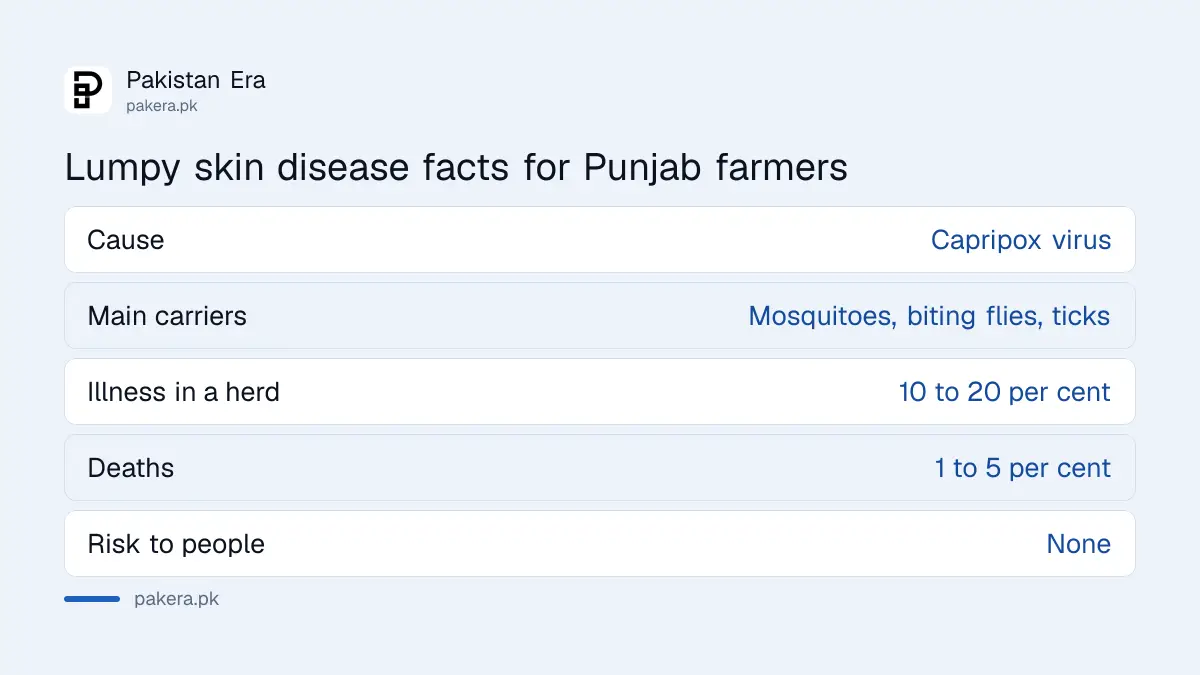
| Point | What the department says |
|---|---|
| Cause | Capripox virus, Poxviridae family |
| Animals hit | Cattle and some wild animals |
| Illness rate in a herd | 10 to 20 per cent |
| Death rate | 1 to 5 per cent |
| Risk to people | None; it does not pass to humans |
| Vaccine for cows | Given free by the department |
Insects and close contact spread the virus
The main carriers are insects and ticks: mosquitoes, biting flies and ticks. The department says animals living close together is considered the most important route of spread. The virus is heavy in the skin lumps, scabs and wounds, and can be recovered from that material for up to 35 days.
The virus is also found in blood, saliva, eye and nose discharge, and semen. Infected bulls can shed it in semen, though the department says spread through semen has not been proven. In practice, the lumps, scabs and discharges of a sick animal are what to keep away from healthy ones.
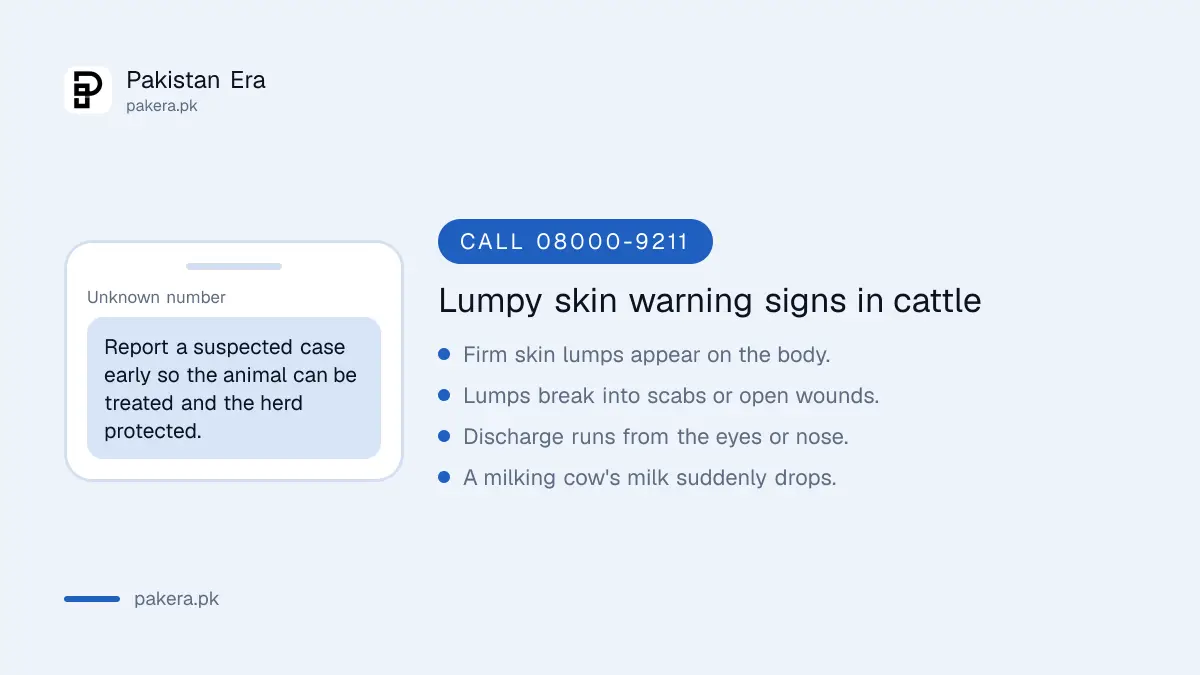
- Skin lumps (nodules) on the body are the sign the disease is named after.
- Scabs and open wounds where the lumps break.
- Discharge from the eyes and nose.
- A drop in milk in a milking cow.
People cannot catch it, and milk and meat are safe
The Punjab Livestock Department says plainly that lumpy skin disease does not pass to humans. Milk and meat from cattle are safe for people when used under normal hygiene rules. So boil milk as you always should, and buy meat from clean, licensed shops.
So there is no need to stop buying milk during an outbreak. The real loss falls on the farmer, through lower milk, abortions and sick animals, not on the family drinking boiled milk.
Get the free vaccine and report a case on 08000-9211
The department's lumpy skin page says cows are being vaccinated against the disease completely free. Farmers can also report lumpy skin or any other disease free through the department's mobile app. The helpline 08000-9211 connects you to the nearest veterinary service.
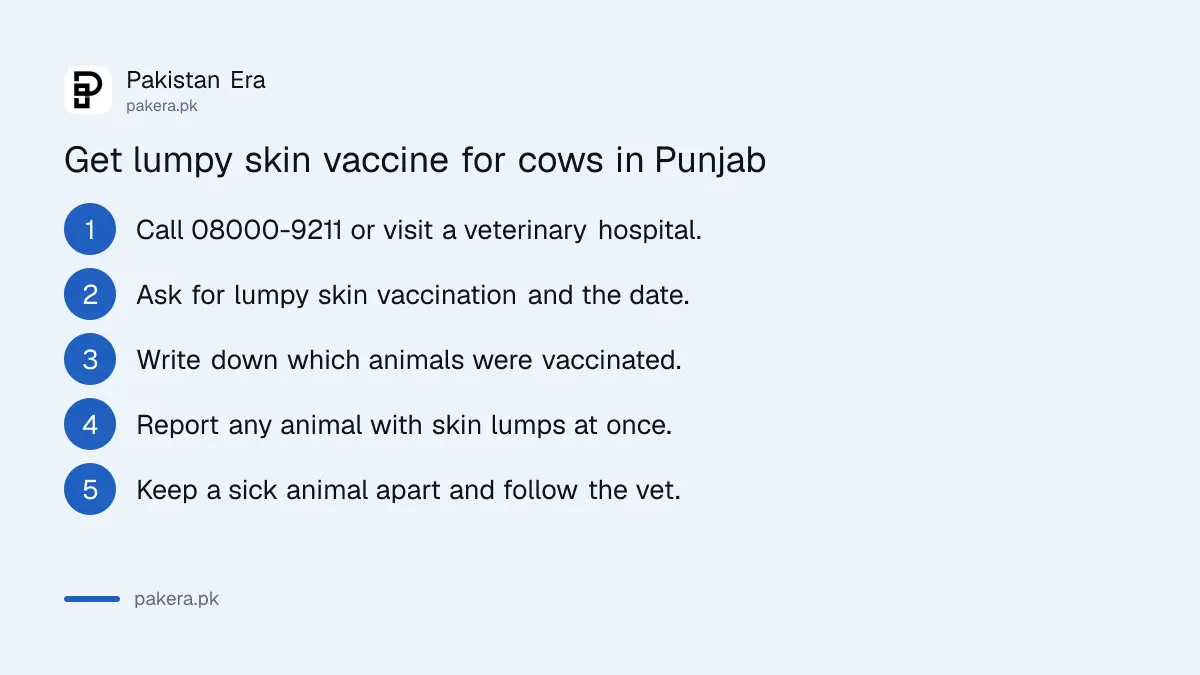
- Call 08000-9211 or visit your nearest government veterinary hospital or dispensary.
- Ask for lumpy skin vaccination for your cows, and the date the team will come.
- Keep a written record of which animals were vaccinated and when.
- If an animal shows skin lumps, report it at once through the helpline or the app.
- Follow the vet's advice on treatment, and keep the sick animal apart.
The department's veterinary hospitals, dispensaries and mobile units also give free diagnosis and treatment; see how to get free animal treatment and vaccines in Punjab. Vaccine quality depends on storage, and the 2 to 8 degree cold chain for animal vaccines explains what to check before a dose goes in.
Cut insects and contact to protect the herd
Because insects and close contact carry the virus, the best protection after vaccination is to keep a sick animal apart, control flies, mosquitoes and ticks, and avoid bringing new animals in without a check. The department's 2022 plan was built on biosecurity and controls on animal movement.
- Keep a sick animal in a separate shed, with its own feed and water buckets.
- Clean the shed, drain standing water and remove dung often, so flies and mosquitoes breed less.
- Check animals for ticks, and treat them on a vet's advice.
- Keep new animals from a market apart for some days before they join the herd.
- Wash hands and change clothes after handling a sick animal and before milking healthy ones.
A healthy, well-fed animal copes better. Good feeding and clean sheds also help against other problems such as mastitis and worms in dairy animals.
Common questions
Can humans get lumpy skin disease?
No. The Punjab Livestock Department says the disease does not pass to humans.
Is it safe to drink milk from a cow with lumpy skin disease?
The department says milk and meat are safe for people when used under hygiene rules. Boil milk before drinking.
How does lumpy skin disease spread?
Mainly through mosquitoes, biting flies and ticks, and through animals living close together. The virus is heavy in skin lumps, scabs and wounds.
Is the lumpy skin vaccine free in Punjab?
The department's lumpy skin page says vaccine for cows is given completely free. Call 08000-9211 to ask about vaccination in your area.
How many infected animals die?
The department puts deaths at 1 to 5 per cent and the illness rate in a herd at 10 to 20 per cent.
Where do I report a lumpy skin case?
Call 08000-9211, use the department's mobile app, or tell your nearest government veterinary hospital.
How we verified this
What we checked and where we read it.
We checked these official pages on 15 November 2026:
- The Punjab Livestock and Dairy Development Department's Lumpy Skin Disease and Surveillance page (Urdu): cause, spread, illness and death rates, safety of milk and meat, the 2022 emergency measures, free vaccination for cows and free reporting through the department's app.
- The department's home page, for the 08000-9211 helpline.
The lumpy skin page was written for the 2022 outbreak and has not been dated since; its contingency plan and guidelines are linked from it. The herd care steps above follow from the routes of spread the page lists.
About the author

Tax, Bills and Technology Writer
Ali Akhtar is a young and curious voice here at Pakistan Era. He is currently pursuing his A-Levels and has a growing interest in Pakistan’s changing industrial landscape and educational trends. Ali likes to write in a way that helps him explain and explore the world around him. His writing reflects the perspective of the new generation navigating the evolving trends of Pakistan where technology, youth innovation, and shifting opportunities are reshaping the country’s future.