Flu Cases in Pakistan, Week 40 2026: 45,923 Flu-Like Illnesses, Influenza A and B Found
Pakistan logged 45,923 flu-like illness cases in week 40 of 2026, NIH says, and labs found influenza A in 9 samples. See each province and when to see a doctor.
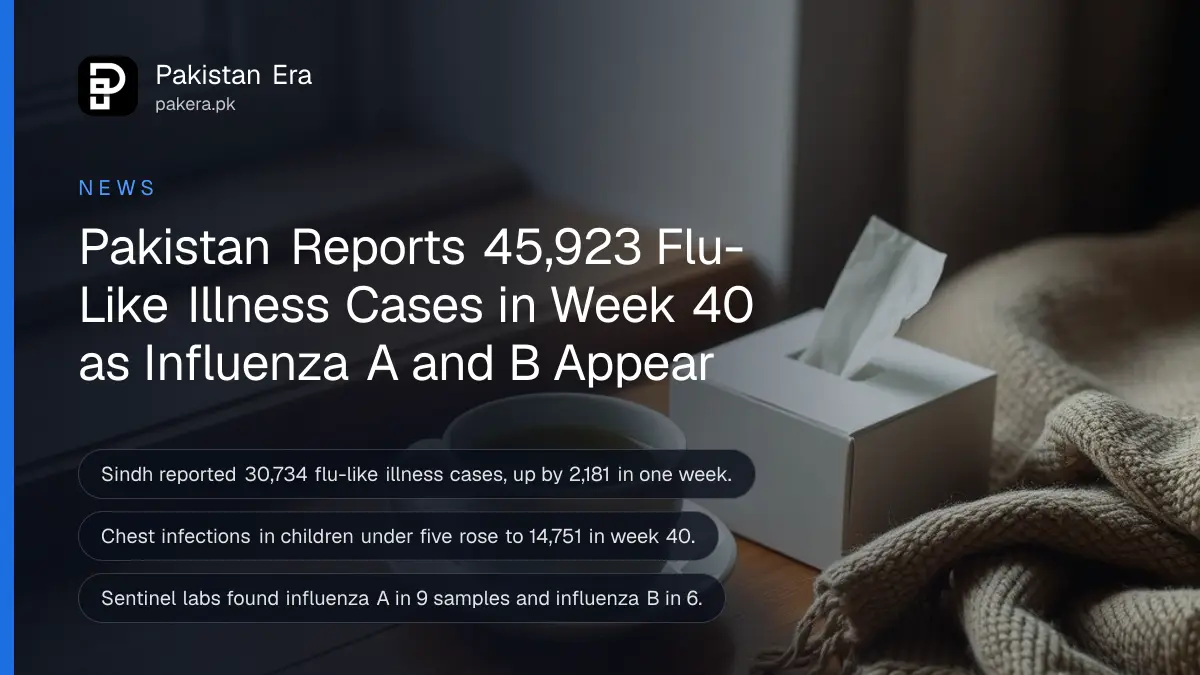
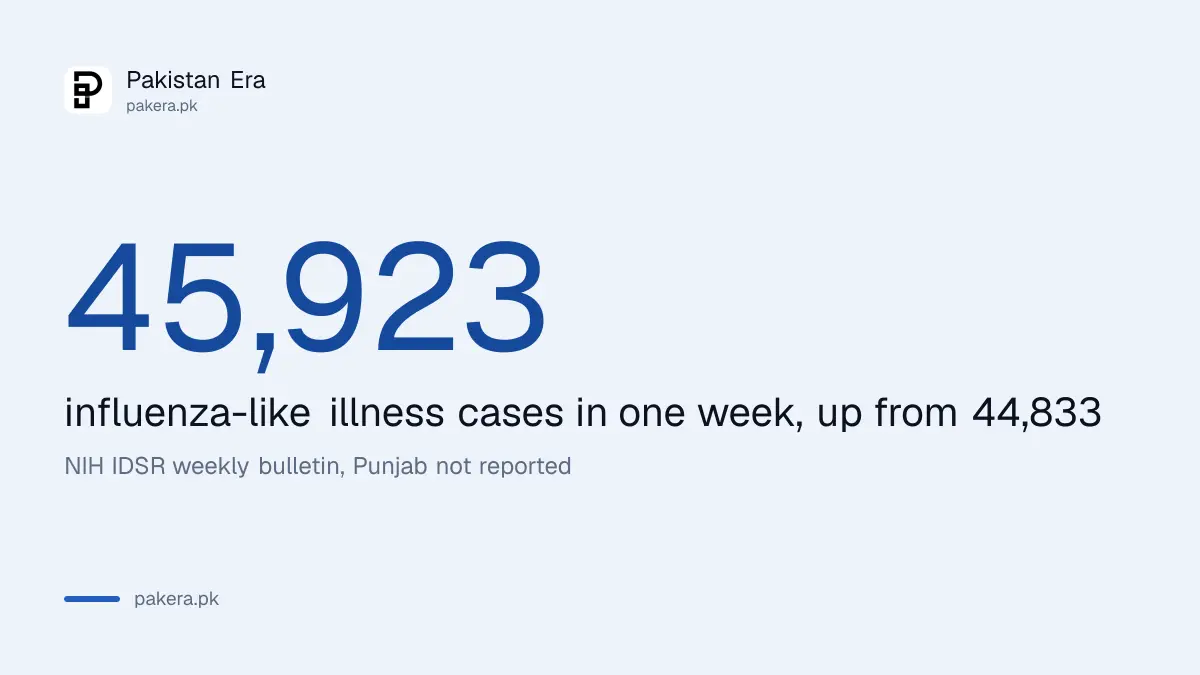
Pakistan reported 45,923 cases of influenza-like illness in epidemiological week 40 of 2026, up from 44,833 the week before, the National Institute of Health (NIH) said in its bulletin posted on 24 October 2026. Its sentinel labs found influenza A in 9 samples and influenza B in 6.
Influenza-like illness, or ILI, means fever with a cough or sore throat. It is the third most reported condition in the country this week. Chest infections in children under five also rose. Below are the figures by province, the lab results and what the NIH advice says about when a cough or fever needs a doctor.
Flu-like illness rose to 45,923 cases in week 40
NIH counted 45,923 ILI cases in week 40, against 44,833 in week 39, a rise of 1,090 or about 2 per cent. The bulletin says both ILI and acute chest infections in children under five increased this week.
These are clinical counts. A health worker records a patient with the symptoms, and only a few samples are tested for a virus. So the figure tracks how many people are sick with flu-like symptoms, not how many have influenza itself.
| Province or area | Week 39 | Week 40 | Change |
|---|---|---|---|
| Sindh | 28,553 | 30,734 | up 2,181 |
| Balochistan | 8,134 | 7,837 | down 297 |
| Khyber Pakhtunkhwa | 3,929 | 3,211 | down 718 |
| Islamabad | 1,971 | 2,168 | up 197 |
| Azad Jammu and Kashmir | 1,918 | 1,582 | down 336 |
| Gilgit-Baltistan | 328 | 391 | up 63 |
| Punjab | not reported | not reported | |
| Total | 44,833 | 45,923 | up 1,090 |
Sindh and Islamabad drive the rise
Sindh reported 30,734 ILI cases, up by 2,181, and Islamabad rose to 2,168. In Islamabad, flu-like illness was the single most reported condition this week. Khyber Pakhtunkhwa, Balochistan and Azad Kashmir all fell.
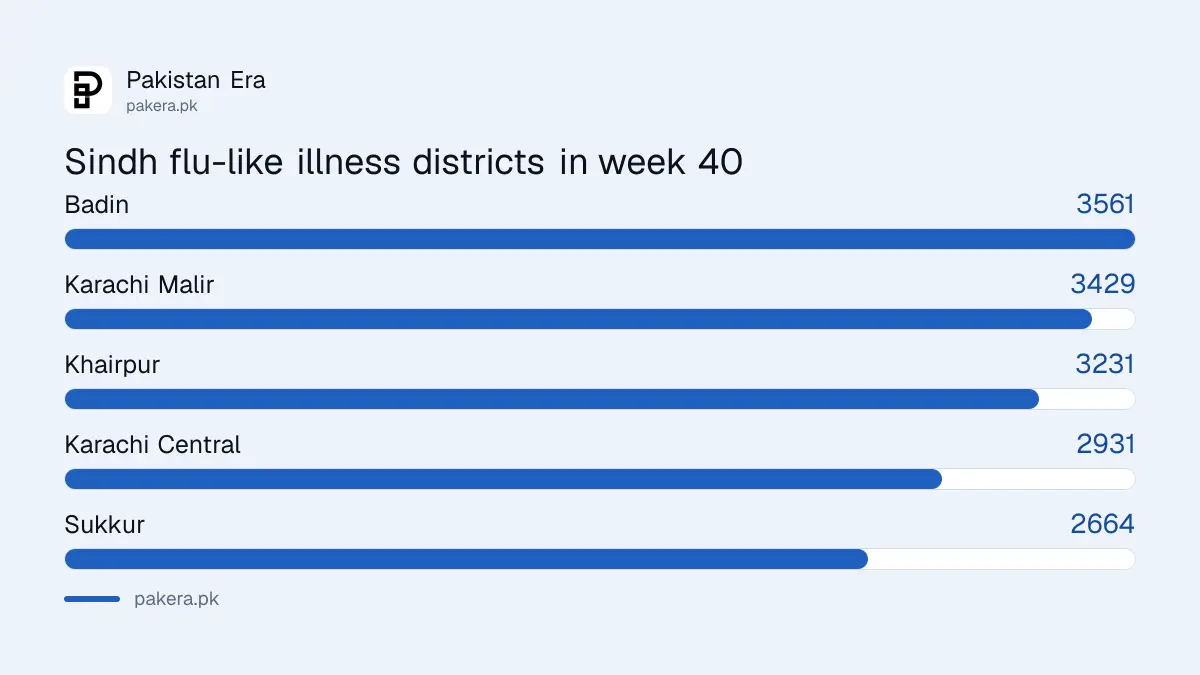
Within Sindh, Badin reported 3,561 cases, Karachi Malir 3,429, Khairpur 3,231, Karachi Central 2,931 and Sukkur 2,664. In Balochistan the highest were Gwadar with 1,344, Kech (Turbat) with 999 and Quetta with 901. In Khyber Pakhtunkhwa, Swabi led with 773 and Battagram with 640.
Chest infections in young children climbed to 14,751
Acute lower respiratory infections in children under five rose to 14,751 in week 40, from 14,073. Sindh reported 10,076 of them. Severe acute respiratory infection (SARI), the hospital-level form, fell slightly to 1,705 from 1,869.
Small children cannot always say what is wrong. Fast breathing, chest drawing in with each breath, refusing feeds or unusual sleepiness are reasons to take a child to a doctor the same day.
Labs found influenza A in 9 samples and influenza B in 6
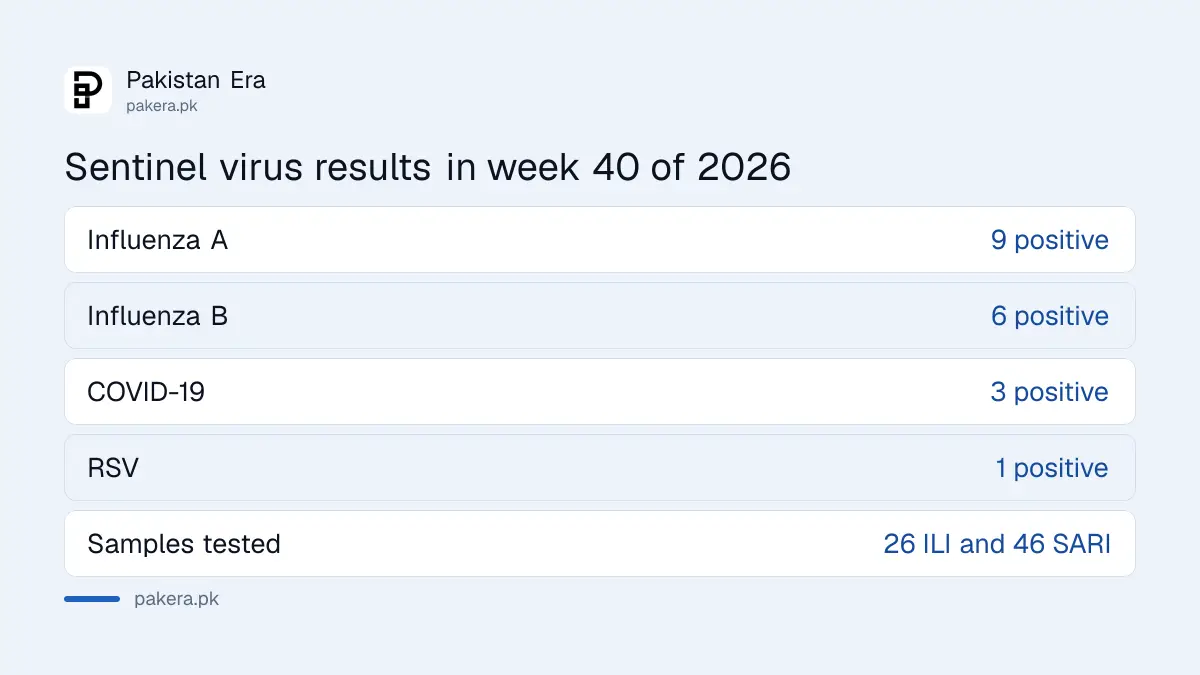
NIH's sentinel hospitals tested 26 ILI samples and 46 SARI samples in week 40. Influenza A was found in 9, mostly from Punjab's sentinel sites, and influenza B in 6. COVID-19 was found in 3 and RSV in 1.
| Virus | Positive in ILI samples | Positive in SARI samples | Total positive |
|---|---|---|---|
| Influenza A | 2 (Punjab) | 7 (Punjab 5, KP 1, Islamabad 1) | 9 |
| Influenza B | 0 | 6 (KP 4, Punjab 2) | 6 |
| COVID-19 | 0 | 3 (Punjab 2, KP 1) | 3 |
| RSV | 0 | 1 (Punjab) | 1 |
The samples are few, so this is a signal rather than a full picture. Still, it shows seasonal flu viruses are circulating as winter begins. Punjab's labs feed this sentinel table even though Punjab does not report clinical counts to the bulletin.
When a flu-like illness needs a doctor
Most flu gets better at home with rest and fluids in about a week. But older people, pregnant women, young children and people with diabetes, heart, lung or kidney disease face a higher risk. NIH advice lists them as groups who should see a doctor early.
- Rest, drink plenty of fluids and stay home while you have a fever, to protect others.
- Learn to tell a cold from flu. Flu comes on fast, with high fever and body aches.
- See a doctor early if you are in a high-risk group. Antiviral medicine works best when started soon, and the NIH list of who needs Tamiflu explains who qualifies.
- Go to hospital at once for breathlessness, chest pain, blue lips, confusion or a fever that returns after getting better.
- Ask about the yearly flu vaccine in Pakistan, especially for older parents and anyone with a long-term illness.
Smog makes coughs worse in Punjab at this time of year. On the evening of 24 October, Pakpattan's AQI reached 359, so people with chest symptoms there should stay indoors where they can.
Common questions
How many flu-like illness cases did Pakistan report in week 40 of 2026?
45,923 influenza-like illness cases, up from 44,833 in week 39, in the NIH bulletin posted on 24 October 2026.
Is influenza spreading in Pakistan now?
Yes, at a low level in the lab data. NIH sentinel labs found influenza A in 9 samples and influenza B in 6 in week 40.
Which province has the most flu-like illness?
Sindh, with 30,734 cases in week 40. Badin and Karachi Malir reported the most within Sindh.
Should I take antibiotics for flu?
No. Flu is caused by a virus, and antibiotics do not treat viruses. A doctor may prescribe them only if a bacterial infection develops.
Who should get the flu vaccine?
Older people, pregnant women, health workers and people with long-term illnesses are the usual priority groups. Ask a doctor whether it suits you.
How we verified this
What we checked, where we read it, and what we could not confirm.
We read the NIH Integrated Disease Surveillance and Response bulletin for week 40 of 2026 on the NIH weekly bulletin page on 24 October 2026 and compared it with the week 39 bulletin. Province figures come from Table 1, districts from Tables 2 to 4, and the virus results from the National Influenza Centre sentinel table on page 15. The bulletin does not give calendar dates for week 40, and its sentinel sample sizes are small, so we do not draw a trend from them.
About the author

Public Services and Education Journalist
Fajr Riaz is a journalist and content writer at Pakistan Era, based in Lahore. She covers the questions people meet in everyday life in Pakistan: how a public service works, what a change in the rules means, and where to find a reliable answer.