Pakistan Medical Visa for Foreign Patients: 48 Hours for 3 Months, or 30 Days for One Year
Pakistan medical visa for foreign patients: short term in 48 hours for 3 months, extended up to one year, who is covered, the hospital letter and how to apply.
Short answer: A foreign patient who needs urgent care can get a short term Pakistan medical visa for up to 3 months, single entry, within 48 hours at a Pakistan mission. A longer treatment needs the extended medical visa for up to one year. That one is approved by the Ministry of Interior within 30 days.
A man in Birmingham has a brother in Rawalpindi who needs a heart operation, and the family abroad wants to fly in. They ask the same question every time: which visa, and who signs it? The answer depends on how urgent the case is and how long the treatment will take.
We read the Directorate General of Immigration and Passports (DGIP) visa categories page on 13 October 2026. It shows a last modified date of 14 September 2026. The medical visa is one of the 11 categories DGIP now lists, and it is marked as new.
Two medical visas exist and they differ in speed
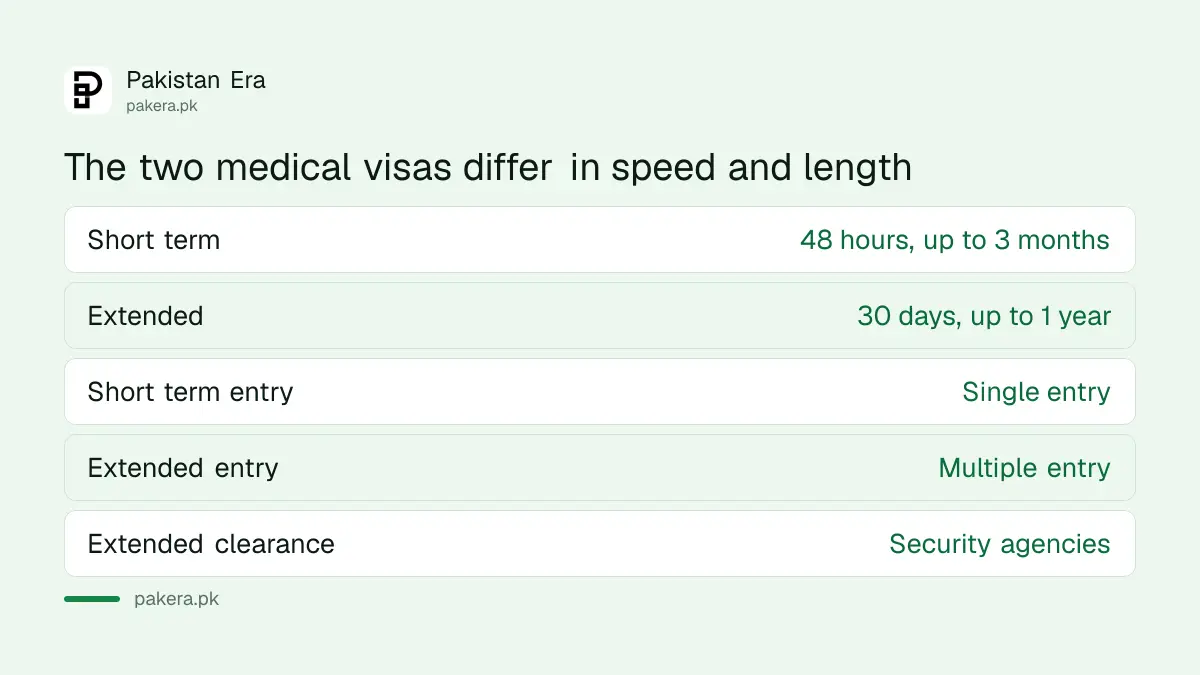
DGIP lists a short term medical visa for emergencies and an extended term medical visa for longer treatment. The short one is single entry, up to 3 months, and issued within 48 hours. The extended one is multiple entry, up to one year, and takes up to 30 days.
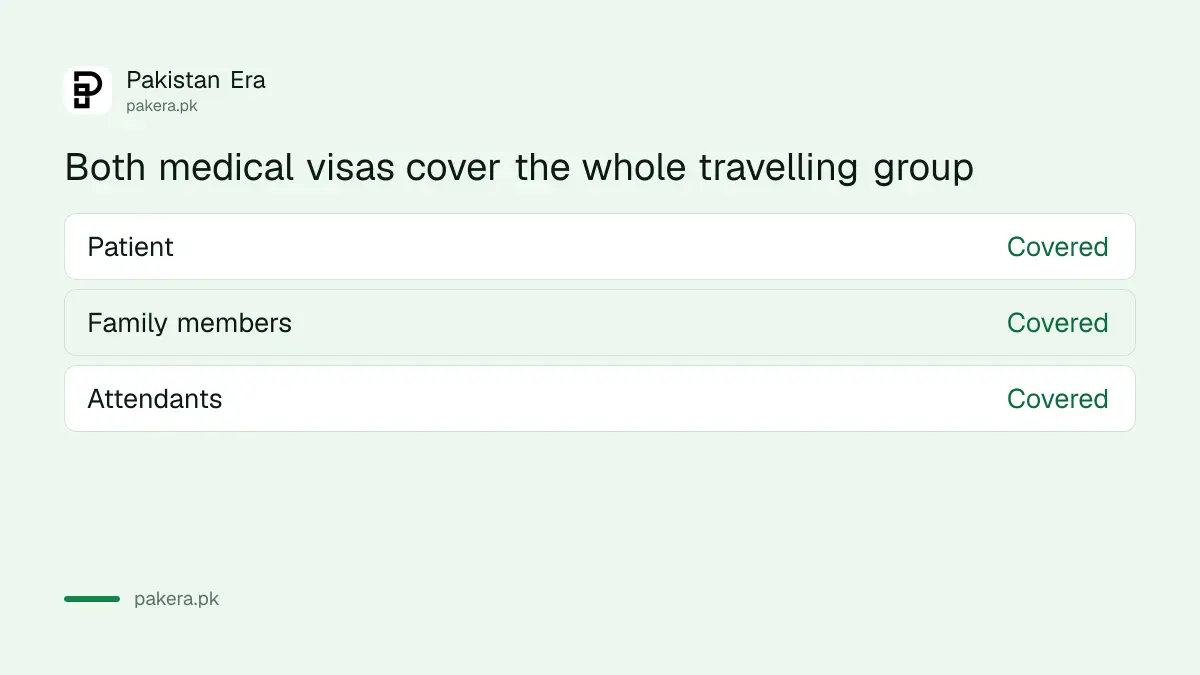
Both cover the patient, family members and attendants. That matters, because most patients do not travel alone. List everyone who will fly with the patient on the application, and keep the relationship clear.
The short term visa needs no security clearance
For the short term medical visa, DGIP says security clearance is not required. The mission only sends an intimation to the ISI, IB and FIA. The applicant submits the routine visa documents, a passport copy and photographs.
The page does not say that a hospital letter is mandatory for the short term visa. Still, bring one. A letter from the treating doctor helps the officer see that the case is a real emergency, and the page lists only "routine visa documents" without defining the list. Ask the mission what it wants in addition.
The extended visa needs a hospital consent letter
For the extended medical visa, the Ministry of Interior approves the case after security agencies clear it. DGIP says the case is assumed approved if the agencies do not answer within the set time. The patient must take consultation and a consent letter only from hospitals on an enlisted list.
The Ministry of National Health Services, Regulations and Coordination furnishes that list of hospitals, according to DGIP. We could not find the list on the page, so ask the mission or the hospital whether it is enlisted before you pay any fee. A letter from a hospital that is not on the list may not count.
| Point | Short term | Extended term |
|---|---|---|
| Entries | Single | Multiple |
| Length | Up to 3 months | Up to 1 year |
| Time | 48 hours | 30 days |
| Security clearance | Not required | Required |
| Who decides | Pakistan mission | Ministry of Interior |
| Hospital letter | Bring one (not stated) | Required |
Follow six steps from letter to arrival
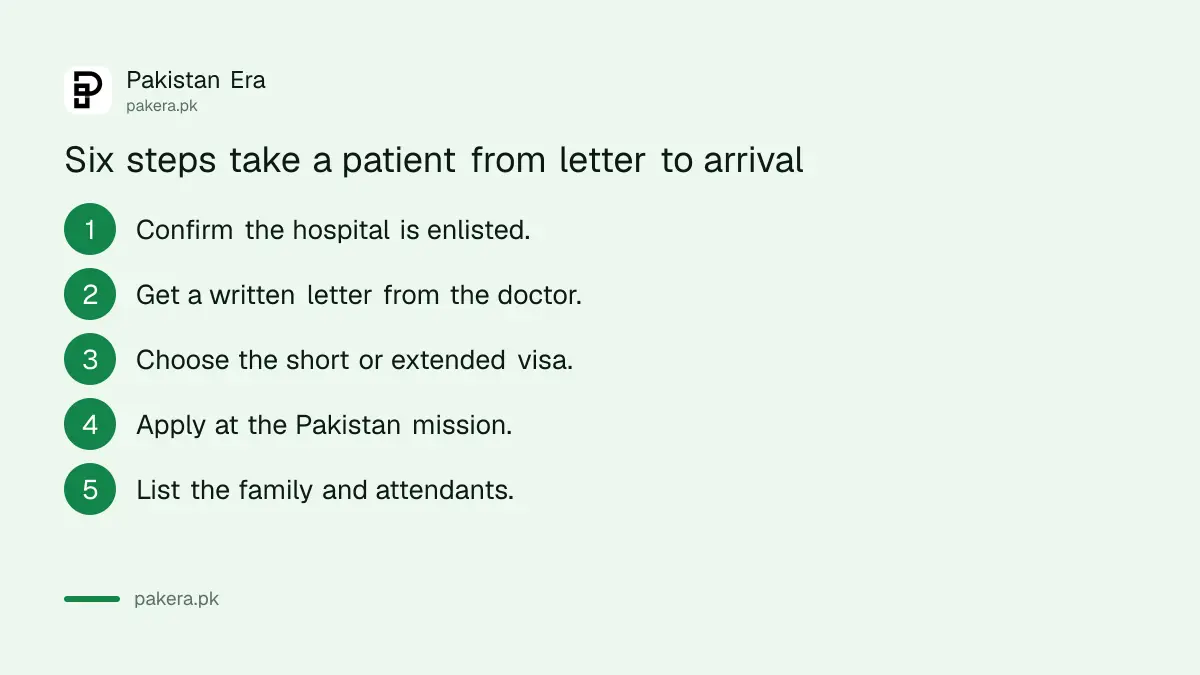
Start with the hospital, not the form. The same order works for either visa: pick the treatment, get the letter, then apply at the mission. Do not book a flight until the visa decision comes.
- Choose the hospital and confirm it is enlisted for medical visas.
- Ask the doctor for a written letter that states the illness and the plan.
- Decide which visa you need: urgent (short) or long treatment (extended).
- Apply at the Pakistan mission in your country with the passport copy and photographs.
- List the patient, family and attendants who will travel.
- Keep the approval, then carry the hospital letter on arrival.
Fees and extra stay depend on your nationality
DGIP charges visa fees on a reciprocal basis. A foreign patient pays what Pakistan charges that nationality, and the fee page prints that list in US dollars. Its note says countries not listed pay US$20, and an extension costs US$20 unless stated otherwise.
That fee page was last modified on 4 October 2023, so treat any figure as reported. Confirm it with the mission. A patient who stays beyond the visa pays the overstay surcharge, set out in the page on the overstay surcharge for foreigners.
Pakistan-origin patients may have a simpler route
A patient who is a foreigner of Pakistan origin, or a foreign spouse of one, may qualify for the family visit visa instead. It runs 5 years with a one year stay, as described in the guide to the family visit visa for foreign spouses and Pakistan-origin relatives. That avoids the hospital list.
It is not a medical visa, so DGIP does not promise treatment access under it. A plain tourist visitor who falls ill should not use the tourist route for planned treatment. The tourist e-visa guide is for sightseeing, not for surgery.
Common questions
How long does a Pakistan medical visa take?
The short term visa takes 48 hours and the extended visa takes up to 30 days, according to DGIP.
Can family members travel with the patient?
Yes. DGIP says both medical visas cover the individual, family and attendants.
Is security clearance needed?
Not for the short term visa, but it is needed for the extended visa. For the short one, the mission only informs the ISI, IB and FIA.
Which hospital letter counts for the extended visa?
One from a hospital on the enlisted list. The health ministry furnishes that list, according to DGIP.
How much is the medical visa fee?
It depends on nationality and is charged in US dollars. DGIP's fee note says unlisted countries pay US$20, but the page is old, so confirm with the mission.
How we verified this
What we checked, where we read it, and what we could not confirm.
Last checked on 13 October 2026. We read the DGIP visa categories page and fee page. We could not find the list of enlisted hospitals, and the online visa portal refused automated requests. We did not apply for a visa.
About the author

Public Services and Education Journalist
Fajr Riaz is a journalist and content writer at Pakistan Era, based in Lahore. She covers the questions people meet in everyday life in Pakistan: how a public service works, what a change in the rules means, and where to find a reliable answer.