Maternity Leave in Punjab 2026: 14 Weeks Paid Under the Labour Code, 7 Days Paternity and 130 Days Iddat
The Punjab Labour Code 2026 gives 14 weeks of paid maternity leave after six months of work, 7 days of paternity and up to 130 days of iddat leave. Full rules.
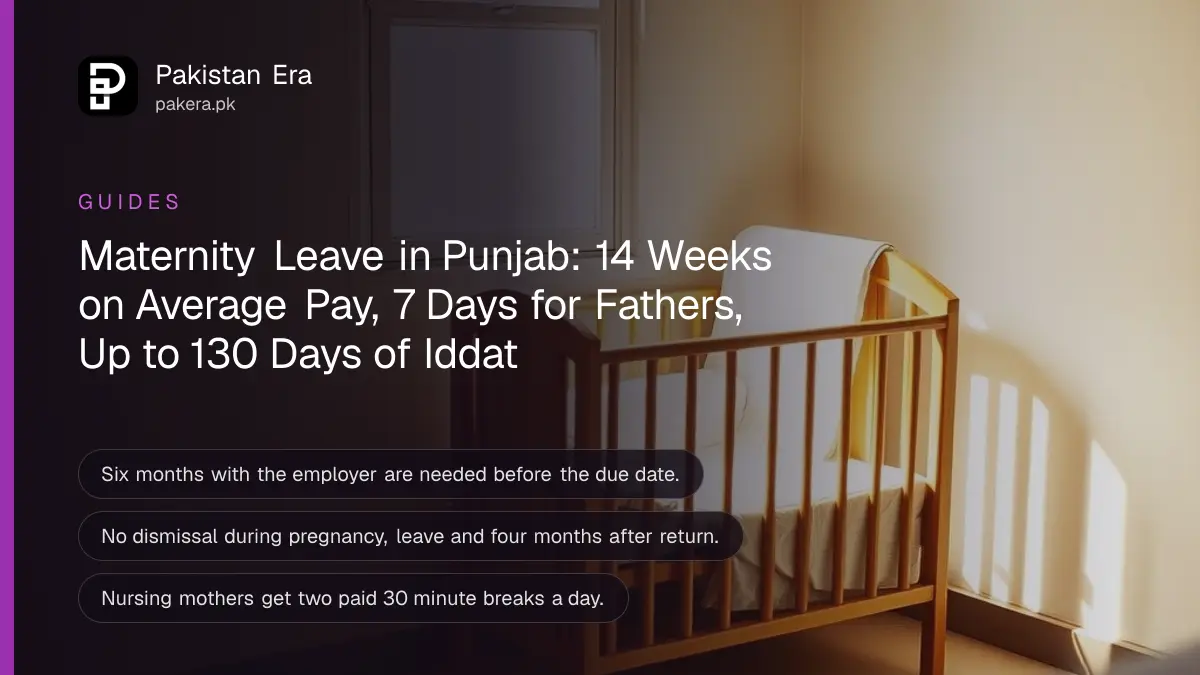
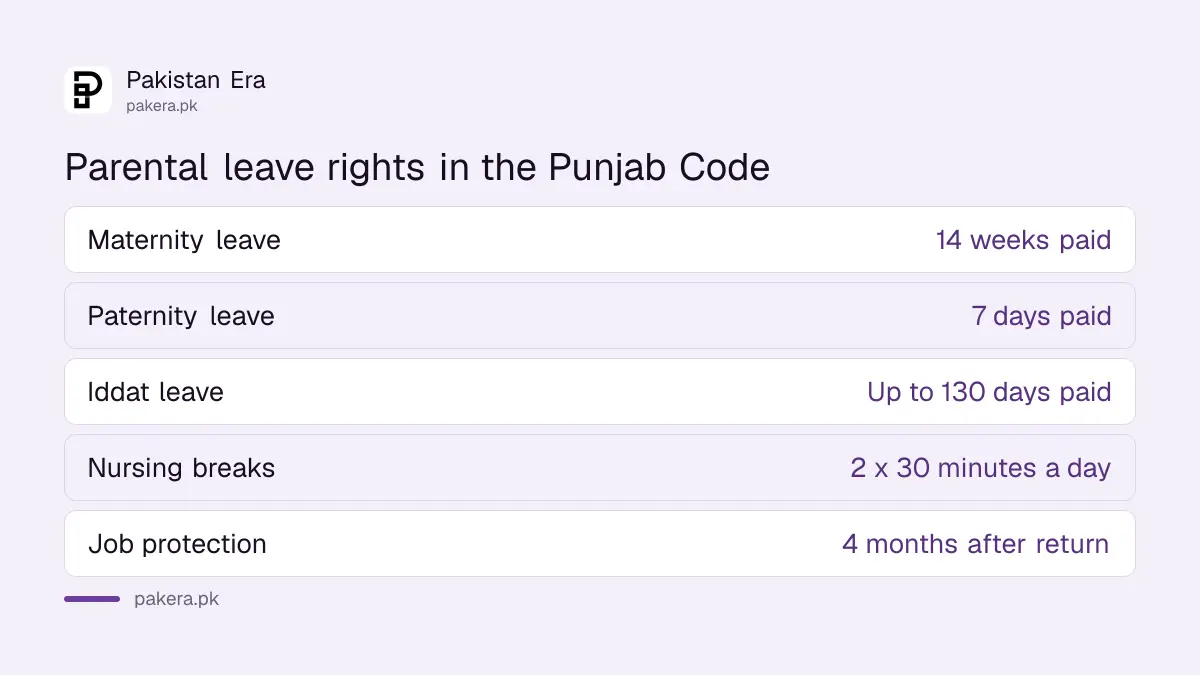
Under the Punjab Labour Code 2026, a woman worker gets 14 weeks of paid maternity leave, six before the birth and eight after, at her average monthly pay, once she has worked six months for the employer. Fathers get seven days of paid paternity leave, and a widow gets fully paid iddat leave of up to 130 days.
The Code replaced the Punjab Maternity Benefit Ordinance of 1958, so older guides that quote the 1958 rules no longer describe Punjab. We read the parental leave chapter on the Punjab Government's Punjab Code page for the Labour Code 2026 on 28 October 2026.
Maternity leave in Punjab is 14 weeks on full average pay
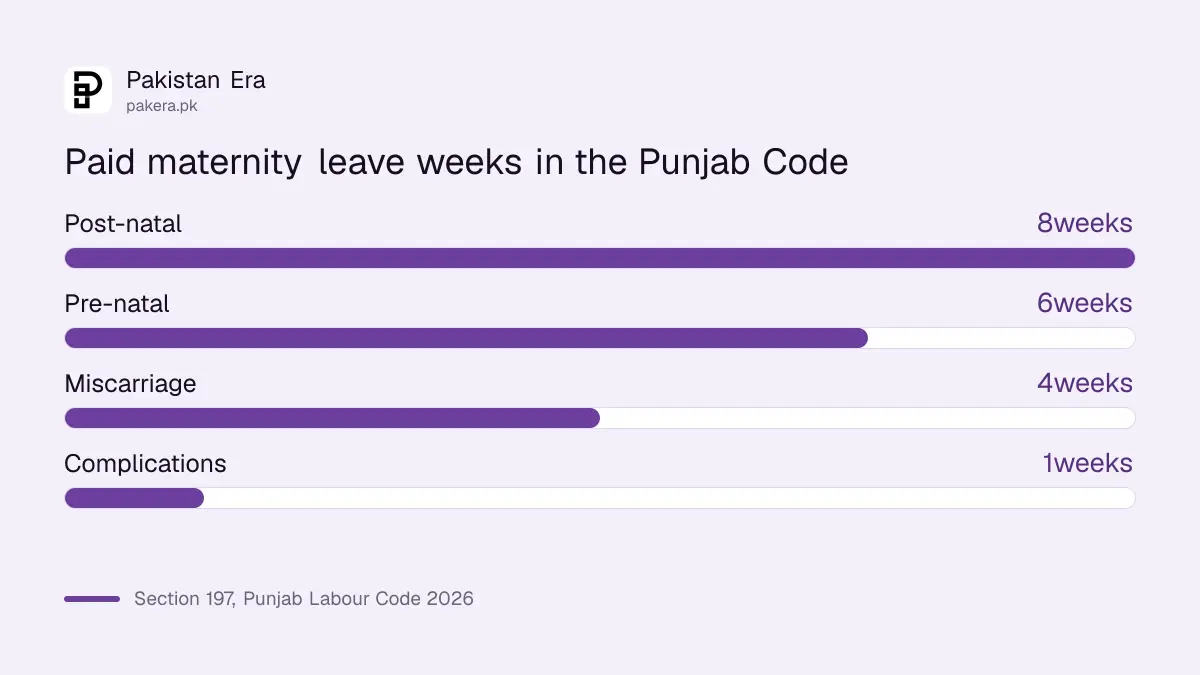
Section 197 gives six weeks of pre-natal leave, ending on the day of delivery, and eight weeks of post-natal leave. Six of the post-natal weeks are compulsory. One extra week is allowed for medical complications, and four weeks for a miscarriage.
| Leave | Length | Pay | Section |
|---|---|---|---|
| Pre-natal maternity leave | 6 weeks | Average monthly pay | 197(1)(a) |
| Post-natal maternity leave | 8 weeks, 6 compulsory | Average monthly pay | 197(1)(b) |
| Extra leave for complications | 1 week, with a doctor's certificate | Average monthly pay | 197(1)(c) |
| Miscarriage or medical termination | 4 weeks, with a doctor's certificate | Average monthly pay | 197(1)(d) |
| Paternity leave | 7 calendar days | Full pay | 198 |
| Iddat leave after the husband's death | Up to 130 days | Full pay | 196 |
The pay continues month by month into your bank account, like a salary. If the baby comes early, unused pre-natal leave moves to after the birth. If it comes late, the post-natal leave still cannot drop below six weeks.
You need six months with the employer to get paid leave
The proviso to section 197(1) says a woman is not entitled to the maternity benefit unless she has worked at that workplace for at least six months before the expected date of delivery. A worker who joined five months earlier does not qualify under the Code, though a contract can give more.
Workers registered with the Punjab Employees Social Security Institution may also be able to claim from that scheme. The steps to claim the PESSI maternity benefit in Punjab are separate from the employer's duty under the Code.
There is one weak point for small workplaces. Section 434 lets the Chief Inspector reduce maternity and paternity entitlements in establishments with fewer than 20 workers, on a sliding scale. We did not find any such reduction notified, so the full 14 weeks is the starting point.
How to apply for maternity leave under the Punjab Labour Code
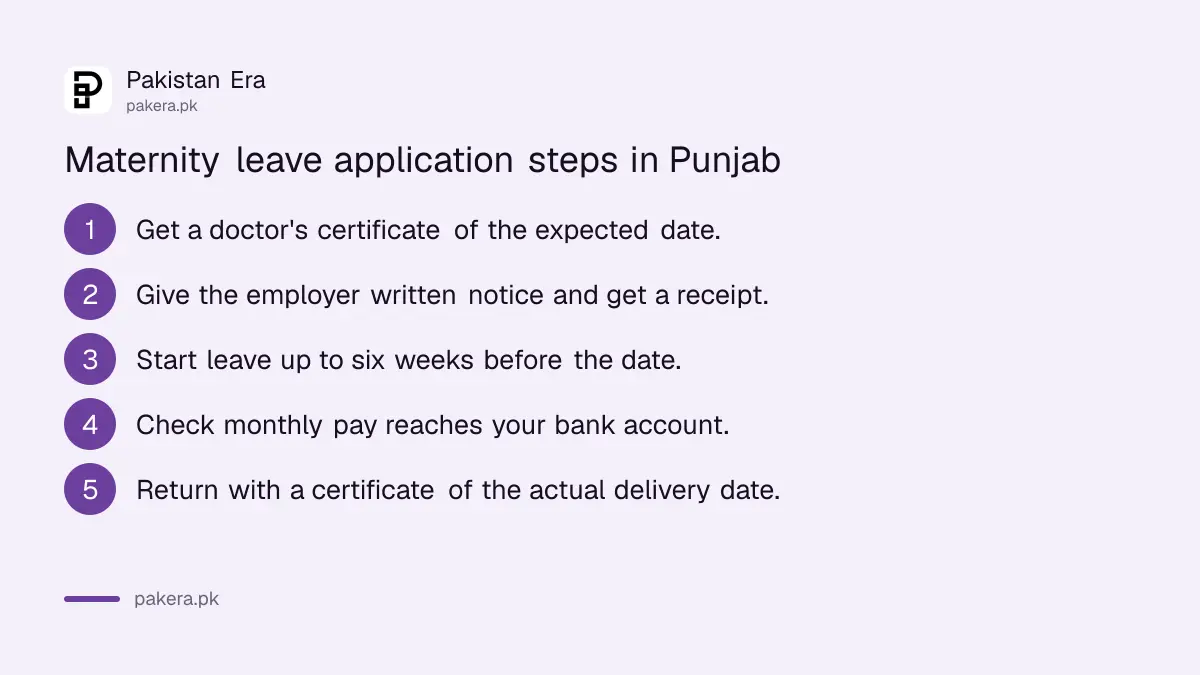
Section 197(3) asks for written notice of the expected date of delivery, backed by a doctor's certificate, before the leave starts. On return, you give a second certificate showing the actual date of delivery. Keep copies of both, and of the employer's receipt.
- Get a certificate from your doctor stating the expected date of delivery.
- Give the employer a written notice with the certificate, and ask for a signed receipt.
- Agree the start date, which can be up to six weeks before the expected date.
- Check that your pay reaches your bank account each month during the leave.
- On return, hand in a certificate of the actual date of delivery and ask for your same job back.
You cannot be fired for pregnancy, and your job is kept
Section 197(7) bars termination during pregnancy, during maternity leave and for four months after you return, except for reasons unrelated to the pregnancy, the birth or nursing. Section 197(8) gives you the right to return to the same job, or a suitable one on equal terms.
The Code adds working rules for pregnant and nursing workers:
- No overtime in the two months before the expected delivery date.
- No hazardous work while pregnant or nursing, and a safer job must be offered where practicable.
- No heavy work or long standing for a month before the pre-natal leave and a month after the post-natal leave.
- Two paid nursing breaks of 30 minutes a day until the child turns one, where a daycare exists at or near work.
- No questions about pregnancy or marriage as a condition of getting the job, except for work that could harm a pregnancy.
Section 147 also says maternity and iddat leave can never be a valid reason for termination, and section 147(2) bars disciplinary action against a pregnant worker. Other leave types sit in a separate chapter, covered in the Punjab Labour Code annual, casual and sick leave rules.
Fathers get 7 days, but not with two or more children
Section 198 gives a male worker seven calendar days of paternity leave on full pay, starting on or just before the delivery date. It is not allowed if he already has two or more surviving children at the time of the birth.
Iddat leave is in section 196. When a woman worker's husband dies, she gets fully paid iddat leave in line with her faith, up to 130 days, and it does not count against any other leave. The section does not apply to workers secured under the Provincial Employees Social Security Ordinance 1965. If you are registered with PESSI, ask PESSI what it pays in that case.
Complain within three months if the leave is refused
If the employer refuses the leave or cuts the pay, write a grievance to the employer within three months under section 335. It must answer in writing within fifteen days. After that, you can go to the Labour Court within 60 days.
For maternity pay that is due but unpaid, section 338 also allows an application to the Payment of Wages Authority. The national picture, including federal and other provincial rules, is in the overview of maternity leave for private sector employees.
Common questions
How many weeks is maternity leave in Punjab?
14 weeks under the Punjab Labour Code 2026: six weeks before the birth and eight after, on average monthly pay. Complications add one week.
Is maternity leave paid by the employer in Punjab?
Yes. Section 197(4) says the employer pays the maternity benefit directly into the worker's bank account each month of the leave.
Can I get maternity leave if I joined four months ago?
Not under the Code. You need at least six months with the employer before the expected delivery date, unless your contract gives more.
How long is paternity leave in Punjab?
Seven calendar days on full pay, from the day of delivery or just before. It does not apply if you already have two or more living children.
How long is paid iddat leave in Punjab?
Up to 130 days on full pay after the husband's death, separate from other leave. It does not apply to workers secured under the PESSI social security law.
Can my employer fire me after maternity leave?
Not for reasons linked to the pregnancy, the birth or nursing, during pregnancy, leave and four months after you return.
How we verified this
What we checked, where we read it, and what we could not confirm.
We read sections 147, 196, 197, 198, 335, 338, 434 and 435 of the Punjab Labour Code 2026 (Act IX of 2026) on the Punjab Code portal of the Law and Parliamentary Affairs Department on 28 October 2026. The Code was published in the Punjab Gazette on 10 February 2026 and takes effect on a date the Punjab Government notifies. We could not open the Punjab Labour Department website to confirm the commencement notification or any reduced rates for small establishments, so check with your district labour office if your employer disputes the leave.
About the author

Tax, Bills and Technology Writer
Ali Akhtar is a young and curious voice here at Pakistan Era. He is currently pursuing his A-Levels and has a growing interest in Pakistan’s changing industrial landscape and educational trends. Ali likes to write in a way that helps him explain and explore the world around him. His writing reflects the perspective of the new generation navigating the evolving trends of Pakistan where technology, youth innovation, and shifting opportunities are reshaping the country’s future.