Section 144 in Rawalpindi and Murree Until 8 November 2026: Pillion Riding, Loudspeakers and Gatherings Banned
Section 144 runs in Rawalpindi and Murree from 10 October to 8 November 2026, banning pillion riding, loudspeakers and groups over five. Fines and exemptions.
Section 144 is in force in Rawalpindi and Murree districts from 10 October to 8 November 2026, banning gatherings of more than five people, rallies, sit-ins, pillion riding on motorcycles, loudspeakers and the carrying of weapons, batons or petrol bombs. The order was issued by the Punjab government, according to reports of 10 October. Breaking it is an offence under Section 188 of the Pakistan Penal Code, which carries up to one month in jail or a Rs 600 fine, or six months and Rs 3,000 where there is danger to life.
We could not find the notification on an official page. The Punjab Home Department website did not load for us on 19 October 2026 and the Punjab government portal carried no order. So the dates and the list of bans are reported, from a television channel's account of the notification. The penalty figures are from the Pakistan Penal Code text, which we read on the Pakistan Code website on 25 September 2026. The rest of this page is what the order means for the month.
The order covers two districts for one month, not the whole province
The Rawalpindi and Murree order is separate from the province-wide bans Punjab issued in September and early October. The province-wide order that ran until 15 October has lapsed. This one is narrower in place and longer in time: two districts, 30 days, from 10 October to 8 November 2026.
Murree is a district of its own since 2022, carved out of Rawalpindi, which is why the order names both. Together they cover the city of Rawalpindi, its cantonment areas, the Murree hills and the road up from Islamabad. Islamabad Capital Territory is not in the order; it has its own orders under its own laws.
The reported reason is the law and order situation and security fears. The notification is not quoted in full in any report we read, so the exact recital is not known. A one-month term is longer than Section 144 itself allows without a provincial notification, as the next section explains.
Six things are banned, and three of them affect ordinary days
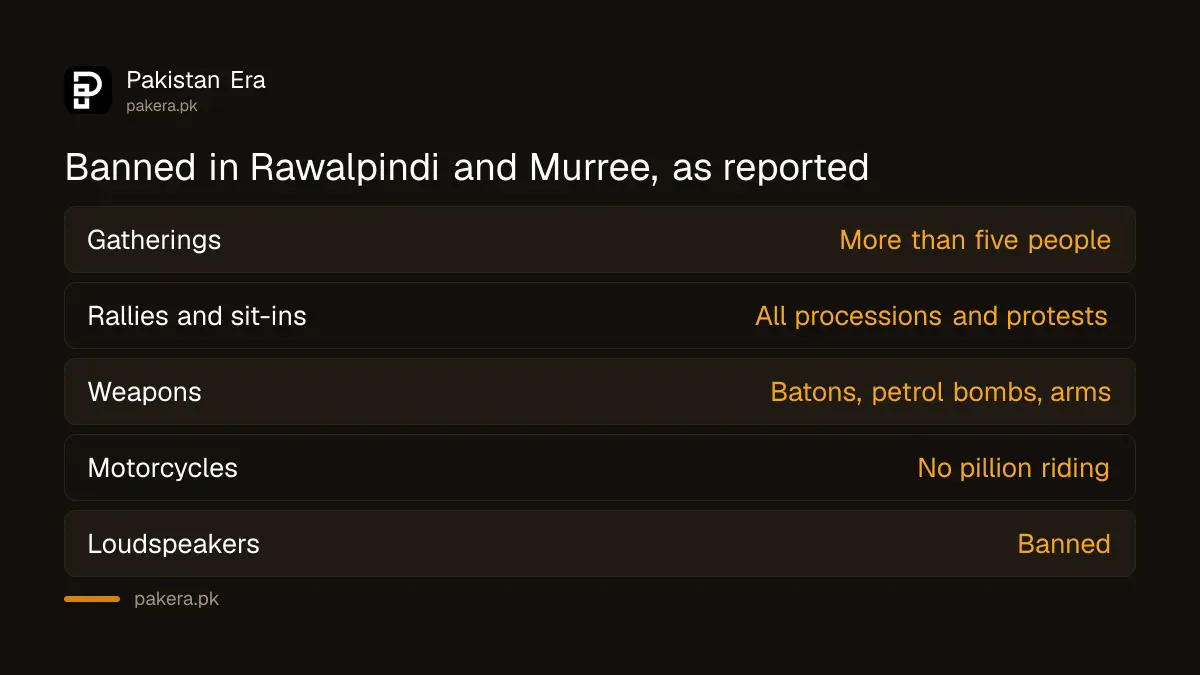
The reported list is: public gatherings, processions, rallies, sit-ins and protests; gatherings of more than five people; use of batons, petrol bombs and weapons; pillion riding on motorcycles; and loudspeakers. The first three are aimed at protests. The last three touch daily life in a city of several million.
| Banned, as reported | Who it affects | Usual exemption in Punjab orders |
|---|---|---|
| Gatherings of more than five people | Anyone in a public place | Weddings, funerals, worship, permitted events in earlier orders |
| Rallies, processions, sit-ins, protests | Political and civic groups | None reported |
| Weapons, batons, petrol bombs | Anyone in public | On-duty security staff in earlier orders |
| Pillion riding | Every two-wheeler with a passenger | Women, children, the elderly and on-duty staff in past orders |
| Loudspeakers | Mosques, markets, events | Azan and Friday sermons in past orders |
The exemptions column is the problem. Reports of this order do not list any exemptions, but every past pillion ban in Punjab exempted women, children and the elderly, and loudspeaker orders have excluded the azan. We cannot say whether this order does. Until the text is published, assume the ban is as stated and carry the reason for any exception with you.
Breaking the order is a crime under Section 188 of the Penal Code
Section 144 of the Code of Criminal Procedure lets a magistrate, or the provincial government, direct people to abstain from an act where that is needed to prevent danger to life, safety or public tranquillity. Disobeying such an order is punished under Section 188 of the Pakistan Penal Code.
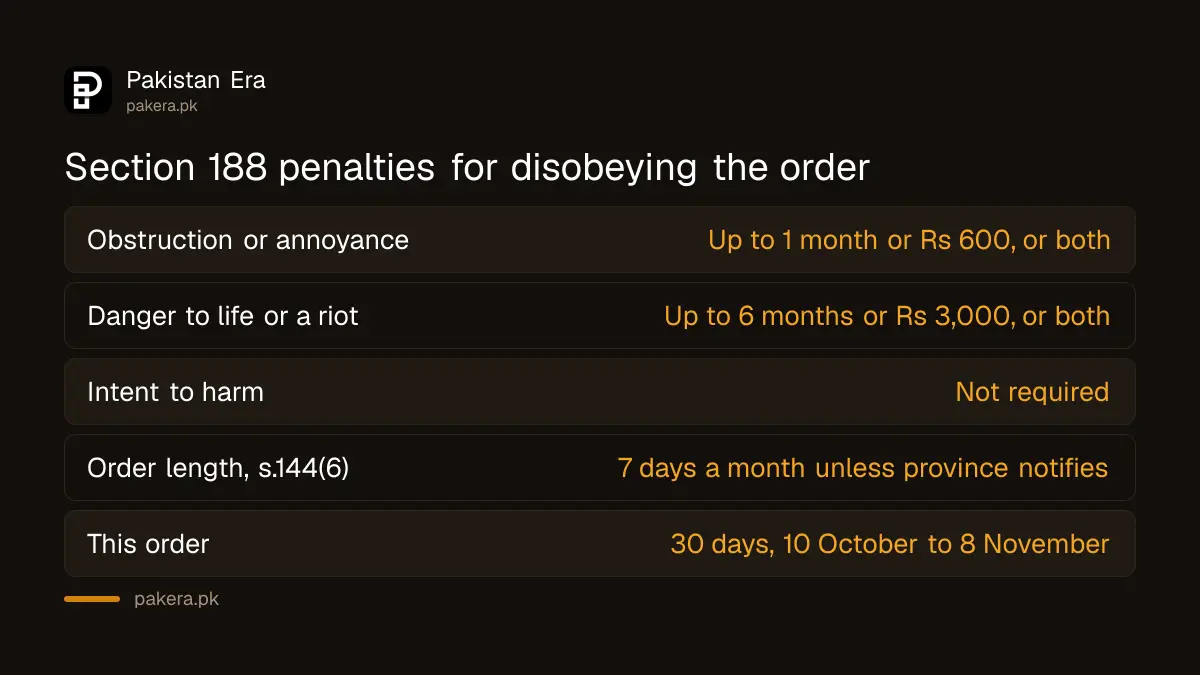
The penalty has two tiers. Where the disobedience causes or tends to cause obstruction, annoyance or injury, it is simple imprisonment for up to one month, or a fine of up to Rs 600, or both. Where it causes or tends to cause danger to human life, health or safety, or a riot or affray, it is imprisonment of up to six months, or a fine of up to Rs 3,000, or both. The explanation to the section says the person need not intend harm; it is enough that they knew of the order and disobeyed it.
Section 144(6) of the criminal procedure code also limits how long an order lasts: two consecutive days, and no more than seven days in a month, unless the provincial government directs otherwise by notification where there is danger to life or a likelihood of riot. A 30-day order therefore depends on such a provincial direction, which is why the order is in the provincial government's name.
Cricket at the stadium, a Murree trip and Friday prayers during the order
Three ordinary plans fall inside the window. The Pakistan vs England ODI on 20 October in Rawalpindi brings thousands to the stadium; a ticketed match with police security is the kind of permitted event earlier Punjab orders exempted, and the match is going ahead. Check the stadium's banned items list anyway, since batons and anything that could be a weapon are covered twice over.
A trip to Murree is not banned. The order restricts gatherings and pillion riding, not travel. A couple on one motorcycle, though, is pillion riding on the face of the reported order, so take the car or the bus up the hill. The usual tourist forecast for Murree matters more than the order for most visitors.
Friday prayers and the azan were exempt in past loudspeaker orders, and Punjab's own loudspeaker law already limits mosques to the azan and the Arabic khutba. The procedure to stop loudspeaker noise in Punjab under that law runs in parallel with the Section 144 ban.
What to do if you have a gathering planned before 8 November
The order does not say that no event can take place. Past Punjab orders exempted events with formal permission from the district administration. Ask for that permission in writing, and ask the deputy commissioner's office whether this order carries the same exemptions as the September one.
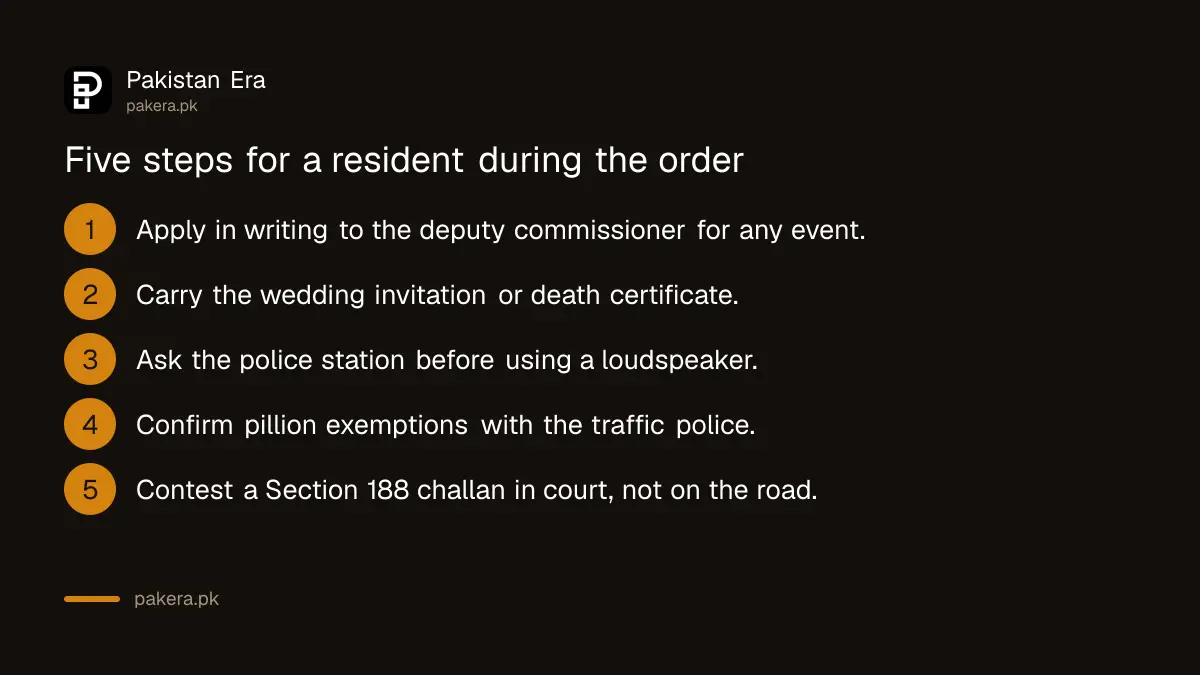
- Apply to the deputy commissioner of Rawalpindi or Murree in writing for permission, naming the date, place, expected numbers and purpose.
- For a wedding or funeral, keep the invitation or the death certificate with you; past orders exempted these, and the paper settles a police query on the spot.
- Do not use a loudspeaker outdoors without checking with the local police station first; the mosque exemption, if any, is for the azan.
- If you ride with a passenger, carry the reason: a woman, a child or an elderly person as pillion was exempt in past orders, but confirm with the traffic police.
- If you are charged under Section 188, the first-tier offence is bailable and the fine is small; take the challan and contest it rather than argue at the roadside.
Common questions
How long is Section 144 in force in Rawalpindi and Murree?
From 10 October to 8 November 2026, one month, according to reports of the Punjab government's notification. The notification itself is not on an official page we could open.
Is pillion riding banned in Rawalpindi now?
Yes, as reported. The order lists pillion riding on motorcycles. Reports do not mention exemptions for women, children or the elderly, which past orders carried.
Can I go to Murree?
Yes. The order restricts gatherings, protests, pillion riding, loudspeakers and weapons. It does not restrict travel or hotels.
What is the punishment for breaking it?
Under Section 188 of the Pakistan Penal Code, up to one month in jail or Rs 600, or both; up to six months or Rs 3,000, or both, where there is danger to life or a riot.
Does the order cover Islamabad?
No. It names Rawalpindi and Murree districts in Punjab. Islamabad Capital Territory issues its own orders under its own laws.
Is the cricket match on 20 October affected?
The match is scheduled to go ahead. A ticketed match with security is the kind of permitted event earlier orders exempted, though this order's exemptions are not published.
How we verified this
What we checked, where we read it, and what we could not confirm.
Last checked 19 October 2026. The dates, districts and list of bans come from a television channel's report of the Punjab government notification on 10 October 2026; the Punjab Home Department website did not load and the Punjab government portal carried no order on 19 October, so the order is reported, not read. Section 188 of the Pakistan Penal Code and Section 144(6) of the Code of Criminal Procedure are from the official texts on the Pakistan Code website, which we read on 25 September 2026. Exemptions for weddings, funerals, worship and permitted events are from the Punjab Home Department's September order as reported, not from this one. We could not verify the notification number or any exemption in this order, and we say so above.
About the author

Global Affairs & Political Economy Writer
Muhammad Hatim is a book lover who started writing because he enjoys it. At Pakistan Era he writes about international relations, geopolitics and the global economy, with a particular interest in South Asia and the forces behind current events.