How to Stop Static in Clothes in Winter in Pakistan: Sweaters, Jackets and Clinging Dupattas
Stop static in clothes in winter in Pakistan: fabric softener in the rinse, take synthetics out slightly damp, moisturise, and touch metal with a key first.

To stop static in winter clothes, add fabric softener to the final rinse, take synthetic clothes out of the dryer while slightly damp, and moisturise your skin before dressing. For a quick fix, lightly dampen your hands and smooth them over the clinging garment. Touching a metal object with a key before your finger stops most of the small shocks.
Static is a winter problem in Pakistan's dry northern cities. In Islamabad, Quetta, Peshawar and Gilgit, a polyester jacket crackles, an acrylic sweater sparks when you pull it off, a dupatta clings to the kameez and a door handle bites your finger. It is harmless, but irritating, and the fixes cost almost nothing.
Static builds up when dry air meets synthetic fabric
Static is an electric charge that builds when fabrics rub together and the air is too dry to carry it away. Synthetic fibres such as polyester, acrylic and nylon build the most. Cold, dry winter air and heated rooms with closed windows make it worse.
Most winter wear in Pakistan is synthetic or blended: acrylic sweaters and shawls, polyester puffers, fleece jackets and nylon linings. In humid Karachi, the sea air carries the charge away. In dry Islamabad or Quetta in December and January, it stays on the clothes and on you.
| Fabric | Static risk | Common winter items |
|---|---|---|
| Polyester | High | Puffer jackets, fleece, tracksuits, linings |
| Acrylic | High | Budget sweaters, mufflers, many shawls |
| Nylon | High | Jacket shells, linings, tights |
| Wool | Medium, more in very dry air | Shawls, coats, sweaters |
| Cotton, khaddar | Low | Kurtas, shirts, vests |

Five quick fixes for static when you are already dressed
Dampen your hands and smooth them over the garment, rub a little moisturiser into your hands and run them over the fabric, discharge yourself on metal with a key, change one synthetic layer for cotton, or slip a cotton vest under a clinging kameez.
- Damp hands. Wet your hands lightly, shake off the water and smooth them down the clinging fabric. The moisture carries the charge away.
- Moisturiser. Rub a little lotion into your hands, then run them over a clinging dupatta or skirt. Do not use too much on silk or chiffon.
- Touch metal with a key. Before you touch a door handle or a car door, touch it with a metal key or coin first. The spark goes through the key, not your finger.
- Change one layer. A cotton vest or kurta between two synthetic layers breaks the rubbing that builds the charge.
- Take it off slowly. Pulling an acrylic sweater off fast builds the biggest spark. Pull it off slowly by the hem.

Wash and dry synthetics so static does not build
Add fabric softener to the last rinse for acrylic and polyester, use the correct detergent dose, and do not over dry. In a tumble dryer, use a cool setting and take synthetics out while still slightly damp, then let them finish on a stand.
- Fabric softener in the rinse. It coats the fibres and reduces static in acrylic and polyester. Use the amount on the bottle.
- Dryer sheets. If you use a tumble dryer, a dryer sheet in the load helps with static.
- Do not over dry. Bone dry synthetics crackle the most. Take them out slightly damp.
- Air dry when you can. Clothes dried on a stand or line build far less static than tumble dried ones.
- Wash inside out. Less rubbing on the outside of the fabric means less charge and less pilling.
Never use fabric softener on fleece or sportswear with a moisture wicking finish unless the label allows it, and use it sparingly on towels. The care label is the guide, and the laundry symbols on it tell you what the fabric can take.
Static also holds lint on dark clothes, which is why a black polyester jacket seems to collect every white thread in the house. Softener and air drying help with both. Static and rubbing also make sweaters pill faster, and the safe ways to remove pilling from sweaters come after the static is under control.
Add moisture to the air and to your skin
Dry indoor air in heated winter rooms is the main cause of static. A humidifier, a bowl of water near the heater, drying laundry indoors and moisturised skin all add moisture and cut the shocks. Dry skin builds charge faster than moisturised skin.
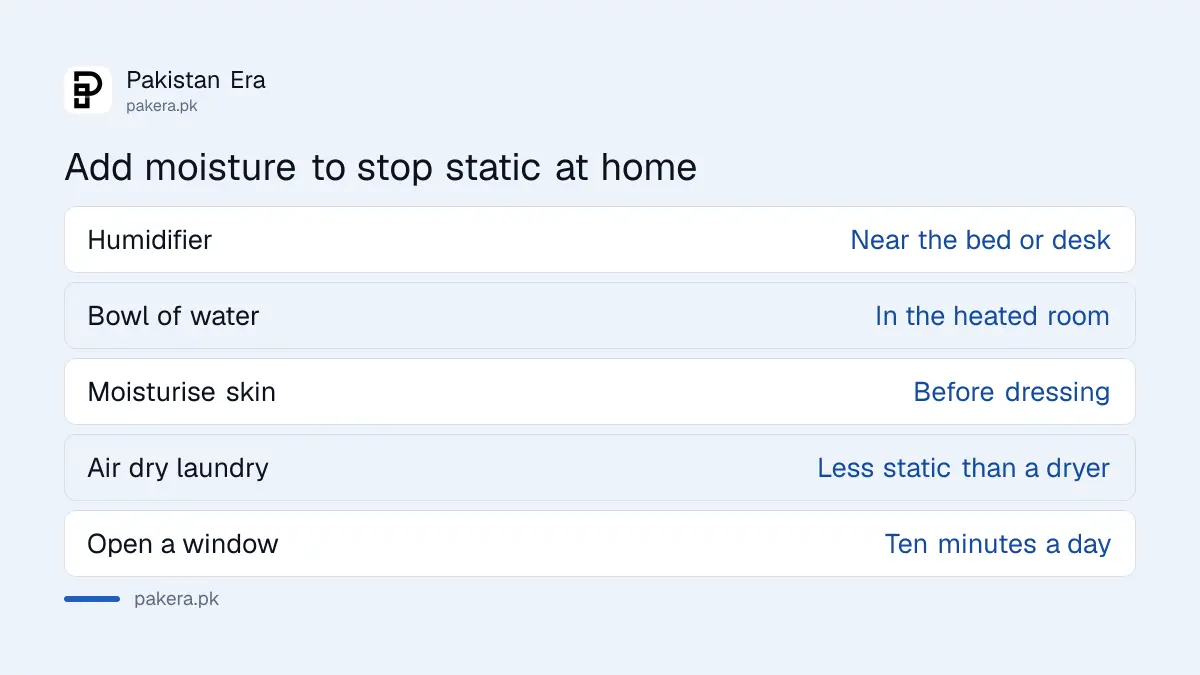
- Humidifier. A small room humidifier near the bed or desk raises the moisture in the air. Westpoint and other makers sell them, and current humidifier prices in Pakistan start well below a heater.
- A bowl of water. A wide bowl of water in a heated room is a free, small step.
- Moisturise. Lotion on arms and legs before dressing stops clothes clinging. The same habits that ease dry skin in winter also cut static.
- Air the room. Open a window for ten minutes a day, even in the cold. It also keeps a gas heated room safe.
Shoes matter too. Rubber soles on carpet build charge as you walk. Leather soles and cotton socks build less.
Common questions
Why do I get shocks from door handles in winter?
Your body builds charge as you walk and as your clothes rub, and dry winter air cannot carry it away. Touching metal releases it as a spark. Touch the handle with a key first.
Does fabric softener stop static?
Yes, it reduces static in synthetic fabrics like acrylic and polyester. Add it to the final rinse at the dose on the bottle. Dryer sheets do the same job in a tumble dryer.
Why does my dupatta stick to my kameez?
Two synthetic fabrics rubbing in dry air build static. Smooth the dupatta with damp or moisturised hands, or wear a cotton kameez under a synthetic dupatta.
Is static from clothes dangerous?
The small shocks from clothes are harmless to people, just unpleasant. Keep synthetic clothes away from fuel at petrol pumps and from gas leaks, where any spark is a risk.
Which winter fabric has the least static?
Cotton and khaddar build the least static. A cotton vest or kurta under a synthetic sweater is the simplest way to cut static without changing your winter wardrobe.
How we verified this
What we checked and where we read it.
We checked this guidance on 15 November 2026 against the detergent maker Ariel's fabric care pages. Its page on how to wash acrylic says adding fabric softener to the wash reduces static electricity, that dryer sheets prevent static, and that acrylic should be washed cold and inside out. Its page on how to wash polyester says to take garments out of the dryer while slightly damp to avoid static build up. The fabric risk table, the key trick, the humidity points and the dressing tips are general physics and our own household advice, not figures from a single authority.
About the author

Lifestyle & Clothing Writer
Mahnoor Siddiqui is a lifestyle and clothing writer at Pakistan Era, joining the new lifestyle desk in November 2026.