Dry Skin in Winter in Pakistan: A Simple Daily Routine, Which Moisturiser to Use and When to See a Doctor
Dry skin in winter in Pakistan: a 5 step routine, lotion vs cream vs ointment, care for hands, heels and lips, a heater fire warning and when to see a doctor.
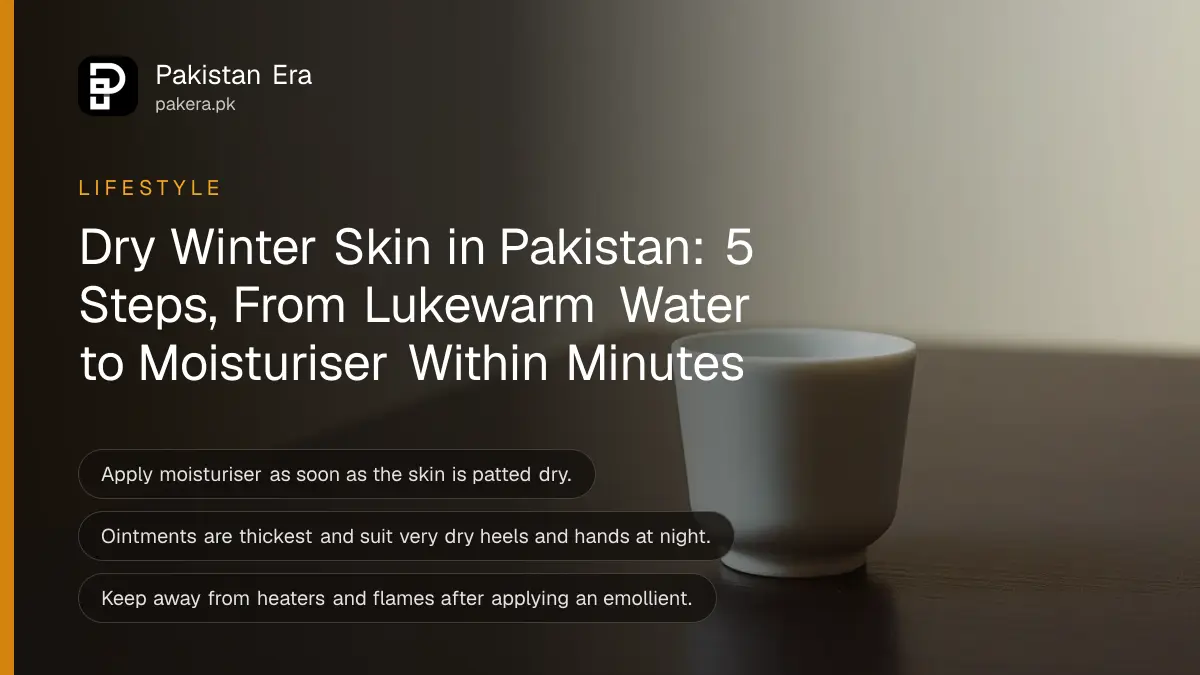
For dry winter skin, the basic routine is simple: wash with lukewarm water and a mild cleanser instead of ordinary soap, pat dry, and put on a moisturiser within a few minutes, while the skin is still slightly damp. Repeat it on hands and face whenever they feel tight, which can be three or four times a day in December. The NHS advises exactly this, and says emollients (plain moisturisers) may need to go on more often in winter.
Winter in most of Pakistan is dry. Lahore and Islamabad lose the monsoon humidity by November, and a gas heater running all evening dries a room further. Then come hot baths, strong soap and wind on a motorbike. Cracked heels, rough hands and chapped lips by January are almost a tradition. They do not need to be.
This page covers everyday basics only. It is not medical advice. If your skin bleeds, weeps, itches badly or does not improve, see a doctor or a pharmacist.
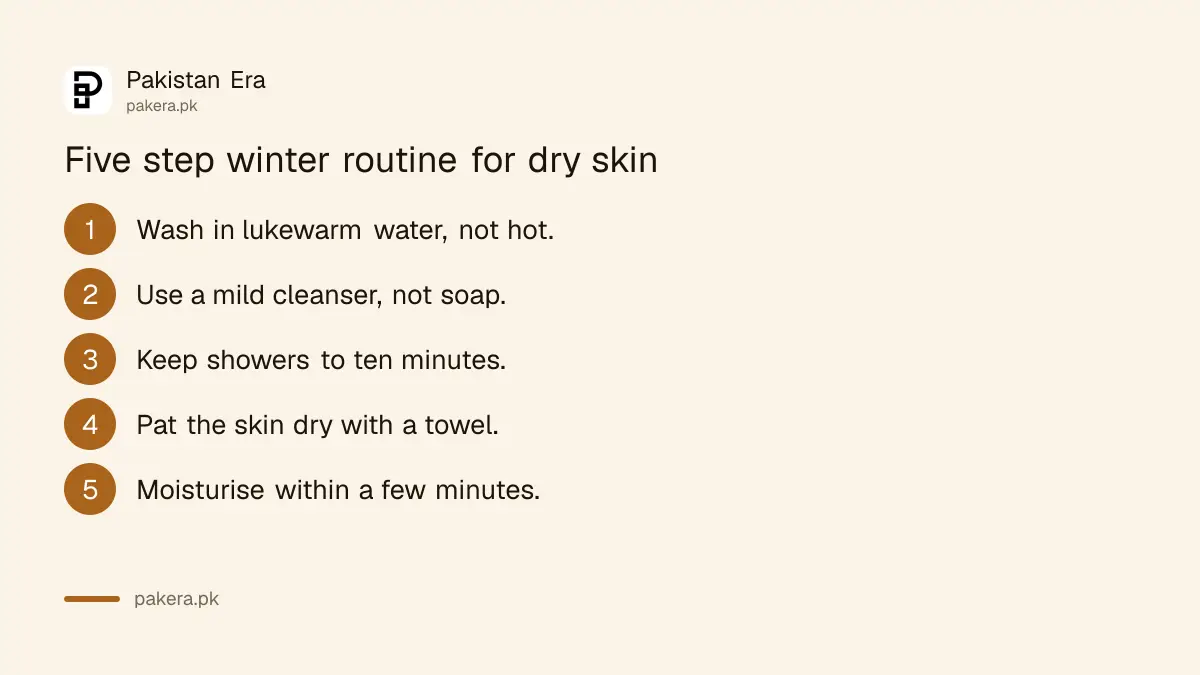
A daily winter routine for dry skin
A good routine has four parts: lukewarm water, a mild cleanser in place of soap, patting dry, and moisturiser straight after. The NHS says emollients should be applied as soon as you have patted your skin dry, and as often as needed, ideally at least three or four times a day.
- Keep the water lukewarm. A very hot bath feels good in a cold house, but hot water strips the skin's own oils faster.
- Swap soap for a mild cleanser. The NHS notes that ordinary soaps, shampoos and shower gels can dry the skin. A soap-free wash or a cream cleanser is gentler.
- Keep it short. Five to ten minutes in the shower is enough.
- Pat, do not rub. Press the towel on the skin instead of scrubbing.
- Moisturise within a few minutes. Smooth it on in the direction the hair grows, as the NHS describes, rather than rubbing hard.
The timing matters more than the brand. A cheap plain moisturiser on damp skin often does more than an expensive one on dry skin hours later.
Choose the right type of moisturiser
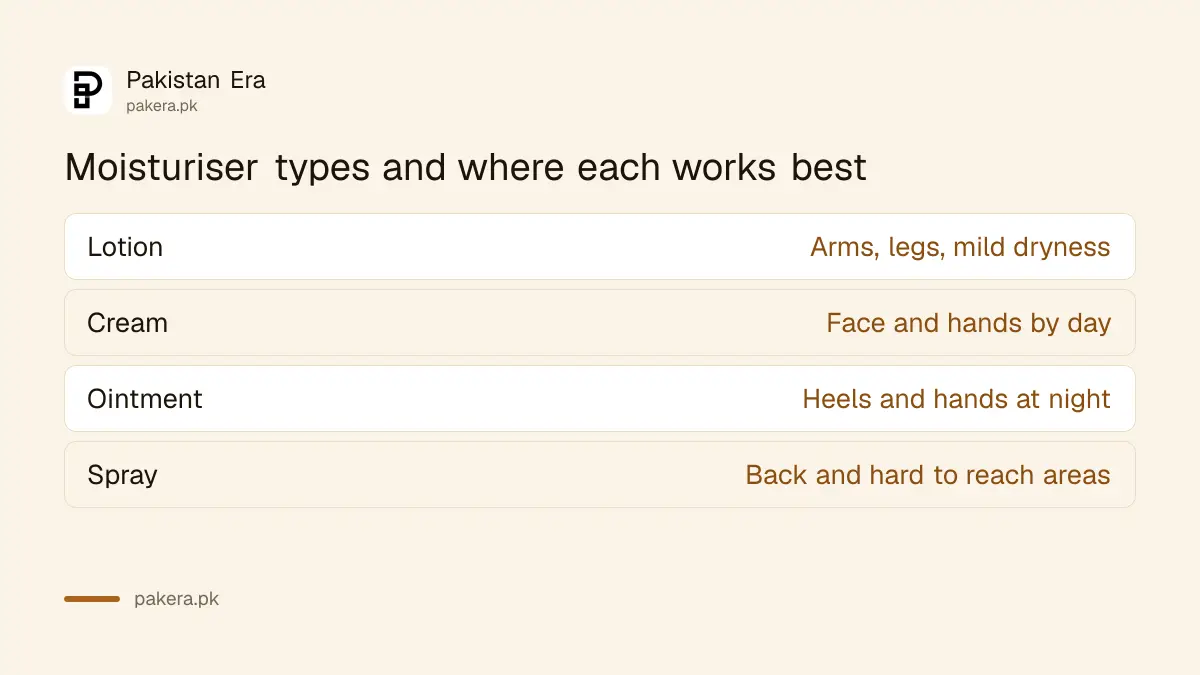
Moisturisers come as lotions, creams, ointments and sprays. The NHS describes lotions as light and good for hairy areas, creams as fairly light for daytime, and ointments as thick and very moisturising, better for very dry skin and at night. Pick by how dry your skin is.
| Type | Feel | Best for |
|---|---|---|
| Lotion | Thin, spreads easily, less moisture | Arms, legs, hairy areas, mild dryness |
| Cream | Light, soaks in fast | Face and hands in the day |
| Ointment | Thick and greasy | Very dry hands, heels and elbows, at night |
| Spray | Soaks in quickly | Hard to reach areas like the back |
Plain petroleum jelly is an ointment, and many families already keep a tub at home. It works well on heels and knuckles at night. It is too greasy for most people's face in the day.
Fragrance-free products are usually the safer choice for sensitive skin. The NHS also notes that aqueous cream is no longer recommended as a leave-on moisturiser, because it contains sodium lauryl sulphate, which can irritate the skin.
Hands, heels and lips need extra care
Hands, heels and lips crack first in a Pakistani winter, because they get the most water, friction and wind. The NHS says hands and face need extra attention. Moisturise hands after every wash, put a thick layer on heels at night under cotton socks, and keep a plain lip balm with you.
- Hands: washing for wudu five times a day means five chances to dry out. Keep a small tube of cream by the sink and use a little after each wash.
- Heels: cracked heels are made worse by open chappals on cold floors. Wear socks indoors, and rub an ointment into the heels before bed.
- Lips: try not to lick them. Saliva dries and leaves them drier. Use a plain balm, especially before going out on a bike.
- Dishes and laundry: rubber gloves protect hands from detergent and hot water.
Clothes and home habits that help dry skin
Some winter dryness comes from clothes and the room, not the bathroom. Rough wool directly on the skin, heavy synthetic layers and a gas heater all add to it. A cotton layer under wool, and a bowl of water near the heater, are simple changes.
- Wear a soft cotton layer under wool sweaters and shawls if wool makes you itch.
- Wash new clothes before wearing them, and rinse detergent out well.
- Do not sit right in front of a gas heater or an electric rod heater for hours.
- Keep a bowl of water in a heated room to add a little moisture to the air.
- Drink enough water through the day. Cold weather makes many of us forget.
Smog season brings its own trouble. Masks rub the cheeks and nose, so a light cream before you put one on helps. Our page on wearing an N95 or KN95 mask in smog covers the mask side, and the smog forecast for November and December shows when the worst spells are expected.
Safety points before you buy or apply anything
Two safety points matter most. First, the NHS warns that emollients can make clothes, bedding and dressings catch fire more easily, so keep away from flames, heaters and cigarettes after applying them. Second, be careful of skin products that make medical promises without proof.
The fire point is real in a Pakistani winter. Many homes cook on open gas and warm up beside a heater. If you have put a thick ointment on your hands, do not lean over the stove or the heater. Wash bedding and socks often, because the product builds up in the fabric.
Watch for adverts that promise to "cure" eczema or whiten skin in days. Herbal and unani creams sold as medicine should be enlisted with the Drug Regulatory Authority of Pakistan (DRAP). Here is how to check a herbal or unani product with DRAP, and you can report a misleading health advert to DRAP.
Stop using a product and speak to a pharmacist or doctor if it causes burning, stinging or a rash that does not settle. The NHS lists a burning or stinging feeling that does not settle after a few days as a side effect to report.
When to see a doctor or pharmacist
See a pharmacist or doctor if dry skin cracks and bleeds, becomes red and very itchy, weeps fluid, keeps you awake, or does not improve after two weeks of regular moisturising. The NHS says a severe skin condition may need stronger treatment than a moisturiser.
A pharmacist can suggest a suitable product for mild dryness. A doctor is the right person for anything that looks infected, spreads, or comes with swelling or fever. Do not use a steroid cream from the shop counter without advice. If you are already using one, the NHS suggests leaving 20 to 30 minutes between it and your moisturiser.
Common questions
Why does my skin get so dry in winter in Pakistan?
The air is drier, heaters dry it further, and hot baths and soap strip natural oils. Hands also get washed many times a day.
When should I apply moisturiser?
Straight after washing, once you have patted the skin dry and it is still slightly damp. The NHS advises at least three or four times a day for dry skin.
Is petroleum jelly good for cracked heels?
It is a simple ointment that many people find helpful on heels at night under cotton socks. See a doctor if heels crack deeply or bleed.
Should I stop using soap in winter?
The NHS notes ordinary soap can dry the skin. A mild, soap-free cleanser is gentler for dry or itchy skin.
Can moisturiser catch fire?
The NHS warns that clothes and bedding with emollient on them can catch fire easily. Keep away from flames and heaters after applying it.
How do I stop chapped lips in winter?
Do not lick your lips, use a plain lip balm several times a day, and cover your mouth with a scarf on windy rides.
How we verified this
What we checked, where we read it, and what we could not confirm.
We read the NHS page on emollients (nhs.uk/conditions/emollients) and the Guy's and St Thomas' NHS page on emollients and how to use them (guysandstthomas.nhs.uk) on 5 November 2026. The advice on timing, types, frequency, soap, aqueous cream, fire risk and side effects comes from those pages. The tips for Pakistani homes, such as wudu and gas heaters, are our own general advice. This page is not medical advice, and we did not test any product.
About the author

Lifestyle & Clothing Writer
Mahnoor Siddiqui is a lifestyle and clothing writer at Pakistan Era, joining the new lifestyle desk in November 2026.