Pakistan's ECC Approves Minimum Indicative Prices for the 2026 Tobacco Crop, Rs 525 a Kg Reported
The ECC approved minimum prices for the 2026 tobacco crop on 8 October. Rs 525 per kg is reported but not on an official page. See what growers should check.
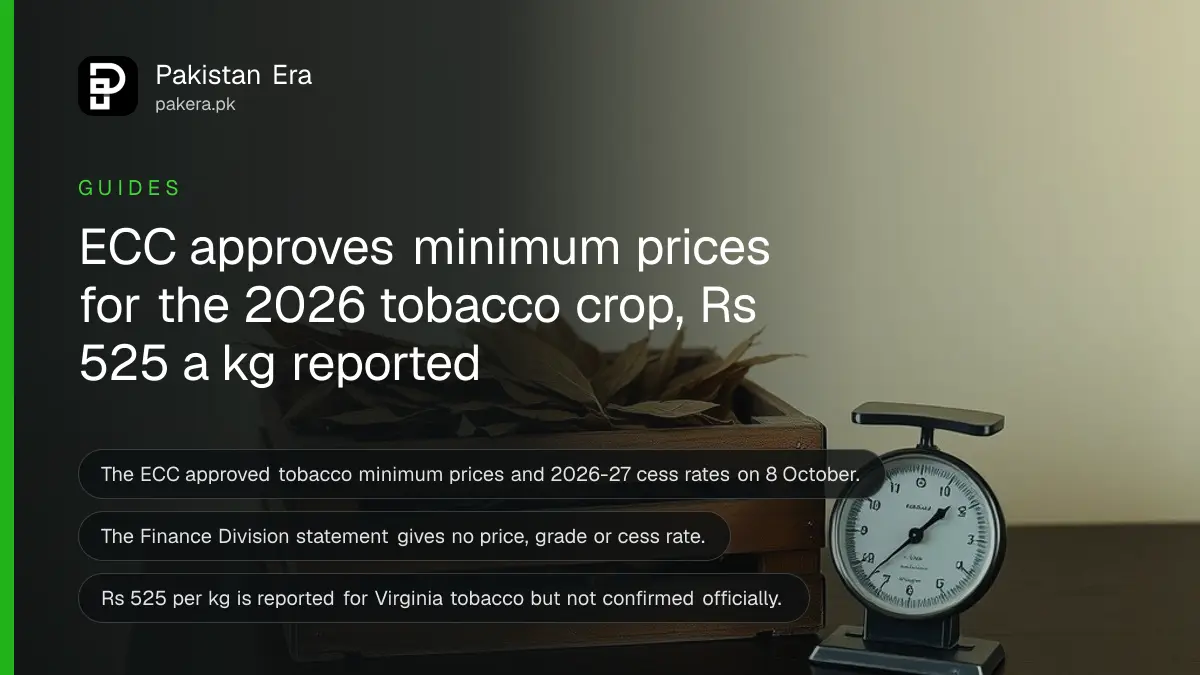
Short answer: The Economic Coordination Committee (ECC) approved minimum indicative prices for the 2026 tobacco crop and revised cess rates for 2026-27 on 8 October 2026. The Finance Division's statement gives no figure. Reports say the price for Virginia tobacco is Rs 525 per kg. We could not confirm that at an official page.
We read the Finance Division's statement ourselves. It lists the decision in one sentence. This page explains what a minimum indicative price (MIP) is, what the statement leaves out and what a grower should check before selling.
The ECC approved tobacco prices and cess rates on 8 October
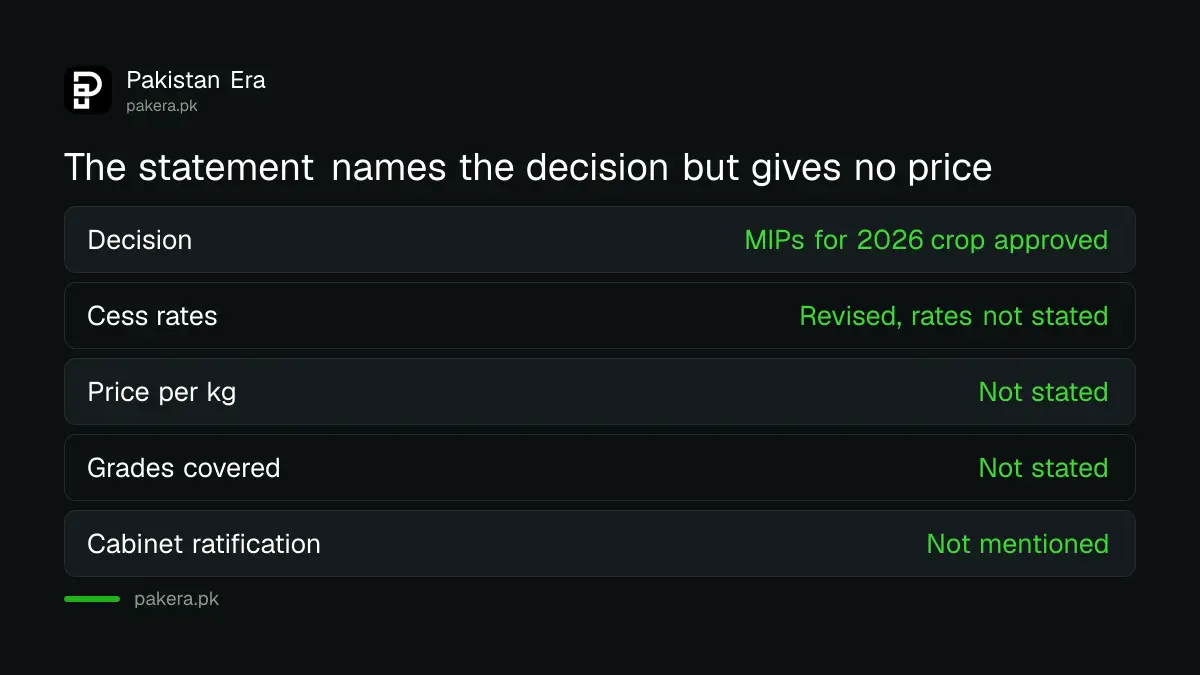
The ECC considered a summary from the Ministry of National Food Security and Research and approved the minimum indicative prices for the 2026 tobacco crop and the revision of cess rates for 2026-27. The statement states no price, no grade and no cess rate.
The decision was one of 17 items at the meeting. It sits beside other farm decisions, such as the ECC's sugar export approval. The statement does not say whether the cabinet has ratified the tobacco decision, which is the normal next step for ECC approvals.
A minimum indicative price is a guide, not a guarantee
A minimum indicative price is the government's lowest suggested price that buyers should pay growers for a crop. It is a floor to guide bargaining, not a promise that the government will buy the crop. It differs from a support price, where the state steps in to buy.
That difference matters. For wheat, the government has announced a support price, as we explain in our note on the wheat support price for 2026-27. For tobacco, the price works through agreements between growers and the companies that buy the leaf. A floor only helps if buyers respect it.
Reports put the Virginia tobacco price at Rs 525 per kg
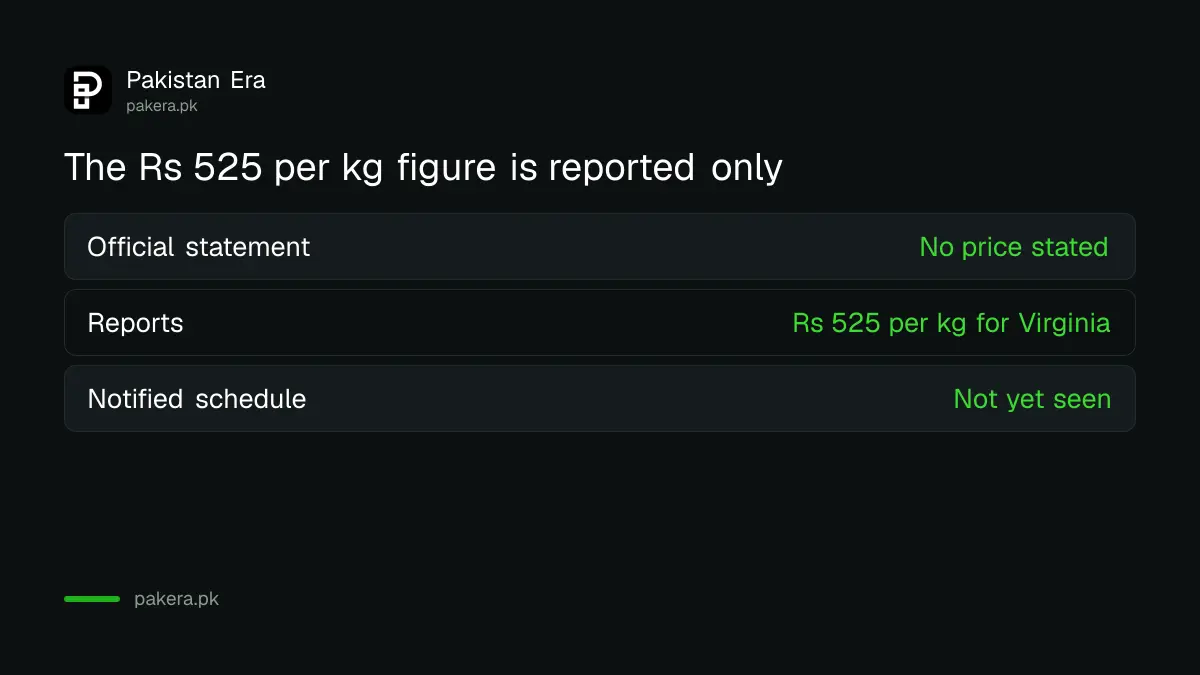
Reports say the government approved Rs 525 per kg as the minimum price for the 2026 crop, citing sources. The same figure was reportedly proposed earlier in the 2026-27 budget discussion. Growers' groups were reported to have objected to it in June.
We have not seen Rs 525 on a Finance Division, Ministry or Pakistan Tobacco Board page. Treat it as reported. The reports also do not say which grade or type of tobacco the floor covers, so a grower should not assume it applies to every grade.
| Item | What we know | Source status |
|---|---|---|
| Decision | ECC approved MIPs for the 2026 crop | Official statement, 8 October 2026 |
| Cess rates | Revised for 2026-27, rates not stated | Official statement, no figures |
| Price | Rs 525 per kg for Virginia tobacco | Reported, not on an official page |
| Grades covered | Not stated | Unknown |
| Cabinet ratification | Not mentioned | Unknown |
Khyber Pakhtunkhwa growers are most affected
Reports say Khyber Pakhtunkhwa grows most of Pakistan's flue-cured Virginia tobacco, mainly in Swabi, Mardan, Charsadda, Buner and Mansehra. The Pakistan Tobacco Board is reported to count nearly 80,000 growers nationwide, more than 45,000 of them in the province.
Those figures are reported, and we could not confirm them on an official page. They show why the floor price and the cess matter: they touch tens of thousands of farm households before the leaf reaches a factory.
The cess is a levy on tobacco. The statement does not say whether the revised rate goes up or down, or who pays it. Until the notification appears, growers cannot work out their take-home price from the headline floor alone.
What a grower should check before selling leaf
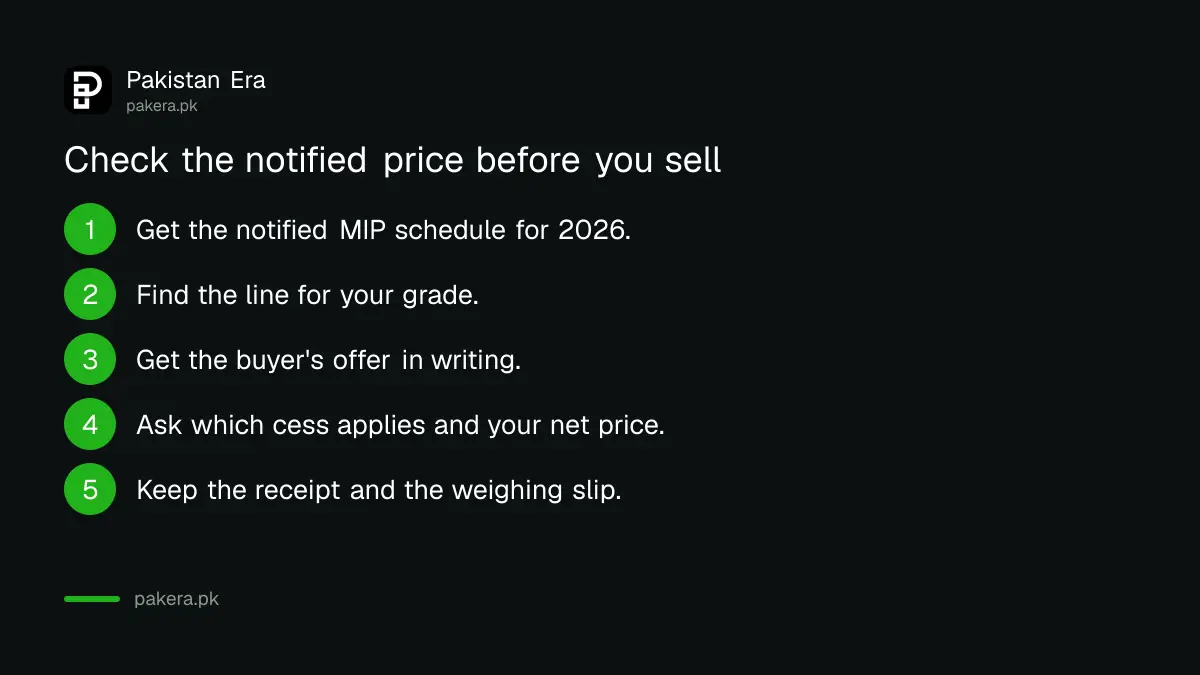
Do not sign a sale on a rumour of a price. Get the notified price and cess in writing from the responsible body, then compare it to the offer for your grade. The steps below keep that simple.
- Ask the Pakistan Tobacco Board or the Ministry of National Food Security and Research for the notified MIP schedule for the 2026 crop.
- Find the line for your grade or type and note the price per kg.
- Ask the buyer to put the offer in writing and compare it with the notified floor.
- Ask which cess or deduction applies for 2026-27 and what your net price is after it.
- Keep the receipt and the weighing slip. If the price is below the notified floor, ask the Board in writing how to raise it.
Common questions
What did the ECC approve for tobacco?
It approved minimum indicative prices for the 2026 tobacco crop and revised cess rates for 2026-27, as listed in the Finance Division's statement of 8 October 2026.
Is Rs 525 per kg the official price?
It is the figure in reports. The Finance Division statement gives no price, so we cannot confirm it. Ask the Pakistan Tobacco Board for the notified schedule.
Does the government buy tobacco at the minimum price?
A minimum indicative price is a guide for buyers and growers. It is not a purchase promise. Check with the Board how the price is enforced.
What is the cess on tobacco?
A cess is a levy charged on the crop. The statement says the 2026-27 rates were revised and does not give the new rates.
Which provinces grow most tobacco?
Reports say Khyber Pakhtunkhwa grows most of the Virginia tobacco, and that other provinces grow other types.
How we verified this
What we checked, where we read it, and what we could not confirm.
Last checked on 11 October 2026. We read the Finance Division's press release of 8 October 2026 (PR No. 653) on the ECC meeting. The Rs 525 figure, the grower numbers and the district list are reported and are not confirmed on an official page we could open. The grower steps are our own practical checklist, not a Board procedure. We did not reach the Pakistan Tobacco Board for a notified schedule.
About the author

Global Affairs & Political Economy Writer
Muhammad Hatim is a book lover who started writing because he enjoys it. At Pakistan Era he writes about international relations, geopolitics and the global economy, with a particular interest in South Asia and the forces behind current events.