Check the UK Health Surcharge for Pakistani Students: £776 a Year, Dependants Pay Too
Pakistani students pay a UK health surcharge of £776 a year, and each dependant pays the same. See how course length changes the total and how to pay it.
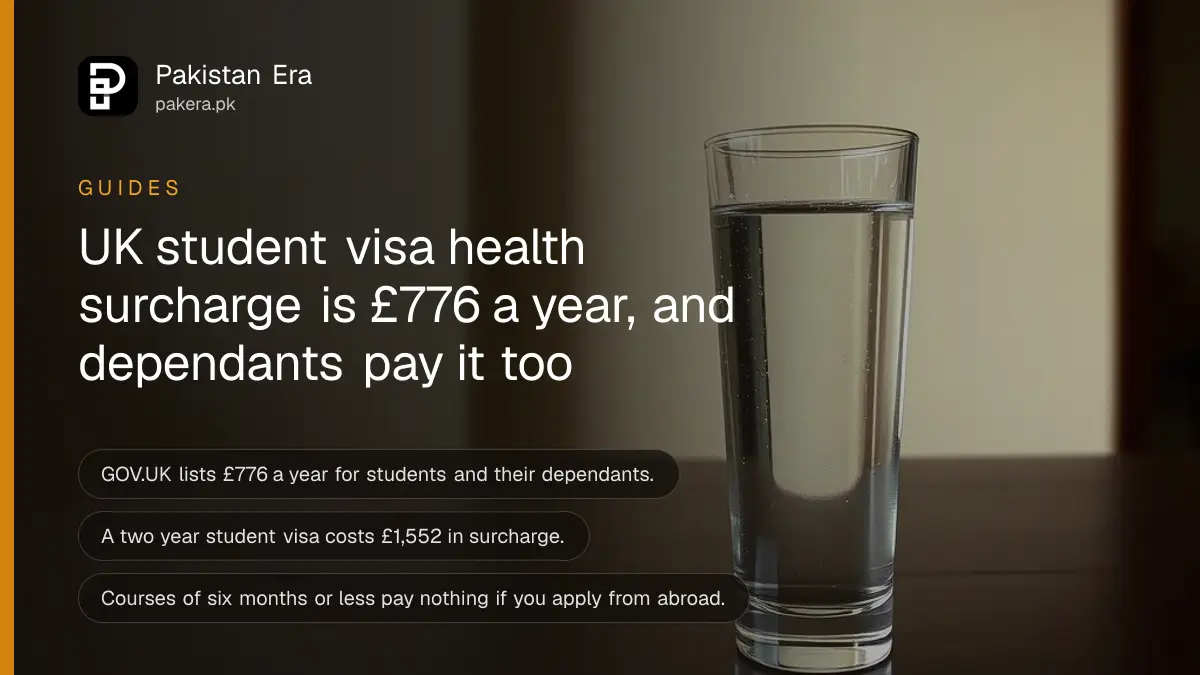
Short answer: A Pakistani student applying for a UK Student visa pays the Immigration Health Surcharge (IHS) of £776 for each year of the visa. Each dependant pays the same. Everyone else pays £1,035 a year. A two-year student visa costs £1,552 in surcharge. A course of six months or less, applied for from outside the UK, pays none.
A student budgets for tuition, the visa fee and the funds in the bank, then finds a separate health charge at the end of the online form. It is paid before the visa decision, and it is easy to underestimate when your course is not a round number of years.
We read the GOV.UK page on how much the health surcharge costs on 14 October 2026. The page did not show the date from which these amounts apply, so we do not claim one. We also did not read the visa fee page, so no visa fee is stated here.
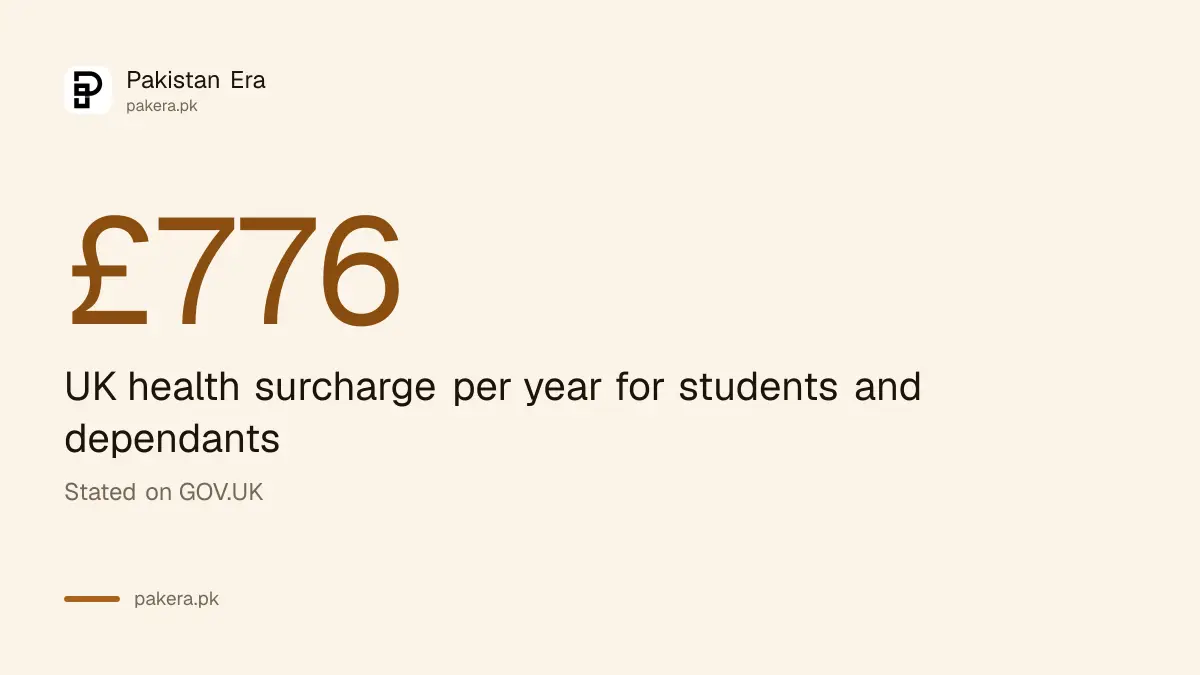
The rate is £776 a year for students
GOV.UK lists £776 per year for students, their dependants and Youth Mobility Scheme visa holders, and the same £776 for under-18 applicants. All other applicants pay £1,035 per year. Dependants aged 18 or over usually pay the same as the main applicant.
| Applicant | Surcharge per year |
|---|---|
| Student | £776 |
| Student's dependant | £776 |
| Under-18 applicant | £776 |
| Youth Mobility Scheme | £776 |
| All other applicants | £1,035 |
The surcharge gives you access to the National Health Service (NHS) in the UK while you hold the visa. You pay it as part of your visa application, and you pay for the whole length of the visa in one go.
Course length decides the total
GOV.UK counts the surcharge by visa length. Six months or less from outside the UK costs nothing. More than six months but under one year costs one full year. Longer visas cost whole years, with half a year added in some cases.
The page gives these rules for students, dependants and under-18 applicants:
- Visa of 6 months or less, applying from outside the UK: no surcharge.
- Visa of 6 months or less, applying from inside the UK: £388, which is half the yearly rate.
- More than 6 months but under 1 year: £776, the full yearly rate, wherever you apply from.
- More than 1 year, up to 18 months: the yearly rate plus half of it. By our sum that is £776 plus £388, or £1,164.
- More than 18 months but under 2 years: two full years, £1,552.
The page uses a two-year student visa at £1,552 as its example. Add your course length and the visa's extra time carefully. The Home Office decides your visa length, and the application will show the exact amount before you pay.
Count dependants into the budget
Each dependant pays the same £776 a year as the student, and an adult dependant usually pays the same as the main applicant. A student bringing a spouse and one child on a two-year visa should plan for three people times £1,552, which is £4,656.
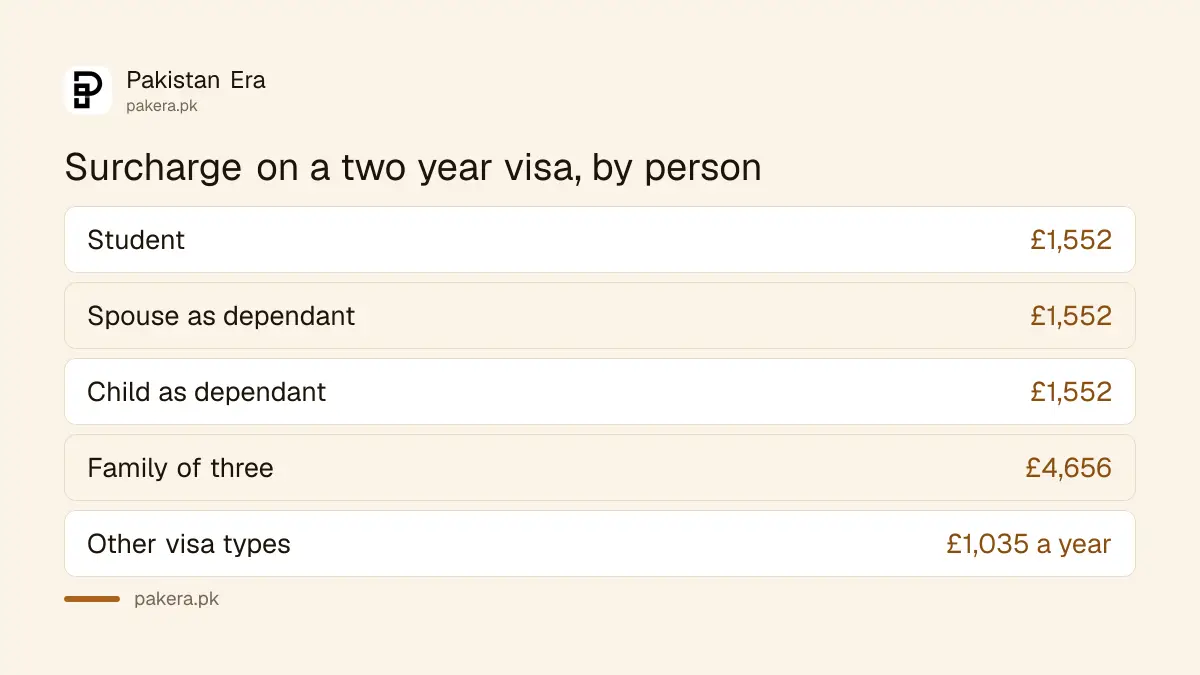
That sum is ours, built from the GOV.UK rates, and it assumes a two-year visa for all three. The real amount depends on each person's visa length. Whether dependants are allowed for your course is a separate question, so check your course before you plan a family move.
To plan the rest of your money, see the page on the UK student visa funds increase from 30 November 2026. The funds you must show in the bank are separate from this charge.
Pay it inside the visa application
You pay the surcharge online as part of the Student visa application, before a decision. We did not read the refund rules on the page, so if you are refused, ask how a refund works.
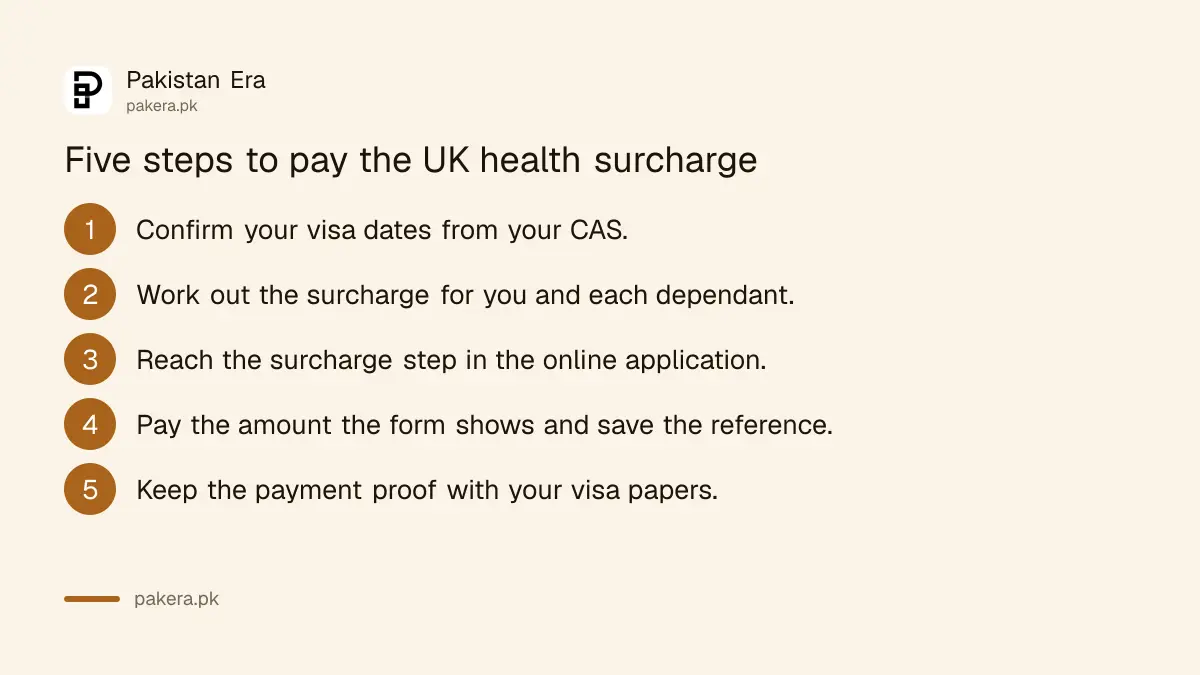
- Confirm your course length and your visa start and end dates from your Confirmation of Acceptance for Studies (CAS).
- Work out the surcharge for you and each dependant using the rates above.
- Start the visa application and reach the health surcharge step.
- Pay the amount the form shows, and save the reference.
- Keep the payment confirmation with your visa documents.
Before you pay anything, make sure your university is allowed to sponsor students. Read how to check a UK university's student sponsor licence. And if your course is longer than six months, you may need a tuberculosis test, covered in how to book a UK TB test in Pakistan.
Where the surcharge fits in your plan
The surcharge is one cost among several: tuition, the visa fee, funds in the bank, a TB test and travel. Add them in one sheet before you commit. The overall steps are in our UK student visa guide for Pakistan.
If you plan to stay after the degree, read about the UK Graduate visa for Pakistani students. We did not read which surcharge rate applies to the Graduate route, so check that before you plan.
Be careful with anyone who offers to "arrange" your visa and fees. Take the quote only from the official form.
Common questions
How much is the UK health surcharge for students?
£776 for each year of the visa, according to GOV.UK. Under-18 applicants and student dependants pay the same.
Do I pay nothing for a short course?
If your visa is for six months or less and you apply from outside the UK, there is no surcharge. Applying from inside the UK costs £388.
How much do other visa holders pay?
£1,035 per year for all other applicants, according to the GOV.UK page.
Does my husband or wife pay too?
Yes, a dependant pays the same rate as the main applicant. Adult dependants usually pay the same as the student.
When do I pay it?
As part of the online visa application, before the decision. The form shows the exact amount for your visa length.
How we verified this
What we checked, where we read it, and what we could not confirm.
Last checked on 14 October 2026, Pakistan time. We read the GOV.UK page Pay for UK healthcare as part of your immigration application. The page did not give an effective date for the amounts, and we did not read refund or exemption rules beyond those listed. Confirm the figure in your own application before you pay.
About the author

Public Services and Education Journalist
Fajr Riaz is a journalist and content writer at Pakistan Era, based in Lahore. She covers the questions people meet in everyday life in Pakistan: how a public service works, what a change in the rules means, and where to find a reliable answer.