Apply for a ZTBL Tahafuz-e-Ajnas Loan of Up to Rs 5 Million to Build a Grain Godown
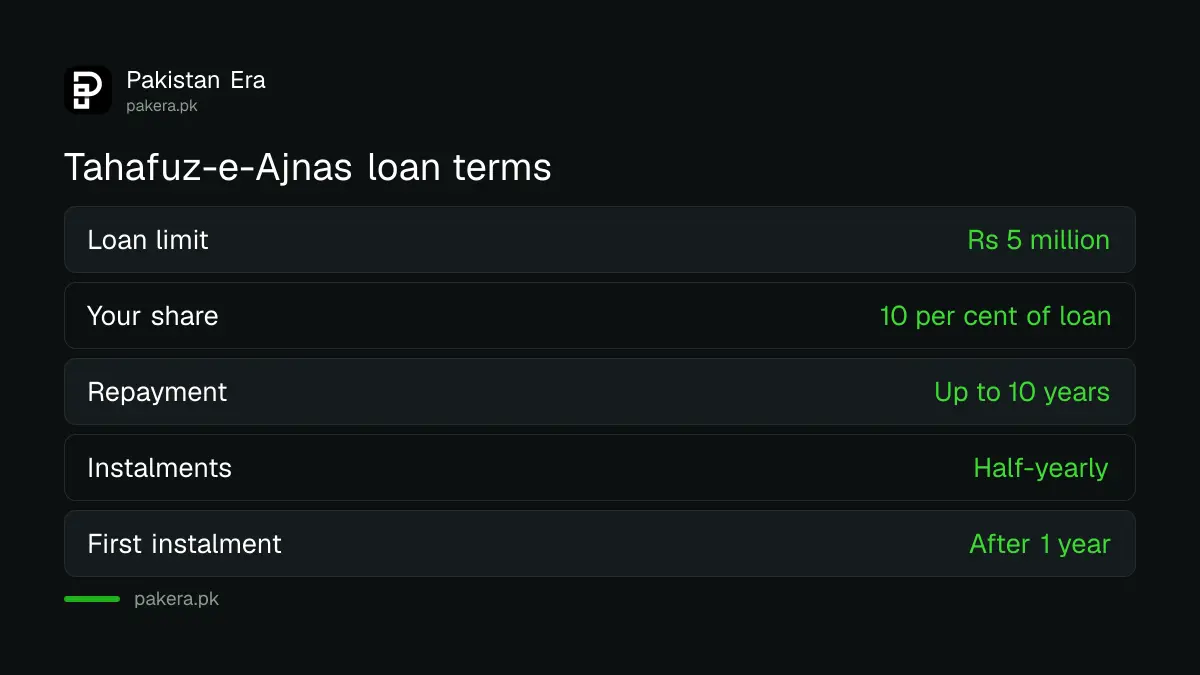
ZTBL's Tahafuz-e-Ajnas scheme lends up to Rs 5 million to build a godown: 10 per cent equity, 10 years to repay, first instalment a year after release.
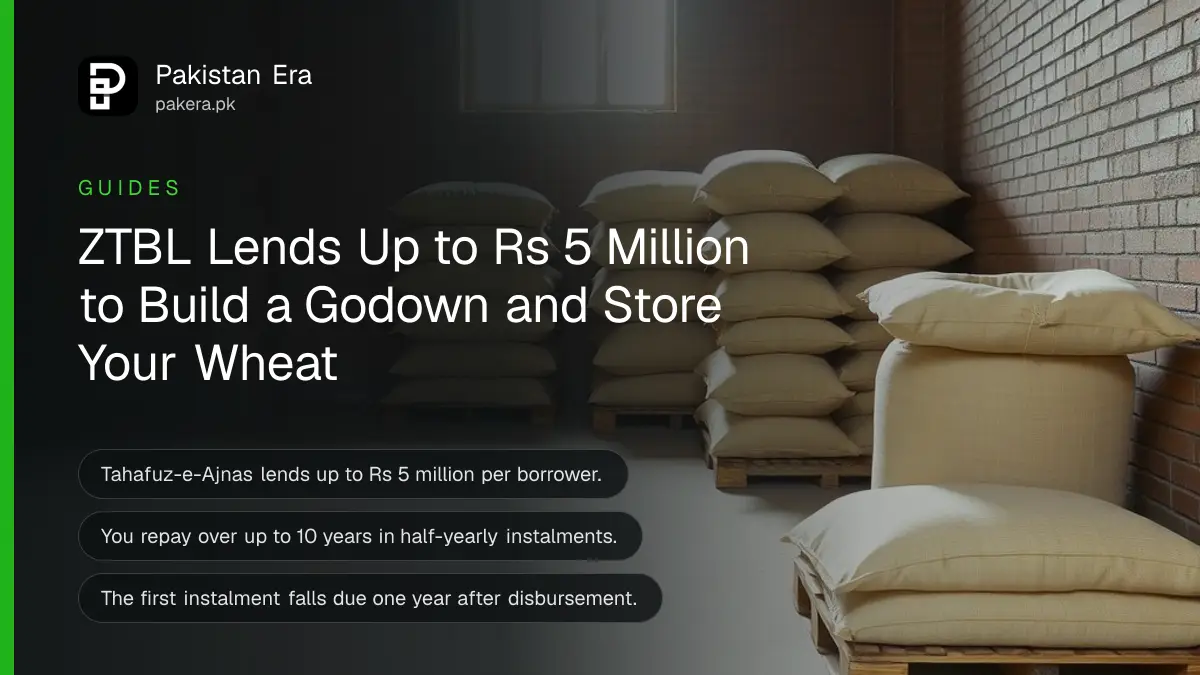
ZTBL's Tahafuz-e-Ajnas scheme lends up to Rs 5 million to build a godown, so farmers can store wheat and other produce and sell when prices are better. You pay 10 per cent of the loan amount, repay over up to 10 years in half-yearly instalments, and the first instalment falls due one year after the money is released.
Every April, many small farmers sell wheat straight from the threshing floor because they have nowhere safe to keep it. The price at that moment is usually the lowest of the year. Zarai Taraqiati Bank Limited (ZTBL) built Tahafuz-e-Ajnas, which means "protection of grain", to pay for storage.
Tahafuz-e-Ajnas pays for a godown to store farm produce
The scheme finances a godown, a storage building for farm produce. ZTBL says it helps small farmers hold their crop until market prices are better, adds storage and packaging capacity, and cuts the waste of farm produce. It runs nationwide, except where a federal or provincial restriction applies.
Storage gives a farmer a choice. Instead of selling every bag at harvest, you can keep part of the crop and sell later in the season. A dry, clean godown also cuts losses to damp, rats and insects.
| Term | Tahafuz-e-Ajnas loan |
|---|---|
| Loan limit | Up to Rs 5 million per borrower or party |
| Your share (equity) | 10 per cent of the loan amount |
| Repayment period | Up to 10 years |
| Instalments | Half-yearly |
| First instalment | One year after disbursement |
| Markup | ZTBL's prevailing rate on development loans |
| Security | Tangible property the bank accepts |
| Approval | Credit Review Department at ZTBL head office |
The one-year grace period lets a godown earn before you pay
The first instalment is due one year after the loan is released. That gives you time to build the godown and store at least one harvest before repayments start. After that, you pay every six months until the loan ends, within 10 years.
Plan the timing around the wheat crop. If the money is released in winter, the godown can be ready for the April and May harvest, and the first instalment falls the following winter. ZTBL monitors the site every month until the godown is complete.
The page gives no markup percentage. Ask the branch for the development loan rate and the total cost of credit over the full term, in writing, before you sign.
New borrowers get preference under the scheme
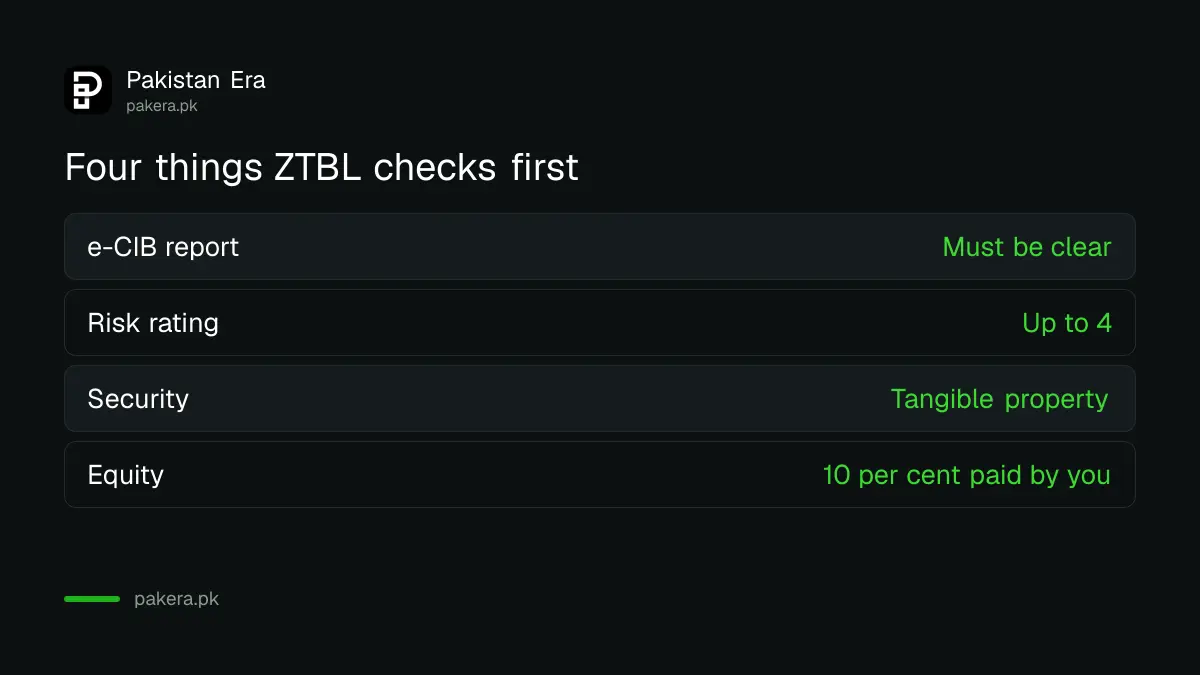
ZTBL wants creditworthy, reputable rural residents who can repay. New borrowers get preference. Existing borrowers with a good repayment record, who know the work, may also be considered. You also need a clear e-CIB report and an Obligor Risk Rating up to 4.
- Clear e-CIB. The State Bank's credit record must show no unpaid loan or default.
- Risk rating up to 4. ZTBL's own grade of how safe your loan is.
- Security. Tangible property, such as land, that the bank accepts.
- Your 10 per cent. Paid from your own money toward the project.
Apply at a ZTBL branch with four documents
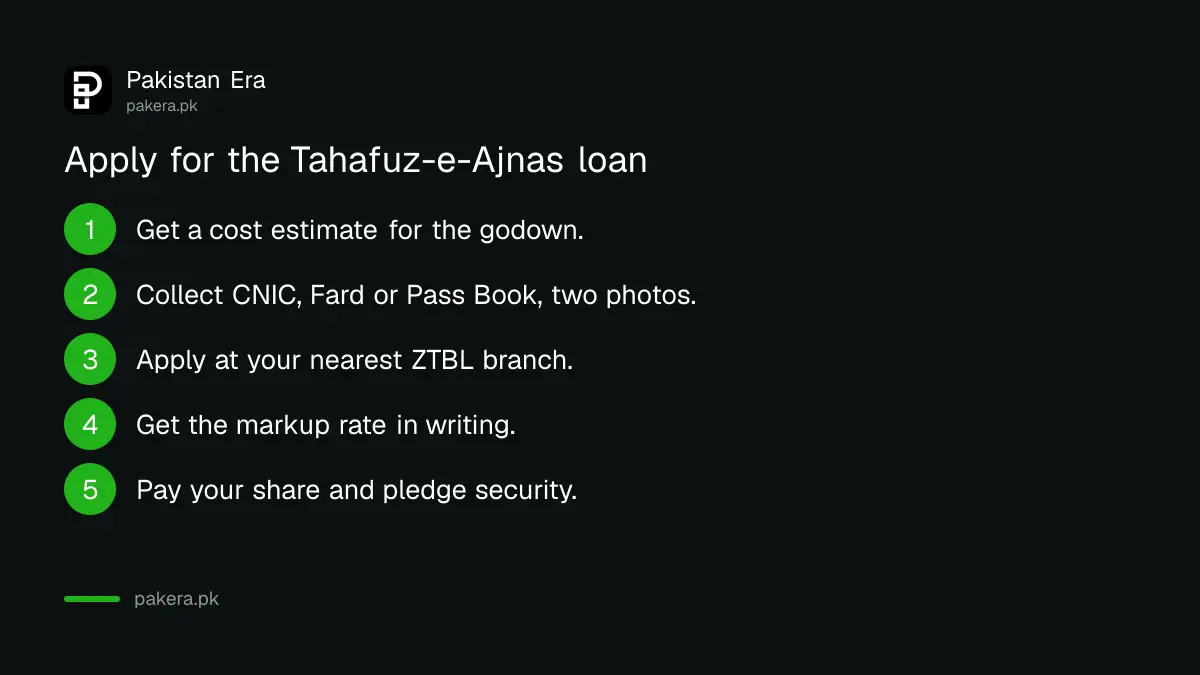
ZTBL asks for a CNIC copy, the loan application, an Agri Pass Book or Fard Jamabandi, and two recent photographs. Bring a cost estimate for the godown too, so the branch can size the loan. The Credit Review Department at head office approves it.
- Get a written cost estimate for the godown from a builder.
- Collect your CNIC copy, Agri Pass Book or Fard Jamabandi and two recent photographs.
- Fill in the loan application at your nearest ZTBL branch.
- Ask for the markup rate and total cost of credit in writing.
- Pay your 10 per cent share and pledge the security the bank asks for.
- Sign the documents, build the godown and keep the branch updated on progress.
ZTBL's helpline is 051-111-30-30-30, and the ZTBL branches open on Saturday help if you work the fields all week.
A warehouse receipt loan is the option if you do not want to build
If you would rather not build your own godown, ZTBL also lends against crop stored in an accredited warehouse. That loan uses an electronic warehouse receipt as security, and you pay the warehouse for storage instead of building one.
The ZTBL electronic warehouse receipt loan suits a farmer who wants cash now but does not want to sell the crop yet. Tahafuz-e-Ajnas suits a farmer, or a group of neighbours, who will use their own store every year.
Before deciding to hold wheat, look at the government's wheat support price for 2027 of Rs 4,500 per 40 kg and the wheat rate by city. Storage only pays if the later price beats the harvest price by more than your markup and storage losses.
Common questions
What is the ZTBL Tahafuz-e-Ajnas scheme?
It is a ZTBL loan to build a godown, so farmers can store produce and sell when prices improve.
How much can I borrow under Tahafuz-e-Ajnas?
Up to Rs 5 million per borrower or party, with 10 per cent of the loan amount paid by you.
When do I pay the first instalment?
One year after the loan is disbursed. After that, instalments are half-yearly, within a total of 10 years.
Which documents does ZTBL need for a godown loan?
A CNIC copy, the loan application, an Agri Pass Book or Fard Jamabandi, and two recent photographs.
Can an existing ZTBL borrower apply?
Yes, if the repayment record is good and the borrower knows the activity, though new borrowers get preference.
Is the Tahafuz-e-Ajnas scheme available in every province?
ZTBL says it runs nationwide, except in areas where the federal or a provincial government has imposed a restriction.
How we verified this
What we checked and where we read it.
Last checked 25 November 2026. The terms come from ZTBL's Tahafuz-e-Ajnas Scheme (Product on Godown) page, and the helpline from the ZTBL website. The product page gives no markup percentage, processing fee or godown size. ZTBL can change its terms, so confirm them at a branch.
Free on WhatsApp
Get last dates and rule changes on WhatsApp
We post new last dates, fee changes and fixes for common problems, a few short posts a day.
Follow Pakera on WhatsAppOther followers cannot see your number.
Pakera Solves It
Which online process wasted your time this week?
A portal that will not load, a form nobody explains, a complaint that went nowhere. Tell us. Every week we pick one, solve it step by step and publish the answer.
About the author

Tax, Bills and Technology Writer
Ali Akhtar is a young and curious voice here at Pakistan Era. He is currently pursuing his A-Levels and has a growing interest in Pakistan’s changing industrial landscape and educational trends. Ali likes to write in a way that helps him explain and explore the world around him. His writing reflects the perspective of the new generation navigating the evolving trends of Pakistan where technology, youth innovation, and shifting opportunities are reshaping the country’s future.