Benazir Nashonuma Study: Child Stunting 22% Lower at Six Months in Pakistan
BISP says an Aga Khan University study found Benazir Nashonuma stunting 22% lower at six months and 18% at one year. See the results, reach and how to enrol.
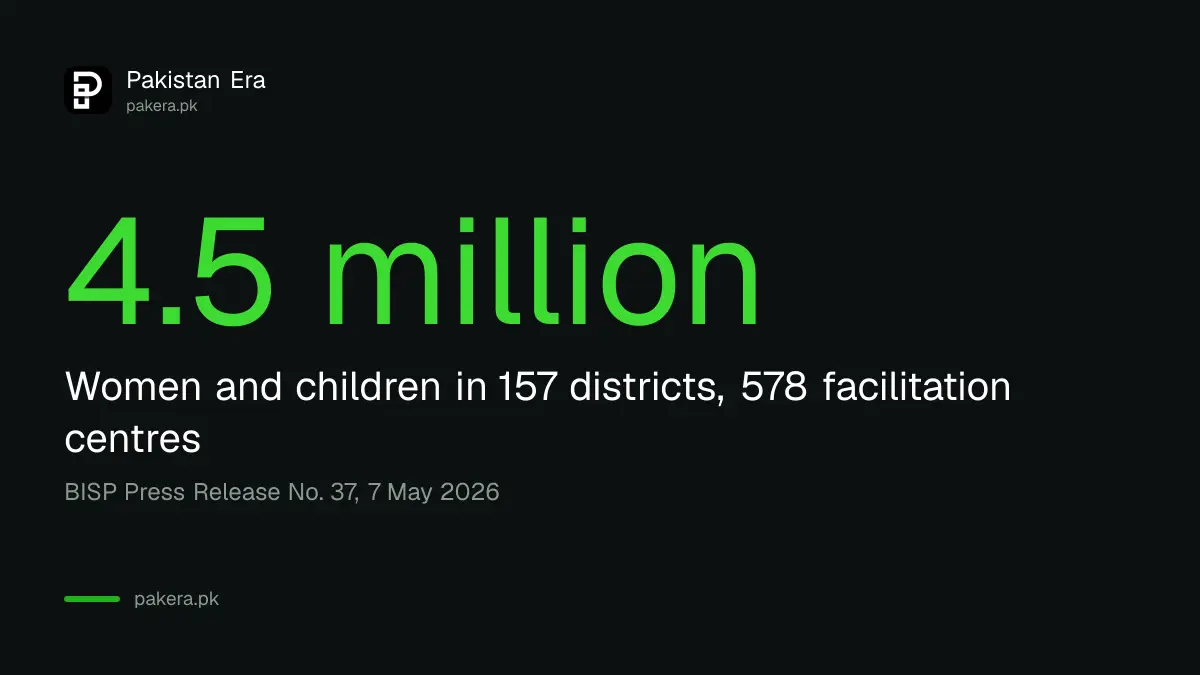
BISP says an Aga Khan University study found stunting among Benazir Nashonuma children was 22 percent lower at six months of age and 18 percent lower at one year. It also reported 6 percent fewer low birth weight cases and 11 percent fewer premature births. The figures come from a BISP press release dated 7 May 2026.
Stunting means a child is too short for their age because of long-term poor nutrition. It harms learning and health for life. We read BISP's press release and its Nashonuma registration leaflet on 14 October 2026 to set out what the results say, what they leave out, and what a family must do to join.
The study reports lower stunting at six months and one year
BISP's release says the Aga Khan University Endline Impact Evaluation found stunting 22 percent lower at six months and 18 percent lower at one year among beneficiary children. The results were presented at BISP Headquarters in Islamabad on 7 May 2026.
| Outcome | Result reported by BISP |
|---|---|
| Stunting at six months | 22 percent lower |
| Stunting at one year | 18 percent lower |
| Low birth weight cases | 6 percent lower |
| Premature births | 11 percent lower |
| Weak and vulnerable newborns | 7 percent lower |
The release does not say what group the beneficiary children were compared with. It also does not say if "lower" means percentage points or a relative drop. We have not read the university's own report, so treat the numbers as BISP's summary of it.
The programme says it reaches 4.5 million women and children
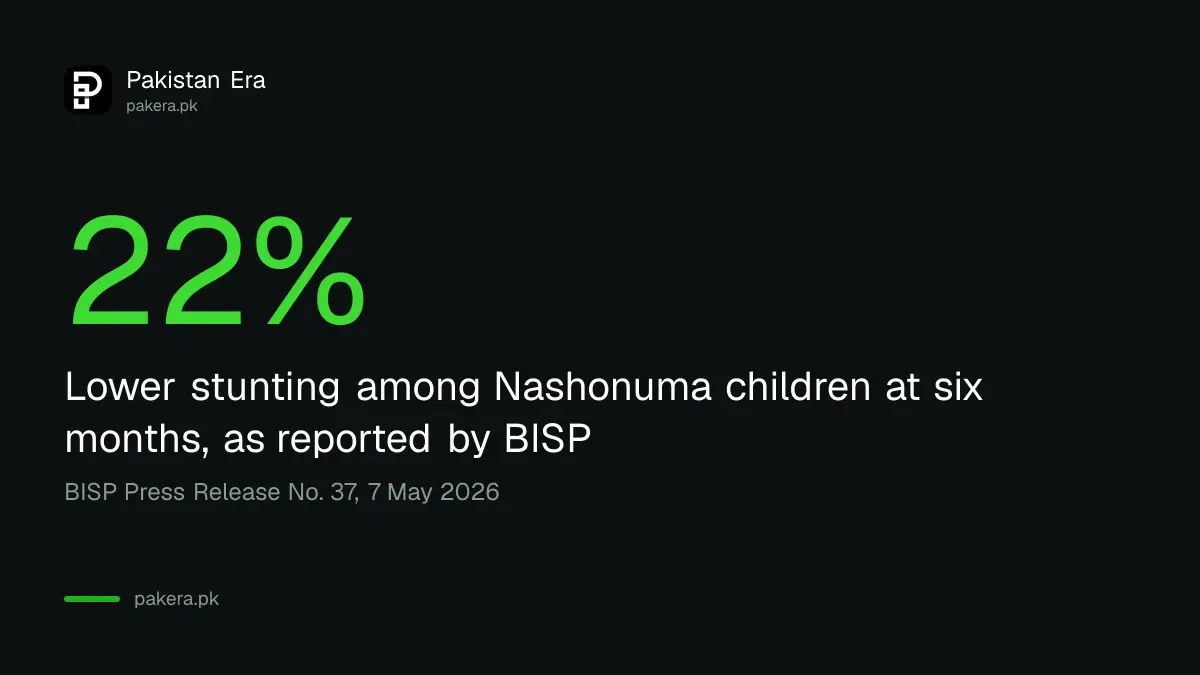
BISP's chairperson told the session that Benazir Nashonuma has reached over 4.5 million women and children in 157 districts. The programme runs through 578 facilitation centres and 169 stabilization centres. In February 2026 a BISP release gave a lower count, over 4.3 million.
The two figures come from the same programme at different dates, so they do not conflict. They show growth of about 200,000 beneficiaries in under three months, by BISP's own numbers. That is our arithmetic.
The release names a facilitation centre as the place where families enrol. The release does not explain what a stabilization centre does. BISP's text does not give a list of centre addresses, so ask your BISP Tehsil Office for the nearest one.
Eligible mothers and children must meet the programme's conditions
BISP's registration leaflet says Nashonuma covers pregnant and lactating women and children aged 6 to 23 months in households receiving Kafaalat. Families enrol at a facilitation centre and must keep health and nutrition conditions to receive the cash support.
The leaflet states the daily nutrition rule: a 75 gram Maamta sachet a day for pregnant and lactating women, and a 50 gram Wawamum sachet a day for children aged 6 to 23 months. The compliance condition is at least 90 percent consumption plus checkups and routine vaccines.
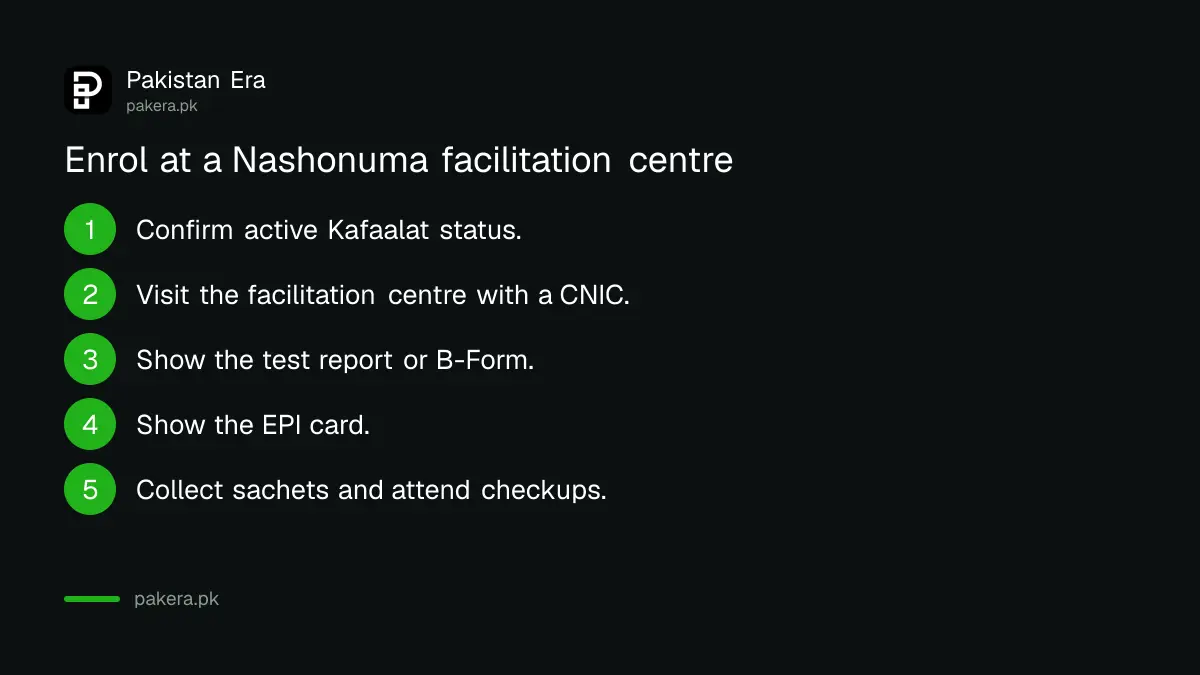
- Confirm the household is an active Kafaalat beneficiary.
- Go to the Nashonuma facilitation centre with the woman's CNIC.
- Pregnant women bring a pregnancy test or confirmation report and the EPI card.
- Mothers of newborns bring the baby's B-Form and EPI card.
- Children aged 6 to 23 months need the B-Form and EPI card.
- Collect the sachets on schedule and attend the health visits.
The full list of papers, and the exact Rs 2,000 and Rs 2,500 amounts, are in the guide to the Benazir Nashonuma payment that is held until you comply. Registration steps are in how to register for the Benazir Nashonuma nutrition programme.
The results do not prove every child gains the same
An average result across millions of children says little about one child. Stunting also depends on water, illness, food at home and income. Nashonuma adds nutrition support and checkups to the household's regular Kafaalat cash, so no single input explains the change.
BISP also launched a real-time Nashonuma digital dashboard on 23 February 2026 to track performance. The release says it supports monitoring at federal and provincial level. We have not seen the dashboard's numbers, as they were not on the page we read.
For a family, the practical point is simple. The programme's gains rest on sachets eaten and visits kept. Payments are held back if a family does not meet the 90 percent condition.
Common questions about the Benazir Nashonuma study
What did the Aga Khan University study find?
BISP says it found stunting 22 percent lower at six months and 18 percent lower at one year among beneficiary children. It also reported lower low birth weight, premature birth and weak newborn rates.
When were the results announced?
BISP announced the results on 7 May 2026 at its headquarters in Islamabad. The press release is numbered 37. It names the university and the federal poverty alleviation minister among the speakers.
How many people does Benazir Nashonuma reach?
BISP says over 4.5 million women and children across 157 districts, through 578 facilitation centres and 169 stabilization centres. A February 2026 release said over 4.3 million.
Who can join Benazir Nashonuma?
Pregnant and lactating women and children aged 6 to 23 months in households that receive Kafaalat. BISP's leaflet says enrolment is at a Nashonuma facilitation centre.
Is the study on BISP's website?
BISP's press release is on its site. We did not find the full university report there. Read the release for the headline figures and wait for the report for the method.
Do I lose money if I miss the sachets?
BISP's leaflet sets a condition of at least 90 percent consumption of the nutrition food plus health visits. Payment is held until a family complies, as set out in our linked guide.
How we verified this
What we checked, where we read it, and what we could not confirm.
Last checked 14 October 2026. The study figures, the 4.5 million count and the centre numbers come from BISP Press Release No. 37 of 7 May 2026. The dashboard date and the 4.3 million count come from Press Release No. 19 of 23 February 2026. The enrolment rules come from BISP's Nashonuma registration leaflet. We have not read the Aga Khan University report itself.
About the author

Tax, Bills and Technology Writer
Ali Akhtar is a young and curious voice here at Pakistan Era. He is currently pursuing his A-Levels and has a growing interest in Pakistan’s changing industrial landscape and educational trends. Ali likes to write in a way that helps him explain and explore the world around him. His writing reflects the perspective of the new generation navigating the evolving trends of Pakistan where technology, youth innovation, and shifting opportunities are reshaping the country’s future.